


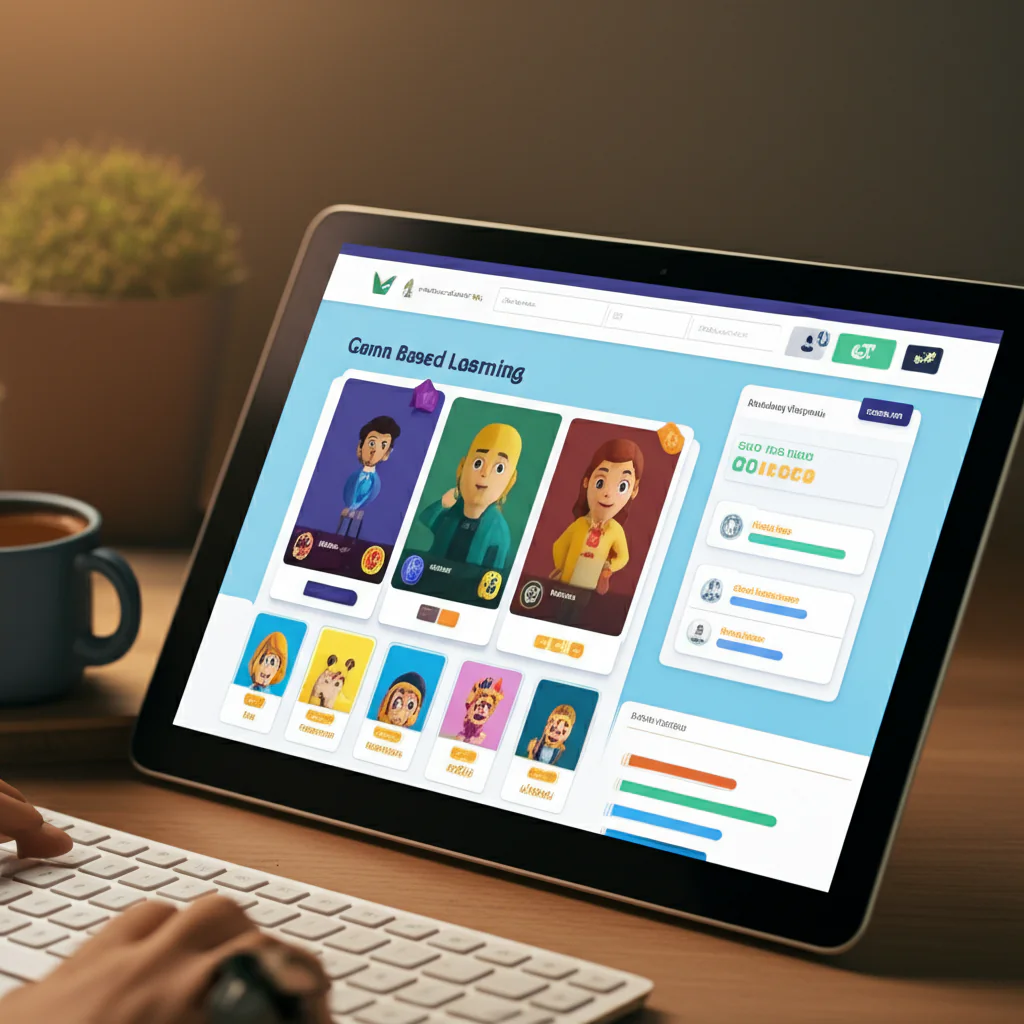
Remember the days when “learning” and “fun” were mutually exclusive concepts, separated by a vast chasm of dry textbooks and endless lectures? Those days are officially over. At Learning Game™, we’ve watched our own kids’ eyes light up not just during recess, but during math review sessions, all thanks to the magic of game-based learning platforms. It’s a revelation: when you turn a lesson into a quest, a quiz into a battle, and a mistake into a “try again” opportunity, engagement skyrockets. In fact, studies show that gamified learning can boost course completion rates to a staggering 90% or higher, a number that makes traditional eLearning look like a distant memory.
But with a sea of options out there, from the chaotic fun of Blooket to the strategic depth of Gimkit, how do you choose the right tool for your classroom or corporate training? We’ve done the heavy lifting (and the playing!) to bring you our definitive list of the 15 best game-based learning platforms for 2026. Whether you are an elementary teacher looking to master multiplication tables, a corporate L&D pro trying to make compliance training less painful, or a parent seeking the best educational apps for your child, we’ve got you covered. We’ll dive deep into features, pricing models, and real-world success stories, revealing which platforms truly deliver on their promises and which ones are just flash in the pan.
Ready to stop teaching and start playing? Let’s unlock the potential of your learners!
Key Takeaways
- Gamification Drives Results: Integrating game mechanics into learning can increase course completion rates to 90%+ and significantly improve knowledge retention through dopamine-driven engagement.
- One Size Does Not Fit All: The best platform depends on your audience; Kahoot! and Blooket excel in elementary classrooms, while Centrical and Hoopla are tailored for corporate performance and sales training.
- Beyond the Quiz: Modern platforms offer more than just multiple-choice questions, featuring adaptive learning paths, RPG mechanics, and AI-driven personalization to cater to diverse learning styles.
- Actionable Recommendations: Whether you need microlearning for busy professionals or immersive simulations for higher ed, our top 15 list provides the perfect match for every educational need.
👉 Shop Top Game-Based Learning Platforms:
- For K-12 Classrooms: Kahoot! | Gimkit | Blooket
- For Corporate Training: SC Training | GoSkills | Hoopla
- For Language Learning: Duolingo | Quizlet
Table of Contents
- ⚡️ Quick Tips and Facts
- 📜 The Evolution of Play: A Brief History of Game-Based Learning
- 🧠 Why Gamification Works: The Science Behind Engagement and Retention
- 🏆 Top 15 Game-Based Learning Platforms for Every Educational Need
- 1. SC Training (formerly EdApp): Microlearning Mets Gamification
- 2. Kahoot!: The King of Live Quiz Competitions
- 3. Gimkit: Strategy, Cash, and High-Octane Learning
- 4. Quizz: Self-Paced Mastery with a Twist
- 5. Quizlet: Flashcards Evolved into Games
- 6. Blooket: Where Custom Content Mets Chaotic Fun
- 7. Classcraft: RPG Mechanics for Classroom Management
- 8. Duolingo: The Gold Standard for Language Gamification
- 9. Profs Training Maker: Corporate Gamification Done Right
- 10. GoSkills: Bite-Sized Business Skills with Leaderboards
- 1. Raptivity: Interactive Templates for Any LMS
- 12. Gametize: Building Custom Gamified Experiences
- 13. Centrical: AI-Driven Employee Performance Gaming
- 14. Archy Learning: Adaptive Learning Paths with Rewards
- 15. Hopla: Gamified Sales Training for Teams
- 🎮 Game-Based Learning Course Examples: From Math to Sales
- 🛠️ How to Choose the Right Platform: A Buyer’s Guide for Educators and L&D Pros
- 🚀 Implementation Strategies: Turning Your Classroom or LMS into a Game Zone
- 📊 Measuring Success: Analytics and ROI in Gamified Learning
- 🤔 Common Pitfalls: When Gamification Goes Wrong
- 💡 Quick Tips and Facts: The Do’s and Don’ts of Educational Gaming
- 🔗 Recommended Links
- ❓ Frequently Asked Questions (FAQ)
- 📚 Reference Links
⚡️ Quick Tips and Facts
Hey
there, fellow learning adventurers! 👋 At Learning Game™, we’re absolutely buzzing about game-based learning platforms. Why? Because we’ve seen firsthand how they can transform tedious tasks into thrilling quests for learners of all ages.
From our own kids’ excited shouts during a Kahoot! quiz to the “aha!” moments we witness in professional development, the power of play in education is undeniable.
Did you know that gamification tools can lead to 90% or higher
course completion rates compared to traditional eLearning? That’s a massive win in our book! It’s not just about making things “fun” – though that’s a huge bonus! – it’s about tapping
into our innate human desire for challenge, mastery, and connection. When learning feels like a game, our brains release dopamine, which actually helps create new neural connections, making learning stick!
Here
are some quick insights we’ve gathered from years of playing, teaching, and observing:
-
Engagement is Key: Game-based learning platforms are designed to captivate attention, keeping learners hooked from start to finish. Think about how
easily kids get lost in a good video game – we’re harnessing that same magic! -
Retention Soars: Active participation, immediate feedback, and the thrill of achievement solidify knowledge far better than passive listening or reading.
-
Personalized Paths: Many platforms offer adaptive learning, allowing each student or employee to progress at their own pace and focus on areas where they need the most support. No more one-size-fits-all!
Skills for Life: Beyond subject matter, these platforms often foster critical thinking, problem-solving, collaboration, and digital literacy – essential skills for today’s world.
- Not Just for Kids: While fantastic for elementary students,
game-based learning is incredibly effective for adult learners too, whether in higher education or corporate training.
So, are you ready to dive into a world where learning feels less like a chore and more like an epic adventure? Let’s explore how
these platforms are changing the game!
📜 The Evolution of Play: A Brief History of

Game-Based Learning
It might feel like game-based learning is a shiny new trend, but trust us, the idea of learning through play is as old as, well, play itself! Think back to ancient civilizations teaching strategy through board
games, or even our own childhoods spent building forts and inventing elaborate scenarios. These were all early forms of edutainment [https://www.learninggame.org/category/edutainment/], blending education with entertainment.
The formal concept of integrating games into learning environments really started gaining traction with educational theorists like Maria Montessori and Jean Piaget, who emphasized the importance of hands-on, experiential learning. But it was the advent of digital technology that truly supercharged this
field.
In the early days of personal computing, simple computer games were quickly recognized for their educational potential. Remember classics like “Math Blaster” or “Oregon Trail”? These weren’t just games; they were pioneers in educational
games [https://www.learninggame.org/category/educational-games/], showing us how digital environments could make subjects like math and history come alive. Researchers like Thomas W. Malone and Mark Lepper, even back in the 1
980s, were exploring the “taxonomy of intrinsic motivations for learning,” highlighting challenge, curiosity, and control as key drivers that games naturally provide.
Fast forward to today, and the landscape has exploded!
We’ve moved far beyond simple quizzes to sophisticated simulations, role-playing games, and entire virtual worlds designed for deep learning. The rise of mobile technology has made educational apps [https://www.learninggame.org/category/educational-apps/] ubiquitous, turning every smartphone and tablet into a potential learning device. From digitizing classroom quizzes with tools like Kahoot! to creating immersive corporate training experiences, the evolution of game-based learning is
a testament to its enduring power and adaptability. It’s a journey from “hiscore to high marks,” as one study put it when teaching programming through gamification.
So, while the tools may be modern
, the philosophy remains the same: learning should be an engaging, active, and often playful experience.
🧠
Why Gamification Works: The Science Behind Engagement and Retention
Have you ever wondered why you can spend hours trying to beat a level in a video game, but a 30-minute training module feels like an eternity? It’s
not just about the “fun” factor, though that’s certainly a big piece of the puzzle! There’s some serious science happening behind the scenes when we engage with game-based learning platforms.
At its core, gam
ification leverages our natural human psychology. When we tackle a challenge, earn a badge, or see our name climb a leaderboard, our brains release dopamine. This neurotransmitter is often associated with pleasure and reward, but it also plays a crucial role
in motivation, memory, and learning. That little hit of dopamine reinforces the behavior, making us want to do it again! It’s why our kids beg for “just one more round” of Quizizz,
or why we find ourselves striving for that next Duolingo streak.
Here are some key psychological and neurological reasons why gamification is so effective:
- Intrinsic Motivation: Games tap into our inherent desire for competence, autonomy, and relatedness
. We want to master skills, make choices, and connect with others. When learning provides these elements, we’re naturally more driven. - Immediate Feedback: Unlike waiting for a graded test, games
provide instant feedback. You know immediately if your answer was right or wrong, allowing for rapid correction and understanding. This feedback loop is vital for learning and skill development. - Goal-Oriented Learning: Games are structured around clear goals and
progress markers. Whether it’s reaching the next level, earning points, or unlocking new content, these objectives provide a sense of purpose and direction, keeping learners focused. - Safe Environment for Failure: In a game, ”
failing” isn’t really failing; it’s an opportunity to learn and try again. This low-stakes environment encourages experimentation and resilience, reducing the fear of making mistakes that can often hinder traditional learning. - Social
Interaction and Competition: Many game-based platforms incorporate multiplayer elements, leaderboards, and team challenges. This fosters healthy competition and collaboration, adding another layer of engagement and motivation. We’ve seen this firsthand in our family game nights – a
little friendly rivalry can really spark effort! - Microlearning Magic: Platforms like SC Training (formerly EdApp) excel at breaking down complex information into bite-sized, manageable modules that can be completed in minutes. This microlearning approach prevents cognitive overload and makes learning feel less daunting, perfectly aligning with our busy lives.
The proof is in the pudding: gamification tools have been shown to boost course completion rates to 90% or
higher. That’s a staggering improvement over traditional eLearning, which often struggles with engagement and retention. It’s not just about making learning “fun” for kids; it’s about designing learning experiences that are
inherently engaging for the human brain, regardless of age. As the research suggests, game engagement theory is applicable to adult learners too, challenging the notion that games are solely for younger demographics.
🏆 Top 15 Game-Based Learning Platforms for Every Educational Need
Alright, buckle up, because this is where the rubber
meets the road! We’ve explored why game-based learning is so powerful, and now it’s time to dive into the how. Our team at Learning Game™ has put countless hours into exploring, testing, and
even playing (yes, it’s part of the job!) with a multitude of platforms. We’ve gathered insights from educators, parents, and of course, the kids themselves, to bring you our top picks.
Whether you’re a
teacher looking to energize your classroom, an L&D professional aiming to boost employee engagement, or a parent seeking engaging educational apps [https://www.learninggame.org/category/educational-apps/] for your children, there
‘s a platform here for you. We’ll give you the lowdown on features, benefits, and even some drawbacks, all from our collective experience.
Ready to find your next learning game changer? Let’s go!
- SC Training (formerly EdApp): Microlearning Mets Gamification
| Aspect | Rating (1-10) |
|---|---|
| Design | 9 |
| Functionality | |
| 9 | |
| Engagement | 9 |
| Customization | 8 |
| Analytics | 8 |
| Value for Money | 9 |
SC Training, formerly known as Ed
App, is a powerhouse in the world of mobile-first, microlearning-focused training. Our team has been consistently impressed with how they’ve mastered the art of breaking down complex information into bite-sized, digestible modules that truly
feel like games. It’s perfect for those moments when you have a few minutes to spare, making learning incredibly accessible.
What Makes SC Training a Game-Changer?
SC Training’s core strategy revolves around **microlearning
**, transforming overwhelming information into short, impactful lessons that can be completed in minutes. This approach is a lifesaver for busy professionals and students alike, fitting seamlessly into even the most packed schedules. We’ve found
that this dramatically increases the likelihood of learners actually completing their courses – a common struggle with traditional, lengthy modules.
- Built-in Authoring Tool & Templates: This is where SC Training truly shines for content creators. Their intuitive
authoring tool comes packed with interactive templates, from image/word matching to letter jumbles and true or false quizzes. We’ve used it to quickly transform dry compliance training into something genuinely engaging.
Achievements Feature:** Who doesn’t love a little recognition? SC Training uses banners and virtual rewards to congratulate and motivate learners, fostering a sense of accomplishment. It’s a simple yet effective psychological trick!
Rapid Refresh:** Need to quickly assess knowledge or reinforce key concepts? Their in-app quiz maker, Rapid Refresh, makes creating engaging assessments a breeze.
- Expert Support: They even offer access to a group of
instructional designers to help you craft top-notch courses. This is a huge benefit for organizations without in-house L&D expertise.
Our Take:
From an educator’s perspective, SC Training is fantastic for delivering targeted, impactful
learning. For parents, imagine a platform that makes learning a new skill as easy as checking your phone during a coffee break. The focus on gamified microlessons is a clear winner for boosting course completion rates and knowledge retention.
👉 CHECK PRICE on:
2. Kahoot!: The King of Live Quiz Competitions
| Aspect |
Rating (1-10) |
| :————– | :———— |
| Design | 9 |
| Functionality | 9 |
| Engagement | 10 |
| Customization
| 7 |
| Analytics | 7 |
| Value for Money | 9 |
If you’ve ever been in a classroom or a corporate training session and heard a catchy, upbeat tune signaling the start of a
quiz, chances are you’ve experienced Kahoot! It’s undeniably “one of the world’s fastest growing learning brands” and for good reason. Our kids absolutely adore Kahoot!, and we’ve
seen it light up even the most reluctant learners.
Why Kahoot! Gets Everyone Buzzing:
Kahoot! is an online quiz maker and game platform that transforms traditional quizzes into vibrant, competitive “Kahoots.” It’s incredibly versatile, working brilliantly in both live, synchronous settings and for self-paced, asynchronous challenges.
- Live Kahoots: This is where the magic happens! Presented on a shared screen, participants
join with their own devices (phones, tablets, computers) and compete in real-time. The energy is infectious, with players racing to answer correctly and climb the leaderboard. We’ve used it for everything from
reviewing history facts to breaking the ice in team meetings. - Asynchronous Challenges: For individual learning or remote teams, Kahoot! allows you to create self-paced challenges. Learners can complete quizzes on their own time, still enjoying
the gamified elements and competition. - Visually Appealing & Engaging: With its bright colors, upbeat music, and clear interface, Kahoot! is designed to be fun. It’s a
“new and cheap way to get classroom-response instead of using clickers.” - Multiple Game Templates: Beyond simple multiple-choice, Kahoot! offers various question types to keep things fresh.
Our
Take:
Kahoot! is a fantastic tool for formative assessment and injecting high energy into any learning environment. While its customization options might be a bit more limited than some enterprise solutions, its sheer
engagement factor and ease of use make it a staple in many classrooms and training rooms. It’s particularly effective for elementary students practicing rhyming skills and CVC word decoding using clip-art images.
**
CHECK PRICE on:**
3. Gimkit: Strategy, Cash, and High-Octane Learning
| Aspect | Rating (1-10) |
|---|---|
| Design | 8 |
| Functionality | 9 |
| Engagement | 10 |
| Customization | 8 |
| Analytics | 7 |
| Value for Money | 9 |
If Kahoot! is the king of live quizzes, then Gimkit is its rebellious, strategic cousin. Our kids at Learning Game™ often
describe Gimkit as “Kahoot! but with money and power-ups!” It takes the core concept of answering questions and layers on a fascinating economic system, turning learning into a strategic game of investment and upgrades.
What Makes Gimkit a
Strategic Masterpiece?
Gimkit is an accessible game-based platform where learners answer questions repeatedly for mastery, but with a twist: they earn in-game currency. This “money” can then be reinvested to
purchase upgrades and power-ups, fundamentally changing the gameplay.
- In-Game Economy: This is Gimkit’s secret sauce. Students earn virtual cash for correct answers, which they can then spend on items like “streak
bonuses,” “money multipliers,” or even “ice bombs” to freeze opponents. This adds a layer of economic strategy that’s incredibly engaging. - Diverse Game Modes: With 10 unique game
modes and millions of combinations, Gimkit keeps things fresh. From “Trust No One” (a social deduction game) to “Fishtopia” (a fishing game), there’s a mode to suit every class
and mood. - Student-Driven Strategy: Students aren’t just answering questions; they’re making tactical decisions about how to spend their earnings to maximize their score. This fosters critical thinking and decision
-making skills alongside content mastery. - Content Kits: Teachers can create their own “kits” of questions or choose from a vast library of community-created content.
Our Take:
Gimkit is a phenomenal
tool for reinforcing content and providing formative assessment in a highly engaging way. It’s particularly great for review sessions where students need repeated exposure to material. The strategic element means that even students who might struggle with raw
recall can succeed by playing smart. It’s a fantastic example of how educational games [https://www.learninggame.org/category/educational-games/] can be both fun and deeply effective.
👉 CHECK PRICE on:
4. Quizizz: Self-Paced Mastery with a Twist
| Aspect | Rating (1-10) |
| :————– | :———— |
| Design | 8 |
| Functionality | 9 |
| Engagement | 8 |
| Customization | 9 |
| Analytics
| 9 |
| Value for Money | 9 |
Quizizz, often referred to simply as “Quizz” in some discussions, is another fantastic platform that our team at Learning Game™ frequently recommends. While
it shares some similarities with Kahoot!, Quizizz offers a distinct advantage: its strong emphasis on self-paced learning and detailed data analytics, making it a favorite for both teachers and L&D teams.
Why Quizizz Emp
owers Learners:
Quizizz is an engaging platform that allows managers and L&D teams (and teachers!) to enhance training with free online quizzes. Its flexibility in delivery and robust reporting features set it apart.
- Self-Paced Learning: Unlike the shared-screen, synchronous nature of a live Kahoot!, Quizizz allows each learner to progress through questions at their own speed on their own device. This reduces pressure and allows for deeper processing
. - Interactive Lessons & Quizzes: You can access existing content or create tailored quizzes to fit your specific needs. They even have an AI feature to help you generate questions!
User-Friendly Admin Portal:** The dashboard is a dream for educators and trainers, allowing you to manage quizzes and even Google Slide presentations in one place. This makes tracking progress and identifying learning gaps incredibly efficient.
*
Detailed Data Analytics: Quizizz provides excellent data on student answers and whole-class graphs, offering immediate feedback and valuable insights for targeted intervention. This is crucial for understanding where learners are excelling and where they
might need extra support.
- Image-Heavy Content Support: This feature is particularly beneficial for younger learners or those with limited reading skills, allowing for visual cues to aid comprehension.
Our Take:
Quizizz is a strong contender for anyone looking for a flexible, data-rich game-based learning platform. Its self-paced nature is a huge plus for personalized learning, and the analytics provide educators with the insights they need to truly
support their students. For elementary students, we’ve found it ideal for practicing foundational skills like rhyming and CVC word decoding.
👉 CHECK PRICE on:
5. Quizlet: Flashcards Evolved into Games
| Aspect | Rating (1-10) |
|---|---|
| Design | 7 |
| Functionality | 8 |
| Engagement | 8 |
| Customization | 8 |
| Analytics | 7 |
| Value for Money | 9 |
Ah, Quizlet! If you’ve ever used flashcards to study, imagine them supercharged and turned into interactive games. That’s Quizlet in a nutshell. Our kids use it constantly for vocabulary, history dates
, and science terms, and we’ve even found ourselves using it to brush up on new concepts. It’s a classic for a reason, evolving brilliantly over the years.
How Quizlet Makes Studying Stick:
Quizlet
is an online quiz maker known for its flashcard formats and game-show style content. It takes the simple, effective concept of flashcards and expands it into a dynamic learning environment.
- Flash
card Foundation: At its heart, Quizlet excels with flashcards. You can create your own custom sets or choose from a massive library of pre-made flashcard stacks covering virtually any subject imaginable.
Beyond Flashcards: The real magic happens when Quizlet transforms these flashcards into engaging activities. “Learn” mode uses spaced repetition, “Match” is a race against the clock, and “Gravity” is an arcade-style game
where you type answers before asteroids hit.
-
Audio and Visual Content: Flashcards aren’t just text! Quizlet supports audio and visual content, which is fantastic for language learning or visual learners.
-
Mobile Functionality: Study anywhere, anytime! Quizlet works seamlessly across mobile, tablet, and computer, making it perfect for utilizing downtime.
-
QuizletPlus: For those who
want more, the paid service offers analytics, advanced customization options, and an ad-free experience.
Our Take:
Quizlet is an incredibly versatile tool for memorization and vocabulary building. It’s a
fantastic example of how a simple concept can be gamified to enhance learning. While it might not have the elaborate game modes of a Gimkit, its focus on core learning mechanisms makes it indispensable for many students. It’s a go-to for reinforcing
foundational knowledge.
👉 CHECK PRICE on:
6. Blooket: Where Custom Content Mets Chaotic Fun
| Aspect | Rating (1-10) |
|---|---|
| Design | 8 |
| Functionality | 9 |
| Engagement | 10 |
| Customization | 9 |
| Analytics | 7 |
| Value for Money | 9 |
If you’re looking for a platform that takes the concept of a quiz game and injects it with pure, unadulter
ated chaos and fun, then Blooket is your jam! Our kids at Learning Game™ are absolutely obsessed with Blooket, often requesting “just one more round” because of its highly engaging and unpredictable gameplay. It’s a fantastic tool for reviewing content, especially for subjects like math facts and fractions.
Why Blooket is a Blast:
Blooket is a traditional game-based platform with leaderboards, but it stands
out with its incredibly diverse and often wacky game modes that make reviewing content feel less like work and more like an arcade adventure.
- Diverse Game Modes: This is Blooket’s superpower.
Beyond standard quiz modes, you’ll find games like “Tower Defense,” “Cafe,” “Factory,” and “Gold Quest,” where students answer questions to earn resources, defend their base, or sabotage opponents. Each mode offers a unique strategic
element. - Customizable Content: Teachers can create their own “Blookets” (question sets) or choose from a vast library of community-created content. This allows for incredible flexibility in adapting to any subject or topic.
High Engagement: The combination of fast-paced gameplay, strategic elements, and the element of surprise (you never know what power-up you’ll get!) keeps students thoroughly engaged. We’ve seen it
work wonders for motivating students to practice math facts!
- Immediate Feedback: Like other top platforms, Blooket provides instant feedback on correct and incorrect answers, aiding in quick learning and correction.
Our Take:
Blooket is an absolute winner for content review and reinforcing skills, particularly for elementary students. It’s a prime example of how educational games [https://www.learninggame.org/category/educational-games/] can be both highly effective and incredibly entertaining. If you want to see your students genuinely excited about reviewing material, Blooket is definitely one to try.
CHECK PRICE on
:
7. Classcraft: RPG Mechanics for Classroom Management
| Aspect | Rating (1-10) |
|---|---|
| : | |
| Design | 9 |
| Functionality | 9 |
| Engagement | 9 |
| Customization | 9 |
| Analytics | |
| 7 | |
| Value for Money | 8 |
Imagine turning your entire classroom or learning environment into a captivating role-playing game (RPG). That’s the magic of Classcraft! Our educators at Learning Game™ have explored
this platform extensively, and it’s a truly innovative approach to not just learning content, but also classroom management and fostering positive behaviors.
How Classcraft Transforms the Learning Experience:
Classcraft integrates RPG elements like characters, quests, powers
, and rewards directly into the daily classroom routine. Students choose avatars, join teams, and embark on a collective adventure, earning points for good behavior, completing assignments, and collaborating.
- Character Progression: Students create their own characters (mages, warriors, healers) with unique powers and abilities. As they demonstrate positive behaviors and academic achievement, they earn experience points (XP) to level up and unlock new gear and powers.
- Quests and Missions: Teachers can design
“quests” that align with their curriculum, turning assignments and projects into engaging missions. Completing these quests earns students rewards and advances their storyline. - Powers and Consequences: Students can use their character’s powers to gain in
-game advantages (e.g., extra time on a test, permission to eat in class) or even help their teammates. Conversely, negative behaviors can lead to “damage” (HP loss) or “detentions” (AP loss), which
are tied to real-world consequences. - Team-Based Collaboration: Students work in teams, encouraging peer support and collaborative problem-solving. A team’s success often depends on each member contributing positively.
- Parent
Engagement: Classcraft includes features that allow parents to track their child’s progress and achievements, fostering a stronger home-school connection.
Our Take:
Classcraft is more than just a game-based learning platform; it’s a
gamified classroom management system that deeply integrates learning with behavior. It’s particularly powerful for fostering digital citizenship [https://www.learninggame.org/category/digital-citizenship/] by encouraging responsible online interactions and collaborative
skills. While it requires a commitment from the teacher to set up and maintain, the long-term benefits in student engagement, motivation, and positive classroom culture are immense.
👉 CHECK PRICE on:
8. Duolingo: The Gold Standard for Language Gamification
| Aspect | Rating (1-10) |
|---|---|
| Design | 10 |
| Functionality | 9 |
| Engagement | 10 |
| Customization | 7 |
| Analytics | 8 |
| Value for Money | 10 |
“Hola!” “Bonjour!” “Kon’nichiwa!” If you’ve ever tried to learn a new language, chances are you’ve encountered Duolingo. It’s
arguably the most recognizable and successful example of gamification applied to learning, and for good reason! Our team at Learning Game™ has family members who have successfully picked up phrases and even fluency using this delightful educational app [https://www.learninggame.org/category/educational-apps/].
Why Duolingo is a Language Learning Phenomenon:
Duolingo makes learning a new language feel less like studying and more like playing a casual mobile game. Its
bite-sized lessons, clear progression, and constant positive reinforcement keep learners coming back day after day.
- Gamified Progression: The entire learning path is structured like a game board, with “skills” (lessons) to unlock and
master. Each skill has multiple levels, encouraging repeated practice for mastery. - Streaks and Leaderboards: Duolingo famously uses “streaks” to motivate daily practice. Break your streak, and you feel the pang of loss
! Leaderboards add a competitive element, allowing you to compare your progress with friends or global learners. - Immediate Feedback & Reinforcement: Correct answers are celebrated, incorrect ones are gently corrected, and the app adapts to your learning
pace, focusing on areas where you need improvement. - Variety of Exercises: Lessons incorporate listening, speaking, reading, and writing exercises, providing a well-rounded language learning experience.
- Free to Use: The core
functionality of Duolingo is completely free, making language learning accessible to millions worldwide.
Our Take:
Duolingo is a masterclass in applying gamification principles to a complex learning task. It demonstrates how consistent, small efforts
, driven by clever game mechanics, can lead to significant learning outcomes. For anyone looking to pick up a new language, or even for teachers seeking supplementary educational games [https://www.learninggame.org/category/educational-games/]
for their language classes, Duolingo is an absolute must-try.
👉 CHECK PRICE on:
9. ProProfs Training Maker
: Corporate Gamification Done Right
| Aspect | Rating (1-10) |
|---|---|
| Design | 7 |
| Functionality | 8 |
| Engagement | 7 |
| Customization | 9 |
| Analytics | 8 |
| Value for Money | 8 |
When it comes to corporate training, engagement can often be a
challenge. That’s where platforms like ProProfs Training Maker (often referred to simply as “Profs” in discussions) step in. Our team at Learning Game™ recognizes its strength in providing a comprehensive Learning Management System (LMS) that cleverly
integrates gamification to make professional development more palatable and effective.
How ProProfs Makes Training Engaging:
ProProfs Training Maker is an LMS that combines online and offline training, offering a blended learning approach. Its focus is on making corporate training flexible, engaging, and measurable.
- Content Creation & Library: You can create courses from scratch using their intuitive tools or leverage their extensive online training course library. This
flexibility is a huge plus for L&D teams. - Integrated Gaming Elements: ProProfs includes various gamification elements such as brain games, learning paths with progress tracking, and quizzes. These elements
help break up monotony and keep learners motivated. - Flexible Learning: Learners have control over what, when, and how they learn, with options for virtual learning games and classrooms. This learner-centric approach is
crucial for adult education. - Certificates of Completion: Providing course completion certificates is a simple yet powerful motivator, acknowledging achievement and providing tangible proof of skill development.
- Collaborative Learning: The
platform supports collaborative learning, allowing teams to work together and share knowledge.
Our Take:
ProProfs Training Maker is a solid choice for organizations looking to inject gamification into their corporate training programs. It’s a comprehensive solution
that offers both content creation tools and a robust LMS, making it suitable for a wide range of training needs. While its “fun factor” might not be as overt as a Kahoot!, its strategic integration of gamification elements significantly boosts engagement in
a professional context.
👉 CHECK PRICE on:
10. GoSkills: Bite-Sized Business Skills with
Leaderboards
| Aspect | Rating (1-10) |
|---|---|
| Design | 8 |
| Functionality | 8 |
| Engagement | |
| 7 | |
| Customization | 6 |
| Analytics | 7 |
| Value for Money | 8 |
In today’s fast-paced professional world, continuous learning is non-negotiable,
but finding the time can be a challenge. GoSkills steps in as an on-demand, game-based training website that specializes in bite-sized courses for business skills. Our team at Learning Game™ sees it as an excellent resource for professionals looking to
quickly upskill without committing to lengthy programs.
How GoSkills Makes Professional Development Engaging:
GoSkills focuses on delivering high-quality, practical business courses in a flexible, gamified format, making skill acquisition efficient and rewarding.
- Bite-Sized Courses: Their content is designed for easy consumption, allowing learners to fit professional development into their busy schedules. Topics range from business writing and data analysis to web application development.
Gamification Elements: GoSkills incorporates daily streaks and time-tracking goals to motivate consistent learning. Seeing your streak grow can be a powerful incentive to log in each day.
- Verified Certificates &
CEUs/PDUs: Upon completion, learners receive verified certificates for LinkedIn, and many courses offer Continuing Education Units (CEUs) and Professional Development Units (PDUs). This adds significant professional value.
Mobile-Friendly & Cloud-Based: The platform is accessible anywhere, anytime, on any device, ensuring maximum flexibility for learners.
Our Take:
GoSkills is a practical and effective platform for professionals
seeking to enhance their business acumen. Its game-based approach, combined with the convenience of mobile learning and recognized certifications, makes it a valuable investment for individual career growth and corporate upskilling initiatives. It’s a great example of how
gamification can be subtly yet effectively applied to adult learning.
👉 CHECK PRICE on:
11. Raptivity: Interactive Templates for Any LMS
| Aspect | Rating (1-10) |
|---|---|
| Design | 8 |
| Functionality | 9 |
| Engagement | 8 |
| Customization | 9 |
| Analytics | 6 |
| Value for Money | 7 |
Sometimes, you don’t need an entire LMS; you just need to make your existing content
pop! That’s where Raptivity comes in. Our educators at Learning Game™ appreciate Raptivity as a powerful tool for instructional designers and content creators who want to add a layer of interactivity and gamification to their eLearning modules,
regardless of the platform they’re using.
How Raptivity Supercharges Your Content:
Raptivity is an interactive eLearning solution designed for creating visually stimulating games and materials that can be easily integrated into any learning management system.
- Extensive Library of Interactions: Raptivity boasts a vast library of educational web games and pre-made responsive interactions, including parallax displays, panning slides, and 360-degree interactions.
This means you don’t have to be a coding wizard to create engaging content. - User-Friendly Customization: Its intuitive interface allows you to customize quizzes, simulations, flashcards, and brainteasers without needing advanced
design expertise. This empowers educators and trainers to quickly build interactive elements. - LMS Agnostic: One of Raptivity’s biggest strengths is its ability to integrate with virtually any LMS. You
create the interactive content in Raptivity and then export it for use wherever your courses reside. - Diverse Game Types: From simple quizzes to complex simulations, Raptivity offers a wide range of game types to suit different learning objectives.
Our Take:
Raptivity is an excellent resource for anyone looking to enhance their existing eLearning content with engaging, game-based interactions. It’s especially useful for L&D professionals and instructional designers who want to add a
professional polish and interactive flair to their courses without starting from scratch. While it’s more of a content creation tool than a full LMS, its focus on interactivity is a huge plus.
👉 CHECK PRICE on:
12. Gametize: Building Custom Gamified Experiences
| Aspect | Rating (1-10) |
|---|---|
| :— | :— |
| Design | 8 |
| Functionality | 9 |
| Engagement | 8 |
| Customization | 10 |
| Analytics | 9 |
| Value for Money | 8 |
For organizations that want to go beyond off-the-shelf solutions and create truly bespoke gamified experiences, Gametize is a serious contender. Our team at Learning Game™
sees Gametize as an enterprise-grade solution that empowers businesses to design custom onboarding, upskilling, and engagement programs with a strong gamified core.
How Gametize Crafts Tailored Gamification:
Gametize provides
a robust platform for building custom gamified experiences, offering a vast library of game templates and powerful motivation tools.
- Extensive Game Template Library: They offer a wide array of game templates categorized by project type
, making it easier to start building for employee engagement, L&D, or talent acquisition. This provides a strong foundation for customization. - Powerful Motivation Tools: Gametize incorporates classic gamification elements like
leaderboards, badges, and rewards to foster healthy competition and drive desired behaviors. These are essential for sustained engagement. - Robust Analytics: The platform provides comprehensive results tracking, player moderation, and team collaboration
tools, giving administrators deep insights into learner performance and engagement. This data is invaluable for optimizing programs. - Customization at its Core: If you have a specific vision for your gamified program, Gametize
gives you the tools to bring it to life, allowing for a high degree of branding and unique gameplay.
Our Take:
Gametize is ideal for larger organizations or those with specific, complex gamification needs that require a high level
of customization. It’s not just about adding a few points; it’s about building an entire gamified ecosystem around your learning or engagement objectives. For businesses serious about leveraging gamification strategically, Gametize offers the tools to do
it right.
👉 CHECK PRICE on:
13. Centrical: AI-Driven Employee Performance Gaming
| Aspect | Rating (1-10) |
|---|---|
| Design | 9 |
| Functionality | 9 |
| Engagement | 9 |
| Customization | |
| 9 | |
| Analytics | 10 |
| Value for Money | 8 |
In the world of corporate performance and employee engagement, Centrical stands out by combining powerful gamification with AI-driven insights.
Our team at Learning Game™ recognizes Centrical as a sophisticated solution for companies looking to not only train but also motivate and optimize employee performance through intelligent game mechanics.
How Centrical Drives Performance with Play:
Centrical is a powerful gam
ification software designed for designing gamified microlearning content without requiring advanced technical skills. Its strength lies in linking learning directly to performance outcomes.
- Gamified Microlearning & Quest-Based Narratives:
Centrical allows for the creation of customizable learning challenges and engaging, quest-based game narratives. This transforms routine tasks and learning into an ongoing adventure. - Risk-Free Virtual Environment: Employees can practice new
skills in a safe, virtual environment, allowing them to experiment and learn from mistakes without real-world consequences. This is invaluable for skill development. - Real-Time Performance Management: A key differentiator
is its ability to provide learners with instant access to their performance data and feedback. This immediate insight empowers employees to understand their impact and areas for improvement. - Continuous Engagement: Centrical supports the continuous rollout of fun
training games, challenges, and raffles, ensuring sustained employee engagement. - AI-Powered Personalization: The platform uses AI to personalize learning paths and challenges, ensuring that each employee receives the most relevant and
impactful content.
Our Take:
Centrical is an advanced solution for organizations that want to tightly integrate gamified learning with actual employee performance and business objectives. Its AI capabilities and real-time feedback mechanisms make it a powerful tool for driving continuous
improvement and motivation in a corporate setting. It’s a prime example of game-based learning platforms being used for sophisticated corporate training.
👉 CHECK PRICE on:
14. Archy Learning: Adaptive Learning Paths with Rewards
| Aspect | Rating (1-10) |
|---|---|
| Design | 8 |
| Functionality | 9 |
| Engagement | 8 |
| Customization | 9 |
| Analytics | 9 |
| Value for Money | 8 |
In our quest for comprehensive learning solutions, Archy Learning caught our eye as an all-in-one platform that combines gamification with adaptive learning. Our team at Learning Game™ sees it as a versatile tool for both global classrooms and remote teams
, offering a highly customizable and trackable learning experience.
How Archy Learning Personalizes the Journey:
Archy Learning is an all-in-one gamification software and eLearning platform designed for global classrooms and remote teams. Its focus on custom learning paths and tracking makes it highly effective.
- Content Integration Flexibility: Easily integrate existing content by copying and pasting YouTube links or uploading PDFs and other digital resources. This makes content
creation incredibly efficient. - Customizable Learning Paths: Design personalized learning paths with custom quizzes, mixed media exams, and interactive video modules. This adaptive approach ensures that learning is tailored to individual needs.
Robust Tracking Features: For administrators, Archy Learning offers school tracking and head office features for monitoring course progress and assessment results. This provides valuable insights into learner performance.
- Motivation through Certificates: Course certificates
are available to motivate completion and provide tangible recognition of achievement. - Global Reach: Designed for global classrooms, it’s well-suited for diverse audiences and remote learning environments.
Our Take:
Archy Learning is a strong option for educators and L&D professionals who need a platform that offers both extensive customization and robust tracking. Its ability to create adaptive learning paths, combined with gamified elements, makes it an effective tool for ensuring
personalized and engaging learning experiences across various settings.
👉 CHECK PRICE on:
15. Hoopla: Gamified Sales Training for Teams
|
| Aspect | Rating (1-10) |
|---|---|
| Design | 8 |
| Functionality | 8 |
| Engagement | 9 |
| Customization | 7 |
| Analytics | 8 |
| Value for Money | 7 |
When it comes to motivating sales teams, traditional training can often fall flat. That’s where
Hoopla (sometimes referred to as Hopla by Radiant) steps in, specifically designed to inject energy and competition into sales performance. Our team at Learning Game™ recognizes the power of targeted gamification for specific professional roles, and Hoopla nails
it for sales.
How Hoopla Ignites Sales Performance:
Hoopla is a gamification platform specifically designed for sales teams to increase performance, using tournament-style or race-style digital game-based learning.
- Tournament & Race-Style Games: Hoopla transforms sales metrics into exciting competitions. Teams or individuals can compete in “tournaments” or “races” based on achieving sales targets, making work feel like
a sport. - Real-Time Recognition: One of its most powerful features is automatic live news updates when employees reach targets. This instant public recognition is a huge motivator for
sales professionals. - Built-in Leaderboards: Clear, visible leaderboards track individual and team performance, fostering healthy competition and transparency. Everyone knows who’s leading the pack!
- Gam
ified Sales Content: The platform is built around gamifying sales-specific content and objectives, making training directly relevant and impactful.
Our Take:
Hoopla is an excellent example of a niche game-based learning platform that perfectly targets its
audience. For sales organizations looking to boost motivation, drive performance, and make work more engaging, Hoopla offers a highly effective, gamified solution. It proves that gamification isn’t just for classrooms; it’s a powerful tool for
driving results in the professional world.
👉 CHECK PRICE on:
🎮 Game-Based Learning Course Examples: From Math to Sales
Okay, so we’ve talked a lot about what these platforms are, but how do they actually play
out in real-world learning scenarios? Our team at Learning Game™ has seen an incredible array of applications, proving that game-based learning isn’t just a niche approach – it’s a versatile powerhouse for almost any subject or skill!
Let’s look at some diverse examples that showcase the incredible breadth of educational games [https://www.learninggame.org/category/educational-games/] and gamified learning experiences:
🍎 Elementary Education: Making
Fundamentals Fun
-
Math Facts Mastery: Remember Blooket? We’ve seen classrooms where students beg for “just five more minutes” of Gold Quest to practice their multiplication tables. The competitive element and the thrill of earning virtual
currency make rote memorization feel like an exciting challenge. Similarly, Quizizz with its image-heavy content is fantastic for kindergarteners practicing rhyming skills and CVC word decoding. -
Reading Comprehension Quests: Imagine a Classcraft quest where students earn XP for successfully summarizing chapters of a book, identifying literary devices, or collaborating on a group presentation. The entire reading journey becomes an epic adventure.
Science Explorations: Platforms like Kahoot! are perfect for quick, engaging reviews of scientific concepts, from the water cycle to animal classifications. The immediate feedback helps solidify understanding.
📚 Higher Education: Deepening Understanding and
Engagement
- Medical Simulations: In fields like medical education, game-based learning offers a risk-free virtual environment for practicing complex procedures or diagnostic pathways. This allows students to make mistakes and learn from
them without real-world consequences, a critical aspect of professional training. - Programming Challenges: As one study noted, gamification can help students move “from hiscore to high marks” when learning programming.
Platforms can turn coding exercises into competitive challenges with leaderboards and unlockable levels, making debugging feel like solving a puzzle. - Language Acquisition: Duolingo is the poster child here, making daily language practice feel like a delightful
game. Its bite-sized lessons and streak mechanics keep learners engaged consistently, building fluency over time.
💼 Corporate Training: Boosting Skills and Performance
- Onboarding Journeys: Instead of a mountain of paperwork and boring videos
, new hires can embark on a gamified onboarding “quest” using platforms like Gametize or Centrical. They earn badges for completing HR modules, unlock information about company culture, and virtually meet teammates, making the initial experience engaging and informative
. - Sales Performance Tournaments: Hoopla is specifically designed for this! Sales teams compete in real-time “tournaments” based on achieving sales targets, with live leaderboards and instant recognition for hitting milestones. This transforms individual goals into a team sport.
- Compliance Training: Let’s be honest, compliance training can be dull. But with SC Training (formerly EdApp), microlearning modules infused with interactive games (like drag-and-drop scenarios or true/false challenges) can make learning about safety protocols or company policies surprisingly engaging, leading to those impressive 90%+ completion rates.
- Software Proficiency: Imagine
learning a new CRM or project management tool through a series of interactive simulations and challenges, earning points for correct actions and unlocking advanced features. This is where tools like Raptivity can create custom, immersive experiences.
💡 Beyond the Classroom: Life
Skills and Hobbies
- Financial Literacy Games: Learning about budgeting, investing, or saving can be intimidating. Game-based apps can simulate real-world financial scenarios, allowing users to make decisions and see the consequences in a safe, virtual
environment. - Typing Tutors: Many classic typing programs are inherently game-based, turning the mundane task of learning keyboarding into a race or a challenge.
- Simulation Games: Think about games like ”
Kerbal Space Program” or “Civilization.” These aren’t explicitly “educational apps,” but they are fantastic examples of game-based learning [https://www.learninggame.org/category/educational-games/] where players
learn complex physics, history, and strategic thinking by experiencing them firsthand. As the featured video [#featured-video] above explains, game-based learning involves “thinking about a game as a model of the real world” and learning from
it.
As you can see, the possibilities are virtually endless! The key is to match the right game mechanics and platform to your specific learning objectives and audience. Whether it’s mastering multiplication or navigating complex corporate policies, game-based learning
makes the journey more effective and, dare we say, a whole lot more fun!
🛠️ How to Choose the Right Platform: A Buyer’s Guide for Educators and L&D Pros
So, you’re convinced that game-based learning is the way to go – fantastic! But now
comes the big question: with so many amazing platforms out there, how do you pick the right one for your specific needs? It can feel a bit like trying to choose your starter Pokémon, right? Don’t worry, our
team at Learning Game™ has navigated these waters many times, and we’ve got some expert advice to help you make a confident decision.
Choosing the perfect platform isn’t just about the flashiest graphics or the most game modes. It’
s about aligning the tool with your pedagogical goals, your audience’s needs, and your practical constraints.
1. Define Your Learning Objectives and Audience 🎯
Before you even look at a platform, ask yourself:
- What do you want learners to achieve? Is it memorization (Quizlet)? Critical thinking (Gimkit)? Collaborative problem-solving (Classcraft)? Or perhaps mastering a new software (Raptivity)?
- Who
are your learners? Elementary students thrive on immediate gratification and vibrant visuals (Kahoot!, Blooket). Adult learners might appreciate more subtle gamification and direct relevance to their work (GoSkills, Centrical). What’s their comfort
level with technology? - What subject matter are you covering? Some platforms are better suited for specific content types.
2. Consider the Type of Gamification Needed 🎲
Are you looking for:
*
Full Game-Based Learning? Where the learning is the game (e.g., Duolingo, simulation games).
- Gamification of Existing Content? Adding game elements (points, badges, leaderboards)
to non-game activities (e.g., SC Training, ProProfs). - A Hybrid Approach? Many platforms offer a blend.
3. Evaluate Key Features and Functionality ⚙️
Here’
s a checklist of features to consider:
| Feature Category | Questions to Ask
⚡️ Quick Tips and Facts
Hey there, fellow learning adventurers!
👋 At Learning Game™, we’re absolutely buzzing about game-based learning platforms. Why? Because we’ve seen firsthand how they can transform tedious tasks into thrilling quests for learners of all ages. From our own kids’ excited
shouts during a Kahoot! quiz to the “aha!” moments we witness in professional development, the power of play in education is undeniable.
Did you know that gamification tools have proven to result in 90% (or higher) completion
rates compared to typical eLearning courses? That’s a massive win in our book! It’s not just about making things “fun” – though that’s a huge bonus! – it’s
about tapping into our innate human desire for challenge, mastery, and connection. When learning feels like a game, our brains release dopamine, which actually increases the creation of synapses in the brain, helping information stick!
Here are some quick insights we’ve gathered from years of playing, teaching, and observing:
-
Engagement is Key: Game-based learning platforms are designed to captivate attention, keeping learners hooked from start to finish.
Think about how easily kids get lost in a good video game – we’re harnessing that same magic! -
Retention Soars: Active participation, immediate feedback, and the thrill of achievement solidify knowledge far better than passive listening or
reading. -
Personalized Paths: Many platforms offer adaptive learning, allowing each student or employee to progress at their own pace and focus on areas where they need the most support. No more one-size-fits-all!
-
Skills for Life: Beyond subject matter, these platforms often foster critical thinking, problem-solving, collaboration, and digital citizenship [https://www.learninggame.org/category/digital-citizenship/] – essential skills for
today’s world. -
Not Just for Kids: While fantastic for elementary students, game-based learning is incredibly effective for adult learners too, whether in higher education or corporate training.
So
, are you ready to dive into a world where learning feels less like a chore and more like an epic adventure? Let’s explore how these platforms are changing the game!
📜 The Evolution of Play: A Brief History of Game-Based Learning

It might feel like game-based learning is a shiny new trend, but
trust us, the idea of learning through play is as old as, well, play itself! Think back to ancient civilizations teaching strategy through board games, or even our own childhoods spent building forts and inventing elaborate scenarios. These were all early
forms of edutainment [https://www.learninggame.org/category/edutainment/], blending education with entertainment.
The formal concept of integrating games into learning environments really started gaining traction with educational theorists like Maria
Montessori and Jean Piaget, who emphasized the importance of hands-on, experiential learning. But it was the advent of digital technology that truly supercharged this field.
In the early days of personal computing, simple computer games were quickly recognized for
their educational potential. Remember classics like “Math Blaster” or “Oregon Trail”? These weren’t just games; they were pioneers in educational games [https://www.learninggame.org/category/educational-games/], showing us how digital environments could make subjects like math and history come alive. Researchers like Thomas W. Malone and Mark Lepper, even back in the 1980s, were exploring the “taxonomy of intrinsic motivations for
learning,” highlighting challenge, curiosity, and control as key drivers that games naturally provide.
Fast forward to today, and the landscape has exploded! We’ve moved far beyond simple quizzes to sophisticated simulations,
role-playing games, and entire virtual worlds designed for deep learning. The rise of mobile technology has made educational apps [https://www.learninggame.org/category/educational-apps/] ubiquitous, turning every smartphone and tablet into
a potential learning device. From digitizing classroom quizzes with tools like Kahoot! to creating immersive corporate training experiences, the evolution of game-based learning is a testament to its enduring power and adaptability
. It’s a journey from “hiscore to high marks,” as one study put it when teaching programming through gamification.
For a deeper dive into how a popular game can be used for learning, check
out our article on Minecraft Education.
So, while the tools may be modern, the philosophy remains the same: learning should be an engaging, active, and often playful experience
.
🧠 Why Gamification Works: The Science Behind Engagement and Retention
Have you ever wondered why
you can spend hours trying to beat a level in a video game, but a 30-minute training module feels like an eternity? It’s not just about the “fun” factor, though that’s certainly a big piece
of the puzzle! There’s some serious science happening behind the scenes when we engage with game-based learning platforms.
At its core, gamification leverages our natural human psychology. When we tackle a challenge, earn a badge,
or see our name climb a leaderboard, our brains release dopamine. This neurotransmitter is often associated with pleasure and reward, but it also plays a crucial role in motivation, memory, and learning.
That little hit of dopamine reinforces the behavior, making us want to do it again! It’s why our kids beg for “just one more round” of Quizizz, or why we find ourselves striving for that next Duolingo streak
.
Here are some key psychological and neurological reasons why gamification is so effective:
-
Intrinsic Motivation: Games tap into our inherent desire for competence, autonomy, and relatedness. We want to master skills, make choices,
and connect with others. When learning provides these elements, we’re naturally more driven. -
Immediate Feedback: Unlike waiting for a graded test, games provide instant feedback. You know immediately if your answer was
right or wrong, allowing for rapid correction and understanding. This feedback loop is vital for learning and skill development. -
Goal-Oriented Learning: Games are structured around clear goals and progress markers. Whether it’s reaching the
next level, earning points, or unlocking new content, these objectives provide a sense of purpose and direction, keeping learners focused. -
Safe Environment for Failure: In a game, “failing” isn’t really failing;
it’s an opportunity to learn and try again. This low-stakes environment encourages experimentation and resilience, reducing the fear of making mistakes that can often hinder traditional learning. -
Social Interaction and Competition: Many game-based platforms
incorporate multiplayer elements, leaderboards, and team challenges. This fosters healthy competition and collaboration, adding another layer of engagement and motivation. We’ve seen this firsthand in our family game nights – a little friendly rivalry can really spark effort! -
Microlearning Magic: Platforms like SC Training (formerly EdApp) excel at breaking down complex information into bite-sized, manageable modules that can be completed in minutes. This microlearning approach
prevents cognitive overload and makes learning feel less daunting, perfectly aligning with our busy lives.
The proof is in the pudding: gamification tools have been shown to boost course completion rates to 90% or higher. That’s a staggering improvement over traditional eLearning, which often struggles with engagement and retention. It’s not just about making learning “fun” for kids; it’s about designing learning experiences that are inherently engaging for the human
brain, regardless of age. As the research suggests, game engagement theory is applicable to adult learners too, challenging the notion that games are solely for younger demographics.
🏆 Top 15 Game-Based Learning Platforms for Every Educational Need
Alright, buckle up, because this is where the rubber meets the
road! We’ve explored why game-based learning is so powerful, and now it’s time to dive into the how. Our team at Learning Game™ has put countless hours into exploring, testing, and even playing (yes, it’s part of the job!) with a multitude of platforms. We’ve gathered insights from educators, parents, and of course, the kids themselves, to bring you our top picks.
Whether you’re a teacher looking
to energize your classroom, an L&D professional aiming to boost employee engagement, or a parent seeking engaging educational apps [https://www.learninggame.org/category/educational-apps/] for your children, there’s a
platform here for you. We’ll give you the lowdown on features, benefits, and even some drawbacks, all from our collective experience.
Ready to find your next learning game changer? Let’s go!
1
. SC Training (formerly EdApp): Microlearning Mets Gamification
| Aspect | Rating (1-10) |
|---|---|
| Design | 9 |
| Functionality | |
| 9 | |
| Engagement | 9 |
| Customization | 8 |
| Analytics | 8 |
| Value for Money | 9 |
SC Training, formerly
known as EdApp, is a powerhouse in the world of mobile-first, microlearning-focused training. Our team has been consistently impressed with how they’ve mastered the art of breaking down complex information into bite-sized, digestible
modules that truly feel like games. It’s perfect for those moments when you have a few minutes to spare, making learning incredibly accessible.
What Makes SC Training a Game-Changer?
SC Training’s core strategy
revolves around microlearning, transforming overwhelming information into short, impactful lessons that can be completed in minutes. This approach is a lifesaver for busy professionals and students alike, fitting seamlessly into even the most packed
schedules. We’ve found that this dramatically increases the likelihood of learners actually completing their courses – a common struggle with traditional, lengthy modules.
- Built-in Authoring Tool & Templates: This is where SC Training truly shines
for content creators. Their intuitive authoring tool comes packed with interactive templates, from image/word matching to letter jumbles and true or false quizzes. We’ve used it to quickly transform dry compliance training into
something genuinely engaging. - Achievements Feature: Who doesn’t love a little recognition? SC Training uses banners and virtual rewards to congratulate and motivate learners, fostering a sense of accomplishment. It’s
a simple yet effective psychological trick! - Rapid Refresh: Need to quickly assess knowledge or reinforce key concepts? Their in-app quiz maker, Rapid Refresh, makes creating engaging assessments a breeze.
Expert Support:** They even offer access to a group of instructional designers to help you craft top-notch courses. This is a huge benefit for organizations without in-house L&D expertise.
Our Take:
From an educator’
s perspective, SC Training is fantastic for delivering targeted, impactful learning. For parents, imagine a platform that makes learning a new skill as easy as checking your phone during a coffee break. The focus on gamified microlessons is
a clear winner for boosting course completion rates and knowledge retention.
👉 Shop SC Training on:
2.
Kahoot!: The King of Live Quiz Competitions
| Aspect | Rating (1-10) |
|---|---|
| Design | 9 |
| Functionality | 9 |
| Engagement | 10 |
| Customization | 7 |
| Analytics | 7 |
| Value for Money | 9 |
If you’ve ever been
in a classroom or a corporate training session and heard a catchy, upbeat tune signaling the start of a quiz, chances are you’ve experienced Kahoot! It’s undeniably “one of the world’s fastest growing learning brands” and for good reason. Our kids absolutely adore Kahoot!, and we’ve seen it light up even the most reluctant learners.
Why Kahoot! Gets Everyone Buzzing:
Kahoot!
is an online quiz maker and game platform that transforms traditional quizzes into vibrant, competitive “Kahoots.” It’s incredibly versatile, working brilliantly in both live, synchronous settings and for self-paced, asynchronous
challenges.
- Live Kahoots: This is where the magic happens! Presented on a shared screen, participants join with their own devices (phones, tablets, computers) and compete in real-time. The energy is infectious
, with players racing to answer correctly and climb the leaderboard. We’ve used it for everything from reviewing history facts to breaking the ice in team meetings. - Asynchronous Challenges: For individual learning
or remote teams, Kahoot! allows you to create self-paced challenges. Learners can complete quizzes on their own time, still enjoying the gamified elements and competition. - Visually Appealing
& Engaging: With its bright colors, upbeat music, and clear interface, Kahoot! is designed to be fun. It’s a “new and cheap way to get classroom-response instead of using clickers.” - Multiple Game Templates: Beyond simple multiple-choice, Kahoot! offers various question types to keep things fresh.
Our Take:
Kahoot! is a fantastic tool for formative assessment and
injecting high energy into any learning environment. While its customization options might be a bit more limited than some enterprise solutions, its sheer engagement factor and ease of use make it a staple in many classrooms and training rooms.
It’s particularly effective for elementary students practicing rhyming skills and CVC word decoding using clip-art images.
👉 Shop Kahoot! on:
3. Gimkit: Strategy, Cash, and High-Octane Learning
| Aspect | Rating (1-10) |
|---|---|
| Design | |
| 8 | |
| Functionality | 9 |
| Engagement | 10 |
| Customization | 8 |
| Analytics | 7 |
| Value | |
| for Money | 9 |
If Kahoot! is the king of live quizzes, then Gimkit is its rebellious, strategic cousin. Our kids at Learning Game™ often describe Gimkit as “Kahoot! but with money and power-
ups!” It takes the core concept of answering questions and layers on a fascinating economic system, turning learning into a strategic game of investment and upgrades.
What Makes Gimkit a Strategic Masterpiece?
Gimkit is an accessible game
-based platform where learners answer questions repeatedly for mastery, but with a twist: they earn in-game currency. This “money” can then be reinvested to purchase upgrades and power-ups, fundamentally changing
the gameplay.
- In-Game Economy: This is Gimkit’s secret sauce. Students earn virtual cash for correct answers, which they can then spend on items like “streak bonuses,” “money multipliers,” or even ”
ice bombs” to freeze opponents. This adds a layer of economic strategy that’s incredibly engaging. - Diverse Game Modes: With 10 unique game modes and millions of combinations, Gimkit
keeps things fresh. From “Trust No One” (a social deduction game) to “Fishtopia” (a fishing game), there’s a mode to suit every class and mood.
Student-Driven Strategy: Students aren’t just answering questions; they’re making tactical decisions about how to spend their earnings to maximize their score. This fosters critical thinking and decision-making skills alongside content
mastery.
- Content Kits: Teachers can create their own “kits” of questions or choose from a vast library of community-created content.
Our Take:
Gimkit is a phenomenal tool for reinforcing
content and providing formative assessment in a highly engaging way. It’s particularly great for review sessions where students need repeated exposure to material. The strategic element means that even students who might struggle with raw recall can succeed by playing
smart. It’s a fantastic example of how educational games [https://www.learninggame.org/category/educational-games/] can be both fun and deeply effective.
👉 Shop Gimkit on:
*
Gimkit Official Website
4. Quizizz: Self-Paced Mastery with a Twist
| Aspect | Rating (1-10) |
|---|---|
| Design | 8 |
| Functionality | 9 |
| Engagement | 8 |
| Customization | 9 |
| Analytics | |
| 9 | |
| Value for Money | 9 |
Quizizz, often referred to simply as “Quizz” in some discussions, is another fantastic platform that our team at Learning Game™ frequently recommends. While it
shares some similarities with Kahoot!, Quizizz offers a distinct advantage: its strong emphasis on self-paced learning and detailed data analytics, making it a favorite for both teachers and L&D teams.
Why Quizizz Emp
owers Learners:
Quizizz is an engaging platform that allows managers and L&D teams (and teachers!) to enhance training with free online quizzes. Its flexibility in delivery and robust reporting features set it apart.
-
Self-Paced Learning: Unlike the shared-screen, synchronous nature of a live Kahoot!, Quizizz allows each learner to progress through questions at their own speed on their own device. This reduces pressure and allows for
deeper processing. -
Interactive Lessons & Quizzes: You can access existing content or create tailored quizzes to fit your specific needs. They even have an AI feature to help you generate questions!
-
User-Friendly Admin Portal: The dashboard is a dream for educators and trainers, allowing you to manage quizzes and even Google Slide presentations in one place. This makes tracking progress and identifying learning gaps
incredibly efficient. -
Detailed Data Analytics: Quizizz provides excellent data on student answers and whole-class graphs, offering immediate feedback and valuable insights for targeted intervention. This is crucial for understanding where learners
are excelling and where they might need extra support. -
Image-Heavy Content Support: This feature is particularly beneficial for younger learners or those with limited reading skills, allowing for visual cues to aid comprehension.
Our Take:
Quizizz is a strong contender for anyone looking for a flexible, data-rich game-based learning platform. Its self-paced nature is a huge plus for personalized learning, and the analytics provide
educators with the insights they need to truly support their students. For elementary students, we’ve found it ideal for practicing foundational skills like rhyming and CVC word decoding.
👉 Shop Quizizz on:
5. Quizlet: Flashcards Evolved into Games
| Aspect | Rating (1-10) |
|---|---|
| :— | :— |
| Design | 7 |
| Functionality | 8 |
| Engagement | 8 |
| Customization | 8 |
| Analytics | 7 |
| Value for Money | 9 |
Ah, Quizlet! If you’ve ever used flashcards to study, imagine them supercharged and turned into interactive games. That’s Quizlet in a nutshell. Our kids
use it constantly for vocabulary, history dates, and science terms, and we’ve even found ourselves using it to brush up on new concepts. It’s a classic for a reason, evolving brilliantly over the years.
How Quizlet
Makes Studying Stick:
Quizlet is an online quiz maker known for its flashcard formats and game-show style content. It takes the simple, effective concept of flashcards and expands it into a dynamic learning
environment.
- Flashcard Foundation: At its heart, Quizlet excels with flashcards. You can create your own custom sets or choose from a massive library of pre-made flashcard stacks covering virtually any subject imaginable.
- Beyond Flashcards: The real magic happens when Quizlet transforms these flashcards into engaging activities. “Learn” mode uses spaced repetition, “Match” is a race against the clock, and “Gravity
” is an arcade-style game where you type answers before asteroids hit. - Audio and Visual Content: Flashcards aren’t just text! Quizlet supports audio and visual content, which is fantastic for language learning or visual
learners. - Mobile Functionality: Study anywhere, anytime! Quizlet works seamlessly across mobile, tablet, and computer, making it perfect for utilizing downtime.
QuizletPlus: For those who want more, the paid service offers analytics, advanced customization options, and an ad-free experience.
Our Take:
Quizlet is an incredibly versatile tool for
memorization and vocabulary building. It’s a fantastic example of how a simple concept can be gamified to enhance learning. While it might not have the elaborate game modes of a Gimkit, its focus on core learning mechanisms makes it indispensable for
many students. It’s a go-to for reinforcing foundational knowledge.
👉 Shop Quizlet on:
6. Blooket: Where
Custom Content Mets Chaotic Fun
| Aspect | Rating (1-10) |
|---|---|
| Design | 8 |
| Functionality | 9 |
| Engagement | |
| 10 | |
| Customization | 9 |
| Analytics | 7 |
| Value for Money | 9 |
If you’re looking for a platform that takes the concept
of a quiz game and injects it with pure, unadulterated chaos and fun, then Blooket is your jam! Our kids at Learning Game™ are absolutely obsessed with Blooket, often requesting “just one more round
” because of its highly engaging and unpredictable gameplay. It’s a fantastic tool for reviewing content, especially for subjects like math facts and fractions.
Why Blooket is a Blast:
Blook
et is a traditional game-based platform with leaderboards, but it stands out with its incredibly diverse and often wacky game modes that make reviewing content feel less like work and more like an arcade adventure.
Diverse Game Modes: This is Blooket’s superpower. Beyond standard quiz modes, you’ll find games like “Tower Defense,” “Cafe,” “Factory,” and “Gold Quest,” where students answer questions to earn resources
, defend their base, or sabotage opponents. Each mode offers a unique strategic element.
- Customizable Content: Teachers can create their own “Blookets” (question sets) or choose from a vast library of community-
created content. This allows for incredible flexibility in adapting to any subject or topic. - High Engagement: The combination of fast-paced gameplay, strategic elements, and the element of surprise (you never know what power-up you’ll get!) keeps students thoroughly engaged. We’ve seen it work wonders for motivating students to practice math facts!
- Immediate Feedback: Like other top platforms, Blooket provides instant feedback
on correct and incorrect answers, aiding in quick learning and correction.
Our Take:
Blooket is an absolute winner for content review and reinforcing skills, particularly for elementary students. It’s a prime example of how educational games [https://www.learninggame.org/category/educational-games/] can be both highly effective and incredibly entertaining. If you want to see your students genuinely
excited about reviewing material, Blooket is definitely one to try.
👉 Shop Blooket on:
7
. Classcraft: RPG Mechanics for Classroom Management
| Aspect | Rating (1-10) |
|---|---|
| Design | 9 |
| Functionality | 9 |
| Engagement | 9 |
| Customization | 9 |
| Analytics | 7 |
| Value for Money | 8 |
Imagine turning your entire classroom or learning environment
into a captivating role-playing game (RPG). That’s the magic of Classcraft! Our educators at Learning Game™ have explored this platform extensively, and it’s a truly innovative approach to not just learning content, but also **
classroom management and fostering positive behaviors**.
How Classcraft Transforms the Learning Experience:
Classcraft integrates RPG elements like characters, quests, powers, and rewards directly into the daily classroom routine. Students choose avatars, join teams, and embark
on a collective adventure, earning points for good behavior, completing assignments, and collaborating.
- Character Progression: Students create their own characters (mages, warriors, healers) with unique powers and abilities. As they demonstrate positive behaviors and
academic achievement, they earn experience points (XP) to level up and unlock new gear and powers. - Quests and Missions: Teachers can design “quests” that align with their curriculum, turning assignments and projects into engaging missions
. Completing these quests earns students rewards and advances their storyline. - Powers and Consequences: Students can use their character’s powers to gain in-game advantages (e.g., extra time on a test, permission to eat in class) or even help their teammates. Conversely, negative behaviors can lead to “damage” (HP loss) or “detentions” (AP loss), which are tied to real-world consequences.
- Team-Based
Collaboration: Students work in teams, encouraging peer support and collaborative problem-solving. A team’s success often depends on each member contributing positively. - Parent Engagement: Classcraft includes features that allow parents to track their child’
s progress and achievements, fostering a stronger home-school connection.
Our Take:
Classcraft is more than just a game-based learning platform; it’s a gamified classroom management system that deeply integrates learning with behavior. It
‘s particularly powerful for fostering digital citizenship [https://www.learninggame.org/category/digital-citizenship/] by encouraging responsible online interactions and collaborative skills. While it requires a commitment from the teacher to set up and
maintain, the long-term benefits in student engagement, motivation, and positive classroom culture are immense.
👉 Shop Classcraft on:
- Duolingo: The Gold Standard for Language Gamification
| Aspect | Rating (1-10) |
|---|---|
| Design | 10 |
| Functionality | |
| 9 | |
| Engagement | 10 |
| Customization | 7 |
| Analytics | 8 |
| Value for Money | 10 |
”
Hola!” “Bonjour!” “Kon’nichiwa!” If you’ve ever tried to learn a new language, chances are you’ve encountered Duolingo. It’s arguably the most recognizable and successful example of gamification applied
to learning, and for good reason! Our team at Learning Game™ has family members who have successfully picked up phrases and even fluency using this delightful educational app [https://www.learninggame.org/category/educational-apps/].
Why Duolingo is a Language Learning Phenomenon:
Duolingo makes learning a new language feel less like studying and more like playing a casual mobile game. Its bite-sized lessons, clear progression, and constant
positive reinforcement keep learners coming back day after day.
- Gamified Progression: The entire learning path is structured like a game board, with “skills” (lessons) to unlock and master. Each skill has multiple levels, encouraging
repeated practice for mastery. - Streaks and Leaderboards: Duolingo famously uses “streaks” to motivate daily practice. Break your streak, and you feel the pang of loss! Leaderboards add a competitive element,
allowing you to compare your progress with friends or global learners. - Immediate Feedback & Reinforcement: Correct answers are celebrated, incorrect ones are gently corrected, and the app adapts to your learning pace, focusing on areas where you need
improvement. - Variety of Exercises: Lessons incorporate listening, speaking, reading, and writing exercises, providing a well-rounded language learning experience.
- Free to Use: The core functionality of Duolingo is completely
free, making language learning accessible to millions worldwide.
Our Take:
Duolingo is a masterclass in applying gamification principles to a complex learning task. It demonstrates how consistent, small efforts, driven by clever game mechanics,
can lead to significant learning outcomes. For anyone looking to pick up a new language, or even for teachers seeking supplementary educational games [https://www.learninggame.org/category/educational-games/] for their language classes,
Duolingo is an absolute must-try.
👉 Shop Duolingo on:
9. ProProfs Training Maker
: Corporate Gamification Done Right
| Aspect | Rating (1-10) |
|---|---|
| Design | 7 |
| Functionality | 8 |
| Engagement | 7 |
| Customization | 9 |
| Analytics | 8 |
| Value for Money | 8 |
When it comes to corporate training, engagement can often be
a challenge. That’s where platforms like ProProfs Training Maker (often referred to simply as “Profs” in discussions) step in. Our team at Learning Game™ recognizes its strength in providing a comprehensive Learning Management System (LMS) that cleverly integrates gamification to make professional development more palatable and effective.
How ProProfs Makes Training Engaging:
ProProfs Training Maker is an LMS that combines online and offline training, offering a blended learning approach.
Its focus is on making corporate training flexible, engaging, and measurable.
-
Content Creation & Library: You can create courses from scratch using their intuitive tools or leverage their extensive online training course library.
This flexibility is a huge plus for L&D teams. -
Integrated Gaming Elements: ProProfs includes various gamification elements such as brain games, learning paths with progress tracking, and quizzes. These elements help break up monotony and keep learners motivated.
-
Flexible Learning: Learners have control over what, when, and how they learn, with options for virtual learning games and classrooms. This learner-centric approach is crucial for adult education.
-
Certificates of Completion: Providing course completion certificates is a simple yet powerful motivator, acknowledging achievement and providing tangible proof of skill development.
-
Collaborative Learning: The platform supports collaborative learning, allowing teams to work together and share knowledge.
Our Take:
ProProfs Training Maker is a solid choice for organizations looking to inject gamification into their corporate
training programs. It’s a comprehensive solution that offers both content creation tools and a robust LMS, making it suitable for a wide range of training needs. While its “fun factor” might not be as overt as a Kahoot!, its
strategic integration of gamification elements significantly boosts engagement in a professional context.
👉 Shop ProProfs Training Maker on:
10. GoSkills: Bite-Sized Business Skills with Leaderboards
| Aspect | Rating (1-10) |
|---|---|
| Design | 8 |
| Functionality | 8 |
| Engagement | 7 |
| Customization | 6 |
| Analytics | 7 |
| Value for Money | 8 |
In today’s fast-paced professional world, continuous learning is non-negotiable, but finding the time can be a challenge. GoSkills steps in as an on-demand, game-based training website that specializes in bite-
sized courses for business skills. Our team at Learning Game™ sees it as an excellent resource for professionals looking to quickly upskill without committing to lengthy programs.
How GoSkills Makes Professional Development Engaging:
GoSkills focuses on delivering high
-quality, practical business courses in a flexible, gamified format, making skill acquisition efficient and rewarding.
- Bite-Sized Courses: Their content is designed for easy consumption, allowing learners to fit professional development into their
busy schedules. Topics range from business writing and data analysis to web application development. - Gamification Elements: GoSkills incorporates daily streaks and time-tracking goals to motivate consistent learning. Seeing your streak grow can be a powerful incentive to log in each day.
- Verified Certificates & CEUs/PDUs: Upon completion, learners receive verified certificates for LinkedIn, and many courses offer Continuing Education Units
(CEUs) and Professional Development Units (PDUs). This adds significant professional value. - Mobile-Friendly & Cloud-Based: The platform is accessible anywhere, anytime, on any device, ensuring maximum
flexibility for learners.
Our Take:
GoSkills is a practical and effective platform for professionals seeking to enhance their business acumen. Its game-based approach, combined with the convenience of mobile learning and recognized
certifications, makes it a valuable investment for individual career growth and corporate upskilling initiatives. It’s a great example of how gamification can be subtly yet effectively applied to adult learning.
👉 Shop GoSkills on:
*
GoSkills Official Website
11. Raptivity: Interactive Templates for Any LMS
| Aspect | Rating (1-10) |
|---|---|
| :— | :— |
| Design | 8 |
| Functionality | 9 |
| Engagement | 8 |
| Customization | 9 |
| Analytics | 6 |
| Value for Money | 7 |
Sometimes, you don’t need an entire LMS; you just need to make your existing content pop! That’s where Raptivity comes in. Our educators at Learning Game™
appreciate Raptivity as a powerful tool for instructional designers and content creators who want to add a layer of interactivity and gamification to their eLearning modules, regardless of the platform they’re using.
How Raptivity Supercharges Your Content:
Raptivity is an interactive eLearning solution designed for creating visually stimulating games and materials that can be easily integrated into any learning management system.
- Extensive Library of Interactions: Raptivity boasts a
vast library of educational web games and pre-made responsive interactions, including parallax displays, panning slides, and 360-degree interactions. This means you don’t have to be a coding wizard to
create engaging content. - User-Friendly Customization: Its intuitive interface allows you to customize quizzes, simulations, flashcards, and brainteasers without needing advanced design expertise. This empowers educators and
trainers to quickly build interactive elements. - LMS Agnostic: One of Raptivity’s biggest strengths is its ability to integrate with virtually any LMS. You create the interactive content in Raptivity and then export it for use
wherever your courses reside. - Diverse Game Types: From simple quizzes to complex simulations, Raptivity offers a wide range of game types to suit different learning objectives.
Our Take:
Raptivity is an excellent resource
for anyone looking to enhance their existing eLearning content with engaging, game-based interactions. It’s especially useful for L&D professionals and instructional designers who want to add a professional polish and interactive flair to their courses without starting from scratch.
While it’s more of a content creation tool than a full LMS, its focus on interactivity is a huge plus.
👉 Shop Raptivity on:
12. Gametize: Building Custom Gamified Experiences
| Aspect | Rating (1-10) |
|---|---|
| Design | 8 |
| Functionality | 9 |
| Engagement | 8 |
| Customization | 10 |
| Analytics | 9 |
| Value for Money | 8
|
For organizations that want to go beyond off-the-shelf solutions and create truly bespoke gamified experiences, Gametize is a serious contender. Our team at Learning Game™ sees Gametize as an enterprise-grade solution that
empowers businesses to design custom onboarding, upskilling, and engagement programs with a strong gamified core.
How Gametize Crafts Tailored Gamification:
Gametize provides a robust platform for building custom gamified experiences,
offering a vast library of game templates and powerful motivation tools.
- Extensive Game Template Library: They offer a wide array of game templates categorized by project type, making it easier to start building for
employee engagement, L&D, or talent acquisition. This provides a strong foundation for customization. - Powerful Motivation Tools: Gametize incorporates classic gamification elements like leaderboards, badges, and
rewards to foster healthy competition and drive desired behaviors. These are essential for sustained engagement. - Robust Analytics: The platform provides comprehensive results tracking, player moderation, and team collaboration tools, giving administrators deep
insights into learner performance and engagement. This data is invaluable for optimizing programs. - Customization at its Core: If you have a specific vision for your gamified program, Gametize gives you
the tools to bring it to life, allowing for a high degree of branding and unique gameplay.
Our Take:
Gametize is ideal for larger organizations or those with specific, complex gamification needs that require a high level of
customization. It’s not just about adding a few points; it’s about building an entire gamified ecosystem around your learning or engagement objectives. For businesses serious about leveraging gamification strategically, Gametize offers the tools to do it
right.
👉 Shop Gametize on:
13. Centrical: AI-Driven Employee Performance Gaming
| Aspect |
Rating (1-10) |
| :————– | :———— |
| Design | 9 |
| Functionality | 9 |
| Engagement | 9 |
| Customization
| 9 |
| Analytics | 10 |
| Value for Money | 8 |
In the world of corporate performance and employee engagement, Centrical stands out by combining powerful gamification with AI
-driven insights. Our team at Learning Game™ recognizes Centrical as a sophisticated solution for companies looking to not only train but also motivate and optimize employee performance through intelligent game mechanics.
How Centrical Drives Performance with Play:
Cent
rical is a powerful gamification software designed for designing gamified microlearning content without requiring advanced technical skills. Its strength lies in linking learning directly to performance outcomes.
- Gamified Microlearning & Quest
-Based Narratives: Centrical allows for the creation of customizable learning challenges and engaging, quest-based game narratives. This transforms routine tasks and learning into an ongoing adventure. - Risk-Free
Virtual Environment: Employees can practice new skills in a safe, virtual environment, allowing them to experiment and learn from mistakes without real-world consequences. This is invaluable for skill development. - Real-
Time Performance Management: A key differentiator is its ability to provide learners with instant access to their performance data and feedback. This immediate insight empowers employees to understand their impact and areas for improvement. - Continuous
Engagement: Centrical supports the continuous rollout of fun training games, challenges, and raffles, ensuring sustained employee engagement. - AI-Powered Personalization: The platform uses AI to personalize learning paths
and challenges, ensuring that each employee receives the most relevant and impactful content.
Our Take:
Centrical is an advanced solution for organizations that want to tightly integrate gamified learning with actual employee performance and business objectives. Its AI capabilities
and real-time feedback mechanisms make it a powerful tool for driving continuous improvement and motivation in a corporate setting. It’s a prime example of game-based learning platforms being used for sophisticated corporate training.
👉 Shop Cent
rical on:
14. Archy Learning: Adaptive Learning Paths with Rewards
| Aspect | Rating (1-10) |
|---|---|
| Design | 8 |
| Functionality | 9 |
| Engagement | 8 |
| Customization | 9 |
| Analytics | 9 |
| Value for Money | 8 |
In our quest for comprehensive learning solutions, Archy Learning caught our eye as an all-in-one platform that combines gamification with adaptive learning.
Our team at Learning Game™ sees it as a versatile tool for both global classrooms and remote teams, offering a highly customizable and trackable learning experience.
How Archy Learning Personalizes the Journey:
Archy Learning is an all
-in-one gamification software and eLearning platform designed for global classrooms and remote teams. Its focus on custom learning paths and tracking makes it highly effective.
-
Content Integration Flexibility: Easily integrate existing
content by copying and pasting YouTube links or uploading PDFs and other digital resources. This makes content creation incredibly efficient. -
Customizable Learning Paths: Design personalized learning paths with custom quizzes, mixed media exams
, and interactive video modules. This adaptive approach ensures that learning is tailored to individual needs. -
Robust Tracking Features: For administrators, Archy Learning offers school tracking and head office features for monitoring course
progress and assessment results. This provides valuable insights into learner performance. -
Motivation through Certificates: Course certificates are available to motivate completion and provide tangible recognition of achievement.
-
Global Reach: Designed for global classrooms, it’s well-suited for diverse audiences and remote learning environments.
Our Take:
Archy Learning is a strong option for educators and L&D professionals who need a
platform that offers both extensive customization and robust tracking. Its ability to create adaptive learning paths, combined with gamified elements, makes it an effective tool for ensuring personalized and engaging learning experiences across various settings.
👉 Shop Archy Learning on:
15. Hoopla: Gamified Sales Training for Teams
| Aspect | Rating (1-10) |
|---|---|
| Design | 8 |
| Functionality | 8 |
| Engagement | 9 |
| Customization | 7 |
| Analytics | |
| 8 | |
| Value for Money | 7 |
When it comes to motivating sales teams, traditional training can often fall flat. That’s where Hoopla (sometimes referred to as Hopla by Radiant) steps
in, specifically designed to inject energy and competition into sales performance. Our team at Learning Game™ recognizes the power of targeted gamification for specific professional roles, and Hoopla nails it for sales.
How Hoopla Ignites Sales Performance
:
Hoopla is a gamification platform specifically designed for sales teams to increase performance, using tournament-style or race-style digital game-based learning.
- Tournament & Race-Style
Games: Hoopla transforms sales metrics into exciting competitions. Teams or individuals can compete in “tournaments” or “races” based on achieving sales targets, with work feeling like a sport. - Real-
Time Recognition: One of its most powerful features is automatic live news updates when employees reach targets. This instant public recognition is a huge motivator for sales professionals. - Built-in Leaderboards: Clear
, visible leaderboards track individual and team performance, fostering healthy competition and transparency. Everyone knows who’s leading the pack! - Gamified Sales Content: The platform is built around gamifying sales
-specific content and objectives, making training directly relevant and impactful.
Our Take:
Hoopla is an excellent example of a niche game-based learning platform that perfectly targets its audience. For sales organizations looking to boost motivation,
drive performance, and make work more engaging, Hoopla offers a highly effective, gamified solution. It proves that gamification isn’t just for classrooms; it’s a powerful tool for driving results in the professional world.
**
Shop Hoopla on:**
## 🎮 Game-Based Learning Course Examples: From Math to Sales
Okay, so we’ve talked a lot about what these platforms are, but how do they actually play out in real-world learning scenarios?
Our team at Learning Game™ has seen an incredible array of applications, proving that game-based learning isn’t just a niche approach – it’s a versatile powerhouse for almost any subject or skill!
Let’s look at some diverse
examples that showcase the incredible breadth of educational games [https://www.learninggame.org/category/educational-games/] and gamified learning experiences:
🍎 Elementary Education: Making Fundamentals Fun
- Math
Facts Mastery: Remember Blooket? We’ve seen classrooms where students beg for “just five more minutes” of Gold Quest to practice their multiplication tables. The competitive element and the thrill of earning virtual currency make rote memorization
feel like an exciting challenge. Similarly, Quizizz with its image-heavy content is fantastic for kindergarteners practicing rhyming skills and CVC word decoding. - Reading
Comprehension Quests: Imagine a Classcraft quest where students earn XP for successfully summarizing chapters of a book, identifying literary devices, or collaborating on a group presentation. The entire reading journey becomes an epic adventure. - Science Explor
ations: Platforms like Kahoot! are perfect for quick, engaging reviews of scientific concepts, from the water cycle to animal classifications. The immediate feedback helps solidify understanding.
📚 Higher Education: Deepening Understanding and Engagement
Medical Simulations: In fields like medical education, game-based learning offers a risk-free virtual environment for practicing complex procedures or diagnostic pathways. This allows students to make mistakes and learn from them without
real-world consequences, a critical aspect of professional training.
- Programming Challenges: As one study noted, gamification can help students move “from hiscore to high marks” when learning programming.
Platforms can turn coding exercises into competitive challenges with leaderboards and unlockable levels, making debugging feel like solving a puzzle. - Language Acquisition: Duolingo is the poster child here, making daily language practice feel like a delightful
game. Its bite-sized lessons and streak mechanics keep learners engaged consistently, building fluency over time.
💼 Corporate Training: Boosting Skills and Performance
- Onboarding Journeys: Instead of a mountain of paperwork and boring
videos, new hires can embark on a gamified onboarding “quest” using platforms like Gametize or Centrical. They earn badges for completing HR modules, unlock information about company culture, and virtually meet teammates, making the initial experience engaging
and informative. - Sales Performance Tournaments: Hoopla is specifically designed for this! Sales teams compete in real-time “tournaments” based on achieving sales targets, with live leaderboards and instant recognition for hitting milestones.
This transforms individual goals into a team sport. - Compliance Training: Let’s be honest, compliance training can be dull. But with SC Training (formerly EdApp), microlearning modules infused with
interactive games (like drag-and-drop scenarios or true/false challenges) can make learning about safety protocols or company policies surprisingly engaging, leading to those impressive 90%+ completion rates.
Software Proficiency: Imagine learning a new CRM or project management tool through a series of interactive simulations and challenges, earning points for correct actions and unlocking advanced features. This is where tools like Raptivity can create custom, immersive experiences.
💡 Beyond the Classroom: Life Skills and Hobbies
- Financial Literacy Games: Learning about budgeting, investing, or saving can be intimidating. Game-based apps can simulate real-world financial scenarios, allowing users to make decisions
and see the consequences in a safe, virtual environment. - Typing Tutors: Many classic typing programs are inherently game-based, turning the mundane task of learning keyboarding into a race or a challenge.
Simulation Games: Think about games like “Kerbal Space Program” or “Civilization.” These aren’t explicitly “educational apps,” but they are fantastic examples of game-based learning [https://www.learninggame.org/category/educational-games/] where players learn complex physics, history, and strategic thinking by experiencing them firsthand. As the featured video [#featured-video] above explains, game-based learning involves “thinking about a game
as a model of the real world” and learning from it.
As you can see, the possibilities are virtually endless! The key is to match the right game mechanics and platform to your specific learning objectives and audience. Whether it’s
mastering multiplication or navigating complex corporate policies, game-based learning makes the journey more effective and, dare we say, a whole lot more fun!
🛠️ How to Choose the Right Platform: A Buyer’s Guide for Educators and L&D Pros
So, you’re convinced that
game-based learning is the way to go – fantastic! But now comes the big question: with so many amazing platforms out there, how do you pick the right one for your specific needs? It can feel a bit like trying
to choose your starter Pokémon, right? Don’t worry, our team at Learning Game™ has navigated these waters many times, and we’ve got some expert advice to help you make a confident decision.
Choosing the perfect platform isn
‘t just about the flashiest graphics or the most game modes. It’s about aligning the tool with your pedagogical goals, your audience’s needs, and your practical constraints.
1. Define Your Learning Objectives and Audience
🎯
Before you even look at a platform, ask yourself:
- What do you want learners to achieve? Is it memorization (Quizlet)? Critical thinking (Gimkit)? Collaborative problem-solving
(Classcraft)? Or perhaps mastering a new software (Raptivity)? - Who are your learners? Elementary students thrive on immediate gratification and vibrant visuals (Kahoot!, Blooket). Adult learners might appreciate more subtle
gamification and direct relevance to their work (GoSkills, Centrical). What’s their comfort level with technology? - What subject matter are you covering? Some platforms are better suited for specific content types.
- Consider the Type of Gamification Needed 🎲
Are you looking for:
- Full Game-Based Learning? Where the learning is the game (e.g., Duolingo, simulation games).
- Gamification of Existing Content? Adding game elements (points, badges, leaderboards) to non-game activities (e.g., SC Training, ProProfs).
- **A Hybrid Approach?
** Many platforms offer a blend.
3. Evaluate Key Features and Functionality ⚙️
Here’s a checklist of features to consider:
| Feature Category | Questions to Ask
to be continued…
How to Choose the Right Platform: A Buyer’s Guide for Educators and L&D Pros
So, you’re
convinced that game-based learning is the way to go – fantastic! But now comes the big question: with so many amazing platforms out there, how do you pick the right one for your specific needs? It can feel a bit
like trying to choose your starter Pokémon, right? Don’t worry, our team at Learning Game™ has navigated these waters many times, and we’ve got some expert advice to help you make a confident decision.
Choosing the perfect
platform isn’t just about the flashiest graphics or the most game modes. It’s about aligning the tool with your pedagogical goals, your audience’s needs, and your practical constraints.
1. Define Your Learning Objectives
and Audience 🎯
Before you even look at a platform, ask yourself:
- What do you want learners to achieve? Is it memorization (Quizlet)? Critical thinking (Gimkit)? Collaborative problem
-solving (Classcraft)? Or perhaps mastering a new software (Raptivity)? - Who are your learners? Elementary students thrive on immediate gratification and vibrant visuals (Kahoot!, Blooket). Adult learners might appreciate
more subtle gamification and direct relevance to their work (GoSkills, Centrical). What’s their comfort level with technology? - What subject matter are you covering? Some platforms are better suited for specific content types.
2. Consider the Type of Gamification Needed 🎲
Are you looking for:
- Full Game-Based Learning? Where the learning is the game (e.g., Duolingo, simulation games).
- Gamification of Existing Content? Adding game elements (points, badges, leaderboards) to non-game activities (e.g., SC Training, ProProfs).
- A Hybrid
Approach? Many platforms offer a blend.
3. Evaluate Key Features and Functionality ⚙️
Here’s a checklist of features to consider:
| Feature Category | Questions to Ask
⚡️ Quick Tips and Facts
Hey there, fellow learning adventurers! 👋 At Learning Game
™, we’re absolutely buzzing about game-based learning platforms. Why? Because we’ve seen firsthand how they can transform tedious tasks into thrilling quests for learners of all ages. From our own kids’ excited shouts during a Kah
oot! quiz to the “aha!” moments we witness in professional development, the power of play in education is undeniable.
Did you know that gamification tools have proven to result in 90% (or higher) completion rates compared to
typical eLearning courses? That’s a massive win in our book! It’s not just about making things “fun” – though that’s a huge bonus! – it’s about tapping into our
innate human desire for challenge, mastery, and connection. When learning feels like a game, our brains release dopamine, which actually increases the creation of synapses in the brain, helping information stick!
Here are some quick insights we’ve gathered from years of playing, teaching, and observing:
-
Engagement is Key: Game-based learning platforms are designed to captivate attention, keeping learners hooked from start to finish. Think
about how easily kids get lost in a good video game – we’re harnessing that same magic! -
Retention Soars: Active participation, immediate feedback, and the thrill of achievement solidify knowledge far better than passive listening or reading
. -
Personalized Paths: Many platforms offer adaptive learning, allowing each student or employee to progress at their own pace and focus on areas where they need the most support. No more one-size-fits-all!
-
Skills for Life: Beyond subject matter, these platforms often foster critical thinking, problem-solving, collaboration, and digital citizenship [https://www.learninggame.org/category/digital-citizenship/] – essential
skills for today’s world. -
Not Just for Kids: While fantastic for elementary students, game-based learning is incredibly effective for adult learners too, whether in higher education or corporate training.
So, are you ready to dive into a world where learning feels less like a chore and more like an epic adventure? Let’s explore how these platforms are changing the game!
📜 The Evolution of Play: A Brief History of Game-Based Learning

It might feel like game-based learning is a shiny
new trend, but trust us, the idea of learning through play is as old as, well, play itself! Think back to ancient civilizations teaching strategy through board games, or even our own childhoods spent building forts and inventing elaborate scenarios.
These were all early forms of edutainment [https://www.learninggame.org/category/edutainment/], blending education with entertainment.
The formal concept of integrating games into learning environments really started gaining traction with
educational theorists like Maria Montessori and Jean Piaget, who emphasized the importance of hands-on, experiential learning. But it was the advent of digital technology that truly supercharged this field.
In the early days of personal computing, simple computer games
were quickly recognized for their educational potential. Remember classics like “Math Blaster” or “Oregon Trail”? These weren’t just games; they were pioneers in educational games [https://www.learninggame.org/category/educational-games/], showing us how digital environments could make subjects like math and history come alive. Researchers like Thomas W. Malone and Mark Lepper, even back in the 1980s, were exploring the “taxonomy
of intrinsic motivations for learning,” highlighting challenge, curiosity, and control as key drivers that games naturally provide.
Fast forward to today, and the landscape has exploded! We’ve moved far beyond simple quizzes
to sophisticated simulations, role-playing games, and entire virtual worlds designed for deep learning. The rise of mobile technology has made educational apps [https://www.learninggame.org/category/educational-apps/] ubiquitous, turning
every smartphone and tablet into a potential learning device. From digitizing classroom quizzes with tools like Kahoot! to creating immersive corporate training experiences, the evolution of game-based learning is a testament to
its enduring power and adaptability. It’s a journey from “hiscore to high marks,” as one study put it when teaching programming through gamification.
For a deeper dive into how a popular game can
be used for learning, check out our article on Minecraft Education.
So, while the tools may be modern, the philosophy remains the same: learning should be an
engaging, active, and often playful experience.
🧠 Why Gamification Works: The Science
Behind Engagement and Retention
Have you ever wondered why you can spend hours trying to beat a level in a video game, but a 30-minute training module feels like an eternity? It’s not just about the “fun”
factor, though that’s certainly a big piece of the puzzle! There’s some serious science happening behind the scenes when we engage with game-based learning platforms.
At its core, gamification leverages our natural human psychology.
When we tackle a challenge, earn a badge, or see our name climb a leaderboard, our brains release dopamine. This neurotransmitter is often associated with pleasure and reward, but it also plays a crucial role in motivation, memory
, and learning. That little hit of dopamine reinforces the behavior, making us want to do it again! It’s why our kids beg for “just one more round” of Quizizz, or why we
find ourselves striving for that next Duolingo streak.
Here are some key psychological and neurological reasons why gamification is so effective:
- Intrinsic Motivation: Games tap into our inherent desire for competence, autonomy, and relatedness
. We want to master skills, make choices, and connect with others. When learning provides these elements, we’re naturally more driven. - Immediate Feedback: Unlike waiting for a graded test,
games provide instant feedback. You know immediately if your answer was right or wrong, allowing for rapid correction and understanding. This feedback loop is vital for learning and skill development. - Goal-Oriented Learning: Games are structured around
clear goals and progress markers. Whether it’s reaching the next level, earning points, or unlocking new content, these objectives provide a sense of purpose and direction, keeping learners focused. - Safe Environment for Failure: In a
game, “failing” isn’t really failing; it’s an opportunity to learn and try again. This low-stakes environment encourages experimentation and resilience, reducing the fear of making mistakes that can often hinder traditional learning.
Social Interaction and Competition: Many game-based platforms incorporate multiplayer elements, leaderboards, and team challenges. This fosters healthy competition and collaboration, adding another layer of engagement and motivation. We’ve seen this firsthand in our family game
nights – a little friendly rivalry can really spark effort!
- Microlearning Magic: Platforms like SC Training (formerly EdApp) excel at breaking down complex information into bite-sized, manageable modules that can be completed in
minutes. This microlearning approach prevents cognitive overload and makes learning feel less daunting, perfectly aligning with our busy lives.
The proof is in the pudding: gamification tools have been shown to boost course completion rates to
90% or higher. That’s a staggering improvement over traditional eLearning, which often struggles with engagement and retention. It’s not just about making learning “fun” for kids; it’s about
designing learning experiences that are inherently engaging for the human brain, regardless of age. As the research suggests, game engagement theory is applicable to adult learners too, challenging the notion that games are solely for younger demographics.
🏆 Top 15 Game-Based Learning Platforms for Every Educational Need
Alright
, buckle up, because this is where the rubber meets the road! We’ve explored why game-based learning is so powerful, and now it’s time to dive into the how. Our team at Learning Game™
has put countless hours into exploring, testing, and even playing (yes, it’s part of the job!) with a multitude of platforms. We’ve gathered insights from educators, parents, and of course, the kids themselves, to
bring you our top picks.
Whether you’re a teacher looking to energize your classroom, an L&D professional aiming to boost employee engagement, or a parent seeking engaging educational apps [https://www.learninggame.org/category/educational-apps/] for your children, there’s a platform here for you. We’ll give you the lowdown on features, benefits, and even some drawbacks, all from our collective experience.
Ready to
find your next learning game changer? Let’s go!
1. SC Training (formerly EdApp): Microlearning Mets Gamification
| Aspect | Rating (1-10) |
|---|---|
| :— | :— |
| Design | 9 |
| Functionality | 9 |
| Engagement | 9 |
| Customization | 8 |
| Analytics | 8 |
| Value for Money | 9 |
SC Training, formerly known as EdApp, is a powerhouse in the world of mobile-first, microlearning-focused training. Our team has been consistently impressed with how they’
ve mastered the art of breaking down complex information into bite-sized, digestible modules that truly feel like games. It’s perfect for those moments when you have a few minutes to spare, making learning incredibly accessible.
What
Makes SC Training a Game-Changer?
SC Training’s core strategy revolves around microlearning, transforming overwhelming information into short, impactful lessons that can be completed in minutes. This approach is a lif
esaver for busy professionals and students alike, fitting seamlessly into even the most packed schedules. We’ve found that this dramatically increases the likelihood of learners actually completing their courses – a common struggle with traditional, lengthy modules.
Built-in Authoring Tool & Templates:** This is where SC Training truly shines for content creators. Their intuitive authoring tool comes packed with interactive templates, from image/word matching to letter jumbles and true or false quizzes. We’ve used it to quickly transform dry compliance training into something genuinely engaging.
- Achievements Feature: Who doesn’t love a little recognition? SC Training uses banners and virtual rewards to congratulate and motivate learners
, fostering a sense of accomplishment. It’s a simple yet effective psychological trick! - Rapid Refresh: Need to quickly assess knowledge or reinforce key concepts? Their in-app quiz maker, Rapid Refresh, makes
creating engaging assessments a breeze. - Expert Support: They even offer access to a group of instructional designers to help you craft top-notch courses. This is a huge benefit for organizations without in-
house L&D expertise.
Our Take:
From an educator’s perspective, SC Training is fantastic for delivering targeted, impactful learning. For parents, imagine a platform that makes learning a new skill as easy as checking your phone
during a coffee break. The focus on gamified microlessons is a clear winner for boosting course completion rates and knowledge retention.
👉 Shop SC Training on:
2. Kahoot!: The King of Live Quiz Competitions
| Aspect | Rating (1-10) |
|---|
| Design | 9 |
| Functionality | 9 |
| Engagement | 10 |
| Customization | 7 |
| Analytics | 7 |
| Value for Money | 9 |
If you’ve ever been in a classroom or a corporate training session and heard a catchy, upbeat tune signaling the start of a quiz, chances are you’ve experienced Kahoot!
It’s undeniably “one of the world’s fastest growing learning brands” and for good reason. Our kids absolutely adore Kahoot!, and we’ve seen it light up even the most reluctant
learners.
Why Kahoot! Gets Everyone Buzzing:
Kahoot! is an online quiz maker and game platform that transforms traditional quizzes into vibrant, competitive “Kahoots.” It’s incredibly
versatile, working brilliantly in both live, synchronous settings and for self-paced, asynchronous challenges.
- Live Kahoots: This is where the magic happens! Presented on a shared screen, participants join with their own devices (phones, tablets, computers) and compete in real-time. The energy is infectious, with players racing to answer correctly and climb the leaderboard. We’ve used it for everything from reviewing history facts to breaking
the ice in team meetings. - Asynchronous Challenges: For individual learning or remote teams, Kahoot! allows you to create self-paced challenges. Learners can complete quizzes on their own time, still enjoying the gamified elements
and competition. - Visually Appealing & Engaging: With its bright colors, upbeat music, and clear interface, Kahoot! is designed to be fun. It’s a “new and
cheap way to get classroom-response instead of using clickers.” - Multiple Game Templates: Beyond simple multiple-choice, Kahoot! offers various question types to keep things fresh.
Our
Take:
Kahoot! is a fantastic tool for formative assessment and injecting high energy into any learning environment. While its customization options might be a bit more limited than some enterprise solutions, its sheer
engagement factor and ease of use make it a staple in many classrooms and training rooms. It’s particularly effective for elementary students practicing rhyming skills and CVC word decoding using clip-art images.
**
Shop Kahoot! on:**
3. Gimkit: Strategy, Cash, and High-Octane Learning
| Aspect | Rating (1-10) |
|---|---|
| Design | 8 |
| Functionality | 9 |
| Engagement | 10 |
| Customization | |
| 8 | |
| Analytics | 7 |
| Value for Money | 9 |
If Kahoot! is the king of live quizzes, then Gimkit is its rebellious, strategic cousin. Our kids
at Learning Game™ often describe Gimkit as “Kahoot! but with money and power-ups!” It takes the core concept of answering questions and layers on a fascinating economic system, turning learning into a strategic game of investment and upgrades.
What Makes Gimkit a Strategic Masterpiece?
Gimkit is an accessible game-based platform where learners answer questions repeatedly for mastery, but with a twist: they earn in-game currency.
This “money” can then be reinvested to purchase upgrades and power-ups, fundamentally changing the gameplay.
- In-Game Economy: This is Gimkit’s secret sauce. Students earn virtual cash for correct answers,
which they can then spend on items like “streak bonuses,” “money multipliers,” or even “ice bombs” to freeze opponents. This adds a layer of economic strategy that’s incredibly engaging.
Diverse Game Modes: With 10 unique game modes and millions of combinations, Gimkit keeps things fresh. From “Trust No One” (a social deduction game) to “Fishtopia” (a fishing game), there’s a mode to suit every class and mood.
- Student-Driven Strategy: Students aren’t just answering questions; they’re making tactical decisions about how to spend their earnings to maximize their
score. This fosters critical thinking and decision-making skills alongside content mastery. - Content Kits: Teachers can create their own “kits” of questions or choose from a vast library of community-created
content.
Our Take:
Gimkit is a phenomenal tool for reinforcing content and providing formative assessment in a highly engaging way. It’s particularly great for review sessions where students need repeated exposure to
material. The strategic element means that even students who might struggle with raw recall can succeed by playing smart. It’s a fantastic example of how educational games [https://www.learninggame.org/category/educational-games/] can be both fun and deeply effective.
👉 Shop Gimkit on:
4. Quizizz: Self-Paced
Mastery with a Twist
| Aspect | Rating (1-10) |
|---|---|
| Design | 8 |
| Functionality | 9 |
| Engagement | |
| 8 | |
| Customization | 9 |
| Analytics | 9 |
| Value for Money | 9 |
Quizizz, often referred to simply as “Quizz” in
some discussions, is another fantastic platform that our team at Learning Game™ frequently recommends. While it shares some similarities with Kahoot!, Quizizz offers a distinct advantage: its strong emphasis on self-paced learning and detailed data analytics,
making it a favorite for both teachers and L&D teams.
Why Quizizz Empowers Learners:
Quizizz is an engaging platform that allows managers and L&D teams (and teachers!) to enhance training with free online quizzes
. Its flexibility in delivery and robust reporting features set it apart.
- Self-Paced Learning: Unlike the shared-screen, synchronous nature of a live Kahoot!, Quizizz allows each learner
to progress through questions at their own speed on their own device. This reduces pressure and allows for deeper processing. - Interactive Lessons & Quizzes: You can access existing content or create tailored quizzes to fit your specific needs. They even have an AI feature to help you generate questions!
- User-Friendly Admin Portal: The dashboard is a dream for educators and trainers, allowing you to manage quizzes and even Google Slide
presentations in one place. This makes tracking progress and identifying learning gaps incredibly efficient. - Detailed Data Analytics: Quizizz provides excellent data on student answers and whole-class graphs, offering immediate feedback and
valuable insights for targeted intervention. This is crucial for understanding where learners are excelling and where they might need extra support. - Image-Heavy Content Support: This feature is particularly beneficial for younger learners
or those with limited reading skills, allowing for visual cues to aid comprehension.
Our Take:
Quizizz is a strong contender for anyone looking for a flexible, data-rich game-based learning platform
. Its self-paced nature is a huge plus for personalized learning, and the analytics provide educators with the insights they need to truly support their students. For elementary students, we’ve found it ideal for practicing foundational skills like rhyming
and CVC word decoding.
👉 Shop Quizizz on:
5. Quizlet: Flashcards Evolved into
Games
| Aspect | Rating (1-10) |
|---|---|
| Design | 7 |
| Functionality | 8 |
| Engagement | 8 |
| Customization | 8 |
| Analytics | 7 |
| Value for Money | 9 |
Ah, Quizlet! If you’ve ever used flashcards to study,
imagine them supercharged and turned into interactive games. That’s Quizlet in a nutshell. Our kids use it constantly for vocabulary, history dates, and science terms, and we’ve even found ourselves using it to brush up on new
concepts. It’s a classic for a reason, evolving brilliantly over the years.
How Quizlet Makes Studying Stick:
Quizlet is an online quiz maker known for its flashcard formats and game-show style content. It takes the simple, effective concept of flashcards and expands it into a dynamic learning environment.
- Flashcard Foundation: At its heart, Quizlet excels with flashcards. You can create your own
custom sets or choose from a massive library of pre-made flashcard stacks covering virtually any subject imaginable. - Beyond Flashcards: The real magic happens when Quizlet transforms these flashcards into engaging activities. ”
Learn” mode uses spaced repetition, “Match” is a race against the clock, and “Gravity” is an arcade-style game where you type answers before asteroids hit. - Audio and Visual Content: Flashcards aren’
t just text! Quizlet supports audio and visual content, which is fantastic for language learning or visual learners. - Mobile Functionality: Study anywhere, anytime! Quizlet works seamlessly across mobile, tablet
, and computer, making it perfect for utilizing downtime. - QuizletPlus: For those who want more, the paid service offers analytics, advanced customization options, and an ad-free experience.
Our Take:
Quizlet is an incredibly versatile tool for memorization and vocabulary building. It’s a fantastic example of how a simple concept can be gamified to enhance learning. While it
might not have the elaborate game modes of a Gimkit, its focus on core learning mechanisms makes it indispensable for many students. It’s a go-to for reinforcing foundational knowledge.
👉 Shop Quizlet on:
6. Blooket: Where Custom Content Mets Chaotic Fun
| Aspect | Rating (1-10) |
|---|
| Design | 8 |
| Functionality | 9 |
| Engagement | 10 |
| Customization | 9 |
| Analytics | 7 |
| Value for Money | 9 |
If you’re looking for a platform that takes the concept of a quiz game and injects it with pure, unadulterated chaos and fun, then Blooket is your
jam! Our kids at Learning Game™ are absolutely obsessed with Blooket, often requesting “just one more round” because of its highly engaging and unpredictable gameplay. It’s a fantastic tool for reviewing content
, especially for subjects like math facts and fractions.
Why Blooket is a Blast:
Blooket is a traditional game-based platform with leaderboards, but it stands out with its incredibly diverse and often wacky game modes
that make reviewing content feel less like work and more like an arcade adventure.
- Diverse Game Modes: This is Blooket’s superpower. Beyond standard quiz modes, you’ll find games
like “Tower Defense,” “Cafe,” “Factory,” and “Gold Quest,” where students answer questions to earn resources, defend their base, or sabotage opponents. Each mode offers a unique strategic element. - Customizable Content:
Teachers can create their own “Blookets” (question sets) or choose from a vast library of community-created content. This allows for incredible flexibility in adapting to any subject or topic. - High Engagement: The combination
of fast-paced gameplay, strategic elements, and the element of surprise (you never know what power-up you’ll get!) keeps students thoroughly engaged. We’ve seen it work wonders for motivating students
to practice math facts! - Immediate Feedback: Like other top platforms, Blooket provides instant feedback on correct and incorrect answers, aiding in quick learning and correction.
Our Take:
Blooket is an absolute winner for content review and reinforcing skills, particularly for elementary students. It’s a prime example of how educational games [https://www.learninggame.org/category/educational-games/] can be both highly effective and incredibly entertaining. If you want to see your students genuinely excited about reviewing material, Blooket is definitely one to try.
👉 Shop Blooket on:
7. Classcraft: RPG Mechanics for Classroom Management
| Aspect | Rating (1-10) |
|---|---|
| : | |
| Design | 9 |
| Functionality | 9 |
| Engagement | 9 |
| Customization | 9 |
| Analytics | |
| 7 | |
| Value for Money | 8 |
Imagine turning your entire classroom or learning environment into a captivating role-playing game (RPG). That’s the magic of Classcraft! Our educators at Learning Game™ have
explored this platform extensively, and it’s a truly innovative approach to not just learning content, but also classroom management and fostering positive behaviors.
How Classcraft Transforms the Learning Experience:
Classcraft integrates RPG elements like characters,
quests, powers, and rewards directly into the daily classroom routine. Students choose avatars, join teams, and embark on a collective adventure, earning points for good behavior, completing assignments, and collaborating.
- Character Progression: Students create
their own characters (mages, warriors, healers) with unique powers and abilities. As they demonstrate positive behaviors and academic achievement, they earn experience points (XP) to level up and unlock new gear and powers. - Quests
and Missions: Teachers can design “quests” that align with their curriculum, turning assignments and projects into engaging missions. Completing these quests earns students rewards and advances their storyline. - Powers and Consequences: Students can use their character
‘s powers to gain in-game advantages (e.g., extra time on a test, permission to eat in class) or even help their teammates. Conversely, negative behaviors can lead to “damage” (HP loss) or ”
detentions” (AP loss), which are tied to real-world consequences. - Team-Based Collaboration: Students work in teams, encouraging peer support and collaborative problem-solving. A team’s success often depends on each
member contributing positively. - Parent Engagement: Classcraft includes features that allow parents to track their child’s progress and achievements, fostering a stronger home-school connection.
Our Take:
Classcraft is more than just
a game-based learning platform; it’s a gamified classroom management system that deeply integrates learning with behavior. It’s particularly powerful for fostering digital citizenship [https://www.learninggame.org/category/digital-citizenship/] by encouraging responsible online interactions and collaborative skills. While it requires a commitment from the teacher to set up and maintain, the long-term benefits in student engagement, motivation, and positive classroom culture are immense.
**
Shop Classcraft on:**
8. Duolingo: The Gold Standard for Language Gamification
| Aspect | Rating (1-10) |
|---|---|
| Design | 10 |
| Functionality | 9 |
| Engagement | 10 |
| Customization | |
| 7 | |
| Analytics | 8 |
| Value for Money | 10 |
“Hola!” “Bonjour!” “Kon’nichiwa!” If you’ve ever tried to learn a new language
, chances are you’ve encountered Duolingo. It’s arguably the most recognizable and successful example of gamification applied to learning, and for good reason! Our team at Learning Game™ has family members who have successfully picked up phrases
and even fluency using this delightful educational app [https://www.learninggame.org/category/educational-apps/].
Why Duolingo is a Language Learning Phenomenon:
Duolingo makes learning a new
language feel less like studying and more like playing a casual mobile game. Its bite-sized lessons, clear progression, and constant positive reinforcement keep learners coming back day after day.
- Gamified Progression: The entire learning path is
structured like a game board, with “skills” (lessons) to unlock and master. Each skill has multiple levels, encouraging repeated practice for mastery. - Streaks and Leaderboards: Duolingo famously uses “streaks
” to motivate daily practice. Break your streak, and you feel the pang of loss! Leaderboards add a competitive element, allowing you to compare your progress with friends or global learners. - Immediate Feedback & Reinforcement: Correct
answers are celebrated, incorrect ones are gently corrected, and the app adapts to your learning pace, focusing on areas where you need improvement. - Variety of Exercises: Lessons incorporate listening, speaking, reading, and writing exercises, providing
a well-rounded language learning experience. - Free to Use: The core functionality of Duolingo is completely free, making language learning accessible to millions worldwide.
Our Take:
Duolingo is a masterclass
in applying gamification principles to a complex learning task. It demonstrates how consistent, small efforts, driven by clever game mechanics, can lead to significant learning outcomes. For anyone looking to pick up a new language, or even for teachers seeking supplementary
educational games [https://www.learninggame.org/category/educational-games/] for their language classes, Duolingo is an absolute must-try.
👉 Shop Duolingo on:
9. ProProfs Training Maker: Corporate Gamification Done Right
| Aspect | Rating (1-10) |
|---|---|
| :— | :— |
| Design | 7 |
| Functionality | 8 |
| Engagement | 7 |
| Customization | 9 |
| Analytics | |
| 8 | |
| Value for Money | 8 |
When it comes to corporate training, engagement can often be a challenge. That’s where platforms like ProProfs Training Maker (often referred to simply as “Profs” in discussions) step in. Our team at Learning Game™ recognizes its strength in providing a comprehensive Learning Management System (LMS) that cleverly integrates gamification to make professional development more palatable and effective.
How ProProfs Makes
Training Engaging:
ProProfs Training Maker is an LMS that combines online and offline training, offering a blended learning approach. Its focus is on making corporate training flexible, engaging, and measurable.
Content Creation & Library: You can create courses from scratch using their intuitive tools or leverage their extensive online training course library. This flexibility is a huge plus for L&D teams.
- Integrated
Gaming Elements: ProProfs includes various gamification elements such as brain games, learning paths with progress tracking, and quizzes. These elements help break up monotony and keep learners motivated. - Flexible Learning
: Learners have control over what, when, and how they learn, with options for virtual learning games and classrooms. This learner-centric approach is crucial for adult education. - Certificates of Completion
: Providing course completion certificates is a simple yet powerful motivator, acknowledging achievement and providing tangible proof of skill development. - Collaborative Learning: The platform supports collaborative learning, allowing teams to work together and
share knowledge.
Our Take:
ProProfs Training Maker is a solid choice for organizations looking to inject gamification into their corporate training programs. It’s a comprehensive solution that offers both content creation tools and a robust LMS,
making it suitable for a wide range of training needs. While its “fun factor” might not be as overt as a Kahoot!, its strategic integration of gamification elements significantly boosts engagement in a professional context.
👉 Shop ProProfs
Training Maker on:
10. GoSkills: Bite-Sized Business Skills with Leaderboards
|
| Aspect | Rating (1-10) |
|---|---|
| Design | 8 |
| Functionality | 8 |
| Engagement | 7 |
| Customization | 6 |
| Analytics | 7 |
| Value for Money | 8 |
In today’s fast-paced professional world, continuous learning is non-negotiable, but
finding the time can be a challenge. GoSkills steps in as an on-demand, game-based training website that specializes in bite-sized courses for business skills. Our team at Learning Game™ sees it as an excellent resource for professionals
looking to quickly upskill without committing to lengthy programs.
How GoSkills Makes Professional Development Engaging:
GoSkills focuses on delivering high-quality, practical business courses in a flexible, gamified format, making skill acquisition efficient and rewarding
.
- Bite-Sized Courses: Their content is designed for easy consumption, allowing learners to fit professional development into their busy schedules. Topics range from business writing and data analysis to web application development.
- Gamification Elements: GoSkills incorporates daily streaks and time-tracking goals to motivate consistent learning. Seeing your streak grow can be a powerful incentive to log in each day.
Verified Certificates & CEUs/PDUs: Upon completion, learners receive verified certificates for LinkedIn, and many courses offer Continuing Education Units (CEUs) and Professional Development Units (PDUs). This adds
significant professional value.
- Mobile-Friendly & Cloud-Based: The platform is accessible anywhere, anytime, on any device, ensuring maximum flexibility for learners.
Our Take:
GoSkills
is a practical and effective platform for professionals seeking to enhance their business acumen. Its game-based approach, combined with the convenience of mobile learning and recognized certifications, makes it a valuable investment for individual career growth and corporate upskilling initiatives.
It’s a great example of how gamification can be subtly yet effectively applied to adult learning.
👉 Shop GoSkills on:
- Raptivity: Interactive Templates for Any LMS
| Aspect | Rating (1-10) |
|---|---|
| Design | 8 |
| Functionality | |
| 9 | |
| Engagement | 8 |
| Customization | 9 |
| Analytics | 6 |
| Value for Money | 7 |
Sometimes, you don’t
need an entire LMS; you just need to make your existing content pop! That’s where Raptivity comes in. Our educators at Learning Game™ appreciate Raptivity as a powerful tool for instructional designers and content creators who want to
add a layer of interactivity and gamification to their eLearning modules, regardless of the platform they’re using.
How Raptivity Supercharges Your Content:
Raptivity is an interactive eLearning solution designed for creating visually stimulating games and
materials that can be easily integrated into any learning management system.
- Extensive Library of Interactions: Raptivity boasts a vast library of educational web games and pre-made responsive interactions, including parallax displays
, panning slides, and 360-degree interactions. This means you don’t have to be a coding wizard to create engaging content. - User-Friendly Customization: Its intuitive
interface allows you to customize quizzes, simulations, flashcards, and brainteasers without needing advanced design expertise. This empowers educators and trainers to quickly build interactive elements. - LMS Agnostic:
One of Raptivity’s biggest strengths is its ability to integrate with virtually any LMS. You create the interactive content in Raptivity and then export it for use wherever your courses reside. - Diverse Game Types: From simple quizzes
to complex simulations, Raptivity offers a wide range of game types to suit different learning objectives.
Our Take:
Raptivity is an excellent resource for anyone looking to enhance their existing eLearning content with engaging, game-based interactions
. It’s especially useful for L&D professionals and instructional designers who want to add a professional polish and interactive flair to their courses without starting from scratch. While it’s more of a content creation tool than a full LMS, its
focus on interactivity is a huge plus.
👉 Shop Raptivity on:
12. Gametize: Building Custom Gam
ified Experiences
| Aspect | Rating (1-10) |
|---|---|
| Design | 8 |
| Functionality | 9 |
| Engagement | |
| 8 | |
| Customization | 10 |
| Analytics | 9 |
| Value for Money | 8 |
For organizations that want to go beyond off-the-shelf solutions and
create truly bespoke gamified experiences, Gametize is a serious contender. Our team at Learning Game™ sees Gametize as an enterprise-grade solution that empowers businesses to design custom onboarding, upskilling, and engagement programs with a
strong gamified core.
How Gametize Crafts Tailored Gamification:
Gametize provides a robust platform for building custom gamified experiences, offering a vast library of game templates and powerful motivation tools.
- Extensive Game Template Library: They offer a wide array of game templates categorized by project type, making it easier to start building for employee engagement, L&D, or talent acquisition. This provides a strong foundation for customization.
- Powerful Motivation Tools: Gametize incorporates classic gamification elements like leaderboards, badges, and rewards to foster healthy competition and drive desired behaviors.
These are essential for sustained engagement. - Robust Analytics: The platform provides comprehensive results tracking, player moderation, and team collaboration tools, giving administrators deep insights into learner performance and engagement. This data is
invaluable for optimizing programs. - Customization at its Core: If you have a specific vision for your gamified program, Gametize gives you the tools to bring it to life, allowing for a high degree of branding and
unique gameplay.
Our Take:
Gametize is ideal for larger organizations or those with specific, complex gamification needs that require a high level of customization. It’s not just about adding a few points; it’s
about building an entire gamified ecosystem around your learning or engagement objectives. For businesses serious about leveraging gamification strategically, Gametize offers the tools to do it right.
👉 Shop Gametize on:
13. Centrical: AI-Driven Employee Performance Gaming
| Aspect | Rating (1-10) |
|---|
| Design | 9 |
| Functionality | 9 |
| Engagement | 9 |
| Customization | 9 |
| Analytics | 10 |
| Value for Money | 8 |
In the world of corporate performance and employee engagement, Centrical stands out by combining powerful gamification with AI-driven insights. Our team at Learning Game™ recognizes Centrical as a sophisticated
solution for companies looking to not only train but also motivate and optimize employee performance through intelligent game mechanics.
How Centrical Drives Performance with Play:
Centrical is a powerful gamification software designed for designing gamified microlearning content without
requiring advanced technical skills. Its strength lies in linking learning directly to performance outcomes.
- Gamified Microlearning & Quest-Based Narratives: Centrical allows for the creation of customizable learning challenges and
engaging, quest-based game narratives. This transforms routine tasks and learning into an ongoing adventure. - Risk-Free Virtual Environment: Employees can practice new skills in a safe, virtual environment, allowing
them to experiment and learn from mistakes without real-world consequences. This is invaluable for skill development. - Real-Time Performance Management: A key differentiator is its ability to provide learners with instant access
to their performance data and feedback. This immediate insight empowers employees to understand their impact and areas for improvement. - Continuous Engagement: Centrical supports the continuous rollout of fun training games, challenges, and
raffles, ensuring sustained employee engagement. - AI-Powered Personalization: The platform uses AI to personalize learning paths and challenges, ensuring that each employee receives the most relevant and impactful content.
Our Take:
Centrical is an advanced solution for organizations that want to tightly integrate gamified learning with actual employee performance and business objectives. Its AI capabilities and real-time feedback mechanisms make it a powerful tool for driving continuous improvement and
motivation in a corporate setting. It’s a prime example of game-based learning platforms being used for sophisticated corporate training.
👉 Shop Centrical on:
14. Archy Learning: Adaptive Learning Paths with Rewards
| Aspect | Rating (1-10) |
|---|---|
| Design | 8 |
| Functionality | 9 |
| Engagement | 8 |
| Customization | 9 |
| Analytics | 9 |
| Value for Money | 8 |
In our quest for comprehensive learning solutions, Archy Learning caught our eye as an all-in-one platform that combines gamification with adaptive learning. Our team at Learning Game™ sees it as a versatile tool for both global classrooms
and remote teams, offering a highly customizable and trackable learning experience.
How Archy Learning Personalizes the Journey:
Archy Learning is an all-in-one gamification software and eLearning platform designed for global classrooms and remote
teams. Its focus on custom learning paths and tracking makes it highly effective.
- Content Integration Flexibility: Easily integrate existing content by copying and pasting YouTube links or uploading PDFs and other digital resources. This makes content creation incredibly efficient.
- Customizable Learning Paths: Design personalized learning paths with custom quizzes, mixed media exams, and interactive video modules. This adaptive approach ensures
that learning is tailored to individual needs. - Robust Tracking Features: For administrators, Archy Learning offers school tracking and head office features for monitoring course progress and assessment results. This provides valuable insights into
learner performance. - Motivation through Certificates: Course certificates are available to motivate completion and provide tangible recognition of achievement.
- Global Reach: Designed for global classrooms, it’s well-
suited for diverse audiences and remote learning environments.
Our Take:
Archy Learning is a strong option for educators and L&D professionals who need a platform that offers both extensive customization and robust tracking. Its ability to create adaptive learning
paths, combined with gamified elements, makes it an effective tool for ensuring personalized and engaging learning experiences across various settings.
👉 Shop Archy Learning on:
15. Hoopla: Gamified Sales Training for Teams
| Aspect | Rating (1-10) |
|---|---|
| Design | 8 |
| Functionality | 8 |
| Engagement | 9 |
| Customization | 7 |
| Analytics | 8 |
| Value for Money | 7 |
When it
comes to motivating sales teams, traditional training can often fall flat. That’s where Hoopla (sometimes referred to as Hopla by Radiant) steps in, specifically designed to inject energy and competition into sales performance. Our team at Learning Game
™ recognizes the power of targeted gamification for specific professional roles, and Hoopla nails it for sales.
How Hoopla Ignites Sales Performance:
Hoopla is a gamification platform specifically designed for sales teams to increase performance
, using tournament-style or race-style digital game-based learning.
- Tournament & Race-Style Games: Hoopla transforms sales metrics into exciting competitions. Teams or individuals can compete in ”
tournaments” or “races” based on achieving sales targets, with work feeling like a sport. - Real-Time Recognition: One of its most powerful features is automatic live news updates when
employees reach targets. This instant public recognition is a huge motivator for sales professionals. - Built-in Leaderboards: Clear, visible leaderboards track individual and team performance, fostering healthy competition and transparency
. Everyone knows who’s leading the pack! - Gamified Sales Content: The platform is built around gamifying sales-specific content and objectives, making training directly relevant and impactful.
Our Take:
Hoopla is an excellent example of a niche game-based learning platform that perfectly targets its audience. For sales organizations looking to boost motivation, drive performance, and make work more engaging, Hoopla offers a highly effective
, gamified solution. It proves that gamification isn’t just for classrooms; it’s a powerful tool for driving results in the professional world.
👉 Shop Hoopla on:
🎮 Game-Based Learning Course Examples: From Math to Sales
Okay, so we’ve talked a lot about what these platforms are, but how do they actually play out in real-world learning scenarios? Our team at Learning Game™ has seen an incredible array of applications, proving that game
-based learning isn’t just a niche approach – it’s a versatile powerhouse for almost any subject or skill!
Let’s look at some diverse examples that showcase the incredible breadth of educational games [https://www.learninggame.org/category/educational-games/] and gamified learning experiences:
🍎 Elementary Education: Making Fundamentals Fun
- Math Facts Mastery: Remember Blooket? We’ve seen classrooms where students *
beg* for “just five more minutes” of Gold Quest to practice their multiplication tables. The competitive element and the thrill of earning virtual currency make rote memorization feel like an exciting challenge. Similarly, Quizizz
with its image-heavy content is fantastic for kindergarteners practicing rhyming skills and CVC word decoding. - Reading Comprehension Quests: Imagine a Classcraft quest where students earn XP for successfully
summarizing chapters of a book, identifying literary devices, or collaborating on a group presentation. The entire reading journey becomes an epic adventure. - Science Explorations: Platforms like Kahoot! are perfect for quick, engaging reviews of scientific
concepts, from the water cycle to animal classifications. The immediate feedback helps solidify understanding.
📚 Higher Education: Deepening Understanding and Engagement
- Medical Simulations: In fields like medical education, game-based learning offers a
risk-free virtual environment for practicing complex procedures or diagnostic pathways. This allows students to make mistakes and learn from them without real-world consequences, a critical aspect of professional training.
Programming Challenges:** As one study noted, gamification can help students move “from hiscore to high marks” when learning programming. Platforms can turn coding exercises into competitive challenges with leaderboards and unlockable levels,
making debugging feel like solving a puzzle.
- Language Acquisition: Duolingo is the poster child here, making daily language practice feel like a delightful game. Its bite-sized lessons and streak mechanics keep learners engaged consistently, building
fluency over time.
💼 Corporate Training: Boosting Skills and Performance
-
Onboarding Journeys: Instead of a mountain of paperwork and boring videos, new hires can embark on a gamified onboarding “quest” using platforms
like Gametize or Centrical. They earn badges for completing HR modules, unlock information about company culture, and virtually meet teammates, making the initial experience engaging and informative. -
Sales Performance Tournaments: Hoopla is specifically
designed for this! Sales teams compete in real-time “tournaments” based on achieving sales targets, with live leaderboards and instant recognition for hitting milestones. This transforms individual goals into a team sport. -
Compliance Training: Let’s be honest, compliance training can be dull. But with SC Training (formerly EdApp), microlearning modules infused with interactive games (like drag-and-drop scenarios or true/false challenges)
can make learning about safety protocols or company policies surprisingly engaging, leading to those impressive 90%+ completion rates. -
Software Proficiency: Imagine learning a new CRM or project management tool through a series
of interactive simulations and challenges, earning points for correct actions and unlocking advanced features. This is where tools like Raptivity can create custom, immersive experiences.
💡 Beyond the Classroom: Life Skills and Hobbies
- Financial
Literacy Games: Learning about budgeting, investing, or saving can be intimidating. Game-based apps can simulate real-world financial scenarios, allowing users to make decisions and see the consequences in a safe, virtual environment. - Typ
ing Tutors: Many classic typing programs are inherently game-based, turning the mundane task of learning keyboarding into a race or a challenge. - Simulation Games: Think about games like “Kerbal Space Program” or ”
Civilization.” These aren’t explicitly “educational apps,” but they are fantastic examples of game-based learning [https://www.learninggame.org/category/educational-games/] where players learn complex physics, history,
and strategic thinking by experiencing them firsthand. As the featured video [#featured-video] above explains, game-based learning involves “thinking about a game as a model of the real world” and learning from it.
As
you can see, the possibilities are virtually endless! The key is to match the right game mechanics and platform to your specific learning objectives and audience. Whether it’s mastering multiplication or navigating complex corporate policies, game-based learning makes the journey
more effective and, dare we say, a whole lot more fun!
🛠️ How to Choose the Right Platform: A Buyer’s Guide for Educators and L&D Pros
So, you’re convinced that game-based learning is the way to go – fantastic!
But now comes the big question: with so many amazing platforms out there, how do you pick the right one for your specific needs? It can feel a bit like trying to choose your starter Pokémon, right? Don’t worry
, our team at Learning Game™ has navigated these waters many times, and we’ve got some expert advice to help you make a confident decision.
Choosing the perfect platform isn’t just about the flashiest graphics or the most game
modes. It’s about aligning the tool with your pedagogical goals, your audience’s needs, and your practical constraints.
1. Define Your Learning Objectives and Audience 🎯
Before you even look at a platform
, ask yourself:
- What do you want learners to achieve? Is it memorization (Quizlet)? Critical thinking (Gimkit)? Collaborative problem-solving (Classcraft)? Or perhaps mastering a new software (Raptivity)?
- Who are your learners? Elementary students thrive on immediate gratification and vibrant visuals (Kahoot!, Blooket). Adult learners might appreciate more subtle gamification and direct relevance to their work (GoSkills, Centrical). What’s their comfort level with technology?
- What subject matter are you covering? Some platforms are better suited for specific content types.
2. Consider the Type of Gamification Needed 🎲
Are you looking for:
- Full Game-Based Learning? Where the learning is the game (e.g., Duolingo, simulation games).
- Gamification of Existing Content?
Adding game elements (points, badges, leaderboards) to non-game activities (e.g., SC Training, ProProfs). - A Hybrid Approach? Many platforms offer a blend.
3.
Evaluate Key Features and Functionality ⚙️
Here’s a checklist of features to consider:
| Feature Category | Questions to Ask
⚡️ Quick Tips and Facts
Hey there, fellow learning adventurers! 👋 At Learning Game™, we’re absolutely buzzing about game-based learning platforms. Why? Because we’ve seen firsthand how they can transform tedious tasks
into thrilling quests for learners of all ages. From our own kids’ excited shouts during a Kahoot! quiz to the “aha!” moments we witness in professional development, the power of play in education is undeniable.
Did you know
that gamification tools have proven to result in 90% (or higher) completion rates compared to typical eLearning courses? That’s a massive win in our book! It’s not just about
making things “fun” – though that’s a huge bonus! – it’s about tapping into our innate human desire for challenge, mastery, and connection. When learning feels like a game, our brains release dopamine, which actually increases
the creation of synapses in the brain, helping information stick!
Here are some quick insights we’ve gathered from years of playing, teaching, and observing:
- Engagement is Key: Game-
based learning platforms are designed to captivate attention, keeping learners hooked from start to finish. Think about how easily kids get lost in a good video game – we’re harnessing that same magic! - Retention Soars: Active
participation, immediate feedback, and the thrill of achievement solidify knowledge far better than passive listening or reading. - Personalized Paths: Many platforms offer adaptive learning, allowing each student or employee to progress at their own pace and focus on
areas where they need the most support. No more one-size-fits-all! - Skills for Life: Beyond subject matter, these platforms often foster critical thinking, problem-solving, collaboration, and digital citizenship
[https://www.learninggame.org/category/digital-citizenship/] – essential skills for today’s world. - Not Just for Kids: While fantastic for elementary students, game-based learning is incredibly effective
for adult learners too, whether in higher education or corporate training.
So, are you ready to dive into a world where learning feels less like a chore and more like an epic adventure? Let’s explore
how these platforms are changing the game!
📜 The Evolution of Play: A
Brief History of Game-Based Learning
It might feel like game-based learning is a shiny new trend, but trust us, the idea of learning through play is as old as, well, play itself! Think back to ancient civilizations teaching
strategy through board games, or even our own childhoods spent building forts and inventing elaborate scenarios. These were all early forms of edutainment [https://www.learninggame.org/category/edutainment/], blending
education with entertainment.
The formal concept of integrating games into learning environments really started gaining traction with educational theorists like Maria Montessori and Jean Piaget, who emphasized the importance of hands-on, experiential learning. But it was the advent of digital technology
that truly supercharged this field.
In the early days of personal computing, simple computer games were quickly recognized for their educational potential. Remember classics like “Math Blaster” or “Oregon Trail”? These weren’t just games; they
were pioneers in educational games [https://www.learninggame.org/category/educational-games/], showing us how digital environments could make subjects like math and history come alive. Researchers like Thomas W. Malone and Mark Le
pper, even back in the 1980s, were exploring the “taxonomy of intrinsic motivations for learning,” highlighting challenge, curiosity, and control as key drivers that games naturally provide.
Fast forward to today, and the landscape has exploded! We’ve moved far beyond simple quizzes to sophisticated simulations, role-playing games, and entire virtual worlds designed for deep learning. The rise of mobile technology has made educational apps
[https://www.learninggame.org/category/educational-apps/] ubiquitous, turning every smartphone and tablet into a potential learning device. From digitizing classroom quizzes with tools like Kahoot! to creating immersive corporate training experiences, the evolution of game-based learning is a testament to its enduring power and adaptability. It’s a journey from “hiscore to high marks,” as one study put it when teaching programming through gam
ification.
For a deeper dive into how a popular game can be used for learning, check out our article on Minecraft Education.
So
, while the tools may be modern, the philosophy remains the same: learning should be an engaging, active, and often playful experience.
🧠 Why Gamification Works: The Science Behind Engagement and Retention
Have you ever wondered why you can spend hours trying to beat a level in a video game, but a 30
-minute training module feels like an eternity? It’s not just about the “fun” factor, though that’s certainly a big piece of the puzzle! There’s some serious science happening behind the scenes when we engage with **
game-based learning platforms**.
At its core, gamification leverages our natural human psychology. When we tackle a challenge, earn a badge, or see our name climb a leaderboard, our brains release dopamine. This neurotransmitter
is often associated with pleasure and reward, but it also plays a crucial role in motivation, memory, and learning. That little hit of dopamine reinforces the behavior, making us want to do it again! It’
s why our kids beg for “just one more round” of Quizizz, or why we find ourselves striving for that next Duolingo streak.
Here are some key psychological and neurological reasons why gamification is so effective:
Intrinsic Motivation: Games tap into our inherent desire for competence, autonomy, and relatedness. We want to master skills, make choices, and connect with others. When learning provides these elements, we’re naturally more driven.
- Immediate Feedback: Unlike waiting for a graded test, games provide instant feedback. You know immediately if your answer was right or wrong, allowing for rapid correction and understanding. This feedback loop is vital for
learning and skill development. - Goal-Oriented Learning: Games are structured around clear goals and progress markers. Whether it’s reaching the next level, earning points, or unlocking new content, these objectives provide a sense of
purpose and direction, keeping learners focused. - Safe Environment for Failure: In a game, “failing” isn’t really failing; it’s an opportunity to learn and try again. This low-stakes environment encourages
experimentation and resilience, reducing the fear of making mistakes that can often hinder traditional learning. - Social Interaction and Competition: Many game-based platforms incorporate multiplayer elements, leaderboards, and team challenges. This fosters healthy competition and collaboration
, adding another layer of engagement and motivation. We’ve seen this firsthand in our family game nights – a little friendly rivalry can really spark effort! - Microlearning Magic: Platforms like SC Training (formerly EdApp) excel
at breaking down complex information into bite-sized, manageable modules that can be completed in minutes. This microlearning approach prevents cognitive overload and makes learning feel less daunting, perfectly aligning with our busy lives.
The proof is in the pudding: gamification tools have been shown to boost course completion rates to 90% or higher. That’s a staggering improvement over traditional eLearning, which often struggles with engagement
and retention. It’s not just about making learning “fun” for kids; it’s about designing learning experiences that are inherently engaging for the human brain, regardless of age. As the research suggests, game engagement theory is applicable to
adult learners too, challenging the notion that games are solely for younger demographics.
🏆 Top 15 Game-Based Learning Platforms for Every Educational Need
Alright, buckle up, because this is where the rubber meets the road! We’ve explored why game-based learning is so
powerful, and now it’s time to dive into the how. Our team at Learning Game™ has put countless hours into exploring, testing, and even playing (yes, it’s part of the job!) with a multitude of
platforms. We’ve gathered insights from educators, parents, and of course, the kids themselves, to bring you our top picks.
Whether you’re a teacher looking to energize your classroom, an L&D professional aiming to
boost employee engagement, or a parent seeking engaging educational apps [https://www.learninggame.org/category/educational-apps/] for your children, there’s a platform here for you. We’ll give you the low
down on features, benefits, and even some drawbacks, all from our collective experience.
Ready to find your next learning game changer? Let’s go!
1. SC Training (formerly EdApp): Microlearning Mets Gam
ification
| Aspect | Rating (1-10) |
|---|---|
| Design | 9 |
| Functionality | 9 |
| Engagement | 9 |
| Customization | 8 |
| Analytics | 8 |
| Value for Money | 9 |
SC Training, formerly known as EdApp, is a powerhouse in the world of
mobile-first, microlearning-focused training. Our team has been consistently impressed with how they’ve mastered the art of breaking down complex information into bite-sized, digestible modules that truly feel like games. It’s perfect
for those moments when you have a few minutes to spare, making learning incredibly accessible.
What Makes SC Training a Game-Changer?
SC Training’s core strategy revolves around microlearning, transforming overwhelming information into short,
impactful lessons that can be completed in minutes. This approach is a lifesaver for busy professionals and students alike, fitting seamlessly into even the most packed schedules. We’ve found that this dramatically increases the likelihood
of learners actually completing their courses – a common struggle with traditional, lengthy modules.
- Built-in Authoring Tool & Templates: This is where SC Training truly shines for content creators. Their intuitive authoring tool comes packed with
interactive templates, from image/word matching to letter jumbles and true or false quizzes. We’ve used it to quickly transform dry compliance training into something genuinely engaging. - Achievements Feature: Who
doesn’t love a little recognition? SC Training uses banners and virtual rewards to congratulate and motivate learners, fostering a sense of accomplishment. It’s a simple yet effective psychological trick! - Rapid
Refresh: Need to quickly assess knowledge or reinforce key concepts? Their in-app quiz maker, Rapid Refresh, makes creating engaging assessments a breeze. - Expert Support: They even offer access to a
group of instructional designers to help you craft top-notch courses. This is a huge benefit for organizations without in-house L&D expertise.
Our Take:
From an educator’s perspective, SC Training is fantastic for delivering
targeted, impactful learning. For parents, imagine a platform that makes learning a new skill as easy as checking your phone during a coffee break. The focus on gamified microlessons is a clear winner for boosting course completion rates and
knowledge retention.
👉 Shop SC Training on:
2. Kahoot!: The King of Live Quiz
Competitions
| Aspect | Rating (1-10) |
|---|---|
| Design | 9 |
| Functionality | 9 |
| Engagement | |
| 10 | |
| Customization | 7 |
| Analytics | 7 |
| Value for Money | 9 |
If you’ve ever been in a classroom or a corporate training session
and heard a catchy, upbeat tune signaling the start of a quiz, chances are you’ve experienced Kahoot! It’s undeniably “one of the world’s fastest growing learning brands” and for good
reason. Our kids absolutely adore Kahoot!, and we’ve seen it light up even the most reluctant learners.
Why Kahoot! Gets Everyone Buzzing:
Kahoot! is an online quiz maker and game platform
that transforms traditional quizzes into vibrant, competitive “Kahoots.” It’s incredibly versatile, working brilliantly in both live, synchronous settings and for self-paced, asynchronous challenges.
- Live K
ahoots: This is where the magic happens! Presented on a shared screen, participants join with their own devices (phones, tablets, computers) and compete in real-time. The energy is infectious, with players racing to answer correctly and
climb the leaderboard. We’ve used it for everything from reviewing history facts to breaking the ice in team meetings. - Asynchronous Challenges: For individual learning or remote teams, Kahoot! allows
you to create self-paced challenges. Learners can complete quizzes on their own time, still enjoying the gamified elements and competition. - Visually Appealing & Engaging: With its bright colors,
upbeat music, and clear interface, Kahoot! is designed to be fun. It’s a “new and cheap way to get classroom-response instead of using clickers.” - Multiple Game
Templates: Beyond simple multiple-choice, Kahoot! offers various question types to keep things fresh.
Our Take:
Kahoot! is a fantastic tool for formative assessment and injecting high energy into any learning environment.
While its customization options might be a bit more limited than some enterprise solutions, its sheer engagement factor and ease of use make it a staple in many classrooms and training rooms. It’s particularly effective for elementary students
practicing rhyming skills and CVC word decoding using clip-art images.
👉 Shop Kahoot! on:
- Gimkit: Strategy, Cash, and High-Octane Learning
| Aspect | Rating (1-10) |
|---|---|
| Design | 8 |
| Functionality | 9 |
| Engagement | 10 |
| Customization | 8 |
| Analytics | 7 |
| Value for Money | 9 |
If Kahoot! is the king of live quizzes, then Gimkit is its rebellious, strategic cousin. Our kids at Learning Game™ often describe Gimkit as “Kahoot! but with money and power-ups!” It takes the core
concept of answering questions and layers on a fascinating economic system, turning learning into a strategic game of investment and upgrades.
What Makes Gimkit a Strategic Masterpiece?
Gimkit is an accessible game-based platform where learners answer
questions repeatedly for mastery, but with a twist: they earn in-game currency. This “money” can then be reinvested to purchase upgrades and power-ups, fundamentally changing the gameplay.
- In
-Game Economy: This is Gimkit’s secret sauce. Students earn virtual cash for correct answers, which they can then spend on items like “streak bonuses,” “money multipliers,” or even “ice bombs” to freeze opponents. This adds a layer of economic strategy that’s incredibly engaging. - Diverse Game Modes: With 10 unique game modes and millions of combinations, Gimkit keeps things fresh. From “Trust No One” (a social deduction game) to “Fishtopia” (a fishing game), there’s a mode to suit every class and mood.
- Student-Driven Strategy: Students aren
‘t just answering questions; they’re making tactical decisions about how to spend their earnings to maximize their score. This fosters critical thinking and decision-making skills alongside content mastery. - Content Kits
: Teachers can create their own “kits” of questions or choose from a vast library of community-created content.
Our Take:
Gimkit is a phenomenal tool for reinforcing content and providing **formative assessment
** in a highly engaging way. It’s particularly great for review sessions where students need repeated exposure to material. The strategic element means that even students who might struggle with raw recall can succeed by playing smart. It’s a fantastic example
of how educational games [https://www.learninggame.org/category/educational-games/] can be both fun and deeply effective.
👉 Shop Gimkit on:
4. Quizizz: Self-Paced Mastery with a Twist
| Aspect | Rating (1-10) |
|---|---|
| Design | 8 |
| Functionality | 9 |
| Engagement | 8 |
| Customization | 9 |
| Analytics | 9 |
| Value | |
| for Money | 9 |
Quizizz, often referred to simply as “Quizz” in some discussions, is another fantastic platform that our team at Learning Game™ frequently recommends. While it shares some similarities with Kahoot!, Quiz
izz offers a distinct advantage: its strong emphasis on self-paced learning and detailed data analytics, making it a favorite for both teachers and L&D teams.
Why Quizizz Empowers Learners:
Quizizz is an
engaging platform that allows managers and L&D teams (and teachers!) to enhance training with free online quizzes. Its flexibility in delivery and robust reporting features set it apart.
- Self-Paced
Learning: Unlike the shared-screen, synchronous nature of a live Kahoot!, Quizizz allows each learner to progress through questions at their own speed on their own device. This reduces pressure and allows for deeper processing. - Interactive
Lessons & Quizzes: You can access existing content or create tailored quizzes to fit your specific needs. They even have an AI feature to help you generate questions! - User-Friendly Admin
Portal: The dashboard is a dream for educators and trainers, allowing you to manage quizzes and even Google Slide presentations in one place. This makes tracking progress and identifying learning gaps incredibly efficient. - Detailed
Data Analytics: Quizizz provides excellent data on student answers and whole-class graphs, offering immediate feedback and valuable insights for targeted intervention. This is crucial for understanding where learners are excelling and where they might need
extra support. - Image-Heavy Content Support: This feature is particularly beneficial for younger learners or those with limited reading skills, allowing for visual cues to aid comprehension.
Our Take:
Quizizz is a strong contender for anyone looking for a flexible, data-rich game-based learning platform. Its self-paced nature is a huge plus for personalized learning, and the analytics provide educators with the insights they need to truly
support their students. For elementary students, we’ve found it ideal for practicing foundational skills like rhyming and CVC word decoding.
👉 Shop Quizizz on:
5. Quizlet: Flashcards Evolved into Games
| Aspect | Rating (1-10) |
|---|---|
| Design | |
| 7 | |
| Functionality | 8 |
| Engagement | 8 |
| Customization | 8 |
| Analytics | 7 |
| Value for Money | |
| 9 |
Ah, Quizlet! If you’ve ever used flashcards to study, imagine them supercharged and turned into interactive games. That’s Quizlet in a nutshell. Our kids use it constantly for vocabulary,
history dates, and science terms, and we’ve even found ourselves using it to brush up on new concepts. It’s a classic for a reason, evolving brilliantly over the years.
How Quizlet Makes Studying Stick:
Quizlet is an online quiz maker known for its flashcard formats and game-show style content. It takes the simple, effective concept of flashcards and expands it into a dynamic learning environment.
Flashcard Foundation: At its heart, Quizlet excels with flashcards. You can create your own custom sets or choose from a massive library of pre-made flashcard stacks covering virtually any subject imaginable.
- Beyond Flashcards: The real magic happens when Quizlet transforms these flashcards into engaging activities. “Learn” mode uses spaced repetition, “Match” is a race against the clock, and “Gravity” is an arcade
-style game where you type answers before asteroids hit. - Audio and Visual Content: Flashcards aren’t just text! Quizlet supports audio and visual content, which is fantastic for language learning or visual learners.
- Mobile Functionality: Study anywhere, anytime! Quizlet works seamlessly across mobile, tablet, and computer, making it perfect for utilizing downtime.
- QuizletPlus
: For those who want more, the paid service offers analytics, advanced customization options, and an ad-free experience.
Our Take:
Quizlet is an incredibly versatile tool for memorization and
vocabulary building. It’s a fantastic example of how a simple concept can be gamified to enhance learning. While it might not have the elaborate game modes of a Gimkit, its focus on core learning mechanisms makes it indispensable for many students
. It’s a go-to for reinforcing foundational knowledge.
👉 Shop Quizlet on:
6. Blooket: Where Custom Content
Mets Chaotic Fun
| Aspect | Rating (1-10) |
|---|---|
| Design | 8 |
| Functionality | 9 |
| Engagement | |
| 10 | |
| Customization | 9 |
| Analytics | 7 |
| Value for Money | 9 |
If you’re looking for a platform that takes the concept of
a quiz game and injects it with pure, unadulterated chaos and fun, then Blooket is your jam! Our kids at Learning Game™ are absolutely obsessed with Blooket, often requesting “just one more round”
because of its highly engaging and unpredictable gameplay. It’s a fantastic tool for reviewing content, especially for subjects like math facts and fractions.
Why Blooket is a Blast:
Blooket
is a traditional game-based platform with leaderboards, but it stands out with its incredibly diverse and often wacky game modes that make reviewing content feel less like work and more like an arcade adventure.
Diverse Game Modes: This is Blooket’s superpower. Beyond standard quiz modes, you’ll find games like “Tower Defense,” “Cafe,” “Factory,” and “Gold Quest,” where students answer questions to earn resources,
defend their base, or sabotage opponents. Each mode offers a unique strategic element.
- Customizable Content: Teachers can create their own “Blookets” (question sets) or choose from a vast library of community-created
content. This allows for incredible flexibility in adapting to any subject or topic. - High Engagement: The combination of fast-paced gameplay, strategic elements, and the element of surprise (you never know what power-up you’ll get!) keeps students thoroughly engaged. We’ve seen it work wonders for motivating students to practice math facts!
- Immediate Feedback: Like other top platforms, Blooket provides instant feedback on
correct and incorrect answers, aiding in quick learning and correction.
Our Take:
Blooket is an absolute winner for content review and reinforcing skills, particularly for elementary students. It’s a prime example of how educational games [https://www.learninggame.org/category/educational-games/] can be both highly effective and incredibly entertaining. If you want to see your students genuinely *
excited* about reviewing material, Blooket is definitely one to try.
👉 Shop Blooket on:
7.
Classcraft: RPG Mechanics for Classroom Management
| Aspect | Rating (1-10) |
|---|---|
| Design | 9 |
| Functionality | 9 |
| Engagement | 9 |
| Customization | 9 |
| Analytics | 7 |
| Value for Money | 8 |
Imagine turning your entire classroom or learning environment into a
captivating role-playing game (RPG). That’s the magic of Classcraft! Our educators at Learning Game™ have explored this platform extensively, and it’s a truly innovative approach to not just learning content, but also classroom management
and fostering positive behaviors.
How Classcraft Transforms the Learning Experience:
Classcraft integrates RPG elements like characters, quests, powers, and rewards directly into the daily classroom routine. Students choose avatars, join teams, and embark on a
collective adventure, earning points for good behavior, completing assignments, and collaborating.
- Character Progression: Students create their own characters (mages, warriors, healers) with unique powers and abilities. As they demonstrate positive behaviors and academic achievement
, they earn experience points (XP) to level up and unlock new gear and powers. - Quests and Missions: Teachers can design “quests” that align with their curriculum, turning assignments and projects into engaging missions. Comple
ting these quests earns students rewards and advances their storyline. - Powers and Consequences: Students can use their character’s powers to gain in-game advantages (e.g., extra time on a test, permission to eat in class) or even help their teammates. Conversely, negative behaviors can lead to “damage” (HP loss) or “detentions” (AP loss), which are tied to real-world consequences.
- Team-Based Collaboration:
Students work in teams, encouraging peer support and collaborative problem-solving. A team’s success often depends on each member contributing positively. - Parent Engagement: Classcraft includes features that allow parents to track their child’s progress
and achievements, fostering a stronger home-school connection.
Our Take:
Classcraft is more than just a game-based learning platform; it’s a gamified classroom management system that deeply integrates learning with behavior.
It’s particularly powerful for fostering digital citizenship [https://www.learninggame.org/category/digital-citizenship/] by encouraging responsible online interactions and collaborative skills. While it requires a commitment from the teacher to set up
and maintain, the long-term benefits in student engagement, motivation, and positive classroom culture are immense.
👉 Shop Classcraft on:
- Duolingo: The Gold Standard for Language Gamification
| Aspect | Rating (1-10) |
|---|---|
| Design | 10 |
| Function | |
| ality | 9 |
| Engagement | 10 |
| Customization | 7 |
| Analytics | 8 |
| Value for Money | 10 |
“Hola!” “Bonjour!” “Kon’nichiwa!” If you’ve ever tried to learn a new language, chances are you’ve encountered Duolingo. It’s arguably the most recognizable and successful example of gamification
applied to learning, and for good reason! Our team at Learning Game™ has family members who have successfully picked up phrases and even fluency using this delightful educational app [https://www.learninggame.org/category/educational-apps/].
Why Duolingo is a Language Learning Phenomenon:
Duolingo makes learning a new language feel less like studying and more like playing a casual mobile game. Its bite-sized lessons, clear progression, and
constant positive reinforcement keep learners coming back day after day.
- Gamified Progression: The entire learning path is structured like a game board, with “skills” (lessons) to unlock and master. Each skill has multiple levels,
encouraging repeated practice for mastery. - Streaks and Leaderboards: Duolingo famously uses “streaks” to motivate daily practice. Break your streak, and you feel the pang of loss! Leaderboards add a competitive element
, allowing you to compare your progress with friends or global learners. - Immediate Feedback & Reinforcement: Correct answers are celebrated, incorrect ones are gently corrected, and the app adapts to your learning pace, focusing on areas where you
need improvement. - Variety of Exercises: Lessons incorporate listening, speaking, reading, and writing exercises, providing a well-rounded language learning experience.
- Free to Use: The core functionality of Duolingo is
completely free, making language learning accessible to millions worldwide.
Our Take:
Duolingo is a masterclass in applying gamification principles to a complex learning task. It demonstrates how consistent, small efforts, driven by clever game mechanics
, can lead to significant learning outcomes. For anyone looking to pick up a new language, or even for teachers seeking supplementary educational games [https://www.learninggame.org/category/educational-games/] for their language classes
, Duolingo is an absolute must-try.
👉 Shop Duolingo on:
9. ProProfs Training
Maker: Corporate Gamification Done Right
| Aspect | Rating (1-10) |
|---|---|
| Design | 7 |
| Functionality | 8 |
| Engagement | 7 |
| Customization | 9 |
| Analytics | 8 |
| Value for Money | 8 |
When it comes to corporate training, engagement can often
be a challenge. That’s where platforms like ProProfs Training Maker (often referred to simply as “Profs” in discussions) step in. Our team at Learning Game™ recognizes its strength in providing a comprehensive Learning Management System (LMS) that cleverly integrates gamification to make professional development more palatable and effective.
How ProProfs Makes Training Engaging:
ProProfs Training Maker is an LMS that combines online and offline training, offering a blended learning approach
. Its focus is on making corporate training flexible, engaging, and measurable.
- Content Creation & Library: You can create courses from scratch using their intuitive tools or leverage their extensive online training course library
. This flexibility is a huge plus for L&D teams. - Integrated Gaming Elements: ProProfs includes various gamification elements such as brain games, learning paths with progress tracking, and quizzes
. These elements help break up monotony and keep learners motivated. - Flexible Learning: Learners have control over what, when, and how they learn, with options for virtual learning games and classrooms. This learner-centric approach is crucial for adult education.
- Certificates of Completion: Providing course completion certificates is a simple yet powerful motivator, acknowledging achievement and providing tangible proof of skill development.
- Collaborative Learning: The platform supports collaborative learning, allowing teams to work together and share knowledge.
Our Take:
ProProfs Training Maker is a solid choice for organizations looking to inject gam
ification into their corporate training programs. It’s a comprehensive solution that offers both content creation tools and a robust LMS, making it suitable for a wide range of training needs. While its “fun factor” might not be as overt as a
Kahoot!, its strategic integration of gamification elements significantly boosts engagement in a professional context.
👉 Shop ProProfs Training Maker on:
10. GoSkills: Bite-Sized Business Skills with Leaderboards
| Aspect | Rating (1-10) |
|---|---|
| Design | |
| 8 | |
| Functionality | 8 |
| Engagement | 7 |
| Customization | 6 |
| Analytics | 7 |
| Value for Money | |
| 8 |
In today’s fast-paced professional world, continuous learning is non-negotiable, but finding the time can be a challenge. GoSkills steps in as an on-demand, game-based training website that
specializes in bite-sized courses for business skills. Our team at Learning Game™ sees it as an excellent resource for professionals looking to quickly upskill without committing to lengthy programs.
How GoSkills Makes Professional Development Engaging:
GoSkills
focuses on delivering high-quality, practical business courses in a flexible, gamified format, making skill acquisition efficient and rewarding.
- Bite-Sized Courses: Their content is designed for easy consumption, allowing learners to fit
professional development into their busy schedules. Topics range from business writing and data analysis to web application development. - Gamification Elements: GoSkills incorporates daily streaks and time-tracking goals to motivate consistent learning
. Seeing your streak grow can be a powerful incentive to log in each day. - Verified Certificates & CEUs/PDUs: Upon completion, learners receive verified certificates for LinkedIn, and many courses
offer Continuing Education Units (CEUs) and Professional Development Units (PDUs). This adds significant professional value. - Mobile-Friendly & Cloud-Based: The platform is accessible anywhere, anytime,
on any device, ensuring maximum flexibility for learners.
Our Take:
GoSkills is a practical and effective platform for professionals seeking to enhance their business acumen. Its game-based approach, combined with the
convenience of mobile learning and recognized certifications, makes it a valuable investment for individual career growth and corporate upskilling initiatives. It’s a great example of how gamification can be subtly yet effectively applied to adult learning.
👉 Shop Go
Skills on:
11. Raptivity: Interactive Templates for Any LMS
| Aspect | Rating (1-10) |
| :————– | :———— |
| Design | 8 |
| Functionality | 9 |
| Engagement | 8 |
| Customization | 9 |
|
Analytics | 6 |
| Value for Money | 7 |
Sometimes, you don’t need an entire LMS; you just need to make your existing content pop! That’s where Raptivity comes
in. Our educators at Learning Game™ appreciate Raptivity as a powerful tool for instructional designers and content creators who want to add a layer of interactivity and gamification to their eLearning modules, regardless of the platform they’re using.
How Raptivity Supercharges Your Content:
Raptivity is an interactive eLearning solution designed for creating visually stimulating games and materials that can be easily integrated into any learning management system.
- Extensive
Library of Interactions: Raptivity boasts a vast library of educational web games and pre-made responsive interactions, including parallax displays, panning slides, and 360-degree interactions. This means you don’
t have to be a coding wizard to create engaging content. - User-Friendly Customization: Its intuitive interface allows you to customize quizzes, simulations, flashcards, and brainteasers without needing advanced design expertise. This empowers educators and trainers to quickly build interactive elements.
- LMS Agnostic: One of Raptivity’s biggest strengths is its ability to integrate with virtually any LMS. You create the interactive content in
Raptivity and then export it for use wherever your courses reside. - Diverse Game Types: From simple quizzes to complex simulations, Raptivity offers a wide range of game types to suit different learning objectives.
Our Take:
Raptivity is an excellent resource for anyone looking to enhance their existing eLearning content with engaging, game-based interactions. It’s especially useful for L&D professionals and instructional designers who want to add a professional polish and interactive flair
to their courses without starting from scratch. While it’s more of a content creation tool than a full LMS, its focus on interactivity is a huge plus.
👉 Shop Raptivity on:
12. Gametize: Building Custom Gamified Experiences
| Aspect | Rating (1-10) |
|---|
| Design | 8 |
| Functionality | 9 |
| Engagement | 8 |
| Customization | 10 |
| Analytics | 9 |
| Value for Money | 8 |
For organizations that want to go beyond off-the-shelf solutions and create truly bespoke gamified experiences, Gametize is a serious contender. Our team at Learning Game™ sees Gamet
ize as an enterprise-grade solution that empowers businesses to design custom onboarding, upskilling, and engagement programs with a strong gamified core.
How Gametize Crafts Tailored Gamification:
Gametize provides a robust platform for
building custom gamified experiences, offering a vast library of game templates and powerful motivation tools.
- Extensive Game Template Library: They offer a wide array of game templates categorized by project type, making
it easier to start building for employee engagement, L&D, or talent acquisition. This provides a strong foundation for customization. - Powerful Motivation Tools: Gametize incorporates classic gamification elements like
leaderboards, badges, and rewards to foster healthy competition and drive desired behaviors. These are essential for sustained engagement. - Robust Analytics: The platform provides comprehensive results tracking, player moderation, and team
collaboration tools, giving administrators deep insights into learner performance and engagement. This data is invaluable for optimizing programs. - Customization at its Core: If you have a specific vision for your gamified program
, Gametize gives you the tools to bring it to life, allowing for a high degree of branding and unique gameplay.
Our Take:
Gametize is ideal for larger organizations or those with specific, complex gamification needs
that require a high level of customization. It’s not just about adding a few points; it’s about building an entire gamified ecosystem around your learning or engagement objectives. For businesses serious about leveraging gamification strategically, Gametize
offers the tools to do it right.
👉 Shop Gametize on:
13. Centrical: AI-Driven Employee Performance
Gaming
| Aspect | Rating (1-10) |
|---|---|
| Design | 9 |
| Functionality | 9 |
| Engagement | 9 |
| Customization | 9 |
| Analytics | 10 |
| Value for Money | 8 |
In the world of corporate performance and employee engagement, Centrical stands out by
combining powerful gamification with AI-driven insights. Our team at Learning Game™ recognizes Centrical as a sophisticated solution for companies looking to not only train but also motivate and optimize employee performance through intelligent game mechanics.
How Centrical Drives
Performance with Play:
Centrical is a powerful gamification software designed for designing gamified microlearning content without requiring advanced technical skills. Its strength lies in linking learning directly to performance outcomes.
Gamified Microlearning & Quest-Based Narratives:** Centrical allows for the creation of customizable learning challenges and engaging, quest-based game narratives. This transforms routine tasks and learning into an ongoing adventure.
-
Risk-Free Virtual Environment: Employees can practice new skills in a safe, virtual environment, allowing them to experiment and learn from mistakes without real-world consequences. This is invaluable for skill development.
-
Real-Time Performance Management: A key differentiator is its ability to provide learners with instant access to their performance data and feedback. This immediate insight empowers employees to understand their impact and areas for improvement
. -
Continuous Engagement: Centrical supports the continuous rollout of fun training games, challenges, and raffles, ensuring sustained employee engagement.
-
AI-Powered Personalization: The platform
uses AI to personalize learning paths and challenges, ensuring that each employee receives the most relevant and impactful content.
Our Take:
Centrical is an advanced solution for organizations that want to tightly integrate gamified learning with actual employee performance and
business objectives. Its AI capabilities and real-time feedback mechanisms make it a powerful tool for driving continuous improvement and motivation in a corporate setting. It’s a prime example of game-based learning platforms being used for sophisticated corporate
training.
👉 Shop Centrical on:
14. Archy Learning: Adaptive Learning Paths with Rewards
| Aspect | Rating |
|---|---|
| (1-10) | |
| Design | 8 |
| Functionality | 9 |
| Engagement | 8 |
| Customization | |
| 9 | |
| Analytics | 9 |
| Value for Money | 8 |
In our quest for comprehensive learning solutions, Archy Learning caught our eye as an all-in-one platform that
combines gamification with adaptive learning. Our team at Learning Game™ sees it as a versatile tool for both global classrooms and remote teams, offering a highly customizable and trackable learning experience.
How Archy Learning Personalizes the Journey:
Archy Learning is an all-in-one gamification software and eLearning platform designed for global classrooms and remote teams. Its focus on custom learning paths and tracking makes it highly effective.
Content Integration Flexibility:** Easily integrate existing content by copying and pasting YouTube links or uploading PDFs and other digital resources. This makes content creation incredibly efficient.
-
Customizable Learning Paths: Design personalized learning paths
with custom quizzes, mixed media exams, and interactive video modules. This adaptive approach ensures that learning is tailored to individual needs. -
Robust Tracking Features: For administrators, Archy Learning offers school tracking
and head office features for monitoring course progress and assessment results. This provides valuable insights into learner performance. -
Motivation through Certificates: Course certificates are available to motivate completion and provide tangible recognition of achievement.
-
Global Reach: Designed for global classrooms, it’s well-suited for diverse audiences and remote learning environments.
Our Take:
Archy Learning is a strong option for educators and
L&D professionals who need a platform that offers both extensive customization and robust tracking. Its ability to create adaptive learning paths, combined with gamified elements, makes it an effective tool for ensuring personalized and engaging learning experiences across various settings.
👉 Shop Archy Learning on:
15. Hoopla: Gamified Sales Training for Teams
| Aspect | Rating (1-10) |
|---|---|
| Design | 8 |
| Functionality | 8 |
| Engagement | 9 |
| Customization | 7 |
| Analytics | 8 |
| Value for Money | 7 |
When it comes to motivating sales teams, traditional training can often fall flat. That’s where Hoopla (sometimes referred to as Hopla by Radiant) steps in, specifically designed to inject energy and competition into sales performance. Our team at Learning Game™ recognizes the power of targeted gamification for specific professional roles, and Hoopla nails it for sales.
How Hoop
la Ignites Sales Performance:
Hoopla is a gamification platform specifically designed for sales teams to increase performance, using tournament-style or race-style digital game-based learning.
Tournament & Race-Style Games:** Hoopla transforms sales metrics into exciting competitions. Teams or individuals can compete in “tournaments” or “races” based on achieving sales targets, with work feeling like a sport.
- Real-Time Recognition: One of its most powerful features is automatic live news updates when employees reach targets. This instant public recognition is a huge motivator for sales professionals.
Built-in Leaderboards: Clear, visible leaderboards track individual and team performance, fostering healthy competition and transparency. Everyone knows who’s leading the pack!
- Gamified Sales Content:
The platform is built around gamifying sales-specific content and objectives, making training directly relevant and impactful.
Our Take:
Hoopla is an excellent example of a niche game-based learning platform that perfectly targets its audience.
For sales organizations looking to boost motivation, drive performance, and make work more engaging, Hoopla offers a highly effective, gamified solution. It proves that gamification isn’t just for classrooms; it’s a powerful tool for driving
results in the professional world.
👉 Shop Hoopla on:
🎮 Game-Based Learning Course Examples: From Math to Sales
Okay, so we’ve talked a lot about what these platforms are, but how do they
actually play out in real-world learning scenarios? Our team at Learning Game™ has seen an incredible array of applications, proving that game-based learning isn’t just a niche approach – it’s a versatile powerhouse for almost any subject
or skill!
Let’s look at some diverse examples that showcase the incredible breadth of educational games [https://www.learninggame.org/category/educational-games/] and gamified learning experiences:
🍎
Elementary Education: Making Fundamentals Fun
-
Math Facts Mastery: Remember Blooket? We’ve seen classrooms where students beg for “just five more minutes” of Gold Quest to practice their multiplication tables. The competitive element
and the thrill of earning virtual currency make rote memorization feel like an exciting challenge. Similarly, Quizizz with its image-heavy content is fantastic for kindergarteners practicing rhyming skills and CVC word decoding. -
Reading Comprehension Quests: Imagine a Classcraft quest where students earn XP for successfully summarizing chapters of a book, identifying literary devices, or collaborating on a group presentation. The entire reading journey
becomes an epic adventure. -
Science Explorations: Platforms like Kahoot! are perfect for quick, engaging reviews of scientific concepts, from the water cycle to animal classifications. The immediate feedback helps solidify understanding.
📚
Higher Education: Deepening Understanding and Engagement
- Medical Simulations: In fields like medical education, game-based learning offers a risk-free virtual environment for practicing complex procedures or diagnostic pathways.
This allows students to make mistakes and learn from them without real-world consequences, a critical aspect of professional training. - Programming Challenges: As one study noted, gamification can help students move “from hiscore to high marks
” when learning programming. Platforms can turn coding exercises into competitive challenges with leaderboards and unlockable levels, making debugging feel like solving a puzzle. - Language Acquisition: Duolingo is the poster
child here, making daily language practice feel like a delightful game. Its bite-sized lessons and streak mechanics keep learners engaged consistently, building fluency over time.
💼 Corporate Training: Boosting Skills and Performance
- Onboarding
Journeys: Instead of a mountain of paperwork and boring videos, new hires can embark on a gamified onboarding “quest” using platforms like Gametize or Centrical. They earn badges for completing HR modules, unlock information about company culture
, and virtually meet teammates, making the initial experience engaging and informative. - Sales Performance Tournaments: Hoopla is specifically designed for this! Sales teams compete in real-time “tournaments” based on achieving sales targets,
with live leaderboards and instant recognition for hitting milestones. This transforms individual goals into a team sport. - Compliance Training: Let’s be honest, compliance training can be dull. But with SC
Training (formerly EdApp), microlearning modules infused with interactive games (like drag-and-drop scenarios or true/false challenges) can make learning about safety protocols or company policies surprisingly engaging, leading to those impressive 90%+ completion
rates. - Software Proficiency: Imagine learning a new CRM or project management tool through a series of interactive simulations and challenges, earning points for correct actions and unlocking advanced features. This is where tools like
Raptivity can create custom, immersive experiences.
💡 Beyond the Classroom: Life Skills and Hobbies
- Financial Literacy Games: Learning about budgeting, investing, or saving can be intimidating. Game-based apps can simulate
real-world financial scenarios, allowing users to make decisions and see the consequences in a safe, virtual environment. - Typing Tutors: Many classic typing programs are inherently game-based, turning the mundane task of learning keyboard
ing into a race or a challenge. - Simulation Games: Think about games like “Kerbal Space Program” or “Civilization.” These aren’t explicitly “educational apps,” but they are fantastic examples of game-
based learning [https://www.learninggame.org/category/educational-games/] where players learn complex physics, history, and strategic thinking by experiencing them firsthand. As the featured video [#featured-video] above
explains, game-based learning involves “thinking about a game as a model of the real world” and learning from it.
As you can see, the possibilities are virtually endless! The key is to match the right game mechanics and platform
to your specific learning objectives and audience. Whether it’s mastering multiplication or navigating complex corporate policies, game-based learning makes the journey more effective and, dare we say, a whole lot more fun!
🛠️ How to Choose the Right Platform: A Buyer’s Guide
for Educators and L&D Pros
So, you’re convinced that game-based learning is the way to go – fantastic! But now comes the big question: with so many amazing platforms out there, how do you pick the *
right* one for your specific needs? It can feel a bit like trying to choose your starter Pokémon, right? Don’t worry, our team at Learning Game™ has navigated these waters many times, and we’ve got some expert
advice to help you make a confident decision.
Choosing the perfect platform isn’t just about the flashiest graphics or the most game modes. It’s about aligning the tool with your pedagogical goals, your audience’s needs, and
your practical constraints.
1. Define Your Learning Objectives and Audience 🎯
Before you even look at a platform, ask yourself:
- What do you want learners to achieve? Is it memorization
(Quizlet)? Critical thinking (Gimkit)? Collaborative problem-solving (Classcraft)? Or perhaps mastering a new software (Raptivity)? - Who are your learners? Elementary students thrive on immediate gratification and vibrant
visuals (Kahoot!, Blooket). Adult learners might appreciate more subtle gamification and direct relevance to their work (GoSkills, Centrical). What’s their comfort level with technology? - What subject matter are you
covering? Some platforms are better suited for specific content types.
2. Consider the Type of Gamification Needed 🎲
Are you looking for:
- Full Game-Based Learning? Where the learning *
is* the game (e.g., Duolingo, simulation games). - Gamification of Existing Content? Adding game elements (points, badges, leaderboards) to non-game activities (e.g., SC Training, ProProfs).
- A Hybrid Approach? Many platforms offer a blend.
3. Evaluate Key Features and Functionality ⚙️
Here’s a checklist of features to consider:
| Feature Category | Questions to Ask

