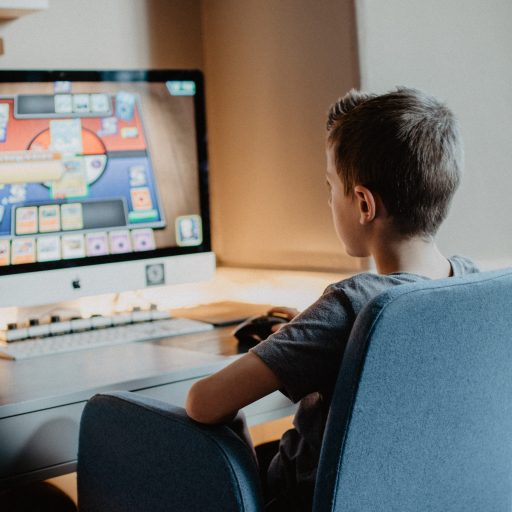


Is Coolmath a learning game? Yes, partly. Coolmath Games is best understood as a learning-oriented entertainment platform: its puzzles, strategy titles, physics challenges, and number games can build logic, spatial reasoning, planning, and persistence, but it does not replace a structured math curriculum.
A child playing 2048 may be practicing number patterns; someone guiding sugar through a maze in Sugar, Sugar may be testing physics and spatial ideas. They probably won’t announce, “I’m developing executive function” — they’ll say, “Wait, I can solve this!”
That distinction matters. Coolmath is excellent for engaging brain breaks, informal practice, and problem-solving conversations, while platforms such as Coolmath.com, Prodigy Math, or Khan Academy Kids are better suited to explicit lessons and progress tracking.
Our recommendation is simple: use Coolmath Games as a supplement, not a substitute. Choose titles intentionally, ask children to explain their strategies, and keep an eye on screen time, ads, privacy, and school rules.
Key Takeaways
- Coolmath Games is learning-oriented edutainment, not a complete educational curriculum.
- Puzzle, physics, strategy, typing, and number games can support logic, planning, spatial reasoning, persistence, and digital fluency.
- Not every Coolmath game teaches math; some are primarily reflex, arcade, or casual entertainment.
- Adult discussion boosts learning: ask what strategy worked, why a move failed, and how the child would solve the problem differently.
- Coolmath does not replace structured instruction, teacher assessment, tutoring, or standards-aligned math practice.
- Parents and teachers should review age suitability, privacy, advertisements, multiplayer features, screen time, and school policies.
- Best verdict: Coolmath Games earns 7/10 for informal learning and 4/10 formal academic instruction.
Table of Contents
- ⚡️ Quick Tips and Facts: Is Coolmath a Learning Game?
- What Kids Can Learn While Playing
- Educational Benefits at a Glance
- Potential Drawbacks Parents Should Know
- 🧭 What Is Coolmath Games? Background, History, and Purpose
- How Coolmath Games Evolved
- Coolmath Versus Coolmath4Kids and Coolmath Coding
- Who Uses the Platform?
- 🎓 Is Coolmath a Learning Game or an Educational Games Website?
- The Difference Between Learning Through Play and Formal Instruction
- Are Coolmath Games Designed for Education?
- What Research Says About Game-Based Learning
- 🧠 Skills Children Can Build on Coolmath Games
- Math Skills and Numerical Reasoning
- Logic, Strategy, and Problem-Solving
- Spatial Reasoning and Visual Thinking
- Memory, Attention, and Executive Function
- Typing, Reading, and Digital Literacy
- Planning, Persistence, and Growth Mindset
- 🏆 The Best Coolmath Games for Learning
- 1. Math and Number Games
- 2. Logic and Puzzle Games
- 3. Strategy and Resource-Management Games
- 4. Physics and Engineering Games
- 5. Word, Typing, and Language Games
- 6. Geography, Trivia, and General Knowledge Games
- 7. Financial Literacy and Money-Management Games
- 8. Clicker, Idle, and Incremental Games
- 9. Multiplayer and Player-versus-Player Games
- 10. New, Featured, and Popular Coolmath Games
- 👾 Iconic Coolmath Games Characters and Franchises
- Fireboy and Watergirl
- Run, Papa’s Games, and Other Familiar Favorites
- Why Recognizable Characters Keep Kids Engaged
- ✅ How Coolmath Games Supports Learning by Design
- Safe-by-Design Features and Moderation
- Game Guidelines and Quality Standards
- The Coolmath Games Promise: What the Platform Aims to Provide
- How Independent Developers Publish Games
- 👨 👩 👧 Is Coolmath Games Safe for Kids?
- Age Ratings and Appropriate Game Selection
- Ads, External Links, and In-Game Distractions
- Privacy, Cookies, and Data Collection
- Violence, Competition, and Chat Concerns
- Accessibility and Inclusive Play Features
- ⏱️ Screen Time and Healthy Coolmath Gaming Habits
- How Long Should Children Play?
- Creating a Family Gaming Routine
- Signs a Child Needs a Break
- Turning Gameplay Into a Learning Conversation
- 🏫 Can Teachers Use Coolmath Games in the Classroom?
- Classroom-Friendly Game Ideas
- Connecting Games to Curriculum Standards
- Learning Objectives, Reflection, and Assessment
- School Network and Device Considerations
- 📱 Devices, Browsers, and Accessibility
- Playing Coolmath Games on Computers and Chromebooks
- Mobile and Tablet Compatibility
- HTML5, Flash, and Modern Browser Support
- Troubleshooting Loading and Performance Problems
- ⚖️ Coolmath Games Compared With Other Educational Platforms
- Coolmath Games vs. Prodigy Math
- Coolmath Games vs. Khan Academy Kids
- Coolmath Games vs. ABCya
- Coolmath Games vs. PBS KIDS Games
- Coolmath Games vs. Minecraft Education
- Which Platform Is Best for Your Child?
- 🔍 Coolmath Games Review: Pros, Cons, and Our Verdict
- What We Like About Coolmath Games
- Where Coolmath Games Falls Short
- Who Benefits Most From the Platform?
- Who Should Choose a More Structured Learning App?
- 💡 How to Choose Educational Coolmath Games
- A Parent’s Game-Selection Checklist
- A Teacher’s Classroom Checklist
- Matching Games to Age, Ability, and Learning Goals
- 🎮 Tips for Getting More Learning From Coolmath Games
- Ask Questions Before, During, and After Play
- Encourage Strategy Instead of Speed
- Use Game Failure as a Problem-Solving Tool
- Pair Digital Games With Offline Activities
- 📚 Conclusion
- 🔗 Recommended Links
- ❓ FAQ: Is Coolmath a Learning Game?
- Is Coolmath Games actually educational?
- What subjects do Coolmath Games teach?
- Is Coolmath Games appropriate for elementary school children?
- Can Coolmath Games improve math skills?
- Are Coolmath Games safe and free for kids?
- Can students play Coolmath Games at school?
- Does Coolmath Games work on Chromebooks and phones?
- What are the best Coolmath Games for learning?
- Is Coolmath Games better than a dedicated math app?
- 📖 Reference Links
Quick Tips and Facts: Is Coolmath a Learning Game? ⚡️
If you’ve ever wondered, “Is Coolmath a learning game, or just a clever excuse to play games during study hall?”, the fairest answer is: it can be both.
Coolmath Games is primarily a browser-based entertainment platform, but many titles exercise logic, strategy, spatial reasoning, planning, pattern recognition, reaction time, and numerical thinking. Its own About Us page describes the philosophy as “Fun + Learning = A Coolmath Game,” while the homepage presents games such as Papa’s Pizzeria, OvO, Sugar, Sugar, 2048, and Tiny Fishing as quick-play challenges rather than formal lessons.
For a broader look at playful learning, see our Learning Game guide and browse Learning Game™’s Educational Games collection.
The short answer
| Question | Best answer |
|---|---|
| Is Coolmath Games an educational platform? | Learning-oriented, but not a conventional curriculum platform |
| Does every game teach math? | ❌ No |
| Can games build useful skills? | ✅ Yes, especially logic, planning, and problem-solving |
| Does it replace a math lesson or tutor? | ❌ No |
| Is it useful as a learning break? | ✅ Often, when the game is chosen intentionally |
| Is it appropriate for every child and every classroom? | ❌ No; supervision and school policy still matter |
Educational value rating
Because Coolmath Games is a large library rather than one single game, we rate the platform as a whole. These scores measure its usefulness for informal learning, not its ability to replace classroom instruction.
| Category | Rating out of 10 | Why |
|---|---|---|
| Engagement | 9/10 | Fast feedback, short rounds, goals, progression, and familiar characters keep players involved |
| Logic and reasoning | 8/10 | Many puzzle and strategy games require planning and deduction |
| Formal math instruction | 4/10 | Some titles use numbers, but most do not teach a structured sequence of concepts |
| Problem-solving | 8/10 | Players test ideas, adjust strategies, and learn from failure |
| Variety | 10/10 | The library includes puzzles, physics, typing, trivia, strategy, and arcade-style games |
| Accessibility | 7/10 | Browser access is convenient, though ads, controls, and device compatibility vary |
| Classroom usefulness | 6/10 | Strong for enrichment or brain breaks; weaker as a standalone lesson |
| Child safety | 7/10 | The platform describes content safeguards, but adults should still review games and settings |
| Progress tracking | 4/10 | It is not built around teacher dashboards, grades, or formal learning reports |
| Overall learning value | 7/10 | Excellent informal practice for thinking skills, with limits for curriculum-based learning |
What kids can learn while playing
A child may not say, “I’m developing spatial reasoning,” while guiding sugar through a maze. They’re more likely to shout, “Wait, don’t spill it!” Yet the thinking is real.
Coolmath games can encourage:
- Planning: deciding what to do before acting
- Sequencing: completing tasks in the right order
- Cause-and-effect reasoning: predicting what happens after a move
- Spatial awareness: rotating, positioning, and navigating objects
- Pattern recognition: spotting repeated shapes, numbers, or behaviors
- Resource management: spending points, upgrading tools, or balancing time
- Persistence: trying again after an unsuccessful attempt
- Attention control: monitoring several visual details at once
- Digital fluency: using menus, controls, feedback, and browser interfaces
The American Academy of Pediatrics recommends that families focus not only on screen duration but also on content, context, and whether media supports healthy development. That distinction matters here: ten focused minutes solving a puzzle is not the same experience as ten minutes of passive scrolling.
Potential drawbacks parents should know
Coolmath Games has genuine benefits, but “contains thinking” does not automatically mean “educational.”
Watch for:
- Entertainment-first design: Most games do not explain a concept or provide a lesson.
- Uneven learning value: Sugar, Sugar and 2048 invite reasoning; a reflex-based platformer may mainly exercise timing and coordination.
- Unclear transfer: Being good at a game does not necessarily improve a child’s fractions, algebra, or reading comprehension.
- Distraction risk: A five-minute brain break can become a forty-minute “one more level” expedition.
- Ads and external content: Families should review the current website experience and use school-approved access.
- Limited assessment: Teachers generally cannot use Coolmath alone to measure what a student has mastered.
- Frustration: Fast games and repeated failure can discourage younger or easily overwhelmed players.
So, is Coolmath educational? Some games are educationaly useful; the platform itself is better described as learning-oriented edutainment. That distinction will become clearer as we examine what Coolmath actually offers.
What Kids Can Learn While Playing 🧠
Learning through play versus being taught
There are two different meanings of “learning game”:
- A game that teaches a specific academic objective, such as multiplying two-digit numbers or identifying equivalent fractions.
- A game that exercises transferable thinking skills, such as planning, reasoning, memory, or spatial visualization.
Coolmath Games does more of the second.
The National Association for the Education of Young Children explains that technology can support learning when it is used intentionally and paired with active adult involvement. That is exactly where parents and teachers can add value: ask children to explain why a move worked, not merely celebrate that they won.
Educational benefits at a glance
| Game or category | Primary skills | Academic connection | Strength of connection |
|---|---|---|---|
| Sugar, Sugar | Spatial reasoning, prediction, experimentation | Physics, geometry, engineering | High |
| 2048 | Number relationships, strategy, pattern recognition | Numeracy and mental math | Medium-high |
| Papa’s Pizzeria | Sequencing, time management, multitasking | Operations, measurement, organization | Medium |
| Tiny Fishing | Goal-setting, upgrades, resource allocation | Basic economic reasoning | Medium |
| Snake 3D | Spatial planning, working memory | Geometry and visualization | Medium-high |
| Fireboy and Watergirl | Cooperation, sequencing, spatial reasoning | Logic and problem-solving | High |
| Run 3 | Timing, mental rotation, visual tracking | Spatial cognition | Medium |
| Clicker Heroes | Incremental progress, resource decisions | Basic optimization | Low-medium |
| Typing games | Keyboard fluency, accuracy, speed | Digital literacy | High |
| Trivia games | Recall, reading, general knowledge | Content knowledge | Variable |
The child’s perspective: “It doesn’t feel like school”
One reason these games work as informal learning tools is that they lower the emotional temperature around mistakes. A child who groans at a worksheet may happily attempt the same kind of reasoning repeatedly when it appears inside a game.
In our Learning Game™ testing conversations, children often described a good game as one that:
- Gives an immediate response
- Lets them retry quickly
- Makes progress visible
- Becomes harder gradually
- Does not require a long explanation before play begins
That feedback echoes the experience described in the featured video, where Coolmath Games is remembered as a “sanctuary” from repetitive assignments and diagnostic tests. The speaker contrasts it with tools such as i-Ready, XtraMath, and IXL, calling many educational programs “high garbage” from a student’s perspective.
That criticism is emotionally understandable, but it needs a careful qualifier: a student’s enjoyment is evidence of engagement, not proof of academic effectiveness. A game can feel more humane than a worksheet and still need adult guidance to connect it to curriculum goals.
Parents see a different game
Parents frequently ask a practical question: “What exactly is my child practicing?”
Here’s a useful translation guide:
| What the child says | What may be happening cognitively |
|---|---|
| “I’m trying a different route.” | Comparing strategies and planning |
| “That didn’t work.” | Using feedback and revising a hypothesis |
| “I need more coins first.” | Delaying gratification and managing resources |
| “I know what comes next.” | Recognizing patterns |
| “Let me show you.” | Explaining a process and verbalizing reasoning |
| “I can do it faster now.” | Building procedural fluency and confidence |
The key is to listen for explanation, not just completion. “I won” is less informative than “I moved the block first because it opened two paths.”
Educational Benefits at a Glance 📊
Cognitive skills Coolmath can support
The [American Psychological Association](https://www.apa.org/topics/video-games/ 긍정) has reported that research on video games is mixed and depends on game type, play context, and outcome measured. That is a helpful warning against sweeping claims. Coolmath may support particular skills, but benefits should be matched to the game rather than assigned to the entire brand.
Logic and deduction
Games such as Bob the Rober To Go, Block the Pig, and various escape-room-style puzzles ask players to:
- Observe the environment.
- Identify constraints.
- Predict consequences.
- Select a move.
- Check the result.
- Revise the plan.
That six-step loop resembles the reasoning process used in science and mathematics. It is not the same as solving a textbook proof, but it is valuable practice in hypothesis testing.
Spatial reasoning
Games involving paths, rotating objects, mazes, and physics can help children think about:
- Direction
- Distance
- Angles
- Balance
- Movement
- Oclusion
- Object relationships
Sugar, Sugar is a particularly clear example. Players draw paths to guide particles into containers. The visual environment acts like a small laboratory: make a prediction, draw a line, observe the result, and modify the design.
Strategic thinking
Checkers, tower-defense games, and upgrade-based titles require trade-offs. A player may need to decide whether to:
- Save resources for a powerful upgrade
- Spend now for immediate progress
- Defend one route or several
- Move quickly or gather more information
- Take a safe option or risk a larger reward
Those choices can open a conversation about oportunity cost, a concept that appears in economics and financial literacy.
Focus and working memory
Platforming and timing games require players to hold rules in mind while responding to changing conditions. However, we should avoid claiming that every action game automatically improves attention in school. Transfer is complicated. A child may become highly attentive to a game without becoming more attentive to a reading assignment.
Skills that need adult guidance
Some benefits are more likely when an adult helps a child reflect:
- Problem-solving: Ask what changed between attempts.
- Math reasoning: Ask children to estimate, compare, or calculate.
- Financial literacy: Discuss saving, spending, upgrades, and trade-offs.
- Communication: Have siblings explain strategies to each other.
- Digital citizenship: Discuss respectful multiplayer behavior and privacy.
For family support, Learning Game™ also recommends our Digital Citizenship resources.
Potential Drawbacks Parents Should Know ⚠️
Not every game is a math game
The name “Coolmath” can create a misleading expectation. The library includes many games that use little or no conventional mathematics.
| Game type | Likely learning focus | What it may not provide |
|---|---|---|
| Puzzle | Logic and reasoning | Direct instruction |
| Platformer | Timing and coordination | Written explanation |
| Idle game | Progression and resource choices | Deep strategic thinking |
| Trivia | Recall and reading | Guaranteed accuracy |
| Simulation | Sequencing and management | Real-world transfer |
| Multiplayer | Competition and communication | Consistent educational goals |
The Coolmath Games About Us page itself makes a similar distinction: the site emphasizes logic, strategy, and decision-making, not that every title teaches arithmetic.
The “educational” label can hide weak evidence
Marketing language such as “brain training” or “mental workout” may sound scientific, but families should ask:
- What exact skill is being practiced?
- Is the skill measured outside the game?
- Is there evidence of transfer to schoolwork?
- Is the game appropriate for the child’s age?
- Does the child understand the underlying idea?
The National Academies emphasizes that digital media outcomes depend on design and use. A game with clear feedback and meaningful decisions is more promising than one built mainly around repetitive taps.
Ads, interruptions, and online distractions
The App Store listing for Coolmath Games: Fun Mini Games identifies the app as requiring an internet connection and discloses potential tracking and diagnostic data categories. Families should read the current privacy information rather than relying on old reviews.
✅ Better practice: Use teacher-approved links, family settings, and age-appropriate games.
❌ Avoid: Assuming that “free” means distraction-free, data-free, or automatically suitable for every child.
What Is Coolmath Games? Background, History, and Purpose 🧭

How Coolmath Games evolved
Coolmath began as a math-focused website and expanded into a broad family of educational and entertainment properties. The official Coolmath Games About Us page describes the brand as a place for “fun + learning games,” while the wider Coolmath ecosystem includes:
- Coolmath Games: Browser-based logic, strategy, puzzle, arcade, and casual games
- Coolmath.com: Math explanations, tools, and activities
- Coolmath4Kids: Math-oriented content for younger learners
- CountForward: Financial literacy activities involving budgeting, taxes, and investing
The brand’s history also includes the shift away from Adobe Flash after Flash reached its end of life on December 31, 2020, as documented by Adobe. Coolmath Games survived that transition by moving toward modern web technologies and HTML5-compatible games.
A familiar school experience
The platform became strongly associated with school computer labs and student free time. The featured video frames Coolmath Games as an escape from repetitive assignments and software such as i-Ready, XtraMath, and IXL.
That cultural memory explains why students sometimes describe the site less like a textbook and more like a digital clubhouse. Titles such as Run 3, Papa’s Pizzeria, and Fireboy and Watergirl felt accessible, quick, and distinct from large commercial console games.
But nostalgia can blur the question. A popular site is not automatically a learning platform, just as a difficult worksheet is not automatically effective teaching. We need to inspect the games themselves.
Coolmath Games versus Coolmath4Kids and Coolmath
| Brand | Main audience | Main purpose | Best fit |
|---|---|---|---|
| Coolmath Games | Broad audience, including older children and teens | Games with logic, strategy, and casual play | Informal practice and enrichment |
| Coolmath4Kids | Younger children | Math games and activities | Early math engagement |
| Coolmath.com | Older children, teens, and adults | Math lessons, tools, and explanations | Direct math support |
| CountForward | Students and families | Budgeting and financial literacy | Real-life money concepts |
Our recommendation: If you want free-play thinking challenges, choose Coolmath Games. If you want explicit instruction, start with Coolmath.com or Coolmath4Kids.
Is Coolmath a Learning Game or an Educational Games Website? 🎓
The most accurate definition
Coolmath Games is best described as a learning-oriented game website or edutainment platform.
It qualifies as learning-oriented because many games ask players to:
- Reason through constraints
- Make decisions
- Plan moves
- Interpret feedback
- Solve spatial or numerical problems
- Persist through increasingly difficult challenges
It is not a formal educational platform because it generally does not provide:
- Grade-level curriculum maps
- Teacher lesson plans for every game
- Standards-aligned assessments
- Individual learning paths
- Mastery dashboards
- Verified progress reports
This distinction resolves the apparent conflict between the homepage and the app listing. The website’s own description emphasizes “fun + learning,” while the App Store calls the app a logic and math puzzle experience. Both are reasonable, but neither makes Coolmath equivalent to a structured math program.
What the App Store says
The Apple App Store listing markets the app with the slogan “where logic + strategy = fun + learning!” It describes categories such as:
- Fun physics
- Path planning
- Quick reaction
- Drawing
- Match 3
- Math puzzles
The listing also reports hundreds of games and says that new games are added regularly. User reviews praise variety, replay value, and increasing difficulty, while complaints include the internet requirement and requests for more titles or balance improvements.
User reviews are useful for understanding experience, but they are not controlled educational studies. A reviewer saying a child plays every day tells us the app is engaging. It does not prove improved fractions, algebra, or test performance.
What Coolmath Games itself says
Coolmath Games says its games should be “enriching, not empty; meaningful, not mindless.” It also states that even games involving running and jumping require thought.
That philosophy is persuasive as a design goal. Still, the site does not publish a numerical learning-effectiveness score or a curriculum alignment system. Its “secret, patented formula” is described in broad terms around fun, logic, strategy, and decision-making rather than publicly measurable academic outcomes.
What educators should call it
For a lesson plan, use language such as:
- “Students will practice strategic decision-making.”
- “Students will explain how they tested and revised a solution.”
- “Students will identify patterns in a game environment.”
- “Students will compare resource-management strategies.”
Avoid promising:
- “Students will master multiplication.”
- “Students will improve IQ.”
- “Students will automatically transfer game skills to reading or algebra.”
That wording is more accurate, more defensible, and more useful.
The Difference Between Learning Through Play and Formal Instruction 📝
Informal learning
Informal learning happens when children acquire understanding through activity, exploration, conversation, and feedback. Coolmath is strongest here.
Example:
- A child notices that a direct route fails.
- They identify an obstacle.
- They test a curved route.
- They observe the result.
- They explain the change.
That is informal experimentation.
Formal instruction
Formal instruction usually includes:
- A clearly stated objective
- Demonstration or explanation
- Guided practice
- Independent practice
- Feedback
- Assessment
- A planned progression
A Coolmath game may include some of these pieces, especially practice and feedback, but rarely all of them. That is why we recommend pairing games with Educational Apps or teacher-created activities when a child needs targeted academic support.
What Research Says About Game-Based Learning 🔬
Research supports a careful yes, not a magical yes.
The Institute of Education Sciences evaluates evidence for educational interventions, and the Edutopia research overview summarizes how game-based learning can promote engagement, feedback, and active problem-solving when aligned with instructional goals.
The strongest conditions tend to include:
- A clear learning objective
- Immediate and understandable feedback
- Increasing challenge
- Opportunities to retry
- Reflection or discussion
- A connection to real-world or academic concepts
Coolmath provides several of these conditions, especially feedback and retrying. It usually leaves the objective-setting and reflection to the adult.
Skills Children Can Build on Coolmath Games 🎯
Math skills and numerical reasoning
Not every Coolmath game teaches arithmetic, but certain titles make numbers meaningful.
2048
Players combine matching numbers and plan moves across a grid. It can support:
- Doubling patterns
- Place-value awareness
- Exponential growth
- Strategic sequencing
- Mental estimation
A parent can ask:
- “What number will two 16 tiles make?”
- “Why did you place that tile in the corner?”
- “What happens if the largest tile becomes trapped?”
- “Can you describe the pattern without looking at the numbers?”
The game does not replace multiplication instruction, but it can make number relationships visible.
Papa’s Pizzeria
At first glance, pizza management looks like pure silliness. Yet it can involve:
- Sequencing orders
- Comparing cooking times
- Dividing attention
- Reading customer feedback
- Managing multiple stages of a task
It is closer to operational planning than mathematics, but that still has educational value.
Tiny Fishing
The game’s upgrade system invites discussion of:
- Saving versus spending
- Delayed rewards
- Incremental improvement
- Efficiency
- Goal-setting
For older learners, this connects naturally with CountForward and other financial literacy resources, though the fictional economy should not be mistaken for a complete financial lesson.
Logic, strategy, and problem-solving
Games such as Block the Pig, IQ Ball, and Bob the Rober To Go typically require players to understand constraints and anticipate outcomes.
A strong problem-solving routine looks like this:
- Describe the goal.
- List what can move or change.
- Identify restrictions.
- Predict a solution.
- Try the solution.
- Record what happened.
- Revise the plan.
- Explain the final strategy.
We encourage children to narrate their thinking aloud. It may sound messy at first, but that mess is often where the learning lives.
Spatial reasoning and visual thinking
Snake 3D, maze games, platformers, and physics puzzles require players to imagine movement through space.
Potential skills include:
- Mental rotation
- Directional vocabulary
- Route comparison
- Visual scanning
- Object permanence
- Relative position
Try this prompt: “Before you move, point to the route you think will work and explain why.” The pause turns reflex play into prediction.
Memory, attention, and executive function
Players often need to remember:
- A game rule
- The location of an obstacle
- The timing of a moving object
- A previous failed route
- A sequence of actions
These are related to executive functions such as working memory and cognitive flexibility. The Harvard Center on the Developing Child explains that executive function includes planning, focus, self-control, and flexible thinking.
Again, avoid overclaiming. A game can exercise these processes without guaranteeing a broad improvement in every setting.
Typing, reading, and digital literacy
Typing games can provide repeated practice with:
- Keyboard location
- Accuracy
- Hand-eye coordination
- Spelling patterns
- Speed
- Digital confidence
Typing practice becomes more effective when children track accuracy as well as speed. A fast typist who creates a parade of errors has not quite won the parade.
Planning, persistence, and growth mindset
A well-designed puzzle makes failure informative. The player learns:
- Which route is blocked
- Which resource wasted
- Which timing was too early
- Which assumption was incorrect
That supports a practical form of growth mindset: “My first strategy failed” rather than “I am bad at this.”
Parents can reinforce this by asking, “What will you change next time?” instead of “Why did you mess up?”
The Best Coolmath Games for Learning 🏆
1. Math and Number Games
| Game | Learning opportunity | Best conversation prompt |
|---|---|---|
| 2048 | Number patterns and strategic combination | “What move keeps the board open?” |
| Color by Numbers: Pixel House | Number matching and pattern recognition | “How do the numbers map to colors?” |
| Lemonade Stand-style games | Pricing, budgeting, and decision-making | “How did you choose the price?” |
| Number puzzles | Calculation and logical deduction | “Which information is essential?” |
Best for: Children who enjoy visible progress and numerical challenges.
Caution: A number on the screen is not automatically a math lesson. Ask children to explain the relationship behind the number.
2. Logic and Puzzle Games
| Game | Main skill | Difficulty profile |
|---|---|---|
| IQ Ball | Path planning and spatial reasoning | Gradual puzzle challenge |
| Block the Pig | Prediction and strategic placement | Requires forward planning |
| Bob the Rober To Go | Observation and sequencing | Multi-step reasoning |
| Fireboy and Watergirl | Coordination and cooperative logic | Strong for pairs |
A child may begin with trial and error, then move toward deliberate planning. That shift is the educational sweet spot.
3. Strategy and Resource-Management Games
Clicker Heroes, Toy Defense, and management titles can encourage players to consider:
- What to upgrade
- When to save
- Which goal matters most
- How short-term actions affect long-term progress
These games are useful for discussing optimization, but some may reward repetitive clicking more than deep reasoning. Choose carefully.
4. Physics and Engineering Games
Sugar, Sugar stands out because players construct a solution rather than merely select one.
A simple home activity:
- Play one level.
- Pause before drawing.
- Predict where the sugar will travel.
- Draw the path.
- Observe where the prediction failed.
- Change one feature at a time.
- Explain the final design.
This connects naturally to engineering habits: define, test, revise, and communicate.
5. Word, Typing, and Language Games
Typing titles can be useful for children who need keyboard practice, while word games may reinforce:
- Vocabulary
- Spelling
- Letter patterns
- Reading speed
- Word recognition
Check the specific game before assigning it. Some are better for entertainment than literacy.
6. Geography, Trivia, and General Knowledge Games
Trivia can create curiosity, but accuracy varies by title and update. Encourage children to verify surprising facts through trusted sources such as Britannica or National Geographic Kids.
A good routine is:
- Write down one surprising answer.
- Look it up.
- Explain why the answer is correct.
- Add one related fact.
That turns a trivia round into a mini research task.
7. Financial Literacy and Money-Management Games
Coolmath’s broader ecosystem includes financial-literacy content through CountForward. These activities can introduce:
- Budgeting
- Saving
- Investing
- Taxes
- Trade-offs
For more structured money learning, pair them with Money as You Grow from the Consumer Financial Protection Bureau.
8. Clicker, Idle, and Incremental Games
Idle games can teach:
- Incremental progress
- Automation
- Upgrade choices
- Opportunity cost
- Patience
But they also carry a risk: repetitive reward loops can keep children playing without demanding much thought. Use a simple test:
If the child cannot explain a meaningful decision they made, the game may be functioning mainly as entertainment.
9. Multiplayer and Player-versus-Player Games
Multiplayer can support:
- Turn-taking
- Cooperation
- Strategic communication
- Sportsmanship
Coolmath says its multiplayer features use restricted communication, approved phrases, emojis, and randomly generated usernames. Even so, adults should review the current experience and explain that no game is a substitute for basic online safety.
10. New, Featured, and Popular Coolmath Games
Popular titles often include Run 3, Papa’s Pizzeria, Fireboy and Watergirl, Moto X3M, OvO, Tiny Fishing, and Snake 3D.
Popularity is useful for motivation, but it is not a learning rating. A familiar title may get a reluctant child started, while a quieter puzzle may produce more sustained reasoning. We recommend choosing by learning goal first, popularity second.
Iconic Coolmath Games Characters and Franchises 👾
Fireboy and Watergirl
The Fireboy and Watergirl series is a strong example of cooperative problem-solving. Each character has different abilities and limitations, so players must:
- Coordinate movement
- Divide responsibilities
- Communicate timing
- Recognize environmental constraints
- Plan multiple actions
It is particularly effective for siblings or classmates because one player’s success often depends on the other’s action.
Run, Papa’s Games, and other familiar favorites
- Run 3: Timing, route selection, and spatial awareness
- Papa’s Pizzeria: Sequencing, multitasking, and customer-feedback loops
- OvO: Precision, timing, and route planning
- Moto X3M: Risk, timing, and motor coordination
- Tiny Fishing: Goal-setting and resource upgrades
The Coolmath Games homepage presents these games mainly through short descriptions. Those descriptions are valuable clues, but they do not amount to formal learning claims.
Why recognizable characters keep children engaged
Familiar games reduce the startup cost. Children already understand the tone, controls, and basic goal, so they can spend more time solving the actual challenge.
One child told us that returning to a familiar game felt like “visiting a place where I already know the rules.” That comfort can support confidence, but it can also encourage automatic play. Ask a returning player to identify what is harder now or what strategy has changed.
How Coolmath Games Supports Learning by Design ✅
Safe-by-design features and moderation
Coolmath says it aims to provide content that is appropriate for all ages and free from adult content and “mindless violence.” It also describes advertising controls intended to block inappropriate advertisements.
Treat those statements as platform policies, not a guarantee that every moment is perfect. Websites change, third-party advertising changes, and children vary widely in what they find suitable.
Game guidelines and quality standards
Coolmath says licensed games are selected for:
- Logic
- Strategy
- Decision-making
- Meaningful interaction
- Technical quality
- Enjoyment
The company also describes working with developers to improve games and fix bugs. Its developer-facing message calls Coolmath Games “The Ultimate Destination To Publish Your Games,” promising access to millions of web players, monetization, brand-building, and control of game intellectual property.
That publishing model explains the platform’s variety: Coolmath is a curated game destination, not a single internally designed curriculum.
The Coolmath Games promise
The brand’s promise can be summarized as:
- Learning should feel enjoyable.
- Games should reward thought.
- Content should be wholesome.
- Players should have meaningful choices.
- Games should offer more than empty repetition.
We like the ambition. The practical question remains: Does a particular game live up to it? That is why parents should evaluate titles individually.
How independent developers publish games
Independent developers contribute many Coolmath titles, including games associated with studios such as Flipline Studios, Dedra Games, Playsaurus, PlayCalm, and Bart Bonte.
For developers, publication can provide:
- Distribution
- Audience access
- Monetization opportunities
- Brand exposure
- Technical collaboration
For families, it means game quality, controls, tone, and learning potential may differ significantly from title to title.
Is Coolmath Games Safe for Kids? 👨 👩 👧
Age ratings and appropriate game selection
The App Store listing for Coolmath Games: Fun Mini Games gives the app a 9+ age rating and mentions infrequent cartoon or fantasy violence. The website presents itself as suitable for broad audiences, but families should still check individual titles.
Use this selection checklist:
- ✅ Read the game description.
- ✅ Preview the opening screen.
- ✅ Check controls and chat features.
- ✅ Consider reading level.
- ✅ Ask whether the child can stop easily.
- ❌ Do not assume the word “math” guarantees suitability.
- ❌ Do not use unapproved mirror sites to bypass school filters.
Ads, external links, and in-game distractions
Ads can interrupt concentration or lead children away from the intended activity. Use:
- School-managed devices where appropriate
- Browser safety controls
- Family supervision
- Full-screen settings only when permitted
- Clear rules about clicking advertisements
Privacy, cookies, and data collection
Apple’s listing discloses potential tracking involving identifiers and usage data, along with data that may be collected for diagnostics. Review the current Coolmath Games Privacy Policy and Apple’s privacy labels before allowing regular use.
For younger children, explain:
- Never enter a full name.
- Never share an address or school.
- Never reuse a personal password.
- Ask an adult before following an external link.
Violence, competition, and chat concerns
Coolmath describes restricted multiplayer communication using approved phrases and emojis rather than unrestricted typing. That is a sensible safety measure, but children should still learn:
- How to report a problem
- How to leave an uncomfortable game
- Why usernames should not reveal identity
- Why “friendly competition” still requires respect
Accessibility and inclusive play features
Accessibility varies by game. Check for:
- Keyboard-only controls
- Clear contrast
- Simple instructions
- Adjustable audio
- Reduced speed or difficulty
- Alternatives to rapid clicking
- Captions or text instructions
A child with motor, visual, auditory, or attention needs may enjoy one Coolmath title and struggle with another. The game’s design matters more than the brand name.
Screen Time and Healthy Coolmath Gaming Habits ⏱️
How long should children play?
The American Academy of Pediatrics Family Media Plan recommends creating a family plan that considers sleep, physical activity, schoolwork, relationships, and the child’s developmental needs.
Rather than relying one universal number, set boundaries around:
- When play can happen
- Where devices can be used
- What must happen first
- How breaks work
- What happens when time ends
Creating a family gaming routine
Try this five-step routine:
- Choose the goal: puzzle practice, typing, relaxation, or cooperative play.
- Choose the game: select a title that matches the goal.
- Set a stopping point: use a level, round, or timer.
- Reflect briefly: ask what strategy worked.
- Transition physically: stand, stretch, drink water, or move outdoors.
The stopping point matters. “When you’re done” is wonderfully vague and almost never works.
Signs a child needs a break
Look for:
- Irritability after play
- Difficulty stopping
- Skipping sleep or meals
- Neglecting responsibilities
- Physical discomfort
- Playing only one type of game
- Anger when a level goes badly
A break is not a punishment. It is a reset button for the human operating system.
Turning gameplay into a learning conversation
Ask:
- What was the goal?
- What was your first idea?
- Why did it fail?
- What changed after you tried again?
- Could you solve it another way?
- What skill did the game require?
- Where might that skill be useful outside the game?
These questions transform “I played a game” into I tested a strategy and can explain it.
Can Teachers Use Coolmath Games in the Classroom? 🏫
Classroom-friendly game ideas
Teachers can use selected games for:
- Early-finisher activities
- Logic stations
- Brain breaks
- Cooperative challenges
- Digital citizenship discussions
- Strategy journals
- Math enrichment
- Keyboard practice
Use school-approved access only. If a district blocks Coolmath, students should not be encouraged to find mirror sites or bypass filters.
Connecting games to curriculum standards
A teacher can build a simple alignment table:
| Learning goal | Possible game connection | Student evidence |
|---|---|---|
| Explain a strategy | Block the Pig | Written oral explanation |
| Identify patterns | 2048 | Pattern description |
| Use spatial vocabulary | Snake 3D | Route diagram |
| Compare resource choices | Tiny Fishing | Upgrade justification |
| Revise a solution | Sugar, Sugar | Before-and-after design |
| Practice keyboard accuracy | Typing game | Accuracy log |
The game is not the standard. The student’s explanation and evidence are the bridge.
Learning objectives, reflection, and assessment
A 15-minute classroom activity could look like this:
- Objective: Students will compare two strategies.
- Warm-up: Teacher demonstrates one game mechanic.
- Play: Students attempt a level in pairs.
- Pause: Students record one failed strategy.
- Retry: Students change one variable.
- Share: Partners explain what improved.
- Exit ticket: “My strategy changed because…”
That structure makes the game serve instruction rather than swallow it.
School network and device considerations
Schools may block Coolmath because of:
- Distraction concerns
- Bandwidth
- Advertising
- Privacy policies
- Classroom management
- Unknown third-party content
- State or district filtering requirements
A block does not prove that Coolmath is dangerous. It usually reflects institutional risk management. Teachers should request approval through normal channels.
Devices, Browsers, and Accessibility 📱
Playing Coolmath Games on computers and Chromebooks
Modern HTML5 games generally work best in updated browsers such as Chrome, Safari, Firefox, or Edge. Results vary by title and school network.
Check:
- Browser updates
- JavaScript settings
- Pop-up restrictions
- Extension conflicts
- Device memory
- School filtering
- Keyboard and mouse access
Mobile and tablet compatibility
The App Store listing identifies compatibility with iPhone, iPad, iPod touch, Mac, and Apple Vision devices, with operating-system requirements that may change over time.
The app requires internet access, and its current privacy label should be reviewed before installation.
HTML5, Flash, and modern browser support
Adobe ended Flash distribution and support on December 31, 2020. Coolmath’s continued availability reflects its transition to newer web technologies rather than continued dependence on Flash.
That transition was not merely technical housekeeping. It preserved access to a library many students considered part of their school experience.
Troubleshooting loading and performance problems
Try these steps:
- Refresh the page.
- Close unused tabs.
- Update the browser.
- Disable conflicting extensions temporarily.
- Test another approved browser.
- Check the school network.
- Restart the device.
- Try a different game.
- Use the official website rather than a mirror.
- Contact school IT if access is restricted.
Coolmath Games Compared With Other Educational Platforms ⚖️
Comparison table
| Platform | Main strength | Structured instruction | Game variety | Teacher tracking | Best use |
|---|---|---|---|---|---|
| Coolmath Games | Logic and casual problem-solving | Low | High | Low | Enrichment and brain breaks |
| Prodigy Math | Curriculum-linked math practice | Medium-high | Medium | High | Math practice |
| Khan Academy Kids | Early literacy and numeracy | High | Medium | Moderate | Younger learners |
| ABCya | Grade-level educational games | Medium | High | Low-moderate | Elementary practice |
| PBS KIDS Games | Safe, character-based learning | Medium | Medium | Low | Early learning |
| Minecraft Education | Creative projects and collaboration | High | High | Medium | Project-based learning |
| IXL | Standards-linked practice | High | Low | High | Targeted skill practice |
Coolmath Games versus Prodigy Math
Prodigy Math is designed around curriculum-linked math practice, while Coolmath is broader and more entertainment-led.
Choose Prodigy when you need:
- Math objectives
- Skill progression
- Practice reports
- Structured content
Choose Coolmath when you need:
- A logic challenge
- A short brain break
- Variety
- Less worksheet-like practice
Coolmath Games versus Khan Academy Kids
Khan Academy Kids focuses on early literacy, numeracy, social-emotional learning, and foundational skills. Coolmath tends to suit older children and broader casual play.
For a preschool or early-elementary child needing direct instruction, Khan Academy Kids is usually the stronger choice.
Coolmath Games versus ABCya
ABCya provides games organized by grade and subject. Coolmath generally offers a loser mixture of categories.
ABCya is better when a teacher or parent needs a specific school skill. Coolmath is better when the goal is open-ended logic and enjoyable challenge.
Coolmath Games versus PBS KIDS Games
PBS KIDS Games combines familiar characters with early learning, literacy, science, and math. It is often a better fit for younger children who benefit from trusted educational storytelling.
Coolmath offers more abstract puzzles and arcade-style challenges for older players.
Coolmath Games versus Minecraft Education
Minecraft Education supports project-based learning, collaboration, coding, and subject-area lessons. It requires more planning and teacher involvement.
Coolmath is lighter and easier to start. Minecraft Education has greater depth but also a steper instructional curve.
Which platform is best for your child?
| Need | Best starting point |
|---|---|
| Structured math practice | Prodigy Math, IXL, or Khan Academy |
| Early literacy and numeracy | Khan Academy Kids or PBS KIDS |
| Grade-organized educational games | ABCya |
| Logic and casual challenge | Coolmath Games |
| Coding and project collaboration | Minecraft Education |
| Financial literacy | CountForward and CFPB Money as You Grow |
Coolmath Games Review: Pros, Cons, and Our Verdict ⭐
What we like about Coolmath Games
✅ Highly engaging: Children often choose it voluntarily.
✅ Broad variety: Puzzle, physics, strategy, typing, trivia, and arcade games all appear in one place.
✅ Low barrier to entry: Many games begin quickly with simple instructions.
✅ Useful thinking practice: Logic, planning, spatial reasoning, and decision-making recur throughout the library.
✅ Strong cultural familiarity: Titles such as Run 3, Fireboy and Watergirl, and Papa’s Pizzeria have lasting appeal.
✅ Good for conversation: The games create natural opportunities to discuss strategy and persistence.
✅ Developer variety: Independent studios bring different mechanics and creative ideas.
Where Coolmath Games falls short
❌ Not a full curriculum: It rarely teaches academic concepts in a planned sequence.
❌ Uneven educational value: Some games are thoughtful; others are mostly reflex or repetition.
❌ Limited reporting: Parents and teachers receive little formal evidence of mastery.
❌ Internet dependence: The mobile listing requires an internet connection.
❌ Possible distraction: The platform is designed to keep play enjoyable, not necessarily brief.
❌ Privacy and advertising require attention: Families should review current policies and device settings.
❌ Transfer is not guaranteed: Game skill does not automatically become classroom skill.
Who benefits most from the platform?
Coolmath is especially useful for:
- Children who resist worksheet-style practice
- Learners who enjoy puzzles and experimentation
- Families seeking short, low-cost browser activities
- Teachers planning optional enrichment
- Siblings looking for cooperative challenges
- Older children developing strategic thinking
Who should choose a more structured learning app?
Choose a formal platform when your child needs:
- Remediation in a specific math skill
- Reading or phonics instruction
- Standards-aligned practice
- Teacher reports
- Mastery tracking
- Differentiated assignments
- Exam preparation
Our confident recommendation: Use Coolmath Games as a supplement, not a substitute. It is a terrific thinking playground, but a playground is not the whole school.
How to Choose Educational Coolmath Games 🔍
A parent’s game-selection checklist
Before approving a game, ask:
- What is the main goal?
- What thinking does the player need to do?
- Is the game appropriate for the child’s age?
- Can the child explain the rules?
- Does the difficulty increase sensibly?
- Are mistakes informative?
- Are ads or external links distracting?
- Can the child stop without a meltdown?
- Does the game require personal information?
- What question will I ask after play?
A teacher’s classroom checklist
Teachers should also consider:
- Does the game support today’s objective?
- Can students access it on approved devices?
- Is it usable with keyboard controls?
- Can pairs collaborate productively?
- Is there a reflection task?
- Is the content suitable for the entire class?
- Does the school permit the website?
- What evidence will students produce?
Matching games to age, ability, and learning goals
| Learner profile | Good starting category | Adult support |
|---|---|---|
| Younger child | Number matching, simple puzzles | Read instructions aloud |
| Visual thinker | Physics and path games | Encourage diagrams |
| Reluctant mathematician | Strategy or simulation | Connect choices to numbers |
| Advanced puzzle solver | Multi-step logic games | Ask for alternate solutions |
| Child with motor challenges | Slower puzzle games | Check controls and accessibility |
| English learner | Visual games with limited text | Preteach key vocabulary |
| Social learner | Cooperative games | Assign communication roles |
Tips for Getting More Learning From Coolmath Games 💡
Ask questions before, during, and after play
Before:
- What do you predict?
- What might make this difficult?
- What information should we watch?
During:
- Why did you choose that move?
- What changed?
- What are you remembering?
After:
- What worked?
- What failed?
- Could you solve it differently?
- Where else might this strategy help?
Encourage strategy instead of speed
Speed can be exciting, but thoughtful explanation is more educational. Ask children to slow down and identify the decision point that mattered most.
Use game failure as a problem-solving tool
A failed attempt is useful if the child can identify the cause. Encourage phrases such as:
- “I assumed the platform would stay still.”
- “I spent the resource too early.”
- “I forgot the rule about the red door.”
- “I need to test one change at a time.”
Pair digital games with offline activities
Try these extensions:
- Draw the game map on paper.
- Build a physical maze.
- Calculate upgrade costs.
- Write instructions for another player.
- Design a new level.
- Explain the strategy in a short paragraph.
- Compare two routes using distance or time.
These activities help transfer game thinking into communication, mathematics, and design.
Conclusion
We can now answer the headline clearly: Coolmath is a learning-oriented game platform, but it is not a complete educational curriculum.
Its strongest learning value comes from games that require:
- Logic
- Strategic planning
- Spatial reasoning
- Decision-making
- Pattern recognition
- Persistence
- Resource management
Its weakest point is formal instruction. Coolmath generally does not provide the structured lessons, standards alignment, mastery reports, or teacher dashboards found in platforms such as Prodigy Math, Khan Academy Kids, or IXL.
Our final rating is 7/10 for informal learning and 4/10 formal academic instruction. That may sound like a compromise, but it is actually a useful recommendation:
- ✅ Choose Coolmath Games for engaging puzzles, brain breaks, strategy practice, and playful problem-solving.
- ✅ Add adult discussion to turn gameplay into reflection.
- ✅ Pair it with structured resources when a child needs direct math, reading, or curriculum support.
- ❌ Do not assume every title teaches math.
- ❌ Do not bypass school filters or ignore privacy and screen-time rules.
The student in the featured video was right about one thing: Coolmath can feel like a genuine escape from repetitive schoolwork. The educator’s job is not to drain that fun away. It is to ask one more question after the level ends: “What did your brain have to figure out?”
Recommended Links 🔗
Learning platforms and educational resources
- Coolmath Games: Official Website | About Us
- Coolmath: Math lessons and tools
- Coolmath4Kids: Math games for younger learners
- Prodigy Math: Official Website
- Khan Academy Kids: Official Website
- ABCya: Educational games by grade
- PBS KIDS Games: Official Website
- Minecraft Education: Official Website
- Learning Game™: Make Learning Fun with Learning Games
- Learning Game™ Educational Games: Browse the category
- Learning Game™ Educational Apps: Browse the category
- Learning Game™ Edutainment: Browse the category
- Learning Game™ Digital Citizenship: Browse the category
Books for parents, teachers, and game-based learning
- Playful Learning: Amazon
- The Art of Game Design: A Book of Lenses: Amazon
- Reality Is Broken by Jane McGonigal: Amazon
- How Children Succeed by Paul Tough: Amazon
- Mindset by Carol S. Dweck: Amazon
FAQ: Is Coolmath a Learning Game? ❓

Are Coolmath games aligned with educational standards and curriculum requirements?
Generally, not in a formal, platform-wide way. Coolmath Games promotes logic, strategy, decision-making, and problem-solving, but it does not present every title as aligned to Common Core, state standards, or a complete grade-level curriculum.
A teacher can align a specific game activity to a standard by creating an objective and assessment. For example, 2048 could support a lesson about number patterns, while Sugar, Sugar could support spatial reasoning and design iteration. The alignment comes from the lesson structure and student evidence, not automatically from the game.
What should teachers document?
Teachers should record:
- The curriculum standard
- The game mechanic connected to it
- The student task
- The reflection prompt
- The evidence of learning
Can playing Coolmath games improve problem-solving skills and critical thinking?
It can practice those skills, especially in logic, strategy, spatial planning, and decision-making. The strongest candidates are games where players must predict, test, revise, and explain.
However, improvement is not automatic. A child may become better at a particular game without transferring that skill to schoolwork. Add reflection, discussion, diagrams, or a written explanation to increase the chance of meaningful transfer.
What subjects does Coolmath cover besides math, and are they effective for learning?
Coolmath Games includes games connected informally to:
- Logic
- Physics
- Spatial reasoning
- Typing
- Reading
- Trivia
- Strategy
- Financial decision-making
- Digital literacy
The broader Coolmath ecosystem also includes direct math activities and financial literacy content. Effectiveness varies by title. A typing game can provide genuine keyboard practice, while a trivia game may offer useful recall but still require fact-checking.
Are there other learning games like Coolmath that can be used in the classroom?
Yes. Consider:
- Prodigy Math for structured math practice
- Khan Academy Kids for early literacy and numeracy
- ABCya for grade-organized educational games
- PBS KIDS Games for early learning and familiar educational characters
- Minecraft Education for coding, collaboration, and project-based learning
- Learning Game™ educational games for broader family-friendly options
The best choice depends on the goal. Coolmath is strongest for open-ended thinking and casual logic challenges; other platforms offer more direct instruction and progress tracking.
Read more about “🚀 25+ Interactive Learning Activities That Actually Work (2026)”
How does Coolmath make learning math fun and engaging for kids?
Coolmath makes learning-related play engaging through:
- Immediate feedback
- Short rounds
- Clear goals
- Visual rewards
- Increasing difficulty
- Retry opportunities
- Familiar game mechanics
- Voluntary challenge
It often makes thinking skills fun rather than teaching a full math lesson. That distinction prevents disappointment and helps parents choose the right title.
Read more about “🧠 15 Cool Math Games That Make Learning Addictive (2026)”
Can Coolmath be used as a learning tool for math students of all ages?
The broader Coolmath brand serves different age groups. Coolmath4Kids is aimed at younger children, while Coolmath.com offers more explicit math content for older learners and adults. Coolmath Games itself contains titles with broad appeal, but age suitability varies.
For a child struggling with a specific math concept, use a structured lesson or tutor alongside a game. For enrichment, curiosity, and problem-solving, Coolmath can work across a wider age range.
What are the benefits of using Coolmath for educational purposes?
Potential benefits include:
- Strong engagement
- Repeated practice without worksheet fatigue
- Immediate feedback
- Strategic decision-making
- Spatial reasoning
- Persistence through failure
- Cooperative play
- Easy access through a browser
- A wide range of game styles
The benefits are greatest when adults choose a relevant game and ask children to explain their thinking.
Does Coolmath Games teach math?
Some games involve math, but Coolmath Games does not teach math in the same structured way as a dedicated math curriculum.
Games such as 2048, number puzzles, and financial-literacy activities can reinforce numerical thinking. Other games focus mostly on timing, movement, logic, or strategy. For explicit instruction in algebra, fractions, geometry, or pre-calculus, use Coolmath.com or another structured math platform.
Read more about “What Games Are Like Prodigy? 🎮 15 Best Alternatives (2026)”
Does Coolmath Games save your progress?
Progress-saving depends on the specific game, device, browser, cookies, account features, and current platform design. Some games may save locally or offer in-game progression, while others may reset after a session or device change.
Do not assume that progress will transfer between devices. Check the individual game’s instructions and avoid clearing browser data if a local save is important.
Why do schools block Coolmath Games?
Schools may block the site because of:
- Classroom distraction
- Network bandwidth
- Advertising
- Privacy concerns
- Third-party content
- Device management policies
- Testing and instructional priorities
A school block does not necessarily mean every game is harmful. It means the school has chosen a broad access policy. Students should follow school rules and ask teachers or IT staff for approved access.
Read more about “15 Free Math Games to Master Multiplication Tables (2026) 🚀”
Is Coolmath Games actually educational?
Some Coolmath Games are educationaly useful, but the platform is not uniformly educational.
The fairest description is learning-oriented edutainment. It offers many opportunities to practice logic, strategy, spatial thinking, planning, and persistence. It does not consistently provide formal lessons, standards alignment, assessments, or mastery tracking.
Use it as a supplement, ask children to explain their strategies, and choose games based on learning goals. That approach captures the fun without pretending that every game is a digital textbook.
Reference Links 📖
- Coolmath Games About Us
- Coolmath Games Official Website
- Coolmath Official Website
- Coolmath4Kids Official Website
- Coolmath Games: Fun Mini Games on the Apple App Store
- Adobe Flash Player End of Life
- American Academy of Pediatrics: Healthy Digital Media Use
- American Academy of Pediatrics Family Media Plan
- NAEYC: Technology and Interactive Media
- Harvard Center on the Developing Child: Executive Function
- Institute of Education Sciences: What Works Clearinghouse
- Consumer Financial Protection Bureau: Money as You Grow
- Prodigy Math Official Website
- Khan Academy Kids Official Website
- ABCya Official Website
- PBS KIDS Games Official Website
- Minecraft Education Official Website
- Learning Game™: Make Learning Fun with Learning Games
- Learning Game™ Educational Games
- Learning Game™ Educational Apps
- Learning Game™ Edutainment
- Learning Game™ Digital Citizenship
- About Us: Learn About Coolmath Games
- Coolmath Games Related Sites