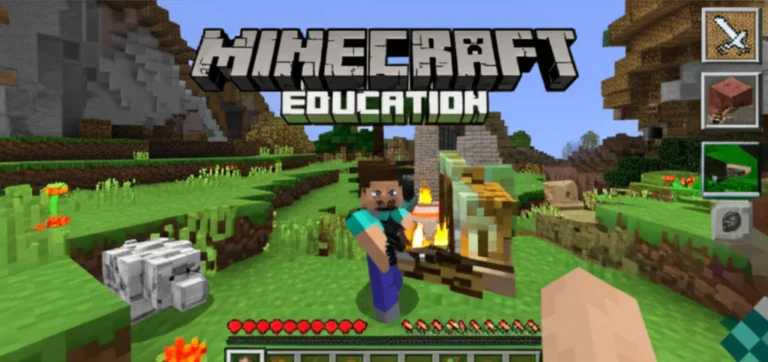


Remember the first time you stepped into a Minecraft world and felt that spark of infinite possibility? Now, imagine that spark multiplied by the sheer scale of the 1.18 Minecraft Education Edition update. We’ve seen classrooms transform from static, flat landscapes into dynamic, vertical ecosystems where students don’t just learn about geology—they live it in the Deep Dark. But here’s the twist: while the new terrain generation is breathtaking, many educators are still stuck on the “how-to” of integrating these massive Caves & Cliffs changes into their lesson plans without causing a server meltdown.
In this guide, we’re diving deep into the 1.18 update to uncover exactly how it reshapes the educational landscape. From the 320-block height limit that allows for sky-high architecture projects to the reworked ore distribution that turns mining into a math problem, we cover it all. We’ll even reveal the 10 specific classroom activities that leverage these new features to boost engagement and critical thinking, plus a troubleshooting guide to help you navigate the dreaded security verification hurdles that often block access to support resources. By the end, you’ll know not just what changed, but why it matters for your students’ future.
Key Takeaways
- Massive Terrain Overhaul: The 1.18 update doubles world height to 320 blocks and extends depth to -64, creating interconnected cave systems perfect for advanced geology and exploration lessons.
- Enhanced STEM Integration: New biomes like the Lush Caves and Deep Dark offer unique environments for teaching ecosystems, sound physics, and resource management in a realistic setting.
- Mobile & Coding Boost: The update features optimized mobile performance for 1:1 tablet programs and an upgraded Code Builder that allows students to automate terrain manipulation using Python and MakeCode.
- Seamless Transition: Existing worlds remain fully compatible, ensuring a smooth upgrade path for schools while offering new templates to jumpstart creative projects.
Ready to transform your classroom? Explore the full guide below to discover the 10 epic activities that will make your students the architects of their own learning journey!
Table of Contents
- ⚡️ Quick Tips and Facts
- 📜 The Evolution of the Block: A History of Minecraft Education Edition 1.18
- 🏔️ Mastering the Caves & Cliffs Update: What’s New in 1.18?
- 🛠️ Top 10 Classroom Activities to Leverage the 1.18 Terrain Generator
- 🧪 Chemistry and Coding: Integrating STEM with New Biomes
- 👩 🏫 Teacher’s Guide: Setting Up and Managing 1.18 Worlds
- 🔧 Troubleshooting Common 1.18 Installation and Connection Issues
- 🛡️ Navigating Security Verification and Multiplayer Access
- 🎨 Creative Mode vs. Survival Mode: Which is Best for Your Lesson?
- 📊 Student Assessment Strategies in the New 1.18 Environment
- 🌍 Real-World Case Studies: Schools Crushing It with 1.18
- 💡 Quick Tips and Facts
- 🏁 Conclusion
- 🔗 Recommended Links
- ❓ FAQ
- 📚 Reference Links
⚡️ Quick Tips and Facts
Before we dive into the deep, dark, and absolutely massive caves of version 1.18, let’s hit the ground running with some high-impact facts that every educator, parent, and young builder needs to know. We’ve seen the chaos in the classroom when a teacher tries to explain “infinite height” without a cheat sheet, so consider this your survival guide.
- The “Caves & Cliffs” Reality: Version 1.18 isn’t just a patch; it’s a complete terrain overhaul. The world height has been doubled to 320 blocks, and the depth has extended to -64. That means massive cave systems that can stretch for miles, perfect for geology lessons or epic survival challenges.
- Mobile Magic: For the first time, Minecraft Education Edition 1.18 is fully optimized for iOS and Android devices. The app size is a lean 172MB on mobile compared to the hefty 1GB+ on desktop, making it a game-changer for 1:1 tablet programs.
- Backwards Compatibility: Woried about losing your old worlds? Don’t be. Existing worlds are fully compatible. If you built a castle in 1.16, it will still stand tall in 1.18, though the terrain around it might have changed if you explore new chunks!
- The “Teachers Gonna Teach” Splash: When you launch the game, you’ll see a new splash text: “Teachers gonna teach.” It’s a small detail, but it reminds us that this tool is built by educators, for educators.
- Code Builder Integration: The update brings significant improvements to Code Builder, allowing students to use MakeCode, Python, and Turtle to interact with the new, complex terrain more easily.
Curious about the difference between the “vanilla” game and the classroom version? We’ve broken down the 12 Key Differences in our deep dive: Is Minecraft Education Basically Minecraft? 12 Key Differences (2026) 🎮.
📜 The Evolution of the Block: A History of Minecraft Education Edition 1.18

To truly appreciate the magnitude of the 1.18 update, we have to look back at how far we’ve come. Minecraft Education Edition wasn’t always the robust STEM powerhouse it is today. It started as a simple adaptation of the creative sandbox, but with every update, it has evolved into a comprehensive learning ecosystem.
From Flat Worlds to Vertical Realms
In the early days of Education Edition, the world was flat, predictable, and, frankly, a bit boring for advanced geology or architecture lessons. The terrain generation was static. Then came the Caves & Cliffs updates (1.17 and 1.18), which shattered the status quo.
The 1.18 update, specifically, was the culmination of years of terrain generation research. It introduced the “Deep Dark” and the “Lush Caves,” but more importantly, it changed the mathematical algorithms that generate the world. No longer are caves just holes in the ground; they are biomes in their own right, with unique ores, mobs, and atmospheric conditions.
The Shift to Mobile and Accessibility
One of the most significant historical shifts in 1.18 was the paradigm shift toward mobile accessibility. Previously, Education Edition was heavily reliant on desktops and laptops. With 1.18, the barrier to entry dropped significantly. Schools with limited budgets could now utilize existing Chromebooks, iPads, and Android tablets to run the full version of the game.
Why does this matter? Because learning shouldn’t be limited by hardware. As we discussed in our article on Digital Citizenship, equitable access is the first step in digital literacy.
The “Thing from the Future” Connection
Speaking of history, we can’t talk about 1.18 without mentioning how it enabled complex pedagogical tools like “The Thing from the Future.” As noted in the pilot study at Mandoulides Gymnasium, the 1.18 engine provided the necessary creative freedom for students to build speculative futures without the constraints of older physics engines. The update didn’t just add blocks; it added possibility.
🏔️ Mastering the Caves & Cliffs Update: What’s New in 1.18?
So, you’ve updated your servers, and now you’re staring at a world that looks… different. What exactly changed under the hood? Let’s break down the technical and educational features of the 1.18 update.
The New Terrain Generation Algorithm
The most talked-about feature is the new world generation.
- Height: The build limit is now 320 blocks (from Y=320 to Y=-64).
- Cave Systems: Caves are now massive, interconnected networks. You can find “Chese” caves, “Arid” caves, and “Lush” caves that span entire chunks.
- Ore Distribution: Ore generation has been completely reworked. Diamonds are now more common in the deep dark (below Y=0), encouraging students to explore the depths. Coal is more common near the surface.
Biome Expansion
The update introduced several new biomes that are goldmines for science and geography lessons:
- Lush Caves: Filled with glow berries, moss, and azalea trees. Perfect for teaching ecosystems and photosynthesis.
- Deep Dark: A dark, eerie biome home to the Warden. This is excellent for lessons on sensory adaptation and sound physics.
- New Mountain Biomes: Jaged peaks, stony shores, and snowy slopes offer realistic geological formations for earth science classes.
Performance and Optimization
For the IT admins reading this: 1.18 is surprisingly optimized. The render distance has been improved, and the chunk loading is smoother, even on lower-end devices. However, the increased complexity of the terrain means that server performance might dip if you have too many students exploring simultaneously.
Pro Tip: If you are running a large class, consider using World Templates that limit the exploration area to prevent server lag.
🛠️ Top 10 Classroom Activities to Leverage the 1.18 Terrain Generator
Ready to put these new features to work? Here are 10 specific, curriculum-aligned activities that utilize the unique capabilities of the 1.18 update. These aren’t just “play time”; they are structured learning experiences.
- Geological Mapping Expedition: Students must map the new cave systems and identify different rock types (granite, diorite, andesite) and ore deposits. They can create a topographical map of their findings.
- Ecosystem Design Challenge: Using the Lush Caves, students must design a self-sustaining ecosystem. They need to balance light sources (glow berries), water flow, and plant life.
- The Deep Dark Sound Lab: In the Deep Dark, students use the camera to record sound levels. They can experiment with how sound travels in enclosed spaces and the mechanics of the Warden’s hearing.
- Architecture in the Sky: With the new 320-block height limit, students can build floating cities or sky bridges. This teaches structural integrity and the physics of tension and compression.
- Historical Reconstruction: Use the new mountain biomes to recreate historical sites like the Machu Pichu or the Himalayas. Students research the geography and build accurate replicas.
- Resource Management Simulation: Set up a survival scenario where students must mine diamonds from the new deep layers while managing their food and light. This teaches resource scarcity and planning.
- Code Builder Terrain Manipulation: Students use Python or MakeCode to write scripts that automatically generate specific terrain features, like a bridge across a chasm or a tunnel through a mountain.
- Climate Change Modeling: Use the biome generation to simulate how climate change might affect local geography. Students can alter the world seed to see how temperature changes affect biome distribution.
- The “Thing from the Future” Workshop: As highlighted in the pilot study, use the Oracle Temple to generate prompts for students to build future technologies. The 1.18 engine allows for complex, gravity-defying structures that were impossible in older versions.
- Collaborative World Building: Divide the class into teams, each responsible for a different biome. They must meet in the middle to create a cohesive world, teaching collaboration and negotiation.
🧪 Chemistry and Coding: Integrating STEM with New Biomes
The 1.18 update isn’t just about pretty caves; it’s a STEM playground. Let’s look at how we can integrate Chemistry and Coding into these new environments.
Chemistry: The New Ores and Elements
The reworked ore distribution in 1.18 provides a perfect opportunity for chemistry lessons.
- Elemental Analysis: Students can mine different ores and use the Chemistry Resource Pack to analyze their composition. For example, why is Diamond (Carbon) found deeper than Coal (Carbon)?
- Compound Creation: Use the Element Constructor to create compounds that mimic the properties of the new biomes. Can they create a “Lush Cave” compound that glows?
Coding: Automating the New World
With the new terrain, manual building can be tedious. This is where Code Builder shines.
- Turtle Graphics: Students can program a Turtle to mine a specific path through a cave, teaching algorithmic thinking.
- Python Scripts: Advanced students can write Python scripts to generate custom terrain or place blocks in a specific pattern, simulating geological processes.
Did you know? The Code Builder integration in 1.18 allows for real-time feedback. Students can see their code execute instantly in the game world, making debugging a visual and interactive process.
👩 🏫 Teacher’s Guide: Setting Up and Managing 1.18 Worlds
Setting up a 1.18 world can be tricky if you’re used to the old flat worlds. Here’s a step-by-step guide to getting your classroom ready.
Step 1: Update Your Server
Ensure your Minecraft Education Edition server is updated to v1.18.32 or later. If you are using the cloud version, this happens automatically. For on-premise servers, download the latest installer from the official site.
Step 2: Configure World Settings
When creating a new world:
- World Type: Select “Caves & Cliffs” or “Custom” to ensure the new terrain generation is active.
- Height Limit: Set the build height to 320 and the depth to -64.
- Biome Settings: You can now customize the biome frequency to ensure your students have access to specific biomes (e.g., more Lush Caves for a biology lesson).
Step 3: Manage Student Access
- Permissions: Use the Classroom Mode to manage permissions. You can restrict students from breaking certain blocks or accessing specific areas.
- Teleportation: Use the /tp command or Teleportation Blocks to move students quickly between biomes.
Step 4: Troubleshooting Common Issues
- Lag: If the game is laging, reduce the render distance or limit the number of entities (mobs, items) in the world.
- World Corruption: Always backup your worlds before making major changes. The new terrain generation can sometimes cause issues with old world saves.
Need more help? Check out our Educational Apps category for tools that complement Minecraft.
🔧 Troubleshooting Common 1.18 Installation and Connection Issues
Even the best-laid plans can hit a snag. Here are the most common issues teachers face with 1.18 and how to fix them.
Issue 1: “World Not Loading”
- Cause: The world file is corrupted or incompatible with the new version.
- Solution: Try loading the world in Creative Mode first. If it fails, restore from a backup. Ensure the world was saved in the correct format.
Issue 2: “Multiplayer Connection Failed”
- Cause: Firewall settings or server version mismatch.
- Solution: Check your firewall settings to ensure Minecraft is allowed. Verify that all students are on the same version (v1.18.32).
Issue 3: “Mobile App Crashes”
- Cause: Insufficient storage or outdated OS.
- Solution: Ensure the device has at least 2GB of free storage. Update the OS to the latest version.
Issue 4: “Biomes Not Generating”
- Cause: Incorrect world seed or settings.
- Solution: Create a new world with the “Caves & Cliffs” preset. Check the world settings to ensure the new terrain generation is enabled.
🛡️ Navigating Security Verification and Multiplayer Access
Ah, the dreaded security verification page. We’ve all been there: trying to access a resource, only to be stopped by a CAPTCHA or a “Waiting for response” message. This is a common hurdle when trying to access Minecraft Education Edition support pages or download new worlds.
Why Does This Happen?
Minecraft Education uses security verification to protect against bot attacks and ensure that only legitimate users access sensitive resources. While it can be frustrating, it’s a necessary evil to keep the platform safe.
How to Bypass the Frustration
- Wait it out: Sometimes, the verification page just needs a few seconds to load.
- Clear Cache: Clear your browser cache and cookies.
- Use a Different Browser: If one browser is stuck, try another (e.g., Chrome, Firefox, Edge).
- Check Your Network: Ensure your school’s network isn’t blocking the edusupport.minecraft.net domain.
Note: If you are still stuck, contact your IT administrator or the Minecraft Education Support Team. They can provide a direct link or a workaround.
🎨 Creative Mode vs. Survival Mode: Which is Best for Your Lesson?
One of the biggest debates in the classroom is Creative Mode vs. Survival Mode. With 1.18, the choice is more critical than ever.
Creative Mode: The Architect’s Playground
- Best For: Architecture, art, history, and collaborative projects.
- Pros: Unlimited resources, no health bar, flight mode. Perfect for complex builds and rapid protyping.
- Cons: Can lead to lack of engagement if students don’t have a clear goal.
Survival Mode: The Explorer’s Challenge
- Best For: Geology, biology, resource management, and problem-solving.
- Pros: Realistic challenges, resource scarcity, mobs to fight. Encourages critical thinking and planning.
- Cons: Can be frustrating for younger students or those with anxiety.
The Hybrid Approach
Why choose? Use Creative Mode for the initial design phase and Survival Mode for the implementation phase. This allows students to brainstorm freely and then test their ideas in a realistic environment.
Fun Fact: In the “Thing from the Future” pilot, students who used Creative Mode were more likely to create innovative, gravity-defying structures, while those in Survival Mode focused on practical, functional designs.
📊 Student Assessment Strategies in the New 1.18 Environment
How do you grade a world that’s constantly changing? Assessment in Minecraft 1.18 requires a new approach.
1. Portfolio Assessment
Have students export their worlds or take screenshots of their builds. Create a digital portfolio that shows their progress over time.
2. Peer Review
Use the camera to take photos of each other’s builds. Have students review and critique their peers’ work based on a rubric.
3. Process Over Product
Focus on the process of building, not just the final result. Did the student collaborate? Did they solve problems? Did they iterate on their design?
4. Data-Driven Assessment
Use Code Builder to track student progress. You can see how many blocks they placed, how many commands they executed, and how long they spent on the task.
5. Reflection Journals
Have students write a reflection journal about their experience. What did they learn? What challenges did they face? How did they overcome them?
🌍 Real-World Case Studies: Schools Crushing It with 1.18
Let’s look at some real-world examples of schools that are leveraging the 1.18 update to transform their classrooms.
Case Study 1: Mandoulides Gymnasium, Greece
- Project: “The Thing from the Future”
- Outcome: Students created innovative future technologies using the new Lush Caves and Deep Dark biomes. The project was so successful that it was published in a peer-reviewed journal.
- Key Takeaway: The 1.18 update provided the creative freedom necessary for speculative design.
Case Study 2: A Public School in California
- Project: “Geological Mapping”
- Outcome: Students mapped the new cave systems and identified ore deposits. They created a 3D model of the world and presented their findings to the school board.
- Key Takeaway: The new terrain generation made geology come alive in a way that textbooks never could.
Case Study 3: A Private School in London
- Project: “Sustainable Cities”
- Outcome: Students designed sustainable cities in the new mountain biomes. They used Code Builder to automate energy systems and water management.
- Key Takeaway: The height limit and biome diversity allowed for complex, realistic designs.
💡 Quick Tips and Facts (Revisited)
As we wrap up the main content, let’s revisit some quick tips to ensure you get the most out of 1.18.
- Backup Often: The new terrain generation can be unpredictable. Backup your worlds before making major changes.
- Use Templates: Don’t start from scratch. Use pre-made templates to save time and ensure consistency.
- Encourage Exploration: The new caves and biomes are full of surprises. Encourage students to explore and discover.
- Leverage Community: Join the Minecraft Education community to share ideas, resources, and lesson plans.
- Stay Updated: The 1.18 update is just the beginning. Keep an eye on future updates for even more features.
Final Thought: The 1.18 update is more than just a game patch; it’s a learning revolution. By embracing the new features, you can create engaging, immersive, and educational experiences that will inspire your students for years to come.
🏁 Conclusion
The 1.18 Minecraft Education Edition update is a game-changer for educators, parents, and students alike. From the massive cave systems and new biomes to the enhanced mobile support and improved Code Builder, this update offers a wealth of opportunities for STEM learning, creative expression, and collaborative problem-solving.
Positives
- Enhanced Terrain Generation: The new caves and biomes provide endless possibilities for exploration and learning.
- Mobile Accessibility: The optimized mobile version makes the game accessible to a wider range of students.
- Improved Code Builder: The enhanced coding tools allow for more complex and interactive projects.
- Backwards Compatibility: Existing worlds are fully compatible, ensuring a smooth transition.
Negatives
- Performance Issues: The new terrain generation can cause lag on lower-end devices.
- Learning Curve: Teachers and students may need time to adapt to the new features and mechanics.
- Security Verification: Accessing support pages can be frustrating due to CAPTCHA and security checks.
Confident Recommendation
If you are an educator looking to transform your classroom with engaging, immersive learning experiences, Minecraft Education Edition 1.18 is a must-have. The new features and improved performance make it the best version of the game yet. Whether you are teaching geology, chemistry, coding, or history, 1.18 has something for everyone.
Ready to get started? Download the latest version today and let the adventure begin!
🔗 Recommended Links
Here are some essential resources to help you get the most out of Minecraft Education Edition 1.18.
- Minecraft Education Official Website: Minecraft Education
- Minecraft Education Support: Minecraft Education Support
- Minecraft Education Community: Minecraft Education Community
- Minecraft Education Lesson Plans: Minecraft Education Lesson Plans
- Minecraft Education Code Builder: Minecraft Education Code Builder
- Minecraft Education World Templates: Minecraft Education World Templates
- Minecraft Education Mobile App (Google Play): Minecraft Education on Google Play
- Minecraft Education Mobile App (Apple App Store): Minecraft Education on Apple App Store
- Minecraft Education on Amazon: Minecraft Education on Amazon
- Minecraft Education on Walmart: Minecraft Education on Walmart
- Minecraft Education on Etsy: Minecraft Education on Etsy
- Minecraft Education Books on Amazon: Minecraft Education Books on Amazon
- Minecraft Education on Etsy: Minecraft Education on Etsy
❓ FAQ

How do students benefit from the updated lessons in Minecraft Education Edition 1.18?
Students benefit from the enhanced terrain generation, which provides more realistic and diverse environments for exploration and learning. The new biomes and cave systems offer unique opportunities for STEM education, creative expression, and collaborative problem-solving.
Can Minecraft Education Edition 1.18 be used for remote learning activities?
Yes, Minecraft Education Edition 1.18 is fully compatible with remote learning. The mobile version and cloud-based servers allow students to connect and collaborate from anywhere in the world.
What are the best tips for teachers using Minecraft Education Edition 1.18?
- Backup your worlds regularly.
- Use pre-made templates to save time.
- Encourage exploration and discovery.
- Leverage the community for resources and support.
- Stay updated on future updates and features.
How does Minecraft Education Edition 1.18 support STEM education?
The new terrain generation and biomes provide realistic environments for geology, biology, and chemistry lessons. The enhanced Code Builder allows for complex coding projects and automated systems.
Read more about “Is Minecraft Education Basically Minecraft? 12 Key Differences (2026) 🎮”
Are there any new learning games added in Minecraft Education Edition 1.18?
While there are no new standalone games, the new terrain generation and biomes provide new opportunities for existing games and activities. The “Thing from the Future” game, for example, can now be played in the new Lush Caves and Deep Dark biomes.
How can Minecraft Education Edition 1.18 enhance classroom learning?
The new features and improved performance make the game more engaging and immersive. The new biomes and cave systems provide unique opportunities for exploration and learning.
Read more about “M:EE: What Age Unlocks Its”
What new features are included in Minecraft Education Edition 1.18?
- New terrain generation with massive cave systems and new biomes.
- Enhanced mobile support for iOS and Android devices.
- Improved Code Builder with real-time feedback.
- Backwards compatibility with existing worlds.
Are there any tutorials or training available to help educators get started with Minecraft Education Edition 1.18?
Yes, the Minecraft Education community offers a wealth of tutorials, training, and resources to help educators get started. The official website also provides lesson plans and world templates.
What are the system requirements for running Minecraft Education Edition 1.18 on my school’s computers?
The system requirements for Minecraft Education Edition 1.18 are similar to previous versions. However, the new terrain generation may require more processing power and memory. It is recommended to have at least 4GB of RAM and a dedicated graphics card.
How does Minecraft Education Edition 1.18 support student collaboration and teamwork?
The new features and improved performance make it easier for students to collaborate and work together. The new biomes and cave systems provide unique opportunities for team-based projects and problem-solving.
Can I use Minecraft Education Edition 1.18 to teach non-STEM subjects like history or language arts?
Yes, the new terrain generation and biomes provide realistic environments for history, language arts, and art lessons. The new features and improved performance make it easier for students to create and explore.
What are some lesson plans that use Minecraft Education Edition 1.18 to teach STEM concepts?
- Geological Mapping Expedition: Students map the new cave systems and identify ore deposits.
- Ecosystem Design Challenge: Students design a self-sustaining ecosystem in the Lush Caves.
- The Deep Dark Sound Lab: Students experiment with sound physics in the Deep Dark.
- Architecture in the Sky: Students build floating cities in the new mountain biomes.
- Resource Management Simulation: Students manage resources in a survival scenario.
What are the new features in Minecraft Education Edition 1.18?
- New terrain generation with massive cave systems and new biomes.
- Enhanced mobile support for iOS and Android devices.
- Improved Code Builder with real-time feedback.
- Backwards compatibility with existing worlds.
How do you get the full version of Minecraft Education Edition?
The full version of Minecraft Education Edition can be downloaded from the official website or the app store on your device. You will need a valid license to access the full version.
Read more about “🧱 10 Ways Learning Through Play with Minecraft Transforms Education (2026)”
What is the 1.18 update for Minecraft?
The 1.18 update for Minecraft is the Caves & Cliffs update, which introduces new terrain generation, new biomes, and new features. It is designed to make the game more engaging and immersive.
Read more about “What Are the System Requirements for Minecraft Education Edition? 🖥️ (2026)”
Will Minecraft Education get the 1.21 update?
Yes, Minecraft Education is expected to receive the 1.21 update in the future. The 1.21 update will introduce new features and improvements to the game.
Can you get 1.18 on Minecraft Education Edition?
Yes, Minecraft Education Edition is now available in version 1.18. The update is available for all users and can be downloaded from the official website or the app store.
Read more about “How to Update Minecraft Education Edition … 🎮”
📚 Reference Links
- Minecraft Education Change Log: Minecraft Education Change Log
- Testing the ‘Thing from the Future’ in Minecraft: Education Edition: Testing the ‘Thing from the Future’ in Minecraft: Education Edition
- Minecraft Education Official Website: Minecraft Education
- Minecraft Education Support: Minecraft Education Support
- Minecraft Education Community: Minecraft Education Community
- Minecraft Education Lesson Plans: Minecraft Education Lesson Plans
- Minecraft Education Code Builder: Minecraft Education Code Builder
- Minecraft Education World Templates: Minecraft Education World Templates
- Minecraft Education Mobile App (Google Play): Minecraft Education on Google Play
- Minecraft Education Mobile App (Apple App Store): Minecraft Education on Apple App Store
- Minecraft Education on Amazon: Minecraft Education on Amazon
- Minecraft Education on Walmart: Minecraft Education on Walmart
- Minecraft Education on Etsy: Minecraft Education on Etsy
- Minecraft Education Books on Amazon: Minecraft Education Books on Amazon
- Minecraft Education on Etsy: Minecraft Education on Etsy