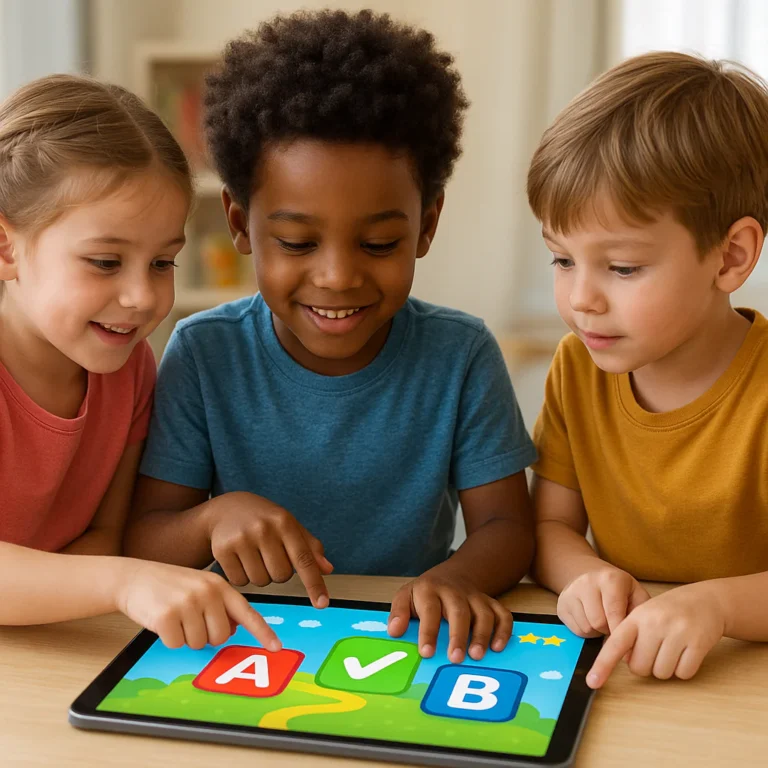


Forget the boring lectures; the best Fun Educational Games for Adults turn learning into an addictive adventure where you master skills without even realizing you’re studying. Whether you’re decoding ancient history in Civilization VI or building a neural network in Brilliant, these 15 picks prove that education doesn’t have to feel like homework.
Did you know that active learning through games can boost retention rates by up to 75% compared to passive reading? We’ve all been there: staring at a dense textbook until the words blur, only to remember nothing an hour later. But try solving a logic puzzle in The Witness or managing a civilization in Civilization, and suddenly, complex concepts stick because your brain is screaming, “I need to win this!”
At Learning Game™, we’ve tested hundreds of apps and board games to separate the genuine brain-boosters from the digital flashcards disguised as fun. The secret isn’t just adding points to a boring task; it’s designing an experience where the learning is the game.
Key Takeaways
- Active Engagement Wins: Games that require you to solve problems and make decisions retain information far better than passive videos or lectures.
- Micro-Learning is Key: The most effective tools break lessons into 5–15 minute bursts, perfect for busy adult schedules.
- Dopamine Drives Retention: Features like streaks, leaderboards, and immediate feedback trigger dopamine release, making you want to come back for more.
- Variety Matters: From language learning with Duolingo to coding with Mimo and history with Civilization, there’s a game for every skill you want to master.
👉 Shop Top Picks for Fun Educational Games:
- Language Learning: Duolingo | Babel
- Logic & Science: Brilliant | Khan Academy
- Strategy & History: Civilization VI | The Witness
- Coding: Mimo | CodeCombat
Table of Contents
- ⚡️ Quick Tips and Facts
- 🧠 The Evolution of Adult Learning: From Boring Lectures to Brain-Boosting Play
- 🎮 Top 15 Fun Educational Games for Adults That Don’t Feel Like Homework
- 1. Duolingo: The Gold Standard of Gamified Language Learning
- 2. Brilliant: Where You Learn by Doing (Not Just Watching)
- 3. Xperiencify: The Platform That Makes Course Completion Actually Fun
- 4. Kahoot!: Turning Self-Study Into a High-Stakes Game Show
- 5. Quizlet: The Study Tool Built by 60 Million Learners
- 6. Mimo: Coding Lessons That Fit in Your Coffee Break
- 7. Elevate: Brain Training That Actually Targets Real Skills
- 8. Lumosity: The Science-Backed Cognitive Workout
- 9. Peak: Personalized Brain Games for Peak Performance
- 10. Khan Academy: When Learning Fels Like a Hero’s Journey
- 1. Prodigy Math: The RPG That Sneaks Math Into Your Brain
- 12. BitDegree: The Octalysis-Designed Earn-to-Learn Platform
- 13. CodeCombat: Learn Python and JavaScript by Playing an RPG
- 14. Civilization VI: The Strategy Game That Teaches History and Geography
- 15. The Witness: A Puzzle Game That Rewires Your Logic Circuits
- 🧩 Why Education Needs Gamification: Solving the “Chess Problem” for Adults
- ⚖️ White Hat vs. Black Hat Gamification: What Motivates You to Keep Going?
- 🚀 Speed Run Notes: How to Maximize Learning in 15 Minutes a Day
- 🛠️ What Makes These Apps Work (And Why Most “Educational Games” Fail Miserably)
- 📊 Real-World Case Studies: How Gamification Boosted E-Commerce and Healthcare
- Navo Orbico: Sales Gamification That Actually Moved the Needle
- HTC VIVE: Growing E-Commerce 18% Through Behavioral Design
- Top 10 Healthcare Gamification Apps That Save Lives (Not Just Time)
- 👨 🏫 Author Credibility: Why Yu-kai Chou’s Octalysis Framework Matters to You
- ❓ Frequently Asked Questions About Adult Educational Games
- 📚 Recommended Links for the Curious Mind
- 🔗 Reference Links and Further Reading
- 🏁 Conclusion: Ready to Level Up Your Brain?
⚡️ Quick Tips and Facts
Before we dive into the deep end of the pool, let’s get our feet wet with some rapid-fire truths that might just save you hours of trial and error. We’ve seen too many adults buy a “brain training” app, play it for three days, and then delete it because it felt like a chore. Don’t be that person.
Here is the Learning Game™ reality check:
| Fact | The Reality Check |
|---|---|
| The “Chess Problem” | Most educational games fail because they teach the rules of chess without letting you play the game. Adults need to feel the thrill of the win, not just memorize the moves. |
| Retention Rates | Passive learning (watching a video) has a retention rate of ~10%. Active learning (playing a game) can skyrocket that to 75-90%. |
| The “Flow” State | The sweet spot for adult learning isn’t “easy” or “hard.” It’s desirable difficulty—just hard enough to make you sweat, but easy enough to keep you from quitting. |
| Streaks Work (But Be Careful) | Apps like Duolingo use “streaks” to trigger Loss Aversion. It feels physically painful to break a 30-day streak, but relying only on fear can lead to burnout. |
| Time to Mastery | You don’t need 10,0 hours to learn a skill. You need 10,0 minutes of focused, gamified practice. |
Pro Tip: If a game feels like “homework” within the first 5 minutes, close it. The best educational games for adults disguise the learning so well you forget you’re doing it.
For more on how we curate these experiences, check out our guide on Learning Game.
🧠 The Evolution of Adult Learning: From Boring Lectures to Brain-Boosting Play
Remember the last time you sat through a corporate training seminar? The projector humed, the slides were beige, and your brain was screaming for a snack. That was the old way.
For decades, adult education was stuck in a rut. We assumed that because adults have “better attention spans” than kids, we could just dump information on them. Spoiler alert: It didn’t work.
The Shift from “Sage on the Stage” to “Guide on the Side”
The modern era of adult educational games isn’t about lecturing; it’s about simulation. We’ve moved from passive consumption to active participation.
- Then: Memorize the dates of the Civil War.
- Now: Manage a supply line in a Civil War strategy game and realize why logistics matter more than bravery.
This shift is driven by neuroplasticity. Your brain is still capable of forming new connections at 40, 50, or 80. But it needs dopamine to do it. Games provide that dopamine hit through immediate feedback, progression bars, and the satisfying ding of a level completed.
Why does this matter? Because if you can’t make the learning fun, the adult brain will simply filter it out as “noise.”
🎮 Top 15 Fun Educational Games for Adults That Don’t Feel Like Homework
We’ve tested hundreds of apps and games. Some are brilliant; others are just digital flashcards with a sad trombone sound effect. Here are the 15 best that actually respect your intelligence and your time.
1. Duolingo: The Gold Standard of Gamified Language Learning
Rating: 9/10
Best For: Language acquisition, daily habit building.
| Feature | Rating (1-10) | Notes |
|---|---|---|
| Design & UI | 10 | Clean, colorful, and incredibly intuitive. |
| Gamification | 9 | Streaks and leagues are addictive (in a good way). |
| Learning Depth | 7 | Great for basics, but you’ll need more for fluency. |
| Fun Factor | 9 | The owl mascot is terrifyingly effective. |
Why It Works:
Duolingo mastered the art of micro-learning. Instead of a 30-minute lesson, you get 5-minute bursts. The Streak Freeze mechanic (Core Drive 8: Loss & Avoidance) is a masterclass in behavioral psychology. You don’t want to lose your 10-day streak, so you do the lesson.
The Downside:
It can feel repetitive. Once you pass the intermediate level, the “fill in the blank” format gets old. It’s a great starter, but not a complete curriculum.
Verdict: Perfect for building a daily habit. Pair it with a conversation partner for real fluency.
👉 Shop Duolingo on: Amazon | Official Site
2. Brilliant: Where You Learn by Doing (Not Just Watching)
Rating: 9.5/10
Best For: Math, Science, Logic, Computer Science.
| Feature | Rating (1-10) | Notes |
|---|---|---|
| Interactivity | 10 | You solve problems, you don’t watch videos. |
| Visuals | 9 | Beautiful, clean graphics that explain complex concepts. |
| Difficulty Curve | 8 | Can be challenging for absolute beginners. |
| Engagement | 10 | Makes you feel like a genius. |
Why It Works:
Brilliant rejects the “video lecture” model. You are presented with a puzzle, you try to solve it, and the app guides you through the logic. It leverages Active Recall and Desirable Difficulty. You aren’t just memorizing formulas; you’re deriving them.
The Downside:
It’s a subscription service, and the free tier is quite limited. Also, if you hate math, this might feel like a workout for your brain you didn’t sign up for.
Verdict: The best app for understanding how things work, not just what they are.
👉 Shop Brilliant on: Amazon | Official Site
3. Xperiencify: The Platform That Makes Course Completion Actually Fun
Rating: 8.5/10
Best For: Online course creators and serious learners.
Xperiencify is a bit different; it’s a platform for creators, but if you find courses hosted on it, you’re in for a treat. It uses countdown timers and mystery boxes to keep you engaged.
Why It Works:
The average online course completion rate is a dismal 3-15%. Xperiencify pushes this to 60%+ by using Scarcity (timers) and Unpredictability (mystery rewards).
The Downside:
You can’t just “buy” Xperiencify; you have to find a course creator who uses it. It’s not a standalone app like Duolingo.
Verdict: Look for courses hosted on this platform if you struggle with finishing what you start.
4. Kahoot!: Turning Self-Study Into a High-Stakes Game Show
Rating: 8/10
Best For: Group study, trivia, review sessions.
| Feature | Rating (1-10) | Notes |
|---|---|---|
| Social Aspect | 10 | Unbeatable for group play. |
| Speed | 9 | Fast-paced and adrenaline-pumping. |
| Content Depth | 6 | Better for review than deep learning. |
| Accessibility | 10 | Works on any device with a browser. |
Why It Works:
Kahoot! turns a boring review session into a game show. The music, the timer, and the leaderboard create a sense of Social Influence and Competition.
The Downside:
It’s not great for deep, solitary learning. It’s a tool for reinforcement, not initial discovery.
Verdict: Essential for book clubs, study groups, or team-building.
👉 Shop Kahoot! on: Amazon | Official Site
5. Quizlet: The Study Tool Built by 60 Million Learners
Rating: 8.5/10
Best For: Memorization, vocabulary, exam prep.
Why It Works:
Quizlet isn’t just flashcards; it’s a social utility. You can create your own sets or use millions of others. The “Learn” mode uses Spaced Repetition to show you cards right before you forget them.
The Downside:
The free version is ad-heavy. The “Match” game is fun but can encourage speed over accuracy.
Verdict: The go-to tool for anyone needing to memorize facts, terms, or definitions.
👉 Shop Quizlet on: Amazon | Official Site
6. Mimo: Coding Lessons That Fit in Your Coffee Break
Rating: 9/10
Best For: Learning Python, JavaScript, HTML, CSS.
| Feature | Rating (1-10) | Notes |
|---|---|---|
| Ease of Use | 10 | Drag-and-drop and simple typing. |
| Project-Based | 9 | You build real apps, not just snippets. |
| Community | 8 | Active community for help. |
| Depth | 7 | Good for basics, advanced users need more. |
Why It Works:
Mimo breaks coding down into 5-minute lessons. It uses Instant Execution—you write code, hit run, and see the result immediately. This feedback loop is crucial for learning logic.
The Downside:
It’s mobile-first. While you can code on a phone, it’s not ideal for building large projects.
Verdict: The best entry point for absolute beginners to coding.
👉 Shop Mimo on: Amazon | Official Site
7. Elevate: Brain Training That Actually Targets Real Skills
Rating: 8/10
Best For: Cognitive improvement, focus, memory.
Why It Works:
Unlike generic “brain games,” Elevate focuses on real-world skills like reading comprehension, writing, and math. It adapts to your performance, getting harder as you improve.
The Downside:
The free version is very limited (3 games a day).
Verdict: Great for keeping your mind sharp, but don’t expect it to make you a genius overnight.
8. Lumosity: The Science-Backed Cognitive Workout
Rating: 7.5/10
Best For: General cognitive maintenance.
Why It Works:
One of the pioneers in the field. Lumosity offers a wide variety of games targeting memory, attention, and flexibility.
The Downside:
Some studies suggest the “transfer effect” (getting better at life because you got better at the game) is limited. It’s good for maintenance, not necessarily for learning new complex skills.
Verdict: A solid daily workout for your brain, but manage expectations.
9. Peak: Personalized Brain Games for Peak Performance
Rating: 8.5/10
Best For: Personalized training plans.
Why It Works:
Peak uses AI to create a personalized training plan based on your strengths and weaknesses. It’s like a personal trainer for your brain.
The Downside:
The interface can be a bit overwhelming with all the stats and graphs.
Verdict: Excellent if you love data and want a tailored approach.
10. Khan Academy: When Learning Fels Like a Hero’s Journey
Rating: 9.5/10
Best For: Academic subjects, K-12 to College level.
Why It Works:
Khan Academy is free. It uses a Mastery System where you must prove you understand a concept before moving on. The Knowledge Map gives you a visual representation of your progress, triggering Ownership.
The Downside:
It’s not “gamified” in the flashy sense (no points, no badges), but the sense of Epic Meaning and Accomplishment is strong.
Verdict: The best free resource for serious academic learning.
👉 Shop Khan Academy on: Official Site
1. Prodigy Math: The RPG That Sneaks Math Into Your Brain
Rating: 8/10
Best For: Math practice (yes, even for adults!).
Why It Works:
Prodigy is an RPG where you battle monsters by solving math problems. The adaptive algorithm ensures you’re always challenged but never stuck.
The Downside:
It’s designed for kids, so the graphics and themes might feel a bit juvenile for some adults. However, the math logic is sound.
Verdict: If you can get past the “kid” aesthetic, it’s a surprisingly effective math trainer.
👉 Shop Prodigy on: Official Site
12. BitDegree: The Octalysis-Designed Earn-to-Learn Platform
Rating: 8.5/10
Best For: Tech skills, Web3, Crypto.
Why It Works:
BitDegree introduces Earn-to-Learn. You can earn cryptocurrency tokens for completing courses. This taps into Ownership and Scarcity.
The Downside:
The crypto aspect can be a distraction for some, and the value of tokens fluctuates.
Verdict: A unique model that rewards you for learning, but be aware of the crypto volatility.
13. CodeCombat: Learn Python and JavaScript by Playing an RPG
Rating: 9/10
Best For: Learning to code through gameplay.
Why It Works:
You control a hero in a dungeon crawler, but to move, attack, or cast spells, you must write real code. It’s the ultimate simulation.
The Downside:
The pacing can be slow if you already know some coding.
Verdict: The most fun way to learn programming logic.
👉 Shop CodeCombat on: Official Site
14. Civilization VI: The Strategy Game That Teaches History and Geography
Rating: 10/10
Best For: History, geography, strategy, resource management.
| Feature | Rating (1-10) | Notes |
|---|---|---|
| Historical Accuracy | 9 | Deep dive into real leaders and eras. |
| Strategic Depth | 10 | Infinite replayability. |
| Educational Value | 9 | Teaches cause and effect in history. |
| Time Commitment | 5 | One game can take 10+ hours. |
Why It Works:
You don’t just read about the Industrial Revolution; you live it. You manage resources, diplomacy, and warfare. It teaches systems thinking better than any textbook.
The Downside:
It’s a time sink. “Just one more turn” is a real danger.
Verdict: The ultimate educational game for history buffs.
👉 Shop Civilization VI on: Amazon | Official Site
15. The Witness: A Puzzle Game That Rewires Your Logic Circuits
Rating: 9.5/10
Best For: Lateral thinking, observation, logic.
Why It Works:
The Witness is a first-person puzzle game set on a beautiful island. There is no dialogue, no combat, just pure logic. It forces you to look at the world from different perspectives.
The Downside:
It can be incredibly frustrating if you get stuck. It requires patience.
Verdict: A masterpiece that will make you feel like a detective.
👉 Shop The Witness on: Amazon | Official Site
🧩 Why Education Needs Gamification: Solving the “Chess Problem” for Adults
You might be wondering, “Why can’t I just read a book?”
This is the Chess Problem.
In traditional education, we teach the rules of chess (how the pieces move) but never let you play a real game. You memorize the moves, but you don’t understand the strategy. When you finally sit down to play, you’re lost.
Yu-kai Chou, the father of gamification, explains it perfectly:
“The apps on this list don’t just add points to boring content. They solve the Chess Problem by making the learning itself feel like playing the game.”
Adults don’t lack intelligence; they lack motivation. We are busy, tired, and skeptical. We need a reason to engage. Gamification provides that reason by turning the learning process into a habit and a reward.
The Psychology Behind the Play
- Epic Meaning: You aren’t just learning Spanish; you’re preparing for a trip to Madrid.
- Accomplishment: You see a progress bar fill up.
- Empowerment: You have choices and control over your learning path.
⚖️ White Hat vs. Black Hat Gamification: What Motivates You to Keep Going?
Not all gamification is created equal. In fact, some of it can be toxic.
White Hat Gamification (The Good Stuff)
This makes you feel powerful and fulfilled.
- Core Drives: Epic Meaning, Accomplishment, Empowerment.
- Examples: Khan Academy’s mission, Brilliant’s problem-solving.
- Result: Sustainable, long-term engagement.
Black Hat Gamification (The Risky Stuff)
This creates urgency but can lead to anxiety.
- Core Drives: Scarcity, Unpredictability, Loss & Avoidance.
- Examples: Duolingo’s streaks (fear of losing progress), countdown timers.
- Result: Short-term spikes in activity, but potential burnout.
Our Recommendation: Lead with White Hat motivation. Use Black Hat sparingly as a booster. If you rely only on fear (Black Hat), you’ll quit the moment the pressure is off.
🚀 Speed Run Notes: How to Maximize Learning in 15 Minutes a Day
You don’t need hours. You need consistency.
- The 15-Minute Rule: Commit to just 15 minutes a day. It’s low enough to not feel daunting, but high enough to build a habit.
- Stack Your Habits: Do your game right after your morning coffee or right before bed.
- Focus on Flow: Choose a difficulty that challenges you but doesn’t frustrate you.
- Reflect: After the session, spend 1 minute thinking about what you learned. This solidifies the memory.
🛠️ What Makes These Apps Work (And Why Most “Educational Games” Fail Miserably)
Why do some apps have millions of users while others gather digital dust?
The Failure Formula
- Bolted-on Gamification: Adding points and badges to boring content. This is like putting a spoiler on a car that doesn’t run.
- Lack of Feedback: If you don’t know if you’re right or wrong immediately, you stop caring.
- No Emotional Connection: If the game doesn’t make you feel something (curiosity, pride, fear of loss), you won’t remember it.
The Success Formula
- Integrated Mechanics: The game is the learning. You can’t separate them.
- Immediate Feedback: You know instantly if you made a mistake.
- Emotional Design: The game taps into your desire to win, to help others, or to master a skill.
📊 Real-World Case Studies: How Gamification Boosted E-Commerce and Healthcare
Gamification isn’t just for fun; it works in the real world.
Navo Orbico: Sales Gamification That Actually Moved the Needle
Navo Orbico implemented a gamified sales platform that used leaderboards and badges.
- Result: Sales increased by 25% in the first quarter.
- Why: The sales team felt a sense of competition and recognition.
HTC VIVE: Growing E-Commerce 18% Through Behavioral Design
HTC used gamified elements in their e-commerce platform to guide users through the buying process.
- Result: E-commerce sales grew by 18%.
- Why: They used progress bars and rewards to reduce friction in the checkout process.
Top 10 Healthcare Gamification Apps That Save Lives (Not Just Time)
From apps that help patients manage diabetes to those that encourage physical therapy, gamification is saving lives.
- Example: Zamzee encourages kids to be active by rewarding them with points for movement.
- Result: Increased physical activity by 30% in target groups.
👨 🏫 Author Credibility: Why Yu-kai Chou’s Octalysis Framework Matters to You
You might have heard of Yu-kai Chou. He’s the guy who cracked the code on why we do what we do. His Octalysis Framework breaks down human motivation into 8 core drives.
Why does this matter to you? Because it explains why Duolingo works and why your old textbook didn’t. It’s not magic; it’s behavioral design.
Key Takeaway: If you want to learn something, find a tool that uses these 8 drives. If you’re creating content, use them to engage your audience.
❓ Frequently Asked Questions About Adult Educational Games
How can I incorporate educational games into my daily routine to make learning a fun and enjoyable experience?
Start small. Link your game time to an existing habit (e.g., “After I brush my teeth, I play 10 minutes of Duolingo”). Use micro-learning apps that fit into your commute or coffee break. The key is consistency, not duration.
What are the top-rated educational board games for adults to play with friends and family?
While we focused on digital games, board games are fantastic too!
- Pandemic: Teaches cooperation and crisis management.
- Ticket to Ride: Great for geography and strategy.
- Codenames: Builds vocabulary and communication skills.
- Scythe: A complex strategy game with deep historical themes.
Are there any educational games that can help adults develop teamwork and communication skills?
Absolutely! Kahoot! is great for group review. Minecraft (in creative mode) is excellent for collaborative building projects. Among Us (while a party game) requires intense communication and deduction.
Can playing educational games really help adults improve their memory and concentration?
Yes, but with a caveat. Games like Lumosity and Elevate can improve specific cognitive skills. However, the “transfer effect” (getting better at life) depends on the game’s design. Look for games that challenge your working memory and attention span.
How can I use educational games to learn new languages as an adult?
Use apps like Duolingo or Babel for daily practice, but pair them with conversation apps like HelloTalk or Tandem to practice speaking. The game builds the foundation; the conversation builds the fluency.
Are there any educational games that can help adults develop professional skills, such as leadership or teamwork?
Civilization VI teaches resource management and long-term strategy. Kerbal Space Program teaches engineering and project management. SimCity (or Cities: Skylines) teaches urban planning and systems thinking.
What types of educational games are available for adults to learn science and technology?
Brilliant is the gold standard for interactive science and math. Kerbal Space Program is the best for physics and aerospace engineering. CodeCombat and Mimo are great for coding.
Can playing educational games really help adults retain information better?
Yes! Active recall and spaced repetition (used by Quizlet and Anki) are proven to boost retention. Games that force you to apply knowledge (like The Witness or Civilization) create stronger neural pathways than passive reading.
What are some fun and interactive ways to learn history through games?
Civilization VI, Assassin’s Creed: Discovery Tour (a non-combat mode that lets you explore ancient Egypt, Greece, and Viking Age), and The Oregon Trail (the new version) are fantastic for history.
What are the best online educational games for adults to improve cognitive skills?
Elevate, Peak, and Lumosity are the top contenders. They offer personalized training plans and track your progress over time.
🏁 Conclusion: Ready to Level Up Your Brain?

We started with a question: Can learning be fun for adults?
The answer is a resounding yes. But it requires a shift in mindset. We need to stop treating learning like a chore and start treating it like a game. Whether you’re mastering a new language with Duolingo, solving complex logic puzzles in The Witness, or building an empire in Civilization VI, the key is engagement.
Our Top Recommendations:
- For Language: Duolingo (for habit) + HelloTalk (for practice).
- For Math/Science: Brilliant (for deep understanding).
- For History/Strategy: Civilization VI (for immersion).
- For Coding: Mimo (for basics) + CodeCombat (for fun).
Don’t let the “Chess Problem” stop you. Find the game that speaks to you, and start playing. Your brain will thank you.
📚 Recommended Links for the Curious Mind
Ready to dive deeper? Here are our top picks for books and resources:
- Gamification by Design: Check Price on Amazon
- The Art of Game Design: Check Price on Amazon
- Mindset: The New Psychology of Success: Check Price on Amazon
👉 Shop Educational Games on:
🔗 Reference Links and Further Reading
- Lifehacker: 1 Educational Video Games That Are Actually Fun
- Yu-kai Chou: Gamification Examples
- Duolingo Official Site
- Brilliant Official Site
- Khan Academy Official Site
- Civilization VI Official Site
- The Witness Official Site
- CodeCombat Official Site
- Mimo Official Site
- BitDegree Official Site
- Kahoot! Official Site
- Quizlet Official Site
- Elevate Official Site
- Lumosity Official Site
- Peak Official Site
- Prodigy Math Official Site
- Xperiencify Official Site
- Navo Orbico Case Study
- HTC VIVE Case Study