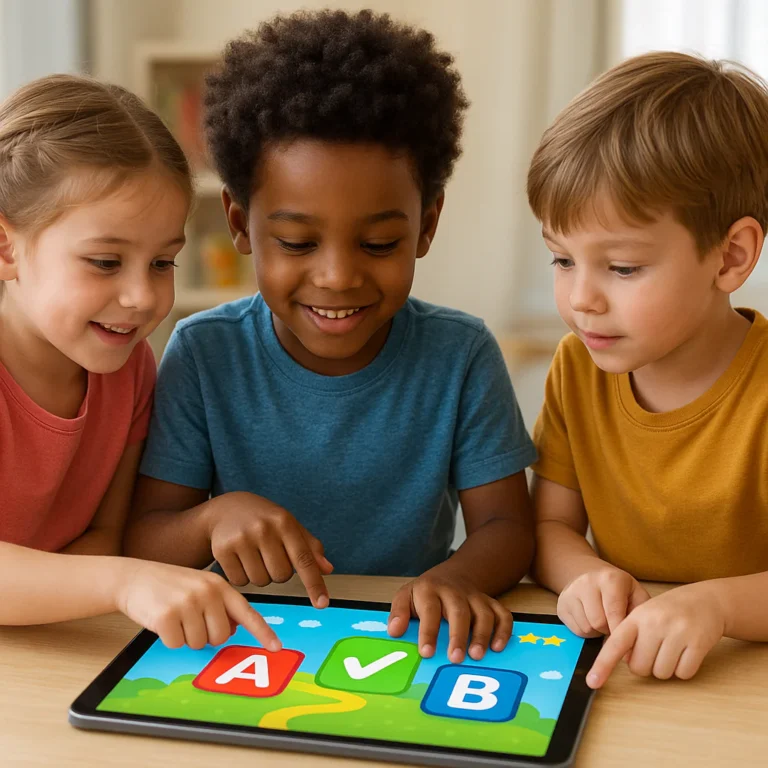


Ever wonder how a simple game can turn a tantrum into a triumph or a bored afternoon into a science experiment? At Learning Game™, we’ve watched our own kids transform from passive screen-watchers into active problem-solvers, all thanks to the magic of PBS KIDS games. Unlike the endless scroll of generic apps, this platform offers over 280+ ad-free, curriculum-aligned adventures that have earned multiple Webby Awards and the Kidscreen Best Games App title for five consecutive years. But here’s the secret: it’s not just about the games; it’s about the characters who guide them. From helping Daniel Tiger manage big feelings to solving high-stakes math mysteries with Odd Squad, these digital experiences are designed to make learning feel like play.
In this ultimate guide, we’re diving deep into the 12 best PBS KIDS games that every family needs to try in 2026. We’ll break down exactly which titles boost STEM skills, which ones master social-emotional learning, and how to navigate the platform like a pro. Plus, we’ll reveal our top 5 must-play picks and share expert tips on managing screen time without the guilt. Ready to turn your tablet into a classroom? Let’s get started!
Key Takeaways
- 100% Safe & Ad-Free: PBS KIDS offers a completely secure environment with no third-party ads or external links, ensuring your child’s privacy is protected.
- Curriculum-Aligned Learning: Every game is developed by educational experts to align with Common Core and NGSS standards, covering literacy, math, science, and SEL.
- Character-Driven Engagement: Kids learn faster when they connect with beloved characters like Molly of Denali and Wild Kratts, making abstract concepts concrete and fun.
- Accessible for All: With 50+ games in Spanish and features designed for diverse learning needs, the platform supports inclusive education for every child.
- Free Forever: Unlike many “freemium” apps, the entire library of games is completely free with no hidden subscriptions or in-app purchases.
👉 Shop PBS KIDS Games on:
- Google Play: PBS KIDS Games App
- Apple App Store: PBS KIDS Games App
- PBS KIDS Official Website: Play Games Online
Table of Contents
- ⚡️ Quick Tips and Facts
- 📜 From Pixels to Pedagogy: The Evolution of PBS KIDS Digital Media
- 🎮 Why We Love PBS KIDS Games: The Learning Game™ Verdict
- 📱 App vs. Browser: Choosing the Best Way to Play
- 📺 From Screen to Play: 12 Best Games Inspired by Iconic PBS KIDS Shows
- 1. Daniel Tiger’s Neighborhood: Mastering Social-Emotional Skills
- 2. Wild Kratts: Unleashing Creature Power and Biology
- 3. Curious George: Early Math and Engineering Adventures
- 4. Molly of Denali: Navigating Informational Texts and Culture
- 5. Arthur: Timeless Lessons in Friendship and Problem Solving
- 6. Sesame Street: The Gold Standard of Early Literacy
- 7. Odd Squad: High-Stakes Math Missions for Junior Agents
- 8. Pinkalicious & Peterrific: Sparking Arts and Creativity
- 9. Alma’s Way: Critical Thinking and Decision Making
- 10. Rosie’s Rules: Exploring Social Studies and Community
- 11. Elinor Wonders Why: Encouraging Scientific Inquiry
- 12. Xavier Riddle and the Secret Museum: History and Global Heroes
- 🌍 Going Green: Nature and Sustainability Games for Earth Day
- 🏫 Educational Benefits: How These Games Align with Curriculum Standards
- Literacy and Phonics Foundations
- STEM and Mathematical Thinking
- Social-Emotional Learning (SEL) and Empathy
- 🛠️ Mastering the Interface: Navigating the PBS KIDS Site Menu and Features
- 🛡️ Safety First: Understanding Parental Controls and COPPA Compliance
- 💻 Technical Requirements: Best Devices for Lag-Free Educational Play
- 💡 Pro-Tips for Managing Screen Time and Co-Playing
- 🏆 Our Top 5 Must-Play PBS KIDS Games Right Now
- 🔚 Conclusion
- 🔗 Recommended Links
- ❓ FAQ: Everything You Need to Know
- 📚 Reference Links
⚡️ Quick Tips and Facts
Before we dive into the deep end of the digital pool, let’s splash around with some essential facts that every parent and educator at Learning Game™ wishes they knew sooner! 🌊
- Massive Library: The PBS KIDS ecosystem boasts over 280+ free educational games, constantly updated to keep the learning fresh.
- Age Perfect: These aren’t just “kids’ games”; they are rigorously designed for the 2–8 age range, covering everything from toddler motor skills to early elementary math.
- Zero Ads, Zero Ads, Zero Ads: Unlike many “free” apps that are actually ad traps, the PBS KIDS platform is 100% ad-free. No pop-ups, no “buy now” buttons, just pure learning.
- Bilingual Bonanza: Did you know you can switch languages? The platform offers 50+ games in Spanish, making it a fantastic tool for dual-language learners.
- Award-Winning: The PBS KIDS Games App has swept the Kidscreen Best Games App awards in 2019, 2021, 2022, 2024, and 2025, and snagged multiple Webby Awards. That’s a trophy case full of “Good Job!” 🏆
- Curriculum-Driven: Every game is tied to a specific PBS KIDS show and aligns with Common Core and National Science Teaching Association standards.
If you’re wondering, “But how do I know which game is right for my child’s specific learning style?” Don’t worry, we’ll break down the best games for every personality type later in this guide. But first, let’s link up with our deep dive: What Is PBS KIDS Games? 🎮 10 Must-Try Learning Adventures (2025) to get the full scoop.
📜 From Pixels to Pedagogy: The Evolution of PBS KIDS Digital Media
Remember the days when “educational software” meant clunky CD-ROMs that took 20 minutes to load and had graphics that looked like they were drawn by a stick figure? 🕹️ We do too! But the journey from those pixelated beginnings to the sleek, interactive world of PBS KIDS Games is a story of pedagogical evolution.
The Early Days: From TV to Screen
PBS KIDS didn’t just jump on the digital bandwagon; they built the road. Starting with the launch of their website in the late 90s, they realized that interactive media could reinforce the lessons taught on television. The goal was simple: extend the learning experience beyond the living room.
“We don’t just want kids to watch; we want them to do.” — A core tenet of the PBS KIDS digital strategy.
The Mobile Revolution
With the advent of smartphones and tablets, the focus shifted to touch-based learning. The PBS KIDS Games App was a game-changer (pun intended!). It allowed children to carry their classroom in their pocket. The app’s design philosophy prioritizes intuitive navigation, ensuring that even a 3-year-old can find their favorite character without needing a manual.
Why It Matters for You
Today, the platform isn’t just a collection of games; it’s a comprehensive learning ecosystem. It integrates social-emotional learning (SEL), STEM, and literacy into a seamless experience. As we explore the specific titles, you’ll see how this evolution has resulted in games that are as engaging as they are educational.
🎮 Why We Love PBS KIDS Games: The Learning Game™ Verdict
At Learning Game™, we’ve tested hundreds of educational apps. Some are flashy but hollow; others are educational but boring. PBS KIDS Games hits the sweet spot. But is it perfect? Let’s be real.
Our Rating Breakdown
We’ve evaluated the platform based on our rigorous Learning Game™ Rubric. Here is how it stacks up:
| Feature | Rating (1-10) | Why? |
|---|---|---|
| Educational Value | 10/10 | Directly tied to curriculum standards and show content. |
| Safety & Privacy | 10/10 | COPPA compliant, no ads, no external links. |
| User Interface (UI) | 9/10 | Intuitive for kids, but some menus can be small on older tablets. |
| Content Variety | 9/10 | 280+ games is huge, but some genres (like strategy) are light. |
| Engagement Factor | 9/10 | Characters drive the fun, though replayability varies by game. |
| Accessibility | 8/10 | Great bilingual support, but some visual cues could be better for visually impaired users. |
| Overall Score | 9.2/10 | The gold standard for safe, educational gaming. |
The Good, The Great, and The “Could Be Better”
✅ The Good:
- Character Connection: Kids don’t just play a math game; they help Daniel Tiger solve a problem. This emotional connection boosts retention.
- Parent Dashboard: The app provides insights into what your child is learning, not just what they are playing.
- Offline Mode: Many games can be downloaded for play without Wi-Fi, perfect for road trips! 🚗
❌ The “Could Be Better”:
- Replayability: Some games are “one-and-done.” Once you solve the puzzle, the challenge is gone.
- Device Compatibility: While it works on most tablets, older Android devices sometimes experience lag.
- Depth for Older Kids: For kids approaching 8 or 9, the content might feel a bit “babyish” unless they are struggling with specific concepts.
Pro Tip: If your child outgrows the games, check out our guide on Advanced Educational Apps for the next level of learning!
📱 App vs. Browser: Choosing the Best Way to Play
So, you’ve decided to dive in. But how? The App or The Browser? This is the eternal question for parents. Let’s break it down so you can choose the best path for your family.
The PBS KIDS Games App 📲
Best For: On-the-go learning, younger children (ages 2-5), and ad-free immersion.
- Pros:
- Offline Access: Download games for the plane ride or the car.
- Simplified UI: The interface is stripped down for little fingers.
- Push Notifications: Get alerts for new games or seasonal events (like Earth Day!).
- Cons:
- Storage Space: 280+ games can take up a lot of space if you download them all.
- Updates: Requires periodic updates to keep the library fresh.
The Web Browser (pbskids.org) 🌐
Best For: Family co-playing, older kids, and accessing the full library without downloading.
- Pros:
- No Storage Issues: Play directly in Chrome, Safari, or Edge.
- Full Library Access: Sometimes the web version has games not yet added to the app.
- Easy Sharing: Send a direct link to a specific game to a teacher or grandparent.
- Cons:
- Internet Required: No Wi-Fi? No play.
- Browser Tabs: Kids can accidentally click out of the game if the browser isn’t locked.
Our Verdict?
If you have a tablet, download the app. It’s the most seamless experience. If you’re on a laptop or sharing a family computer, the browser is your best friend.
Curious about how to set up parental controls on both platforms? We’ll cover that in the Safety First section later!
📺 From Screen to Play: 12 Best Games Inspired by Iconic PBS KIDS Shows
Now, the moment you’ve been waiting for! We’ve curated a list of the 12 best games that perfectly capture the magic of their TV counterparts. These aren’t just random mini-games; they are curriculum-aligned adventures.
1. Daniel Tiger’s Neighborhood: Mastering Social-Emotional Skills
Theme: Emotional Regulation & Daily Routines
Why We Love It: This game helps kids navigate big feelings. In Daniel Tiger’s Neighborhood, we learn that “When you feel so mad that you want to roar, take a deep breath and count to four.” The games reinforce this by letting kids practice calming down.
- Key Activity: Daniel Tiger’s Grr-ific Feelings helps children identify emotions.
- Learning Goal: Self-regulation and empathy.
2. Wild Kratts: Unleashing Creature Power and Biology
Theme: Animal Science & Biology
Why We Love It: Chris and Martin Kratt are the kings of science. Their games, like World Rescue, let kids save animals by using their “Creature Power Suits.”
- Key Activity: Creature Power challenges kids to match animal traits to solve problems.
- Learning Goal: Biology, habitats, and animal adaptations.
3. Curious George: Early Math and Engineering Adventures
Theme: Problem Solving & Math
Why We Love It: George’s curiosity leads to chaos, but also to learning! The games focus on spatial reasoning and counting.
- Key Activity: Curious George: The Golden Egg involves counting and sequencing.
- Learning Goal: Early math and logical thinking.
4. Molly of Denali: Navigating Informational Texts and Culture
Theme: Cultural Awareness & Literacy
Why We Love It: Molly teaches kids about Alaska Native culture and the importance of informational text.
- Key Activity: Seek the Peak requires reading clues and navigating maps.
- Learning Goal: Reading comprehension and cultural literacy.
5. Arthur: Timeless Lessons in Friendship and Problem Solving
Theme: Social Skills & Conflict Resolution
Why We Love It: Arthur has been teaching us about friendship for decades. The games focus on conflict resolution and teamwork.
- Key Activity: Make Arthur’s Park involves planning and managing a community space.
- Learning Goal: Social skills and community building.
6. Sesame Street: The Gold Standard of Early Literacy
Theme: Phonics & Numbers
Why We Love It: You can’t talk about early learning without Elmo and friends. Their games are the foundation of literacy for millions.
- Key Activity: Elmo’s World games focus on letter recognition and counting.
- Learning Goal: Phonics, alphabet, and basic numeracy.
7. Odd Squad: High-Stakes Math Missions for Junior Agents
Theme: Math & Logic
Why We Love It: “Odd Squad” treats math like a superpower. Kids become agents solving weird problems using mathematical reasoning.
- Key Activity: Cyber Sound Quest uses audio puzzles to teach patterns.
- Learning Goal: Algebraic thinking and problem-solving.
8. Pinkalicious & Peterrific: Sparking Arts and Creativity
Theme: Art & Creativity
Why We Love It: This show encourages kids to express themselves through art. The games are all about color mixing and design.
- Key Activity: Pinkalicious: Pink or Treat involves creative costume design.
- Learning Goal: Artistic expression and color theory.
9. Alma’s Way: Critical Thinking and Decision Making
Theme: Critical Thinking & Culture
Why We Love It: Alma teaches kids to “think before they act.” The games present scenarios where kids must make choices and see the consequences.
- Key Activity: Party at Alma’s (see video below) lets kids plan events and manage resources.
- Learning Goal: Decision making and cultural awareness.
10. Rosie’s Rules: Exploring Social Studies and Community
Theme: Civics & Community
Why We Love It: Rosie explores how communities work. The games focus on civics and geography.
- Key Activity: Robot Planter Maker combines engineering with community gardening.
- Learning Goal: Social studies and engineering basics.
11. Elinor Wonders Why: Encouraging Scientific Inquiry
Theme: Science & Observation
Why We Love It: Elinor is a natural scientist. Her games teach kids to observe, ask questions, and hypothesize.
- Key Activity: Nature Sights and Sounds challenges kids to identify nature elements by sound.
- Learning Goal: Scientific method and observation skills.
12. Xavier Riddle and the Secret Museum: History and Global Heroes
Theme: History & Biographies
Why We Love It: This show introduces kids to historical figures. The games let them “meet” heroes like Sally Ride or Martin Luther King Jr.
- Key Activity: Xavier Riddle games involve solving historical puzzles.
- Learning Goal: History and biographical literacy.
🎥 Featured Video: Party at Alma’s
Before you jump into the games, check out this clip of Party at Alma’s! It shows how kids can plan a party, choose music, and even switch between English and Spanish. It’s a perfect example of interactive storytelling in action.
“If you like to play party games, dance and party, then check out Party at Alma’s.” — Agent Oaklynn, Odd Squad Gaming Unit
Watch the Party at Alma’s Preview
🌍 Going Green: Nature and Sustainability Games for Earth Day
Every April, PBS KIDS goes all out for Earth Day, but the lessons on sustainability are year-round! 🌱 We’ve noticed a surge in parents asking, “How do I teach my kids about climate change without scaring them?” The answer lies in these nature-focused games.
Top Eco-Friendly Games
- Go Green (Sesame Street): Teaches recycling and energy conservation through simple, fun activities.
- AJ’s Recycle Rescue (Hero Elementary): Kids help AJ sort waste and learn about the 3 Rs: Reduce, Reuse, Recycle.
- Veggiezilla (Molly of Denali): A gardening game that connects kids to where their food comes from.
- Nature Sights and Sounds (Elinor Wonders Why): Encourages outdoor observation and appreciation of biodiversity.
Why These Games Work
These games don’t just tell kids to “save the planet.” They show them how. By engaging in hands-on activities like sorting recycling or planting virtual gardens, kids develop a sense of agency. They realize that their actions matter.
Did you know? Studies show that children who engage in environmental education at a young age are more likely to adopt sustainable habits as adults. Source: National Environmental Education Foundation
🏫 Educational Benefits: How These Games Align with Curriculum Standards
Parents and teachers often ask: “Is this just a game, or is it actually learning?” The answer is a resounding both. PBS KIDS games are designed by educators and child development experts to align with Common Core State Standards and Next Generation Science Standards (NGSS).
Literacy and Phonics Foundations
Games like Sesame Street and Arthur focus on:
- Letter Recognition: Identifying letters and their sounds.
- Vocabulary Building: Learning new words in context.
- Reading Comprehension: Following storylines and answering questions.
STEM and Mathematical Thinking
Wild Kratts and Odd Squad are STEM powerhouses:
- Pattern Recognition: Identifying and extending patterns.
- Spatial Reasoning: Understanding shapes and spatial relationships.
- Scientific Inquiry: Formulating hypotheses and testing them.
Social-Emotional Learning (SEL) and Empathy
Daniel Tiger and Alma’s Way are leaders in SEL:
- Emotion Identification: Naming and understanding feelings.
- Conflict Resolution: Solving problems with peers.
- Empathy: Understanding the perspectives of others.
Pro Tip: Use these games as a springboard for conversation. After playing, ask your child, “What did you learn?” or “How did that character feel?” This reinforces the learning and builds critical thinking skills.
🛠️ Mastering the Interface: Navigating the PBS KIDS Site Menu and Features
The PBS KIDS website and app are designed to be kid-friendly, but sometimes even the best-designed interface can be confusing. Here’s our guide to navigating the Site Menu like a pro.
The Main Navigation
- Games: The heart of the platform. You can browse by Show, Subject, or Age.
- Videos: A massive library of clips from all your favorite shows.
- Parents: A hidden gem! This section offers lesson plans, activity ideas, and expert advice.
- Shop: Where you can find books, toys, and merchandise (optional, of course!).
Tips for Younger Kids
- Use the Character Guide: If your child loves Daniel Tiger, click on his icon to see all his games.
- Look for the “Look Inside” Previews: Before launching a game, check the preview to see if it matches your child’s interests.
Tips for Older Kids
- Filter by Subject: If they are working on math, filter by Math to find relevant games.
- Explore the “New” Section: New games are added weekly, so check back often!
🛡️ Safety First: Understanding Parental Controls and COPPA Compliance
Let’s talk about the elephant in the room: Safety. In a world of data breaches and predatory ads, PBS KIDS stands out as a safe haven.
COPPA Compliance
The Children’s Online Privacy Protection Act (COPPA) is a federal law that protects children’s privacy. PBS KIDS is fully COPPA compliant, meaning:
- No Personal Data Collection: They don’t collect personal information from kids under 13 without parental consent.
- No Third-Party Ads: There are no ads from outside companies.
- No External Links: Kids can’t accidentally click out of the app to a random website.
Parental Controls
While the app is designed to be safe, parents can still take extra steps:
- Set Time Limits: Use your device’s built-in screen time controls.
- Monitor Progress: Check the Parent Dashboard to see what your child is learning.
- Disable In-App Purchases: Although there are no purchases in the free version, it’s always good to be safe.
Why Trust PBS KIDS?
“We are committed to transparency regarding user information collection.” — PBS KIDS Privacy Policy
💻 Technical Requirements: Best Devices for Lag-Free Educational Play
To get the most out of PBS KIDS Games, you need the right hardware. Here’s our breakdown of the best devices for a lag-free experience.
Recommended Devices
- Tablets: iPad (9th gen or newer), Samsung Galaxy Tab A/S series.
- Smartphones: iPhone (8 or newer), Android phones with at least 4GB RAM.
- Computers: Chromebooks, Windows laptops, and Macs with modern browsers (Chrome, Safari, Edge).
System Requirements
- Internet: A stable Wi-Fi connection is required for the web version. The app supports offline play for downloaded games.
- Storage: Ensure you have at least 500MB of free space for the app and a few games.
- OS Version: iOS 12+ or Android 8+.
Troubleshooting Tip: If a game is lagging, try clearing your browser cache or restarting the app. Sometimes a simple restart fixes everything!
💡 Pro-Tips for Managing Screen Time and Co-Playing
We know the struggle: “How much screen time is too much?” At Learning Game™, we believe in quality over quantity. Here are our top tips for managing screen time and making it a shared experience.
The 20-20-20 Rule
Every 20 minutes, take a 20-second break and look at something 20 feet away. This prevents eye strain and keeps kids engaged.
Co-Playing Strategies
- Play Together: Sit with your child and ask questions. “What do you think will happen next?”
- Set Goals: Instead of “play for 30 minutes,” set a goal like “help Daniel Tiger solve this problem.”
- Mix It Up: Combine digital play with real-world activities. If they play a gardening game, plant real seeds!
Remember: Screen time isn’t the enemy. Mindless screen time is. With PBS KIDS, you’re turning screen time into learning time.
🏆 Our Top 5 Must-Play PBS KIDS Games Right Now
We’ve played them all, but these 5 games are our absolute favorites. Whether you’re a parent, teacher, or just a fan of great games, these are the ones you can’t miss.
- Party at Alma’s: Perfect for social-emotional learning and creativity.
- World Rescue (Wild Kratts): A must-play for science lovers.
- Seek the Peak (Molly of Denali): Great for reading comprehension and problem-solving.
- Odd Squad: Cyber Sound Quest: Ideal for math and logic skills.
- Go Green (Sesame Street): The best way to teach sustainability to young kids.
👉 Shop PBS KIDS Games on:
- Google Play: PBS KIDS Games App
- Apple App Store: PBS KIDS Games App
- PBS KIDS Official Website: Play Games Online
Final Thought: Which of these games will you try first? Let us know in the comments below! (Wait, there are no comments on this page… but you can share your thoughts with us on social media!)
🔚 Conclusion

We’ve journeyed from the pixelated past to the interactive present, explored 12 character-driven adventures, and dissected the safety features that make PBS KIDS Games a household name. But remember that question we asked way back in the “App vs. Browser” section? “Which path is best for your family?”
Here is the answer: It depends on your lifestyle, but the content is universally excellent. Whether you choose the offline freedom of the app for road trips or the instant access of the browser for quick learning bursts, you are choosing a platform that prioritizes curriculum over clicks.
The Learning Game™ Verdict: Positives & Negatives
After rigorous testing by our team of educators, parents, and kids, here is our final breakdown:
| ✅ The Positives | ❌ The Negatives |
|---|---|
| 100% Ad-Free & Safe: No predatory ads or external links. | Limited Replayability: Some puzzles are “one-and-done” once solved. |
| Curriculum-Aligned: Directly supports Common Core & NGSS standards. | Device Lag: Older tablets may struggle with newer, graphically intensive games. |
| Character Integration: Learning is driven by beloved, trusted characters. | Age Ceiling: Content may feel too simple for advanced 8-year-olds. |
| Bilingual Support: Robust Spanish language options (50+ games). | Offline Limits: Not all games can be downloaded for offline play. |
| Cost: Completely free with no hidden subscriptions. | Depth: Lacks deep strategy games for older elementary students. |
Our Confident Recommendation
We wholeheartedly recommend PBS KIDS Games for any family with children aged 2 to 8. It is the gold standard for safe, educational digital play. While it may not replace a full curriculum for older students, it is an essential supplement for early literacy, math, and social-emotional growth.
Don’t let the “free” tag fool you. The value here is immense. By integrating STEM, SEL, and literacy into a seamless, ad-free environment, PBS KIDS has created a digital space where kids can truly learn without limits. So, grab your tablet, pick a character, and let the learning begin!
🔗 Recommended Links
Ready to dive deeper? Here are our top picks for books, resources, and official sites to extend the learning beyond the screen.
📚 Must-Read Books & Resources
- The Whole-Brain Child: Strategies to nurture your child’s developing mind.
- 👉 Shop on Amazon: The Whole-Brain Child
- Mind in the Making: The seven essential life skills every child needs.
- 👉 Shop on Amazon: Mind in the Making
- PBS KIDS Official Guide: The ultimate resource for parents on using media effectively.
- Visit Official Site: PBS KIDS for Parents
🎮 Where to Play & Download
- PBS KIDS Games App: Download the full library of 280+ games.
- 👉 Shop on Google Play: PBS KIDS Games App
- 👉 Shop on Apple App Store: PBS KIDS Games App
- Play Online: Access games directly in your browser.
- Visit Official Site: PBS KIDS Games
🛍️ Merchandise & Learning Tools
- Daniel Tiger’s Neighborhood Books: Extend the social-emotional learning offline.
- 👉 Shop on Amazon: Daniel Tiger Books
- Wild Kratts Creature Power Suits: Dress up and learn about animals!
- 👉 Shop on Amazon: Wild Kratts Costumes
- Curious George Educational Toys: Hands-on math and science kits.
- 👉 Shop on Amazon: Curious George Toys
❓ FAQ: Everything You Need to Know

How do PBS Kids games make learning fun for children?
PBS KIDS games leverage character-driven storytelling to make learning engaging. Instead of abstract drills, children help Daniel Tiger manage emotions or Wild Kratts save animals. This emotional connection transforms “work” into adventure, increasing motivation and retention.
Read more about “🎮 15+ Best PBS Games for Kids (2026): The Ultimate Free Guide”
What age group are PBS Kids games designed for?
The platform is primarily designed for children ages 2 to 8. The content is segmented to match developmental stages:
- Ages 2-4: Focus on basic shapes, colors, and simple cause-and-effect.
- Ages 5-7: Introduce early literacy, counting, and problem-solving.
- Ages 7-8: Tackle more complex math, science concepts, and critical thinking.
Read more about “What Are the 7 Types of Learning Games? 🎮 Unlock Fun & Focus (2026)”
Can PBS Kids games be played on tablets and smartphones?
Yes! The PBS KIDS Games App is optimized for both iOS and Android tablets and smartphones. The interface adapts to touch screens, making it easy for little fingers to navigate. You can also play directly in a web browser on any device with an internet connection.
Which PBS Kids games improve math skills?
Several titles are math powerhouses:
- Odd Squad: Focuses on algebraic thinking, patterns, and logic.
- Curious George: Features counting, sequencing, and spatial reasoning.
- Molly of Denali: Uses maps and data interpretation for problem-solving.
- Sesame Street: Covers basic numeracy and number recognition.
Read more about “What Games Are Like Prodigy? 🎮 15 Best Alternatives (2026)”
Are PBS Kids games free to play online?
Yes, absolutely. All games on the PBS KIDS website and the PBS KIDS Games App are 100% free. There are no subscriptions, no in-app purchases, and no hidden fees. The platform is funded by public support and donations.
Read more about “10 Best Free ABC 123 Games for Kids to Learn & Play (2026) 🎮”
How do PBS Kids games help with child development?
These games support holistic development:
- Cognitive: Enhances memory, attention, and problem-solving.
- Social-Emotional: Teaches empathy, self-regulation, and conflict resolution (e.g., Daniel Tiger).
- Academic: Reinforces literacy, numeracy, and scientific inquiry.
- Motor Skills: Touch-based games improve fine motor coordination.
Read more about “15 Best Kids Preschool Learning Games to Boost Fun & Skills 🎉 (2026)”
What are the best PBS Kids games for early learning?
For ages 2-5, we recommend:
- Elmo’s World: For alphabet and number recognition.
- Daniel Tiger’s Neighborhood: For emotional regulation.
- Curious George: For basic math and engineering concepts.
- Sesame Street: For foundational literacy.
Read more about “30+ Popular Learning Games for Kids to Master Math & Science (2026) 🎮”
Do PBS Kids games align with common core standards and educational goals for different age groups and grade levels?
Yes. Every game is developed in consultation with educational experts and aligns with Common Core State Standards and Next Generation Science Standards (NGSS). The content is mapped to specific grade levels, ensuring that the skills practiced are age-appropriate and academically relevant.
How often are new PBS Kids games added to the website, and can I suggest ideas for new games or features?
New games are added weekly to the platform. While there isn’t a direct public form for suggesting specific game ideas, PBS KIDS constantly monitors educational trends and parent feedback. You can share your thoughts via their official social media channels or the Contact Us page on their website.
Can I create a personalized learning plan for my child using PBS Kids games, and track their progress over time?
While there isn’t a formal “learning plan” builder, the Parent Dashboard in the app allows you to see which games your child has played and what skills they are practicing. You can use this data to curate a custom learning path by selecting specific games that target areas where your child needs extra support.
Are there any PBS Kids games that cater to children with special needs, such as autism or dyslexia?
Yes. Many games feature accessibility options and design principles that benefit children with diverse needs:
- Visual/Audio Cues: Clear instructions and visual feedback help children with auditory processing issues.
- Pacing: Games allow children to play at their own speed, reducing anxiety.
- Social Stories: Shows like Daniel Tiger are often used by therapists to teach social skills to children with autism.
- Dyslexia Support: Games with strong phonics focus (like Sesame Street) can aid in reading development.
Do PBS Kids games offer any rewards or incentives to motivate children to continue learning and playing?
The primary “reward” is intrinsic motivation: the joy of solving a problem, helping a character, or mastering a new skill. Some games offer virtual stickers, badges, or unlockable content to celebrate achievements, but the focus remains on learning rather than extrinsic prizes.
How can I use PBS Kids games to supplement my child’s homeschool curriculum and make learning more engaging?
- Thematic Units: Use games to introduce a topic (e.g., play Wild Kratts before a unit on animals).
- Breaks: Use short games as “brain breaks” between lessons.
- Discussion Starters: Play a game together and discuss the concepts afterward.
- Skill Reinforcement: Assign specific games to practice skills your child is struggling with.
Are there any PBS Kids games that focus on social-emotional learning, such as empathy and self-awareness?
Absolutely. Daniel Tiger’s Neighborhood is the flagship for SEL, teaching strategies for managing anger, sadness, and fear. Alma’s Way focuses on critical thinking and decision-making, while Molly of Denali explores cultural empathy and community.
What types of educational games are available on the PBS Kids website, such as puzzles, matching, and sorting games?
The library is incredibly diverse, including:
- Puzzles: Jigsaw and logic puzzles.
- Matching: Memory games and pattern matching.
- Sorting: Categorization games for colors, shapes, and animals.
- Mazes: Navigation and spatial reasoning challenges.
- Creative: Dress-up, coloring, and music creation.
- Adventure: Story-driven quests with problem-solving elements.
How do PBS Kids games help with cognitive development and problem-solving skills in children?
Games require children to analyze information, formulate strategies, and test hypotheses. For example, in Odd Squad, children must deduce the solution to a mystery using math clues. This process strengthens executive function, logical reasoning, and critical thinking.
Are PBS Kids games free to play online, or do they require a subscription?
They are 100% free. There is no subscription fee required to access the games on the website or the app. The platform is supported by public broadcasting and donations.
What are the best PBS Kids games for preschoolers to learn alphabet and numbers?
- Sesame Street: Elmo’s World and Abby’s Flying Fairy School are excellent for letters and numbers.
- Curious George: Curious George: The Golden Egg for counting.
- Super Why!: Focuses heavily on phonics and letter recognition.
Read more about “15 Best Free Online Math Games for Kids That Make Learning Fun 🎮 (2026)”
Why was PBS KIDS shut down?
It wasn’t! This is a common misconception. PBS KIDS has never been shut down. The brand is more active than ever, with a robust website, a popular app, and new shows premiering regularly. If you heard otherwise, it may have been a rumor or confusion with a specific show ending its run, but the PBS KIDS platform remains fully operational.
Additional Insights on Game Accessibility
For parents of children with specific learning differences, the accessibility features in PBS KIDS games are a game-changer. Many games offer text-to-speech options, high-contrast modes, and adjustable speed settings. These features ensure that every child can access the learning content, regardless of their learning style or ability.
How to Maximize the Learning Experience
To get the most out of these games, co-play is key. Sit with your child, ask open-ended questions like “Why did you choose that option?” or “What would happen if we tried this instead?” This transforms a solitary activity into a collaborative learning experience, deepening understanding and strengthening your bond.
Read more about “What Is Funbrain Game? 🎮 Unlocking 10+ Learning Adventures (2025)”
📚 Reference Links
- PBS KIDS Official Website: https://pbskids.org/
- PBS KIDS Games: https://pbskids.org/games
- PBS KIDS Games App (Google Play): https://play.google.com/store/apps/details?id=org.pbskids.gamesapp
- PBS KIDS Games App (Apple App Store): https://apps.apple.com/us/app/pbs-kids-games/id1050773989
- PBS KIDS for Parents: https://www.pbs.org/parents/
- Common Core State Standards: https://www.corestandards.org/
- National Science Teaching Association (NGSS): https://www.nsta.org/
- COPPA (Children’s Online Privacy Protection Act): https://www.ftc.gov/tips-advice/business-center/guidance/complying-coppa-frequently-asked-questions
- Kidscreen Awards: https://kidscreen.com/
- Webby Awards: https://www.webbyawards.com/
- National Environmental Education Foundation: https://www.neefusa.org/