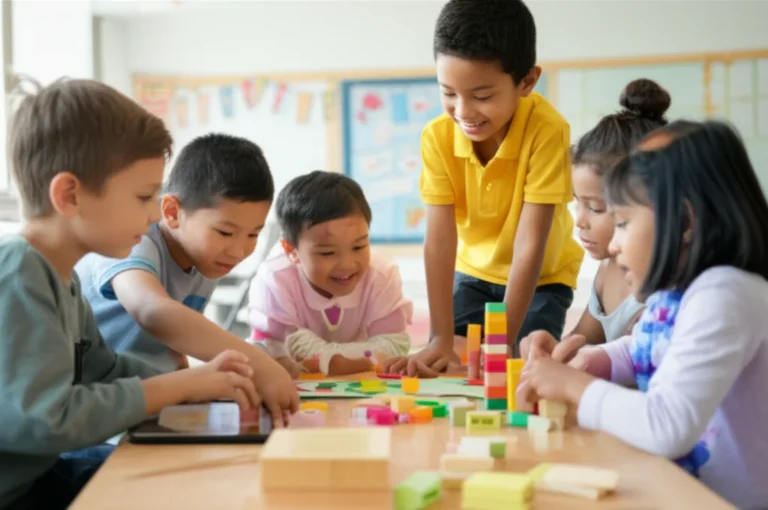

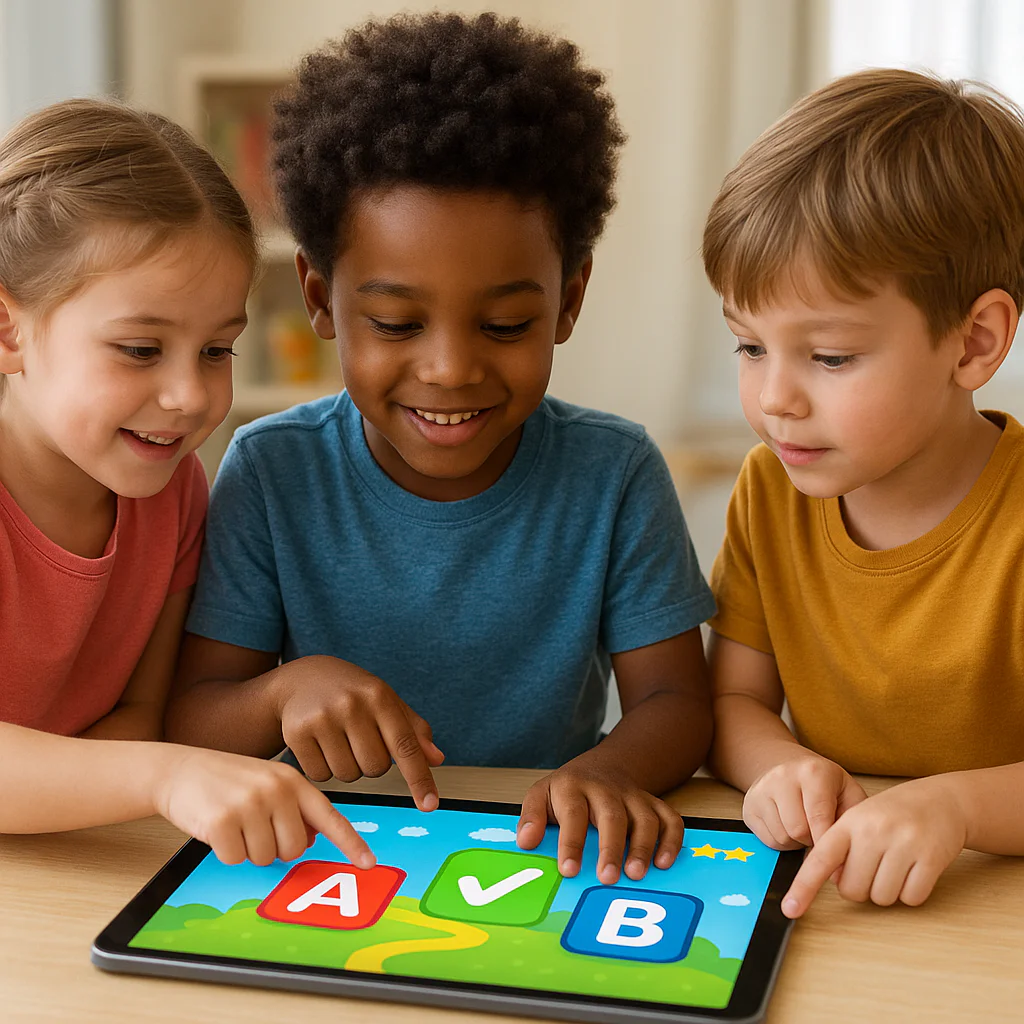

The smartest way to make learning fun is to pair a clear learning goal with active play, useful feedback, and the right level of challenge. The search results provide a wealth of current and emerging topics related to Learning Game and Make Learning Fun with Learning Games. I will extract relevant keywords and phrases, ensuring they are distinct from the already covered list, while focusing on what families and educators can actually use.
A learning game should do more than sprinkle points over a worksheet. Strong examples help children solve problems, explain choices, collaborate, make mistakes safely, and try again. Our Learning Game™ testers have seen a child reject “fraction practice” but eagerly calculate imaginary pizza slices to win a family delivery challenge. Same mathematics, much better invitation.
Research on learning through play highlights active engagement, meaningful experiences, social interaction, iteration, and enjoyment. That combination explains why a well-designed board game, coding challenge, outdoor scavenger hunt, or educational app can turn “I have to study” into “Can I have one more turn?”
Key Takeaways
- Start with the learning objective, then choose the game format.
- Use feedback, repetition, and manageable challenge to build lasting skills.
- Coperative games often outperform constant competition for confidence and participation.
- Mix digital and screen-free activities for richer learning and healthier routines.
- Choose accessible games with adjustable text, audio, timing, contrast, and input options.
- Measure learning, not just excitement: look for explanation, transfer, retention, and improved strategies.
- Popular tools such as Scratch, Khan Academy Kids, PBS KIDS, Minecraft Education, Prodigy Math, and Duolingo can be useful when matched to age, subject, and learning goal.
- AI and adaptive learning are promising, but educators and parents should still check accuracy, privacy, bias, and accessibility.
- The best learning game is one learners want to replay because they are mastering something, not merely collecting rewards.
Table of Contents
- ⚡ Quick Tips and Facts for Making Learning Fun
- What Makes a Learning Game Effective?
- The 10-Minute Rule for Better Engagement
- Learning Games at a Glance: Benefits and Limitations
- 🧠 The Evolution of Play-Based Learning and Educational Games
- From Traditional Games to Digital Learning Platforms
- How Game-Based Learning Differs from Gamification
- What Educational Psychology Says About Learning Through Play
- 🎯 Why Learning Games Make Education More Enjoyable
- Motivation, Curiosity, and Intrinsic Rewards
- Active Learning, Memory, and Skill Development
- Confidence, Collaboration, and Productive Failure
- How Games Support Different Learning Styles and Needs
- 🏆 15 Types of Learning Games for Children and Adults
- 1. Math Games and Number Sense Activities
- 2. Reading, Phonics, and Vocabulary Games
- 3. Writing, Spelling, and Grammar Games
- 4. Science Experiments and Discovery Games
- 5. Coding, Robotics, and Computational Thinking Games
- 6. History, Geography, and Social Studies Games
- 7. Art, Music, and Creative Expression Games
- 8. Language Learning and Translation Games
- 9. Memory, Logic, and Critical-Thinking Games
- 10. Physical Education and Movement-Based Games
- 11. Social-Emotional Learning and Communication Games
- 12. Financial Literacy and Real-World Decision Games
- 13. Board Games, Card Games, and Tabletop Learning
- 14. Outdoor, Scavenger Hunt, and Nature Learning Games
- 15. Multiplayer, Cooperative, and Classroom Team Games
- 🎲 Best Learning Game Ideas by Age and Developmental Stage
- Babies and Todlers: Sensory Play and Early Learning
- Preschoolers: Playful Foundations for Early Literacy and Math
- Elementary School: Building Core Academic Skills
- Middle School: Challenge, Choice, and Deper Thinking
- Teenagers: Real-World Problem Solving and Independent Learning
- Adults: Professional Skills, Hobbies, and Lifelong Learning
- 📚 How to Choose the Right Educational Game
- Match the Game to the Learning Objective
- Check Age Appropriateness and Skill Level
- Compare Solo, Cooperative, and Competitive Play
- Evaluate Accessibility, Inclusivity, and Representation
- Assess Safety, Privacy, Ads, and In-App Purchases
- A Parent and Teacher Checklist for Reviewing Learning Games
- 💻 Digital Learning Games, Apps, and Online Platforms
- Popular Educational Brands Worth Exploring
- ABCmouse, Khan Academy Kids, and PBS KIDS
- Prodigy Math, Duolingo, and Quizlet
- Minecraft Education, Scratch, and Tynker
- How to Tell if an Educational App Is Truly Educational
- Screen-Time Boundaries and Healthy Digital Play
- 🏠 Making Learning Fun at Home
- Turning Everyday Routines into Learning Opportunities
- Family Game Night with an Educational Twist
- Low-Prep Learning Games Using Household Materials
- How Parents Can Give Hints Without Taking Over
- A Weekly Learning Game Schedule for Busy Families
- 🏫 Using Learning Games in Classrooms and Homeschooling
- Align Games with Curriculum Standards
- Learning Centers, Stations, and Small-Group Activities
- Differentiation for Mixed-Ability Learners
- Classroom Management During Game-Based Learning
- Assessing Progress Without Spoiling the Fun
- Blended Learning and Remote Education Strategies
- 🌈 Inclusive Learning Games for Neurodiverse and Diverse Learners
- Designing Games for ADHD Learners
- Supporting Autistic Learners and Sensory Preferences
- Games for Dyslexia, Dyscalculia, and Language Differences
- Universal Design for Learning Principles
- Assistive Technology and Accessible Game Features
- 🛠️ How to Create Your Own Learning Game
- Step 1: Define the Learning Goal
- Step 2: Choose the Game Format and Rules
- Step 3: Add Challenge, Feedback, and Rewards
- Step 4: Test the Game with Real Learners
- Step 5: Improve Replayability and Difficulty
- DIY Learning Game Examples for Different Subjects
- 📊 Measuring Whether a Learning Game Works
- Engagement Metrics Versus Learning Outcomes
- Pretests, Postests, and Formative Assessment
- Observing Problem-Solving, Collaboration, and Persistence
- When to Adapt, Replace, or Retire a Game
- ⚠️ Common Learning Game Mistakes to Avoid
- When Competition Creates More Stress Than Learning
- Avoiding Rewards That Distract from the Skill
- Preventing Cognitive Overload and Confusing Rules
- Why More Screen Time Does Not Always Mean More Learning
- Balancing Fun, Challenge, and Educational Value
- 🔮 The Future of Learning Games
- Artificial Intelligence and Personalized Learning Games
- Virtual Reality, Augmented Reality, and Immersive Play
- Adaptive Learning and Real-Time Feedback
- Emerging Trends in Educational Technology
- ✅ A Practical Learning Game Action Plan
- A One-Day Plan for Parents
- A One-Week Plan for Teachers
- A Four-Week Skill-Building Challenge
- Conclusion
- Recommended Links
- FAQ
- What Is a Learning Game?
- How Do Learning Games Make Education More Fun?
- Are Learning Games Effective for Academic Achievement?
- What Are the Best Learning Games for Kids?
- How Much Time Should Children Spend Playing Educational Games?
- Can Learning Games Replace Traditional Teaching?
- How Can I Make a Learning Game at Home?
- Are Educational Apps Safe for Children?
- How Do I Know If a Game Is Appropriate for My Child’s Age?
- Reference Links
Quick Tips and Facts for Making Learning Fun
If you’re exploring Learning Game™, our educators, parents, and child testers keep returning to one cheerful question: Does the learner want to try again? If the answer is yes, the game has probably found a useful balance between curiosity, challenge, and feedback.
A learning game is not merely a worksheet wearing a pirate hat. It should give learners something meaningful to do, respond quickly, and make progress visible. Research from the National Academies emphasizes that active engagement, feedback, prior knowledge, and supportive environments all influence learning.
What Makes a Learning Game Effective?
The strongest games usually combine these ingredients:
| Ingredient | What it looks like | Why it helps |
|---|---|---|
| Clear goal | “Build a food chain” or “Solve five multiplication problems” | Learners know what success means |
| Immediate feedback | A hint, explanation, sound, or visual response | Mistakes become useful information |
| Appropriate challenge | Tasks are neither automatic nor impossible | Learners stay engaged without feeling defeated |
| Meaningful choices | Players choose paths, tools, or strategies | Choice encourages ownership |
| Repetition with variation | The same skill appears in fresh situations | Practice feels less mechanical |
| Progress visibility | Levels, badges, maps, or mastery bars | Learners can see improvement |
| Social connection | Teams, discussion, peer teaching, or family play | Learning becomes shared rather than solitary |
| Accessibility | Captions, adjustable text, audio, and simple navigation | More learners can participate |
Our recommendation: begin with the learning objective, then select the game mechanic. Starting with “Would a leaderboard look cool?” is how educational design wanders into the shrubery.
For a useful overview of educational games, compare the game’s promised skill with what the learner actually practices.
The 10-Minute Rule for Better Engagement
We often begin with a 10-minute learning-game session, especially for younger children or a new activity:
- Minute 1: Explain the goal in plain language.
- Minutes 2–3: Demonstrate one example.
- Minutes 4–7: Let the learner play independently or with a partner.
- Minutes 8–9: Ask the learner to explain a strategy.
- Minute 10: Celebrate progress and decide whether to continue.
This is not a universal scientific limit. It is a practical starting point. Some learners happily spend 30 minutes designing a Scratch game; others need a movement break after five. The American Academy of Pediatrics recommends considering the child, the content, the context, and what screen use may replace rather than relying one rigid number.
A short session also gives adults a chance to notice a hidden clue: Is the learner struggling because the concept is difficult, or because the rules are confusing? We return to that distinction when discussing cognitive load and assessment.
Learning Games at a Glance: Benefits and Limitations
| Potential benefit ✅ | Possible limitation ❌ | Smart response |
|---|---|---|
| More active participation | Fun can overshadow the learning goal | Ask learners to explain what they practiced |
| Frequent practice | Repetition may become shallow | Use varied problems and real-world examples |
| Immediate feedback | Incorrect feedback can reinforce misconceptions | Prefer teacher-reviewed or evidence-informed platforms |
| Collaboration | Competition can create anxiety | Offer cooperative modes and private progress |
| Personalization | Algorithms may misread learner needs | Keep educator oversight |
| Persistence | Rewards can encourage repeated attempts | Reward strategy, effort, and mastery, not only speed |
| Accessibility | Some games rely heavily on reading, sound, or color | Check captions, narration, contrast, and controls |
| Useful data | Tracking can raise privacy concerns | Collect only necessary data and review settings |
Fact check: game-based learning is not automatically effective simply because learners are smiling. A 2020 review in Frontiers in Psychology found that game-based approaches can support learning, but outcomes depend on design, context, learner characteristics, and how games are integrated with instruction.
Our child testers once adored a spelling app’s fireworks so much that they began tapping random answers to reach the celebration faster. The fireworks were excellent. The learning design needed a referee. We changed the rule: the celebration appeared only after the child explained why the answer was correct.
The Evolution of Play-Based Learning and Educational Games
Learning through play is hardly a new invention. Families have used counting songs, puzzles, storytelling, pretend shops, building blocks, card games, and outdoor challenges for generations. Digital tools simply added animation, adaptive feedback, microphones, cameras, and occasionally a suspiciously enthusiastic cartoon owl.
The UNICEF Learning Through Play guide describes play-based learning as active, engaging, meaningful, socially interactive, iterative, and joyful. Those qualities remain useful whether the game is a homemade scavenger hunt or a tablet-based math adventure.
From Traditional Games to Digital Learning Platforms
| Era or format | Typical examples | Distinctive strength | Watch-out |
|---|---|---|---|
| Oral and physical play | Rhymes, guessing games, movement games | Social interaction and memory | Quality depends on adult facilitation |
| Board and card games | Monopoly, Uno, chess, Scrabble | Strategy, turn-taking, flexible thinking | Rules may be inaccessible to some learners |
| Educational toys | LEGO Education, Learning Resources kits | Hands-on exploration | Materials may not map neatly to curriculum |
| Computer-assisted instruction | Early typing, math, and spelling software | Structured practice | Often limited personalization |
| Mobile apps | Khan Academy Kids, Duolingo, Quizlet | Portable, responsive practice | Notifications and ads can distract |
| Online platforms | Prodigy, Scratch, Minecraft Education | Rich worlds and collaboration | Requires privacy, device, and connectivity checks |
| AI-assisted environments | Conversational tutors and adaptive worlds | Personalization and multimodal feedback | Accuracy, bias, privacy, and overeliance require scrutiny |
Digital learning games can respond quickly and produce detailed activity logs. The data-science literature notes that game logs can reveal attempts, response times, level progression, repeated errors, and abandonment patterns. That information may help educators identify difficulty spikes, but data are not a substitute for conversation. A learner who pauses for ten minutes may be thinking deeply, helping a sibling, or hunting for a snack.
How Game-Based Learning Differs from Gamification
These terms are related but not interchangeable.
| Approach | Definition | Example |
|---|---|---|
| Game-based learning | The game itself is the main learning experience | Players manage a virtual ecosystem to learn food webs |
| Gamification | Game elements are added to an existing task | A vocabulary course adds streaks, points, and badges |
| Play-based learning | Learners explore through flexible, often open-ended play | Children build a bridge and test which design holds the most blocks |
| Simulation | A model represents a real or imagined system | Learners run a virtual business or laboratory |
| Serious game | A game designed primarily for a purpose beyond entertainment | A safety-training scenario with branching decisions |
A badge cannot repair a confusing lesson. Conversely, a carefully designed simulation may teach beautifully without points, avatars, or a leaderboard.
What Educational Psychology Says About Learning Through Play
Effective learning games commonly draw on several principles:
- Retrieval practice: Learners recall information rather than merely reread it. The Learning Scientists provide a clear explanation of why retrieval strengthens learning.
- Spacing: Practice is distributed over time instead of crammed into one marathon session.
- Elaboration: Learners explain, compare, connect, and justify ideas.
- Scaffolding: Hints support progress while preserving the learner’s thinking.
- Feedback: Responses explain what happened and what to try next.
- Metacognition: Learners reflect on strategies and confidence.
- Productive failure: A manageable mistake exposes what needs to be learned.
The trick is to make failure informative rather than humiliating. A gentle “Try looking at the denominator” is more helpful than a giant red buzer that makes a seven-year-old abandon fractions forever.
Why Learning Games Make Education More Enjoyable
Fun is not a decorative ribbon tied around learning. It can influence attention, persistence, curiosity, and willingness to attempt difficult tasks. Yet fun has different forms:
- Silly fun: humor, characters, surprises
- Social fun: teamwork and shared discovery
- Creative fun: designing, building, drawing, composing
- Mastery fun: noticing improvement
- Narrative fun: following a mystery or quest
- Challenge fun: solving something genuinely difficult
Our parent group noticed that children often describe a game as “fun” after mastering a skill they initially disliked. The fun was not always the cartoon. Sometimes it was the satisfying click of an idea finally fitting into place.
Motivation, Curiosity, and Intrinsic Rewards
The Self-Determination Theory overview identifies autonomy, competence, and relatedness as important psychological needs. Learning games can support these needs by offering:
- Autonomy: multiple paths, choices, or creative tools
- Competence: visible progress and achievable challenges
- Relatedness: cooperative play, discussion, and supportive characters
External rewards such as points and badges can be useful, but they should not become the only reason to participate. If the learner stops caring about the subject the moment the badge disappears, the design has probably overfed the reward system.
Active Learning, Memory, and Skill Development
A strong learning game turns the learner into an actor:
- The player predicts what will happen.
- The player makes a choice.
- The system responds.
- The player examines the result.
- The player revises the strategy.
- The player explains or applies the idea elsewhere.
That sequence is more educationaly valuable than tapping through decorative information. The National Science Teaching Association supports active, inquiry-oriented science learning in which students investigate, reason, and communicate.
Confidence, Collaboration, and Productive Failure
Learning games can create a low-stakes environment where learners try again. This is especially useful when a classroom answer feels public and risky.
Try these prompts:
- “What did you notice?”
- “Which clue helped?”
- “What would you change?”
- “Can you show another method?”
- “What would happen if we increased the difficulty?”
- “What did the game not explain clearly?”
A cooperative game can also redistribute expertise. One child may read instructions, another may spot patterns, and another may organize materials. The group succeeds because of complementary skills, not because one speedy player grabs every turn.
How Games Support Different Learning Styles and Needs
We avoid claiming that each child has one fixed “learning style.” Evidence does not support matching every learner to a permanent visual, auditory, or kinesthetic category. Instead, offer multiple ways to access and demonstrate learning:
- Read instructions and hear them aloud.
- Use text, diagrams, models, and demonstrations.
- Allow typing, speaking, drawing, building, or selecting.
- Provide quiet modes and movement breaks.
- Adjust speed, contrast, text size, and complexity.
- Let learners replay explanations without penalty.
The CAST Universal Design for Learning Guidelines offer a stronger framework: provide multiple means of engagement, representation, and action or expression.
15 Types of Learning Games for Children and Adults
Here are 15 useful categories, with examples and design suggestions. We have included both screen-free and digital options because a cardboard game can teach just as powerfully as a polished app.
1. Math Games and Number Sense Activities
Good math games practice:
- Number recognition and counting
- Place value
- Addition, subtraction, multiplication, and division
- Fractions, ratios, and percentages
- Geometry and spatial reasoning
- Estimation and mental math
- Algebraic thinking
- Probability and data interpretation
Examples include Prodigy Math, DragonBox, Osmo Math Wizard, Math Learning Center apps, and homemade dice games.
Design tip: reward explanation, not just speed. Ask, “How did you know?” A correct answer reached by guessing teaches less than a slightly slower answer supported by a clear strategy.
For more ideas, browse educational games on Learning Game™.
2. Reading, Phonics, and Vocabulary Games
Useful mechanics include:
- Sound matching
- Word building
- Rhyming challenges
- Decodable story quests
- Context clues
- Vocabulary sorting
- Reading fluency practice
- Comprehension mysteries
Reading Eggs, Teach Your Monster to Read, PBS KIDS, and Starfall are familiar examples. Adults should check whether an app emphasizes genuine decoding and comprehension or simply rewards rapid guessing.
A parent in our testing group used a treasure-map game with magnetic letters. Her child disliked “phonics practice” but happily searched for the letter combination that unlocked the next island. The task stayed the same; the emotional wrapper changed.
3. Writing, Spelling, and Grammar Games
Try games involving:
- Sentence repair
- Story branching
- Spelling patterns
- Punctuation detectives
- Word-choice challenges
- Character journals
- Collaborative storytelling
- Peer editing
Grammarly is not a children’s game, but its feedback illustrates a useful principle: suggestions should help writers make decisions rather than silently replace their thinking. For younger learners, use word cards, story dice, and illustrated prompts before introducing automated correction.
4. Science Experiments and Discovery Games
Science games work best when learners:
- Make a prediction.
- Test a variable.
- Observe evidence.
- Record results.
- Explain the outcome.
- Revise the model.
Examples include Minecraft Education, Kerbal Space Program, The Magic School Bus titles, PBS KIDS, and hands-on kits from LEGO Education.
A virtual simulation is helpful when the real experiment is dangerous, expensive, slow, or impossible. It should not replace every real-world investigation. A digital volcano can show a process; it cannot replace the smell of vinegar, the messy table, or learning not to put baking soda in your socks.
5. Coding, Robotics, and Computational Thinking Games
Popular platforms include:
- Scratch
- Code.org
- Tynker
- Minecraft Education
- LEGO Education SPIKE
- Kodable
- Lightbot
Coding games teach sequencing, decomposition, pattern recognition, debugging, and abstraction. The best feedback explains why the program behaved unexpectedly. “Try again” is less useful than “The character turns before moving; what order would make the path work?”
6. History, Geography, and Social Studies Games
Game ideas include:
- Map-based treasure hunts
- Historical decision scenarios
- Timeline races
- Virtual museum investigations
- Civics simulations
- Debate role-play
- Resource-management games
- Cultural storytelling activities
Civilization VI can provoke discussions about geography, resources, diplomacy, and historical representation, but it simplifies complex histories. Use it as a starting point for questions, not as a complete textbook.
7. Art, Music, and Creative Expression Games
Creative learning games may involve:
- Digital drawing
- Rhythm and composition
- Virtual instruments
- Costume or architecture design
- Storyboarding
- Stop-motion animation
- Collaborative murals
- Sound-effect creation
GarageBand, Chrome Music Lab, Toca Boca, and Crayola tools can support open-ended creation. There may be no single “correct” answer, but learners can still explain choices, revise drafts, and respond to feedback.
8. Language Learning and Translation Games
Useful activities include:
- Spaced vocabulary review
- Conversation role-play
- Listening discrimination
- Pronunciation practice
- Caption matching
- Cultural scenario games
- Story completion
Duolingo, Mango Languages, Rosetta Stone, and Quizlet offer different approaches. Apps are strongest when paired with real conversation, reading, and cultural context. A streak is not fluency, though it may help someone keep practicing.
9. Memory, Logic, and Critical-Thinking Games
Try:
- Pattern puzzles
- Deduction mysteries
- Sorting challenges
- Strategy board games
- Spatial rotation puzzles
- “Which claim is better supported?” scenarios
- Logic-grid investigations
- Source-evaluation games
Examples include chess, Rush Hour, SET, Portal 2, Baba Is You, and The Logical Journey of the Zombinis. Ask learners to verbalize the rule they discovered. Otherwise, the brain may enjoy the puzzle without transferring the strategy.
10. Physical Education and Movement-Based Games
Movement games can teach:
- Balance and coordination
- Spatial awareness
- Team strategy
- Fitness concepts
- Reaction time
- Anatomy
- Goal setting
Examples include Just Dance, Nintendo Switch Sports, GoNoodle, and outdoor relay challenges. The CDC physical activity guidelines provide broader recommendations for children and adolescents; a learning game should complement, not replace, varied physical activity.
11. Social-Emotional Learning and Communication Games
Possible activities:
- Emotion charades
- Perspective-taking stories
- Conflict-resolution role-play
- Cooperative construction
- Listening challenges
- “What could you say next?” dialogue games
- Recognizing body-language clues
- Team reflection cards
Use care with scoring. Emotional experiences are not spelling words with one universally correct answer. Let learners discuss different responses and consider consequences.
12. Financial Literacy and Real-World Decision Games
Games can model:
- Budgeting
- Saving
- Needs and wants
- Interest
- Risk
- Entrepreneurship
- Consumer choices
- Opportunity cost
Examples include The Game of Life, Money Bags, Payday, and classroom budgeting simulations. Real-world money education should be age-appropriate and clearly distinguish play money from financial advice.
13. Board Games, Card Games, and Tabletop Learning
Tabletop games support:
- Turn-taking
- Planning
- Probability
- Reading
- Counting
- Negotiation
- Emotional regulation
- Flexible thinking
Consider Ticket to Ride, Catan, Carcassonne, Dixit, Uno, Scrabble, Bananagrams, and Codenames. Adapt rules for younger learners or accessibility needs. A shorter cooperative version is often better than a complete rulebook that causes a family revolt before dinner.
14. Outdoor, Scavenger Hunt, and Nature Learning Games
Outdoor games can include:
- Leaf classification
- Geocaching
- Measurement missions
- Bird-sound bingo
- Weather journals
- Neighborhood geometry
- Nature photography
- Map-and-compass quests
These activities connect learning to place. The National Park Service education resources offer lesson ideas that can be transformed into outdoor missions.
15. Multiplayer, Cooperative, and Classroom Team Games
Effective multiplayer learning games define roles and prevent one person from dominating:
- Reader
- Recorder
- Builder
- Timekeeper
- Questioner
- Evidence checker
- Presenter
Rotate roles frequently. A leaderboard may motivate a few learners while discouraging others. Cooperative goals such as “the whole class solves the mystery” can create energy without turning arithmetic into the Olympics.
Best Learning Game Ideas by Age and Developmental Stage
Age labels are useful starting points, not verdicts. Development, language, attention, prior knowledge, motor skills, and interests vary widely.
Babies and Todlers: Sensory Play and Early Learning
Choose simple activities involving:
- Object permanence
- Cause and effect
- Imitation
- Songs and gestures
- Matching colors or shapes
- Naming familiar objects
- Turn-taking
For this age, adult interaction matters more than sophisticated software. The American Academy of Pediatrics advises limiting media for very young children and prioritizing interaction, play, and conversation.
Preschoolers: Playful Foundations for Early Literacy and Math
Try:
- Counting snacks or toy animals
- Rhyming treasure hunts
- Pattern necklaces
- Letter-sound scavenger hunts
- Pretend shops
- Story sequencing
- Shape-building challenges
- Movement songs
PBS KIDS, Khan Academy Kids, Duolingo ABC, and Teach Your Monster to Read may be useful, but preview content and play alongside children when possible.
Elementary School: Building Core Academic Skills
This is a rich stage for:
- Math strategy games
- Reading mysteries
- Science simulations
- Geography quests
- Typing and coding
- Collaborative board games
- Creative writing adventures
- Vocabulary competitions with cooperative goals
Children often appreciate visible progress at this age. Still, let them choose between several activities where possible. Choice can turn “practice time” into “I picked this mission.”
Middle School: Challenge, Choice, and Deper Thinking
Middle-school learners benefit from:
- Open-ended coding
- Historical simulations
- Debate games
- Algebra puzzles
- Engineering design
- Escape-room challenges
- Media-literacy investigations
- Multiplayer strategy
Avoid making every activity look babyish. A serious mystery, design brief, or real-world problem usually beats glittery graphics.
Teenagers: Real-World Problem Solving and Independent Learning
Consider:
- Minecraft Education design challenges
- Kerbal Space Program physics experimentation
- Financial simulations
- Language exchange games
- Debate and civic simulations
- Data visualization projects
- Career scenarios
- Game design with Godot, Unity, or Scratch
Teenagers should increasingly evaluate sources, question models, and critique the game itself. Ask, “Whose perspective is missing from this simulation?”
Adults: Professional Skills, Hobbies, and Lifelong Learning
Adult learning games work when they respect time and experience. Useful formats include:
- Scenario-based compliance training
- Medical and technical simulations
- Language-learning streaks
- Financial decision labs
- Cybersecurity incident response
- Negotiation role-play
- Escape-room team building
- Coding challenges
Platforms such as Duolingo, DataCamp, Codecademy, LinkedIn Learning, and Khan Academy use varied combinations of practice, progress, and feedback. Adults often prefer relevance over cartoon characters. A simulated workplace problem can be highly engaging if it feels authentic.
How to Choose the Right Educational Game
The “best” learning game is the one that fits the learner, goal, setting, and available support. A glowing app with five million downloads can still be the wrong choice for a child who needs slower narration or hands-on materials.
Match the Game to the Learning Objective
Use this sequence:
- Write the objective as an observable action.
- Identify the knowledge or skill required.
- Select a mechanic that rehearses that skill.
- Decide what evidence will show progress.
- Check whether the game’s rewards reinforce the objective.
| Weak objective | Stronger objective | Suitable game mechanic |
|---|---|---|
| Understand fractions | Compare two fractions using visual and numerical evidence | Fraction tiles, sorting, explanation challenge |
| Learn science | Predict how changing one variable affects plant growth | Simulation or real experiment |
| Improve reading | Identify a character’s motivation and cite clues | Story mystery |
| Practice vocabulary | Use new words accurately in context | Dialogue or story-building game |
| Learn coding | Debug a sequence and explain the error | Puzzle-based programming |
Check Age Appropriateness and Skill Level
Look for:
- Reading level
- Motor demands
- Audio speed
- Emotional themes
- Difficulty controls
- Independent navigation
- Content warnings
- Required internet access
- Data collection
- Advertising
- In-app purchases
The Common Sense Education reviews can help families and educators assess digital resources, though we still recommend testing the actual product.
Compare Solo, Cooperative, and Competitive Play
| Mode | Benefits | Risks | Best use |
|---|---|---|---|
| Solo | Personalized pace and privacy | Isolation or frustration | Skill practice and reflection |
| Cooperative | Communication and peer support | Unequal participation | Projects and group problem-solving |
| Competitive | Energy and rapid recall | Anxiety, cheating, status pressure | Optional review rounds |
| Team competition | Shared goals and strategy | Dominant players | Structured classroom tournaments |
Our default recommendation: start cooperatively, then offer competition as an opt-in variation.
Evaluate Accessibility, Inclusivity, and Representation
Check for:
- Captions and transcripts
- Keyboard access
- Screen-reader compatibility
- Adjustable text and contrast
- Color-independent signals
- Audio descriptions
- Pause and replay controls
- Alternative input methods
- Diverse characters and contexts
- Translation or multilingual support
- Sensory-friendly settings
The W3C cognitive accessibility guidance encourages clear structure, familiar interactions, understandable language, and support for people with cognitive and learning disabilities.
Assess Safety, Privacy, Ads, and In-App Purchases
Before using a digital platform, ask:
- What personal information is collected?
- Is a child account required?
- Can children communicate with strangers?
- Are advertisements present?
- Are purchases easy to make?
- Can progress be exported or deleted?
- Does the product comply with relevant child-privacy requirements?
- Is the privacy policy understandable?
The FTC COPA guidance explains requirements related to online services collecting information from children under 13 in the United States.
A Parent and Teacher Checklist for Reviewing Learning Games
✅ The goal is clear
✅ The game requires thinking, not just tapping
✅ Feedback explains mistakes
✅ Difficulty can be adjusted
✅ The learner can pause or replay
✅ Accessibility features are visible
✅ Data collection is proportionate
✅ Competition is optional or carefully structured
✅ Adults can observe progress
✅ The activity connects to real learning
❌ The game rewards guessing
❌ Ads interrupt frequently
❌ Characters speak too quickly
❌ The game confuses speed with mastery
❌ Purchases are hidden behind child-friendly buttons
❌ The “learning” consists mostly of decorative animations
Digital Learning Games, Apps, and Online Platforms
Digital tools can personalize practice, provide instant responses, and make complex systems interactive. They can also produce distractions, inaccurate explanations, and mountains of data nobody examines. The device is not the teacher; the design and human guidance matter.
Popular Educational Brands Worth Exploring
| Brand | Strongest fit | Notable feature | Adult supervision |
|---|---|---|---|
| Khan Academy Kids | Early literacy and math | Structured practice and stories | Recommended |
| PBS KIDS | Preschool and elementary | Familiar characters and subject variety | Recommended |
| Prodigy Math | Elementary math practice | Quest-based progression | Recommended |
| Scratch | Coding and creative projects | Learner-created programs | Essential for community features |
| Minecraft Education | Collaboration and project learning | Open-ended worlds | Recommended |
| Duolingo | Language practice | Short, repeated activities | Recommended |
| Quizlet | Flashcards and review | User-created sets | Review content quality |
| Tynker | Coding pathways | Guided projects | Recommended |
| ABCmouse | Early learning | Broad activity library | Recommended |
ABCmouse, Khan Academy Kids, and PBS KIDS
These platforms target younger learners but differ in approach:
- ABCmouse: broad curriculum coverage with structured pathways and interactive activities.
- Khan Academy Kids: free early-learning content focused on literacy, math, social-emotional learning, and creative activities.
- PBS KIDS: playful activities connected to educational media and familiar characters.
Look beyond brand recognition. Test whether the child can navigate independently, understand instructions, and explain the skill being practiced.
Prodigy Math, Duolingo, and Quizlet
- Prodigy Math: useful for repeated elementary math practice, especially when a child enjoys quests. Monitor whether the narrative becomes more motivating than the math.
- Duolingo: effective for maintaining regular language-learning habits, but pair it with conversation and authentic reading.
- Quizlet: flexible for vocabulary and recall. User-created materials vary in quality, so teachers should review sets before assigning them.
Minecraft Education, Scratch, and Tynker
These tools shine when learners create rather than merely consume:
- Minecraft Education: build models, recreate historical environments, explore ecosystems, or collaborate on design challenges.
- Scratch: animate stories, create games, and learn programming concepts through projects.
- Tynker: follow guided coding activities and progressions.
Creation introduces a useful question: What did the learner build, revise, and explain? That evidence can be more informative than a score.
How to Tell if an Educational App Is Truly Educational
Use the PLAY test:
- P — Purpose: What specific skill is practiced?
- L — Learner action: What does the child actually do?
- A — Accuracy: Is feedback correct and understandable?
- Y — Yield: What evidence shows learning beyond the app?
If the answer to “What does the child do?” is “watch animations and collect coins,” the product may be entertainment with educational decoration.
Screen-Time Boundaries and Healthy Digital Play
Healthy use includes:
- Co-playing or discussing the experience
- Breaks for movement and rest
- Devices outside bedrooms at bedtime
- Clear start and stop points
- Balanced offline activities
- No device during meals when family conversation matters
- Attention to mood, sleep, posture, and behavior
The American Academy of Pediatrics Family Media Plan helps families set routines around media without treating every screen as identical.
Making Learning Fun at Home
Home learning games work best when they fit family life rather than creating a second school day. A five-minute game while cooking can be more sustainable than an elaborate Sunday project that requires twelve printouts and a laminator.
Turning Everyday Routines into Learning Opportunities
Try:
- Cooking: fractions, measurement, sequencing, and chemical change
- Shopping: budgeting, estimation, comparison, and nutrition
- Laundry: sorting, patterns, and responsibility
- Travel: maps, time, distance, and local history
- Gardening: observation, data collection, ecosystems, and patience
- Household repairs: tools, geometry, materials, and safety
- News discussions: evidence, bias, civics, and vocabulary
The secret is to ask questions without turning every moment into a quiz show:
- “What do you predict?”
- “How could we test that?”
- “Which option gives us the best value?”
- “What changed?”
- “What evidence supports your idea?”
Family Game Night with an Educational Twist
Choose one ordinary game and add one reflective prompt:
- Uno: probability and color patterns
- Scrabble: morphology and vocabulary
- Ticket to Ride: geography and planning
- Catan: resources, negotiation, and systems
- Dixit: narrative interpretation and descriptive language
- Chess: prediction and strategic thinking
Do not interrupt every turn with a lecture. Discuss one or two strategies afterward. The goal is family connection with a learning aftertaste, not a surprise exam.
Low-Prep Learning Games Using Household Materials
Paper-and-pencil games
- Category races
- Grid coordinates
- Word ladders
- Logic grids
- Story dice drawn on paper
- “Find the mistake” paragraphs
Cards and dice
- Fraction comparisons
- Multiplication battles
- Probability predictions
- Place-value construction
- Vocabulary matching
Household objects
- Build the tallest stable tower
- Sort objects by material
- Measure shadows
- Design a marble run
- Create a balanced mobile
- Map the route from room to room
Outdoor challenges
- Count and classify plants
- Photograph examples of symmetry
- Track weather
- Find examples of angles
- Estimate and then measure distances
How Parents Can Give Hints Without Taking Over
Use a hint ladder:
- Ask the learner to restate the goal.
- Ask what they have tried.
- Point to a relevant clue.
- Offer two possible next steps.
- Demonstrate a similar, simpler example.
- Explain the method only when necessary.
- Ask the learner to solve a fresh example independently.
A child who receives the answer may finish the task. A child who receives a well-timed hint may learn how to approach the next task.
A Weekly Learning Game Schedule for Busy Families
| Day | Activity | Time | Adult role |
|---|---|---|---|
| Monday | Short retrieval game | 10 minutes | Ask for explanations |
| Tuesday | Physical or outdoor challenge | 15–20 minutes | Join and model curiosity |
| Wednesday | Digital practice | 15 minutes | Review privacy and progress |
| Thursday | Creative project | 20–30 minutes | Provide materials |
| Friday | Family board game | 30 minutes | Focus on strategy |
| Weekend | Real-world mission | Flexible | Let the child lead |
The schedule is deliberately modest. Consistency beats educational fireworks followed by three weeks of silence.
Using Learning Games in Classrooms and Homeschooling
A learning game is not classroom management magic. Before introducing it, decide what students should learn, how they will collaborate, what materials they need, and what happens when the game ends.
Align Games with Curriculum Standards
Create a three-column plan:
| Curriculum target | Game action | Evidence of learning |
|---|---|---|
| Explain how energy moves through an ecosystem | Build and modify a food-web model | Annotated model and oral explanation |
| Compare fractions | Sort, estimate, and justify fraction relationships | Written reasoning |
| Evaluate evidence | Solve a historical mystery using sources | Claim-evidence-reasoning response |
| Debug an algorithm | Repair a program and test variations | Working code and reflection |
The game should rehearse the target, not merely share its vocabulary.
Learning Centers, Stations, and Small-Group Activities
A classroom rotation might include:
- Teacher table: direct instruction and guided practice
- Digital station: adaptive game or simulation
- Hands-on station: manipulatives or experiment
- Collaboration station: cooperative puzzle
- Reflection station: journal, audio response, or exit ticket
Keep instructions visible and short. Assign roles. Use timers carefully; a countdown can energize some learners and overwhelm others.
Differentiation for Mixed-Ability Learners
Adapt:
- Reading level
- Number range
- Time pressure
- Number of choices
- Amount of scaffolding
- Team roles
- Input method
- Extension challenges
- Required explanation
A single game can serve multiple levels when the underlying system allows varied goals. For example, one group may identify a pattern while another proves a general rule.
Classroom Management During Game-Based Learning
Before play, explain:
- The learning target
- The rules
- The noise level
- How turns work
- How to request help
- What to do when finished
- How progress will be recorded
- How respectful disagreement sounds
Use a brief practice round. Many “behavior problems” are actually rule-interpretation problems wearing tiny backpacks.
Assessing Progress Without Spoiling the Fun
Collect evidence through:
- Observation checklists
- Student explanations
- Screenshots or saved work
- Exit tickets
- Error analysis
- Peer teaching
- Short quizzes after play
- Before-and-after comparisons
- Reflection prompts
Ask students:
- “What strategy did you use?”
- “Where did you get stuck?”
- “What feedback helped?”
- “What would you change in the game?”
- “What can you do now that was difficult before?”
Blended Learning and Remote Education Strategies
Remote learning games should provide:
- Low-bandwidth options
- Downloadable or printable alternatives
- Clear asynchronous instructions
- Captions and transcripts
- Multiple submission methods
- Private feedback
- Flexible pacing
- A way to collaborate safely
Google Classroom, Microsoft Teams for Education, Moodle, Nearpod, and Kahoot! can support different parts of a game-based lesson. Avoid making the platform itself the learning objective.
Inclusive Learning Games for Neurodiverse and Diverse Learners
Inclusive design is not a special add-on for a small group. Clear instructions, flexible pacing, predictable navigation, and multiple response options help many learners.
Designing Games for ADHD Learners
Helpful features may include:
- Short rounds
- Visible goals
- Immediate but calm feedback
- Movement opportunities
- Adjustable stimulation
- Reduced clutter
- Pausing without losing progress
- Checkpoints
- One instruction at a time
- Optional audio reminders
A child with ADHD may understand the content but lose the task sequence. External structure can reduce executive-function demands without reducing intellectual challenge.
The CDC ADHD guidance emphasizes that support should be individualized. Games should not be presented as treatment, diagnosis, or a replacement for professional care.
Supporting Autistic Learners and Sensory Preferences
Consider:
- Predictable routines
- Preview screens
- Clear cause-and-effect rules
- Reduced flashing and sudden sounds
- Volume controls
- Visual schedules
- Concrete language
- Optional social interaction
- Safe exit or pause controls
- Interests used respectfully rather than stereotypically
Some autistic learners enjoy highly social play; others prefer solo or parallel play. Offer choices rather than assuming.
Games for Dyslexia, Dyscalculia, and Language Differences
Potential supports include:
- Text-to-speech
- Speech-to-text
- Decodable text
- Readable fonts and spacing
- Audio instructions
- Visual models
- Manipulatives
- Number lines
- Multilingual glossaries
- Extra processing time
- Reduced copying demands
Do not make speed the main measure. A learner may demonstrate excellent reasoning while needing more time to decode text.
Universal Design for Learning Principles
| UDL principle | Learning-game application |
|---|---|
| Multiple means of engagement | Choice of theme, role, difficulty, or collaboration |
| Multiple means of representation | Text, audio, visuals, models, demonstrations |
| Multiple means of action and expression | Type, speak, draw, build, select, or perform |
| Support executive function | Checklists, progress maps, reminders, and clear steps |
| Build self-reflection | Confidence ratings, strategy journals, and review screens |
Assistive Technology and Accessible Game Features
Look for compatibility with:
- Screen readers
- Switch controls
- Keyboard navigation
- Voice input
- Captions
- Magnification
- Haptic feedback
- Alternative text
- Adjustable timing
- Reduced motion
- High contrast
The W3C Web Content Accessibility Guidelines provide a broader technical reference for digital accessibility.
How to Create Your Own Learning Game
Making a game can be surprisingly simple. A stack of index cards, a die, and a clearly defined objective can outperform an expensive platform with vague learning claims.
Step 1: Define the Learning Goal
Write one sentence:
“By the end, the learner will ______.”
Use an observable verb:
- Identify
- Compare
- Classify
- Calculate
- Explain
- Design
- Debug
- Predict
- Justify
- Create
Avoid “understand” unless you define what understanding will look like.
Step 2: Choose the Game Format and Rules
Decide:
- Solo or group
- Cooperative or competitive
- Physical or digital
- Turn-based or real-time
- Open-ended or structured
- Short session or extended project
Then write rules in the learner’s language. Test them with someone who does not already know your plan.
Step 3: Add Challenge, Feedback, and Rewards
A useful loop looks like this:
- Attempt a task.
- Receive evidence or feedback.
- Interpret the result.
- Choose a response.
- Try again or advance.
- Reflect on the strategy.
Rewards might include:
- Unlocking a new scenario
- Choosing the next challenge
- Adding a design element
- Earning a team advantage
- Recording a mastery milestone
Avoid rewards that punish slower learners or turn help-seking into a loss.
Step 4: Test the Game with Real Learners
Observe silently at first:
- Where do learners hesitate?
- Which rule is misunderstood?
- Do players use the intended skill?
- Does anyone dominate?
- Does the feedback change behavior?
- Are mistakes recoverable?
- Is the reading load appropriate?
- Does the game end clearly?
Children are excellent usability testers. They will find a loophole in your carefully crafted scoring system before you finish explaining the second rule.
Step 5: Improve Replayability and Difficulty
Change:
- Problem values
- Story settings
- Available tools
- Time limits
- Number of clues
- Team roles
- Bonus constraints
- Explanation requirements
Replayability should not mean repeating identical questions until everyone becomes a very tired parot.
DIY Learning Game Examples for Different Subjects
| Subject | DIY game | Materials | Learning evidence |
|---|---|---|---|
| Math | Fraction Market | Cards, coins, paper | Compare and justify purchases |
| Reading | Mystery Evidence Hunt | Short text, clue cards | Cite clues and infer motives |
| Science | Ecosystem Balance | Organism cards, tokens | Explain system changes |
| History | Timeline Relay | Event cards, string | Sequence and defend placement |
| Coding | Human Robot | Grid, instruction cards | Write and debug algorithms |
| Language | Story Switch | Picture cards | Use target vocabulary in context |
| SEL | Choice Consequences | Scenario cards | Discuss possible responses |
| Geography | Map Mission | Map, coordinates, tokens | Use scale and spatial language |
Measuring Whether a Learning Game Works
Engagement matters, but engagement is not the same as learning. A learner can spend an hour trying to beat a score while retaining very little of the target concept.
Engagement Metrics Versus Learning Outcomes
| Metric | What it tells you | What it does not prove |
|---|---|---|
| Session length | How long a learner stayed | That learning occurred |
| Repeat attempts | Willingness to continue | That strategies improved |
| Level completion | Progress through the system | Mastery of the concept |
| Accuracy | Performance on presented items | Transfer to new contexts |
| Hint use | Need for support or strategic help | Whether hints were understood |
| Return rate | Ongoing participation | Long-term retention |
| Confidence rating | Learner perception | Actual performance |
| Delayed test | Later recall | Enjoyment or motivation |
The data-science framework described in this peer-reviewed article distinguishes descriptive, diagnostic, predictive, and prescriptive analytics. That distinction is useful:
- Descriptive: What happened?
- Diagnostic: Why might it have happened?
- Predictive: What may happen next?
- Prescriptive: What support should we try?
Pretests, Postests, and Formative Assessment
A practical evaluation plan:
- Give a short pretest.
- Play the game.
- Collect observations and learner reflections.
- Give a similar postest.
- Recheck after a delay.
- Ask learners to apply the skill in a new context.
Do not make the postest identical if memorization could inflate results. Include transfer tasks. If a learner can solve the game’s fraction cards but cannot compare fractions in a recipe, the game needs a bridge to real-world application.
Observing Problem-Solving, Collaboration, and Persistence
Use a simple rubric:
| Skill | Beginning | Developing | Strong |
|---|---|---|---|
| Strategy | Guesses or waits | Tries a known method | Selects and explains an efficient method |
| Feedback use | Ignores clues | Uses some hints | Revises strategy based on evidence |
| Persistence | Stops quickly | Continues with support | Adjusts and retries independently |
| Collaboration | Dominates or withdraws | Participates unevenly | Shares roles and builds on ideas |
| Transfer | Repeats game routine | Applies with prompts | Uses skill in a new situation |
When to Adapt, Replace, or Retire a Game
Adapt the game when:
- The learning goal is right but rules are confusing.
- Difficulty spikes are too severe.
- Learners need more accessible inputs.
- Feedback is technically correct but unclear.
- One strategy dominates.
Replace it when:
- Learners consistently practice the wrong skill.
- The system rewards random guessing.
- Errors are not explained.
- Privacy risks outweigh benefits.
- The activity creates persistent anxiety.
Retire it when repeated redesign cannot solve the underlying mismatch. Nostalgia is not an assessment method.
Common Learning Game Mistakes to Avoid
When Competition Creates More Stress Than Learning
Warning signs include:
- Learners avoid participation
- Speed replaces accuracy
- Students hide mistakes
- Winners dominate repeatedly
- Arguments focus on rules rather than ideas
- Anxiety continues after the game ends
Use private progress, team goals, multiple winners, and cooperative missions. Competition can be an ingredient, not the entire meal.
Avoiding Rewards That Distract from the Skill
A reward is useful when it points back to learning. Examples:
- Unlock a harder design challenge
- Choose the next story setting
- Add a feature to the team project
- Explain a strategy to another learner
A reward is distracting when learners can earn it without practicing the intended skill.
Preventing Cognitive Overload and Confusing Rules
Reduce unnecessary demands:
- Fewer instructions at once
- Consistent button locations
- Familiar symbols
- Demonstration before independent play
- Clear examples and non-examples
- Simple visual hierarchy
- Optional sound effects
- Pause and replay controls
The W3C Making Content Usable guidance is especially helpful for designing content that supports attention, memory, language, and task completion.
Why More Screen Time Does Not Always Mean More Learning
Longer sessions may mean:
- Genuine interest
- Repeated failure
- Confusing navigation
- Social interaction
- Unfinished goals
- Distraction from unrelated features
Track what learners do, not merely how long they remain logged in. Build stopping points and ask learners to demonstrate the skill away from the screen.
Balancing Fun, Challenge, and Educational Value
Use the three-question check:
- Is the learner engaged?
- Is the learner practicing the intended skill?
- Is the learner receiving information that improves the next attempt?
If one answer is no, adjust the game. If all three are yes, you may have something worth keeping.
The Future of Learning Games
The next generation of learning games is likely to become more adaptive, multimodal, and collaborative. Google Cloud’s catalog of generative-AI use cases describes a movement toward “the shift from assistants to agentic teams.” In education, that could mean AI tutors, narrators, teammates, hint systems, and assessment tools working together.
That possibility is exciting. It is also a reason to be cautious. A friendly AI character can make practice feel personal, but personalization without accurate content, privacy protections, or educator oversight is just a very confident guess wearing a cape.
Artificial Intelligence and Personalized Learning Games
Potential uses include:
- Generating practice questions from teacher-approved material
- Adjusting difficulty
- Offering hints rather than answers
- Giving feedback on writing
- Creating branching stories
- Translating instructions
- Supporting voice interaction
- Identifying repeated misconceptions
- Recommending the next activity
Google Cloud examples describe AI systems that generate quizzes from documents, provide adaptive feedback, analyze reading fluency, and offer conversational tutoring. These are promising patterns, not universal proof of effectiveness. Product claims should be checked against independent evidence and classroom results.
Human-in-the-loop rule: let AI suggest, explain, and personalize, but keep educators responsible for goals, accuracy, judgment, and relationships.
Virtual Reality, Augmented Reality, and Immersive Play
VR and AR can support:
- Virtual field trips
- Anatomy exploration
- Historical reconstruction
- Laboratory simulations
- Spatial design
- Vocational training
- Collaborative world-building
Challenges include motion sickness, cost, accessibility, hygiene, device management, and cognitive overload. Immersion should serve the learning objective. A virtual volcano is not automatically better than a well-designed physical model.
Adaptive Learning and Real-Time Feedback
Adaptive systems can use:
- Accuracy
- Time on task
- Error patterns
- Hint requests
- Repeated attempts
- Confidence ratings
- Recent activity
- Preferred input modes
The peer-reviewed data-science review highlights game logs, learner segmentation, recommendation systems, time-series analysis, sentiment analysis, and anomaly detection as possible tools for intelligent applications.
However, adaptive systems can misinterpret behavior. A learner may answer slowly because the question is hard, the device is laging, or the learner is carefully checking work. Data should raise questions, not end conversations.
Emerging Trends in Educational Technology
Watch these areas:
- Generative story and quest creation
- Voice-based tutoring
- Multimodal camera and drawing interaction
- Learner-created 3D worlds
- Persistent educational characters
- Accessibility-first content generation
- Real-time translation
- Explainable recommendation systems
- Teacher dashboards focused on actionable patterns
- Privacy-preserving analytics
- Student ownership of data
- Offline and low-bandwidth learning
- Games that connect classroom learning with real-world action
The best future learning game may not look like a game at all. It may be a collaborative design studio, a virtual field investigation, a personalized story, or a real-world mission with just enough structure to keep curiosity moving.
A Practical Learning Game Action Plan
A One-Day Plan for Parents
- Choose one skill.
- Pick a five-to-15-minute game.
- Explain the goal.
- Let the child attempt independently.
- Offer hints only after observing.
- Ask for an explanation.
- Connect the skill to daily life.
- Record one success and one adjustment.
A One-Week Plan for Teachers
| Day | Teacher action |
|---|---|
| Monday | Define the objective and pre-assess |
| Tuesday | Model the game and practice rules |
| Wednesday | Run small-group play |
| Thursday | Review errors and adapt difficulty |
| Friday | Assess transfer and gather learner feedback |
A Four-Week Skill-Building Challenge
Week 1: Explore
Try several formats and observe motivation, confusion, and accessibility needs.
Week 2: Practice
Use one game repeatedly with varied examples and structured feedback.
Week 3: Create
Ask learners to design a new level, question, story, or rule.
Week 4: Transfer
Use the skill in a new context and evaluate what the game helped learners understand.
A child in our group once declared, “I’m bad at fractions.” After designing a pizza-delivery game, the same child argued passionately about whether three-eighths or two-fifths was the better deal. The fraction skill was not missing. The invitation was.
Conclusion

The best learning games make learners think, choose, explain, revise, and try again. They use fun to support attention and persistence, not to disguise weak instruction.
Our confident recommendations are:
- Choose games that match a clear learning goal.
- Prefer feedback and reasoning over speed.
- Start with cooperative play before competition.
- Combine digital games with conversation and hands-on experiences.
- Check privacy, accessibility, advertising, and data practices.
- Measure transfer and retention, not only points or screen time.
- Use AI carefully, with trusted content and human oversight.
- Let learners create games, not merely consume them.
For most families and classrooms, we recommend beginning with Khan Academy Kids, Scratch, PBS KIDS, Minecraft Education, Code.org, or a well-chosen tabletop game, depending on age and objective. None is perfect. The right choice is the one learners can access, understand, and connect to meaningful practice.
And the unfinished mystery from the beginning? The best sign that a learning game works is not the loudest animation or the longest session. It is the moment a learner closes the game, faces a new problem, and says, “I know how to start.”
Recommended Links
Explore these trusted learning-game resources and products:
- Learning Game™ Learning Game Guide
- Educational Games on Learning Game™
- Educational Apps on Learning Game™
- Edutainment on Learning Game™
- Digital Citizenship on Learning Game™
👉 CHECK PRICE on:
- Scratch resources: Amazon | Scratch Official Website
- Minecraft Education resources: Amazon | Minecraft Education Official Website
- LEGO Education learning kits: Amazon | LEGO Education Official Website
- Osmo learning games: Amazon | Osmo Official Website
- Learning Resources math games: Amazon | Learning Resources Official Website
- ThinkFun logic games: Amazon | ThinkFun Official Website
Recommended books:
- Make It Stick: The Science of Successful Learning
- How People Learn II: Learners, Contexts, and Cultures
- The Gamification of Learning and Instruction
- A Mind for Numbers
- The Art of Game Design: A Book of Lenses
FAQ

What is the impact of gamification on long-term retention?
Gamification can support retention when it encourages retrieval, spacing, feedback, and continued practice. Points and badges alone do not guarantee durable learning. A learner may remember a streak but forget the concept.
What should educators measure?
Use delayed checks, transfer tasks, explanations, and performance in new contexts. Compare these with engagement data rather than treating session length as proof of retention.
Read more about “🎮 15 Top Learning Games to Make Learning Fun (2026)”
How to create custom learning games for the classroom?
Start with one observable objective, choose a mechanic that rehearses it, write simple rules, add feedback, test with a small group, and revise.
A reliable design sequence
- Define the skill.
- Choose the player action.
- Create examples and errors.
- Add hints.
- Decide how progress is shown.
- Test accessibility.
- Assess learning outside the game.
Read more about “Is Coolmath a Learning Game? 🎮”
What are the latest trends in educational game design?
Important trends include adaptive difficulty, generative content, multimodal interaction, AI tutoring, learner-created worlds, accessibility-first design, real-time translation, and analytics that identify misconceptions.
What should not be overlooked?
Privacy, bias, explainability, teacher oversight, and offline access. A flashy AI feature is less valuable than accurate content and useful feedback.
Can learning games help with special needs education?
Yes. Games can offer adjustable pacing, repeated practice, multimodal instructions, predictable routines, alternative input methods, and low-stakes retry opportunities.
What is the right approach?
Individualize support. Consult the learner, family, special educator, and relevant professionals. Do not assume one game works for every learner with the same diagnosis.
Read more about “🚀 25+ Interactive Learning Activities That Actually Work (2026)”
What are some free online learning games for kids?
Useful free or free-access options include Khan Academy Kids, PBS KIDS Games, Scratch, Code.org, Chrome Music Lab, and selected NASA STEM activities.
How should parents choose?
Preview the activity, check privacy and advertising, confirm age suitability, and ask the child to explain what they learned.
Read more about “🎮 45+ Best Free Learning Games for Children (2026)”
What are the best learning games for elementary students?
Strong choices include Prodigy Math for math practice, Khan Academy Kids for younger elementary learners, Scratch for coding and creativity, PBS KIDS for varied subject practice, Minecraft Education for project-based learning, and tabletop games such as Rush Hour, Ticket to Ride, Scrabble, and SET.
Which one should you start with?
Choose based on the target skill. For example, use a fraction game for fraction reasoning rather than a general game that happens to include numbers.
Read more about “🎮 15 Best Online Learning Games for Students (2026)”
How do you measure the ROI of implementing learning games in corporate training?
Measure more than completion rates. Compare training cost and time with changes in performance, error rates, retention, productivity, safety incidents, customer outcomes, and employee confidence.
A practical ROI framework
- Define the business behavior.
- Establish a baseline.
- Track practice and completion.
- Measure post-training performance.
- Conduct a delayed assessment.
- Compare results with implementation and maintenance costs.
- Review employee feedback and accessibility.
Read more about “🎮 Can Learning Games Transform Adult Education in 2026?”
What are the psychological benefits of using learning games for children with ADHD?
Well-designed games may support motivation, task initiation, immediate feedback, persistence, working-memory scaffolds, and a sense of competence.
What are the limitations?
Games do not diagnose or treat ADHD. Avoid excessive stimulation, punitive timers, distracting rewards, and systems that interpret slow responses as low ability.
How can teachers integrate learning games into the curriculum without losing focus?
Tie every game to a stated objective and a follow-up task. Use games as an introduction, practice activity, simulation, or assessment—not as an unconnected reward.
A simple lesson structure
- Teach or model the concept.
- Play with a focused goal.
- Pause for discussion.
- Apply the idea in a new task.
- Assess independently.
Which free learning game platforms are most effective for remote classrooms?
Khan Academy, Khan Academy Kids, Scratch, Code.org, Google Arts & Culture, PBS KIDS, PhET Interactive Simulations, and selected Quizlet resources can support remote learning.
What makes a platform effective remotely?
Look for low bandwidth, clear instructions, asynchronous access, safe collaboration, multiple response formats, and teacher-visible evidence of learning.
What are the latest trends in gamification for online education in 2024?
Major trends include adaptive pathways, AI-generated practice, conversational tutors, short scenario-based learning, multimodal feedback, social learning, accessibility features, and analytics-driven recommendations.
What should modern designers prioritize?
Use gamification to strengthen practice and agency. Avoid manipulative streaks, excessive notifications, opaque algorithms, and competitive systems that punish learners who need more time.
How do learning games improve student retention rates compared to traditional methods?
They may improve retention by increasing retrieval practice, feedback, repetition, motivation, and time on task. However, results vary by game quality, subject, learner, teacher integration, and assessment design.
What evidence is most trustworthy?
Prioritize peer-reviewed studies, independent evaluations, delayed assessments, and transfer measures over vendor claims about engagement alone.
What are the best learning games for adults to make professional development fun?
Useful options include scenario-based simulations, Kahoot! review sessions, Moodle activity paths, Duolingo for language learning, DataCamp for analytics, Codecademy for coding, and custom workplace simulations.
What makes adult learning feel worthwhile?
Authentic problems, relevant feedback, realistic decisions, respect for prior experience, flexible pacing, and a clear connection to workplace performance.
Read more about “🎮 15 Math Games That Make Algebra Fun (2026)”
Reference Links
- Learning Game™
- Learning Game™ Educational Games
- Learning Game™ Educational Apps
- Learning Game™ Edutainment
- Learning Game™ Digital Citizenship
- National Academies: How People Learn II
- UNICEF and LEGO Foundation: Learning Through Play
- American Academy of Pediatrics: Family Media Plan
- American Academy of Pediatrics: Media and Young Children
- CDC: Physical Activity
- CDC: ADHD
- Common Sense Education Reviews
- CAST Universal Design for Learning Guidelines
- W3C Web Content Accessibility Guidelines
- W3C: Making Content Usable for People with Cognitive and Learning Disabilities
- FTC: Children’s Online Privacy Protection Rule
- Frontiers in Psychology: Game-Based Learning Research
- Data Science and Advanced Analytics Review
- Google Cloud Generative AI Use Cases
- Khan Academy
- Khan Academy Kids
- PBS KIDS
- Scratch
- Code.org
- Minecraft Education
- Duolingo
- Quizlet
- Tynker
- LEGO Education
- Osmo
- PhET Interactive Simulations
- Chrome Music Lab