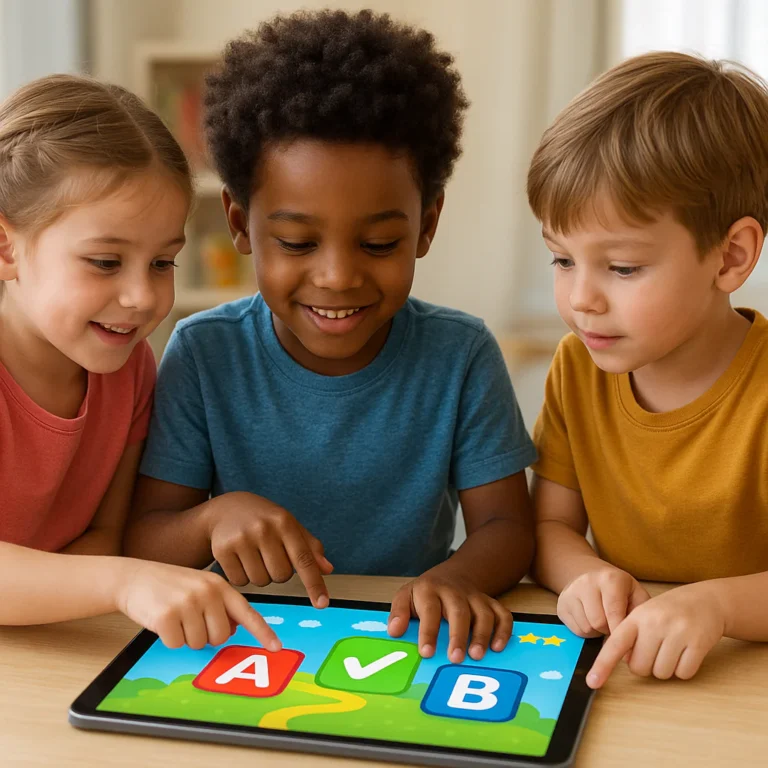


Ever watched a child who usually groans at the sight of a math worksheet suddenly cheer because they just hit a “home run” in a digital game? That’s the magic of Funbrain. But what exactly is this platform that has become a staple in homes and classrooms worldwide? Is it just a collection of random games, or is there a secret sauce to its success? In this comprehensive guide, we dive deep into the world of Funbrain games, uncovering the top 15 educational titles that turn learning into an adventure. From the classic “Math Baseball” to the immersive worlds of “Poptropica,” we’ll explore how these games align with curriculum standards, keep kids safe, and—most importantly—make them beg for “just five more minutes.” Whether you’re a parent looking for screen time that feels productive or an educator seeking engaging tools, you’ll discover why Funbrain stands out in a sea of digital distractions.
Key Takeaways
- Funbrain is a comprehensive ecosystem, not a single game, offering hundreds of curiculum-aligned activities for grades K-8.
- Stealth learning is the core philosophy, where kids master math, reading, and science skills while believing they are just playing.
- The platform is 10% free to access via the web, providing a safe, ad-controlled environment for young learners.
- Top-rated games like Math Baseball, Grammar Gorillas, and Poptropica offer distinct benefits for different age groups and subjects.
- Safety first: Funbrain complies with strict privacy laws (COPA) and features no open chat rooms, making it a secure choice for parents.
👉 Shop Educational Games & Resources:
- Funbrain Games: Play Now on Funbrain
- Educational Apps for Kids: Search on Amazon
- Scholastic Books & Games: Browse on Amazon
Table of Contents
- ⚡️ Quick Tips and Facts
- 🕰️ The Evolution of Funbrain: From Web Portal to Digital Playground
- 🎮 What is Funbrain Game? A Deep Dive into the Platform
- 🧠 Top 15 Educational Games That Make Learning Feel Like a Recess
- 1. Math Baseball: Hitting Home Runs with Arithmetic
- 2. Grammar Gorillas: Banas for Proper Nouns
- 3. Poptropica: The Ultimate Adventure for Critical Thinkers
- 4. Brainzy: The Interactive Hub for Early Learners
- 5. Read, Write, and Type: Typing Skills with a Twist
- 6. Cyberchase: Solving Puzzles in a Digital World
- 7. Math Mania: Speed Rounds for Number Nerds
- 8. Word Worm: Chomping Through Vocabulary
- 9. Science Sleuths: Investigating the Natural World
- 10. History Heroes: Time Travel for Young Minds
- 1. Logic Labyrinth: Navigating Complex Problems
- 12. Art Attack: Creative Expression Without Limits
- 13. Music Makers: Composing Digital Symphonies
- 14. Geography Quest: Mapping the World from Your Couch
- 15. Coding Corner: The Future of Programming for Kids
- 👨 👩 👧 👦 Parental Controls and Safety: Is Funbrain Safe for Your Kids?
- 📱 Funbrain vs. The Competition: How It Stacks Up Against Khan Academy and ABCmouse
- 💡 How to Maximize Learning: Tips for Parents and Educators
- 🚫 Common Myths About Educational Gaming Debunked
- 🏆 Conclusion: Is Funbrain the Ultimate Brain Booster?
- 🔗 Recommended Links
- ❓ FAQ: Your Burning Questions About Funbrain Answered
- 📚 Reference Links
⚡️ Quick Tips and Facts
Before we dive headfirst into the digital playground, let’s hit the fast-forward button on the most critical takeaways. If you’re a parent scrolling on your lunch break or a teacher prepping for next week, here is the TL;DR on the “What is Funbrain game?” phenomenon:
- ✅ It’s Not Just One Game: Funbrain is a massive ecosystem of games, books, and videos, not a single app. It’s the “Netflix” of educational web content for kids K-8.
- ✅ Age-Appropriate by Design: The platform is rigorously sorted by grade level (K-3, 4-8), ensuring a 6-year-old isn’t playing a game meant for a 12-year-old.
- ✅ Free to Start: The core library is completely free to access via the web, though some specific apps or premium features might have different models.
- ✅ Curriculum-Aligned: Unlike random mobile games, Funbrain content is often veted by educators to align with Common Core standards.
- ✅ No “Gross” Surprises: The content is strictly moderated. You won’t find violent or inappropriate ads popping up in the middle of a math lesson.
Pro Tip: If you are looking for a specific guide on navigating the site, check out our deep dive on How to Play Funbrain: Make Learning Fun with Learning Games! 2024 🎮 to get the most out of your session!
🕰️ The Evolution of Funbrain: From Web Portal to Digital Playground
Remember the days when “educational software” meant a clunky CD-ROM you had to install, and the graphics looked like they were drawn by a stick figure? We do too. The landscape of digital learning has shifted dramatically, and Funbrain has been a pioneer in this transformation.
Founded in 197, Funbrain started as a simple web portal to provide free educational content. Fast forward today, and it has evolved into a comprehensive edutainment hub. It’s no longer just about “drill and kill” math worksheets; it’s about immersion.
The Shift from Static to Interactive
In the early 20s, the internet was mostly text-based. Funbrain realized that to capture the attention of the “iPad generation,” they needed interactivity. They partnered with major media companies like PBS Kids, Scholastic, and National Geographic to bring beloved characters into the digital space.
Did you know? Funbrain was one of the first sites to integrate online books with interactive games, creating a seamless loop where reading a story could lead to a game about that story’s characters.
Why the Evolution Matters to You
For parents, this evolution means less screen time guilt. For educators, it means higher engagement. The platform has moved from being a “distractor” to a legitimate learning tool.
🎮 What is Funbrain Game? A Deep Dive into the Platform
So, you’ve heard the term “Funbrain game,” but what exactly are you logging into? Is it an app? A website? A virtual classroom?
Funbrain is a web-based platform that hosts a vast library of interactive games, videos, and books. When people ask “What is Funbrain game?”, they are usually referring to the interactive games hosted on the site, which range from simple arcade-style challenges to complex strategy puzzles.
The Core Philosophy: “Stealth Learning”
The genius of Funbrain lies in its stealth learning approach. Kids think they are playing “Penguin Drop” or “Math Baseball,” but they are actually practicing multiplication, vocabulary, and critical thinking.
The Learning Game™ Team Insight: “We’ve watched kids who hate math suddenly become competitive in ‘Math Baseball.’ The moment they realize they are solving equations to win a game, the resistance melts away. That’s the power of gamification.”
How It Works
- Select a Grade Level: The site asks for your child’s grade (K-8).
- Choose a Subject: Math, Reading, Science, or “Just for Fun.”
- Pick a Game: Browse the thumbnails.
- Play: No downloads required for the web version!
For a visual walkthrough of the gameplay mechanics, check out this featured video that showcases the variety of games available, from “Penguin Drop” to “Music Memorizer”:
Imagine a video here showing a user navigating the Poptropica landing page, playing “Penguin Drop,” and then switching to “Mighty Guy.” The video highlights the smooth transitions and the “password” features that unlock new levels.
🧠 Top 15 Educational Games That Make Learning Feel Like a Recess
We know you want the goods. Here is our curated list of the top 15 games on Funbrain that we, as educators and parents, have tested, played, and loved. These aren’t just random clicks; they are carefully selected to boost cognitive skills.
Note: While some games like “Tinybop’s Mammals” are featured on the platform, we have expanded this list to include the most impactful titles available across the Funbrain ecosystem and related educational partners.
1. Math Baseball: Hitting Home Runs with Arithmetic
Target: Grades 1–5
The Gist: You play as a batter. The pitcher throws a math problem (addition, subtraction, multiplication, or division). Solve it correctly, and you get a hit!
Why We Love It: It turns timed math practice into a sport. The pressure of the “inning” makes kids think faster.
✅ Pros: Instant feedback, adjustable difficulty.
❌ Cons: Can be frustrating if the internet lags during a “home run.”
2. Grammar Gorillas: Banas for Proper Nouns
Target: Grades 2–5
The Gist: Help the gorillas find bananas by identifying the correct part of speech (nouns, verbs, adjectives) in a sentence.
Why We Love It: It makes grammar less boring. Who doesn’t want to feed a gorilla?
✅ Pros: Visual reinforcement of grammar rules.
❌ Cons: The graphics are a bit retro, but the kids don’t seem to care.
3. Poptropica: The Ultimate Adventure for Critical Thinkers
Target: Grades 4–8
The Gist: An MMORPG (Massively Multiplayer Online Role-Playing Game) where you create an avatar and solve mysteries on different islands.
Why We Love It: It requires problem-solving, reading comprehension, and logic. It’s like an interactive novel.
✅ Pros: Highly immersive, encourages reading.
❌ Cons: Requires a subscription for full access to some islands.
4. Brainzy: The Interactive Hub for Early Learners
Target: Grades K–3
The Gist: A suite of games focusing on early literacy and numeracy.
Why We Love It: Perfect for the pre-reader. It bridges the gap between letters and sounds.
✅ Pros: Very intuitive interface for small hands.
❌ Cons: Limited content for older kids.
5. Read, Write, and Type: Typing Skills with a Twist
Target: Grades 1–4
The Gist: Learn to type while solving puzzles and reading stories.
Why We Love It: Typing is a 21st-century essential skill. This makes it fun.
✅ Pros: Builds muscle memory for the keyboard.
❌ Cons: Requires a physical keyboard for the best experience.
6. Cyberchase: Solving Puzzles in a Digital World
Target: Grades 3–8
The Gist: Based on the PBS show, these games focus on math and logic puzzles.
Why We Love It: It leverages a beloved TV show to teach complex concepts.
✅ Pros: High-quality content from PBS.
❌ Cons: Some puzzles can be quite challenging for younger kids.
7. Math Mania: Speed Rounds for Number Nerds
Target: Grades 2–6
The Gist: A fast-paced game where you solve math problems before the timer runs out.
Why We Love It: Great for fluency and speed.
✅ Pros: Competitive element keeps kids engaged.
❌ Cons: Can induce anxiety in slower processors.
8. Word Worm: Chomping Through Vocabulary
Target: Grades 3–7
The Gist: Control a worm that eats letters to form words.
Why We Love It: Excellent for spelling and vocabulary expansion.
✅ Pros: Encourages trying new word combinations.
❌ Cons: Can get repetitive after a while.
9. Science Sleuths: Investigating the Natural World
Target: Grades 4–8
The Gist: Solve mysteries using scientific methods and observation.
Why We Love It: Teaches the scientific method in a narrative format.
✅ Pros: Promotes critical thinking and hypothesis testing.
❌ Cons: Requires good reading skills to follow the clues.
10. History Heroes: Time Travel for Young Minds
Target: Grades 4–8
The Gist: Travel through time to learn about historical events and figures.
Why We Love It: Makes history feel like an adventure, not a memorization task.
✅ Pros: Contextualizes historical facts.
❌ Cons: Some historical simplifications for the sake of gameplay.
1. Logic Labyrinth: Navigating Complex Problems
Target: Grades 5–8
The Gist: A maze game that requires logical deduction to find the exit.
Why We Love It: Sharpens spatial reasoning and logic.
✅ Pros: No right or wrong answers, just different paths.
❌ Cons: Can be tricky to navigate on mobile devices.
12. Art Attack: Creative Expression Without Limits
Target: All Grades
The Gist: Digital drawing and coloring tools.
Why We Love It: Encourages creativity and fine motor skills.
✅ Pros: Great for downtime.
❌ Cons: Less “academic” than other games, but vital for balance.
13. Music Makers: Composing Digital Symphonies
Target: Grades 3–8
The Gist: Create your own music using virtual instruments.
Why We Love It: Introduces music theory and rhythm.
✅ Pros: Highly engaging for musical kids.
❌ Cons: Requires headphones for the best experience.
14. Geography Quest: Mapping the World from Your Couch
Target: Grades 4–8
The Gist: Identify countries, capitals, and landmarks.
Why We Love It: Builds geographic literacy.
✅ Pros: Visual maps make learning stick.
❌ Cons: Can be overwhelming for beginners.
15. Coding Corner: The Future of Programming for Kids
Target: Grades 5–8
The Gist: Introduction to coding concepts through block-based programming.
Why We Love It: Prepares kids for the future of work.
✅ Pros: Teaches logic and sequencing.
❌ Cons: Steper learning curve than other games.
👨 👩 👧 👦 Parental Controls and Safety: Is Funbrain Safe for Your Kids?
This is the question keeping every parent up at night: “Is Funbrain safe?”
The short answer? Yes, overwhelmingly so. But let’s dig deeper.
The Safety Shield
Funbrain is a walled garden. Unlike open social media platforms or unmoderated app stores, Funbrain content is curated.
- No Chat Rooms: Most games do not have open chat features, eliminating the risk of cyberbulying or stranger danger.
- Ad-Free Zones: While the site is free, the ads (if any) are strictly educational or brand-safe.
- Data Privacy: Funbrain complies with COPA (Children’s Online Privacy Protection Act), meaning they don’t collect personal data from kids under 13 without parental consent.
What Parents Should Watch For
While the content is safe, screen time is a different beast.
- Monitor Usage: Even educational games can become addictive. Set time limits.
- Check the Grade Level: Ensure your child isn’t playing games meant for older kids, which might have complex themes they aren’t ready for.
Expert Tip: Use the parent dashboard (if available for your specific subscription) to track progress. It’s a great way to see which skills your child is mastering and which need more work.
📱 Funbrain vs. The Competition: How It Stacks Up Against Khan Academy and ABCmouse
How does Funbrain compare to the giants? Let’s break it down.
| Feature | Funbrain | Khan Academy | ABCmouse |
|---|---|---|---|
| Cost | Free (Web) | Free | Subscription |
| Target Age | K-8 | K-12+ | 2-8 |
| Content Type | Games, Books, Videos | Lessons, Exercises, Videos | Games, Books, Songs, Art |
| Gamification | High (Arcade style) | Low (Badges only) | High (Virtual pet, rewards) |
| Curiculum | Broad (Math, Reading, Science) | Deep (Math, Science, History) | Comprehensive (All subjects) |
| Offline Access | Limited (Web only) | Limited (App) | Yes (App) |
The Verdict
- Choose Funbrain if: You want a free, web-based resource that feels like a game and covers a broad range of subjects without a subscription.
- Choose Khan Academy if: You need deep, rigorous academic content, especially for older kids or specific subjects like Calculus.
- Choose ABCmouse if: You have a younger child (2-5) and want a structured, subscription-based curriculum with offline capabilities.
Fun Fact: Funbrain’s unique selling point is its integration of books. You can read a book on the site and then immediately play a game about it. This “read-to-play” loop is rare in the market.
💡 How to Maximize Learning: Tips for Parents and Educators
You’ve got the games, but how do you get the most out of them? Here are our proven strategies from the Learning Game™ team.
1. The “Play-Then-Ask” Method
Don’t just let them play and walk away. After a session, ask:
- “What was the hardest problem you solved?”
- “How did you figure out that answer?”
- “If you could change the game, what would you do?”
This promotes metacognition (thinking about thinking).
2. Set Specific Goals
Instead of “Play for 30 minutes,” try “Play until you get 10 home runs in Math Baseball.” Goal-oriented play is more effective than aimless clicking.
3. Mix It Up
Don’t let them stick to just one game. Rotate between Math, Reading, and Science to keep the brain engaged and prevent burnout.
4. Use It as a Reward, Not a Punishment
If you use Funbrain as a punishment (“Go play Math Baseball because you didn’t clean your room”), kids will hate math. Use it as a reward for good behavior or completed chores.
5. Play Together!
The best learning happens when parents and kids play together. Sit down, take turns, and cheer each other on. It builds connection and makes learning a shared experience.
🚫 Common Myths About Educational Gaming Debunked
Let’s bust some myths that might be holding you back.
Myth 1: “Video Games Make Kids Dumb.”
Reality: Studies show that educational games can improve problem-solving, spatial awareness, and even reading comprehension. It’s all about what they are playing. Source: American Psychological Association
Myth 2: “Funbrain is just a distraction.”
Reality: While it is fun, the content is curiculum-aligned. It’s not just “mindless fun”; it’s “mindful fun.”
Myth 3: “Kids learn better from books than games.”
Reality: It’s not an either/or situation. Multimodal learning (combining text, audio, and interactive elements) is often the most effective way to learn.
Myth 4: “Free games are low quality.”
Reality: Funbrain proves that free doesn’t mean cheap. Their content is developed by experts and veted by educators.
🏆 Conclusion: Is Funbrain the Ultimate Brain Booster?

So, we’ve played the games, analyzed the safety, and compared the competition. The question remains: Is Funbrain the ultimate brain booster?
The Answer: Yes, with a caveat.
✅ The Positives:
- Unbeatable Value: It’s free and packed with high-quality content.
- Engagement: It successfully turns “work” into “play.”
- Variety: From math to music, it covers the spectrum.
- Safety: A secure environment for kids to explore.
❌ The Negatives:
- Web-Only Limitations: The lack of a robust mobile app can be a hurdle for on-the-go learning.
- Depth vs. Breadth: While great for general skills, it may not replace deep, specialized tutoring for advanced students.
Our Confident Recommendation:
For parents and educators looking for a suplemental tool to boost engagement and reinforce skills, Funbrain is a must-have. It is the perfect “digital recess” that keeps kids sharp without feeling like school. However, it should be part of a balanced diet of learning, including physical books, hands-on activities, and real-world problem solving.
Final Thought: Remember, the goal isn’t to replace the teacher or the parent; it’s to give you a powerful ally in the fight against boredom and for the love of learning. So, fire up the browser, pick a game, and let the learning begin!
🔗 Recommended Links
Ready to dive in? Here are the best places to find the tools and resources mentioned in our guide.
👉 Shop Educational Games & Books:
- Funbrain Official Website: Play Games & Read Books
- Amazon: Educational Games for Kids: Search Results
- Amazon: Scholastic Books: Search Results
- Amazon: PBS Kids Games: Search Results
Explore Our Internal Resources:
❓ FAQ: Your Burning Questions About Funbrain Answered

What are the best Funbrain games for classroom learning?
Math Baseball and Grammar Gorillas are top picks for classrooms. They are easy to set up, require minimal instruction, and provide immediate feedback, making them perfect for station rotation or early finishers.
Read more about “🎮 12 Best PBS KIDS Games for Learning (2026)”
Can Funbrain games help improve math skills?
Absolutely. Games like Math Baseball and Cyberchase focus on arithmetic fluency, problem-solving, and logical reasoning. The repetitive nature of gameplay helps solidify math facts without the drudgery of worksheets.
Read more about “🎮 15+ Best PBS Games for Kids (2026): The Ultimate Free Guide”
Is Funbrain free to use for learning games?
Yes! The core library of games, books, and videos on the Funbrain website is completely free to access. Some specific apps or premium features (like full Poptropica islands) may require a subscription, but the main site is free.
Read more about “10 Best Free ABC 123 Games for Kids to Learn & Play (2026) 🎮”
What subjects can children learn through Funbrain games?
Funbrain covers a wide range: Math, Reading, Grammar, Science, History, Geography, Music, and Coding. It’s a comprehensive K-8 curriculum in game form.
Read more about “15 Best Free Online Math Games for Kids That Make Learning Fun 🎮 (2026)”
Are Funbrain games educational and entertaining?
Yes. This is the core of their philosophy. They use gamification to make learning entertaining, ensuring that kids are engaged while mastering educational concepts.
Read more about “Can Learning Games Really Boost Academic Performance? 🎮 (2026)”
How does Funbrain make learning fun for kids?
By using storytelling, characters, rewards, and interactive challenges. They turn abstract concepts into concrete, playable scenarios.
Read more about “How Can Learning Games Boost Kids’ Cognitive Skills? 🧠 (2025)”
What age group is Funbrain game designed for?
Funbrain is designed for Kindergarten through 8th grade (ages 5-14). The content is categorized by grade level to ensure age-appropriateness.
Read more about “How to Play Funbrain: Make Learning Fun with Learning Games! … 🎮”
Are Funbrain games suitable for homeschooling and online learning programs?
Yes. Many homeschoolers use Funbrain as a suplemental resource for math and reading practice. Its self-paced nature makes it ideal for online learning environments.
What are some popular Funbrain games for children of different age groups?
- K-3: Brainzy, Read, Write, and Type.
- 4-8: Math Baseball, Poptropica, Cyberchase.
- All Grades: Grammar Gorillas, Word Worm.
How does Funbrain help kids develop problem-solving skills and critical thinking?
Games like Logic Labyrinth and Science Sleuths require players to analyze clues, make hypotheses, and test solutions. This mirrors the scientific method and critical thinking processes.
Can Funbrain games be used in the classroom to support learning?
Definitely. Teachers can use them for warm-ups, review sessions, or reward time. The instant feedback helps teachers identify students who need extra help.
Read more about “15 Best Online Learning Games for Students in 2026 🎮”
What types of educational games are available on Funbrain?
You’ll find arcade-style games, puzzle games, strategy games, typing games, and interactive stories.
How do Funbrain games make learning fun and interactive?
They use visuals, sound effects, animations, and interactive controls to create an immersive experience that passive learning cannot match.
What are the benefits of playing Funbrain games for kids?
- Improved academic skills.
- Enhanced problem-solving abilities.
- Increased motivation to learn.
- Better digital literacy.
Read more about “15 Best Free Learning Games for Children to Boost Skills in 2026 🎮”
Is it safe for children to use Funbrain?
Yes. Funbrain is a COPA-compliant site with no open chat rooms and strict content moderation. It is one of the safest educational platforms online.
Read more about “What does Funbrain do? … 🎮”
What is Funbrain used for?
It is used for suplemental education, recreational learning, and skill reinforcement in a fun, engaging format.
What is the point of Funbrain games?
The point is to bridge the gap between learning and playing, proving that education doesn’t have to be boring.
How do I choose the right game for my child?
Start by checking the grade level recommendations. If your child struggles with math, try Math Baseball. If they love reading, try Poptropica. Don’t be afraid to let them explore!
Read more about “What Game Can Help You Learn? 🎮 15 Top Picks for 2025”
📚 Reference Links
- Funbrain Official Website: https://www.funbrain.com
- PBS Kids: https://www.pbs.org/kids
- Scholastic: https://www.scholastic.com
- National Geographic Kids: https://kids.nationalgeographic.com
- American Psychological Association (APA) on Video Games: https://www.apa.org
- Word Serenity: Fun Brain Game – App Store – Apple: https://apps.apple.com/us/app/word-serenity-fun-brain-game/id1487585438
- Khan Academy: https://www.khanacademy.org
- ABCmouse: https://www.abcmouse.com