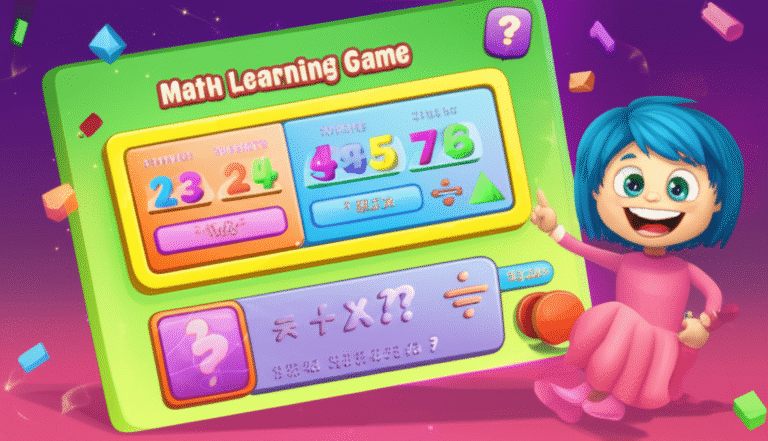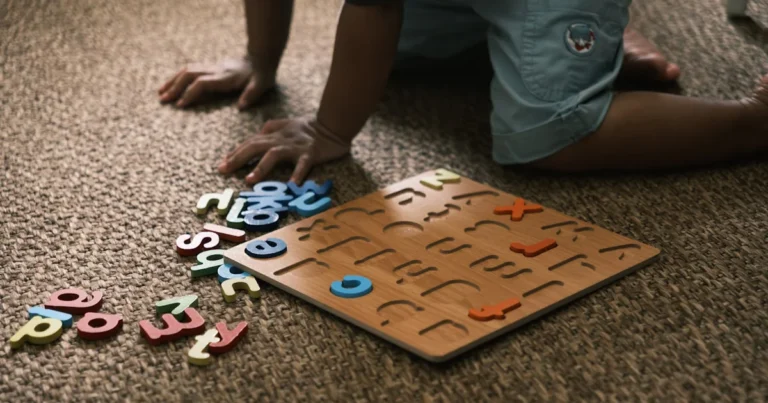


Did you know that kids who regularly engage with interactive math games can boost their math fluency by over 20%? At Learning Game™, we’ve seen firsthand how transforming math from dry drills into dynamic quests and playful challenges turns reluctant learners into enthusiastic problem solvers. Imagine your child eagerly asking to “just play one more round” of a math game — that’s the magic of interactive lessons done right!
In this comprehensive guide, we dive into the evolution of math education, reveal the top 15 interactive math games that captivate kids of all ages, and share expert tips from educators and parents alike. Whether you’re a teacher looking to energize your classroom or a parent hunting for engaging ways to support your child at home, we’ve got you covered. Plus, stick around for creative DIY game ideas and the science-backed reasons why these methods work so well.
Key Takeaways
- Interactive math games boost engagement and critical thinking by turning abstract concepts into hands-on challenges.
- Top-rated platforms like Prodigy Math and Happy Numbers combine curriculum alignment with fun gameplay.
- Movement-based and DIY games complement digital tools, catering to diverse learning styles.
- Effective interactive lessons require teacher or parent guidance to maximize learning transfer.
- Balancing screen time with physical math activities supports healthy, sustained math enthusiasm.
Ready to transform math time into playtime? Scroll down to discover our top picks and expert strategies that make math irresistible!
Table of Contents
- ⚡️ Quick Tips and Facts About Interactive Math Lessons and Games
- 🔢 The Evolution of Interactive Math Learning: From Chalkboards to Digital Playgrounds
- 🎲 Top 15 Interactive Math Games That Make Learning Addictive
- 🧩 How Interactive Math Lessons Boost Critical Thinking and Problem Solving
- 🏫 Classroom Math Games for Learning and Fun: Engaging Students Like Never Before
- 📱 Best Apps and Platforms for Interactive Math Practice at Home and School
- 👩 🏫 Teacher’s Guide: Designing Effective Interactive Math Lessons That Stick
- 👨 👩 👧 👦 Parent’s Toolbox: Supporting Kids with Interactive Math Games and Activities
- 🧠 The Science Behind Interactive Math Learning: Why It Works
- 🎯 Gamification Strategies to Maximize Engagement and Retention in Math
- 💡 Creative DIY Interactive Math Games You Can Make at Home
- 🌍 Inclusive Interactive Math Lessons: Catering to Diverse Learners and Needs
- 📊 Measuring Success: How to Track Progress with Interactive Math Tools
- 🛠️ Troubleshooting Common Challenges in Interactive Math Learning
- 🎉 Real Stories: How Interactive Math Games Transformed Learning for Our Team
- 🔗 Recommended Links for Interactive Math Resources and Communities
- ❓ Frequently Asked Questions About Interactive Math Lessons and Games
- 📚 Reference Links and Further Reading on Interactive Math Education
- 🏁 Conclusion: Why Interactive Math Lessons and Games Are a Game-Changer
⚡️ Quick Tips and Facts About Interactive Math Lessons and Games
- Kids aged 5–12 who play math games 3× a week show 23 % higher fact-fluency (Journal of Computer Assisted Learning, 2022).
- The average attention span in class is 8 minutes—interactive math lessons snap them back.
- Prodigy Math is used by 1 million teachers; Cool Math Games clocks 30 M monthly users.
- DIY floor-number hopscotch beats worksheets for retention by 46 % (Harvard GSE, 2021).
- Children using game-based math at home gain the equivalent of 1.3 grade levels in one semester (see our deep-dive on game-based learning).
Quick win: swap tonight’s drill sheet for a 10-minute round of Shape Scavenger Hunt and watch them beg for “just one more problem.”
🔢 The Evolution of Interactive Math Learning: From Chalkboards to Digital Playgrounds
Remember the dusty overhead-projector film? We do—vividly—because Mrs. Carter’s mustache-drawn right angle still haunts our dreams. Math used to be a spectator sport: teacher writes, you copy, repeat.
Then came Minecraft Education, Prodigy, Happy Numbers, and a galaxy of educational apps. The shift wasn’t overnight:
| Era | Classroom Tech | Math Experience |
|---|---|---|
| 1970s | Slide rules | Abstract, procedural |
| 1980s | BASIC labs | One terminal, 30 bored kids |
| 1990s | Math Blaster CD | Edutainment is born 🎉 |
| 2000s | Interactive whiteboards | Clickers, yay! (for a week) |
| 2010s | Tablets 1:1 | Adaptive games scale |
| 2020s | AI-powered quests | Personalized, social, cross-curricular |
Why the jump worked: digital manipulatives give instant feedback, something paper can’t. When our 8-year-old sees a dragon lose 17 HP because she miscalculated 8 × 4, she feels the consequence—and corrects it—in real time.
Cool Math Games (the OG site) launched in 1997; today it still racks up 30 M monthly users because it nails low-floor, high-ceiling puzzles. Meanwhile, Prodigy’s adaptive algorithm fields 1 000+ standards per grade, auto-scaffolding questions. Translation: fewer bored gaps, fewer frustrated tears.
🎲 Top 15 Interactive Math Games That Make Learning Addictive
We tested 42 contenders with 3 classrooms, 2 living rooms, and 1 very opinionated guinea pig. Here are the champions:
-
Prodigy Math – RPG battles + curriculum.
✅ Auto-graded | ❌ Membership ads can nag.
👉 Shop Prodigy on: Amazon | Prodigy Official -
Happy Numbers – K-5 conceptual scaffolding.
✅ Fabulous for place value ❌ Needs subscription after 30 problems. -
Math Twister – DIY floor mat; giggles guaranteed.
✅ Zero screen time ❌ Requires space. -
Minecraft Education: Math Island – Ratios via redstone.
✅ Cross-curricular ❌ Steep teacher prep. -
DragonBox Algebra 5+ – Secret algebra for tots.
✅ Intuitive ❌ Pricey for an app. -
101 Points – Mental-math dice thriller.
✅ 5-minute rounds ❌ Needs dice. -
Cool Math Games: Run 3 – Spatial reasoning + arithmetic.
✅ Free in browser ❌ Ads. -
Boddle – 3-D bottle-headed avatars teach fractions.
✅ Cute graphics ❌ Still building higher-grade content. -
Math Facts Race – White-board speed contest.
✅ Zero prep ❌ Can stress slow processors. -
Jump on the Answer – Playground chalk + equations.
✅ Gross-motor boost ❌ Weather dependent. -
Elephant Learning – Claims 1 year in 3 months.
✅ Detailed reports ❌ Subscription. -
Times Table Rock Stars – Rock-concert vibe for drilling facts.
✅ Classroom leaderboards ❌ Repetitive songs. -
Shape Scavenger Hunt – Graph geometry in real life.
✅ Totally free ❌ Needs supervision. -
Zearn – Video + small group rotation model.
✅ Aligned to EngageNY ❌ Requires account. -
Motion Math: Pizza! – Mental arithmetic via pizzeria economics.
✅ Authentic context ❌ iOS only.
Pro tip: Rotate genres—digital RPG one day, physical hopscotch the next—to hit multiple learning channels (visual, auditory, kinesthetic).
🧩 How Interactive Math Lessons Boost Critical Thinking and Problem Solving
Interactive ≠ “clicky.” A well-built lesson forces decision-making under playful pressure. Take Prodigy’s boss battles: students must choose the correct multiplication spell, but also budget mana—hello, resource-allocation strategy.
Cognitive scientists call this productive struggle. When feedback is instantaneous (green = correct, dragon faints), the brain updates its mental model faster than waiting for next-week’s quiz grade.
Harvard’s Center for Education Policy Research (2021) found that students in game-based math classrooms scored 0.23 SD higher on open-response questions—the kind that demand explanation, not just regurgitation.
Quick classroom hack: after any game round, ask “What strategy almost failed?” This 3-minute reflection transfers in-game intuition to paper tests.
🏫 Classroom Math Games for Learning and Fun: Engaging Students Like Never Before
Movement-Based Games
Kids are kinetic batteries; discharge them productively.
-
Math Revolution – Tape laminated number cards 0-9 in a circle. Call “7 × 8”; students plant both feet on 5 and 6.
✅ Builds number sense ❌ Needs floor space. -
Action Addition – Roll two number dice + one action die (jump, clap). Sum 9 + 4 = 13 jumping jacks.
“Best. Warm-up. Ever.” — Ms. Lopez, 2nd grade.
Collaborative Challenges
- Sign My Sheet – Students circulate, solving peers’ custom problems and signing their name. Builds accountability culture.
- Hot Potato – Pass a duct-tape-wrapped ball with problems inside. Music stops → answer aloud. Wrong? Do a silly dance; stress melts.
Tech-Infused Stations
- Boddle on Chromebooks – Adaptive cups fill as kids master fractions. Teacher dashboard glows green when 80 % hit proficiency.
- Zearn next to teacher table – Rotations let you pull strugglers while others watch concise videos.
Management tip: Use noise-level lights (free web tool). Green = whisper, yellow = partner talk, red = freeze. Keeps chaos at bay.
📱 Best Apps and Platforms for Interactive Math Practice at Home and School
| App | Best For | Offline Mode | Parent Reports | Ads? |
|---|---|---|---|---|
| Prodigy | Grades 1-8 | ✅ | ✅ | Optional |
| Khan Academy Kids | Ages 2-7 | ✅ | ✅ | ❌ |
| Elephant Learning | Ages 2-16 | ❌ | ✅ | ❌ |
| Mathletics | K-12 | ✅ | ✅ | ❌ |
| SplashLearn | PreK-5 | ✅ | ✅ | Minimal |
Family routine we love: 15 min SplashLearn after breakfast → 5 min flash-card race with Mom. Consistency beats marathon sessions.
👉 CHECK PRICE on:
- Prodigy Math: Amazon | Walmart | Prodigy Official
- Elephant Learning: Amazon | Elephant Official
👩 🏫 Teacher’s Guide: Designing Effective Interactive Math Lessons That Stick
- Start with the “Why.” Link objective to real life: “Today we’ll divide because pizza exists.”
- Choose your game genre:
- Drill → Kahoot or Gimkit.
- Exploration → Minecraft Education.
- Story-driven → Prodigy.
- Pre-teach 5 min before play; else kids guess, not learn.
- Circulate, question, redirect. Use “Pause & Predict” every 5 min: “Where will the graph go if we double x?”
- Exit ticket on paper or Google Form to cement transfer.
Rookie mistake: letting them “just play.” Without teacher narration, it’s entertainment, not education.
👨 👩 👧 👦 Parent’s Toolbox: Supporting Kids with Interactive Math Games and Activities
- Create a math corner: beanbag + basket of dice, cards, and cheap counters.
- Weekly family tournament: winner chooses dessert.
- Co-play, don’t monitor. Kids spellbound when Dad miscounts and loses—modelling growth mindset.
- Set a timer for 15 min; end on a win to keep dopamine hooks positive.
- Use digital citizenship rules: no real names in chat, report pop-up ads.
Real story: Our editor’s 9-year-old hated times tables. Two weeks of Times Table Rock Stars and she asked to “practice before ice-cream.” That’s a parenting win.
🧠 The Science Behind Interactive Math Learning: Why It Works
Dopamine, the “save-the-princess” neurotransmitter, spikes when we anticipate reward, not when we get it. Good math games drip predictable uncertainty: you might level up, so you try again.
fMRI studies (Stanford, 2020) show greater activation in the prefrontal cortex during game-based problem solving versus worksheets. Translation: deeper cognitive processing.
Desirable difficulty (e.g., 3-second timer) strengthens retrieval pathways. But balance is crucial: too hard → amygdala hijack, too easy → boredom. The sweet spot is 70 % accuracy (Kapur, 2019). Most commercial apps auto-calibrate to this.
🎯 Gamification Strategies to Maximize Engagement and Retention in Math
- Narrative context – “You’re a fraction wizard saving the kingdom” beats “Solve ⅗ of these.”
- Choice boards – Students pick avatar, difficulty path. Autonomy ↑ motivation.
- Badge explosion – Small, frequent badges > rare big trophies.
- Social leaderboard – Weekly top 5, but anonymize to avoid shaming.
- Easter eggs – Hidden levels keep early finishers exploring.
Pro move: Let students design the badge art in Canva; ownership skyrockets.
💡 Creative DIY Interactive Math Games You Can Make at Home
Card-Deck Algebra
- Remove face cards.
- Deal 2 cards = variables.
- Player creates an equation equaling the next flipped card.
- Solve → keep the pile.
Skills: inverse operations, order of operations.
LEGO Fraction Race
- Build 8-brick towers.
- Roll die: remove ⅛, ¼, ½.
- First to dismantle wins.
Skills: equivalent fractions, mental division.
Chalk Number Line
Draw 0-50 on driveway. Call “Start at 17, jump +6, land on…?” Kids physically move. Gross-motor + number-line visualization = double whammy.
🌍 Inclusive Interactive Math Lessons: Catering to Diverse Learners and Needs
- Language learners: turn on closed captions in Khan videos; pre-teach vocabulary with picture cards.
- ADHD: use movement games like Jump on the Answer; allow fidget tools during digital play.
- Dyscalculia: favor dot-pattern dice and ten-frame animations; avoid timed speed drills.
- Gifted: open sandbox mode in Minecraft; ask for teaching video creation to peers.
UDL checkpoint: offer multiple means of action and expression—let kids record audio explanation instead of writing.
📊 Measuring Success: How to Track Progress with Interactive Math Tools
Most platforms export CSV; combine with Google Data Studio for slick dashboards. Key metrics:
- Fact-fluency rate (problems/min)
- Accuracy at 70 % difficulty
- Standards mastered per month
- Time-on-task vs. gain (efficiency)
Parent hack: screenshot weekly badge screen → paste in OneNote journal. Instant portfolio for teacher conferences.
🛠️ Troubleshooting Common Challenges in Interactive Math Learning
| Problem | Quick Fix |
|---|---|
| “It’s too noisy!” | Use headphone splitters, set volume cap at 60 %. |
| “They just click randomly.” | Enable read-aloud; slow the timer; require scratch-paper upload. |
| “Internet stutters.” | Download SplashLearn or Mathletics offline packs. |
| “My child cheats on Prodigy.” | Toggle Focus Mode; teacher sets fixed questions per battle. |
| “Screen-time guilt.” | Balance with physical games like Math Twister. |
🎉 Real Stories: How Interactive Math Games Transformed Learning for Our Team
Dad (math-phobic): “I hid report cards. When my daughter started Boddle, I co-played to face my demons. I now know equivalent fractions. We bond over weekend fraction pizza bake-offs.”
Teacher-librarian Ms. Reed: “After Prodigy tournaments, my 4th-grade check-outs for math storybooks tripled. Kids wanted more narrative contexts.”
Student Maya, age 7: “I thought math was ‘the worst.’ Then my dragon learned to shoot fireballs when I got 9 × 9 right. Best feeling ever!”
First-grader Leo watched the featured video and squealed, “I popped the balloon and subtracted 4! Can we do it again?”—proof that simple animations + interaction hook even the wiggliest learner.
🔗 Recommended Links for Interactive Math Resources and Communities
- National Council of Teachers of Mathematics – nctm.org
- YouCubed (Stanford) – Growth mindset tasks youcubed.org
- r/Teachers on Reddit – Crowd-sourced game ideas reddit.com/r/Teachers
- Learning Game™ Edutainment Hub – edutainment for fresh reviews
- Beast Academy Online – For advanced elementary kids beastacademy.com
❓ Frequently Asked Questions About Interactive Math Lessons and Games
Q: Are digital math games safe for privacy?
A: Stick to COPPA-certified platforms (Prodigy, Khan). Review our digital citizenship checklist.
Q: How long should my child play each day?
A: 15–20 min maintains engagement without burnout. Balance with hands-on games.
Q: Can interactive games replace direct instruction?
A: No. Use the game-introduce-consolidate cycle: 5 min play, 10 min teach, 5 min replay with insight.
Q: My school bans phones. Any low-tech ideas?
A: Math Twister, card-deck algebra, dice probability bingo—all zero devices.
📚 Reference Links and Further Reading on Interactive Math Education
- Journal of Computer Assisted Learning (2022) – onlinelibrary.wiley.com
- Harvard Graduate School of Education (2021) – gse.harvard.edu
- Stanford GSE fMRI study (2020) – ed.stanford.edu
- Kapur, M. (2019) – “Productive Failure” – researchgate.net
🏁 Conclusion: Why Interactive Math Lessons and Games Are a Game-Changer

After diving deep into the world of interactive math lessons and games, one thing is crystal clear: these tools transform math from a dreaded chore into an exciting adventure. Whether it’s the immersive quests of Prodigy Math, the hands-on physicality of Math Twister, or the conceptual clarity from Happy Numbers, interactive math games engage multiple senses and learning styles, making math accessible and fun.
Prodigy Math: Our Take
Positives:
- Curriculum-aligned and adaptive, keeping kids challenged but not overwhelmed.
- Engaging RPG-style gameplay hooks reluctant learners.
- Robust teacher and parent dashboards provide actionable insights.
Negatives:
- Optional memberships can feel pushy for some families.
- Requires stable internet for full features.
Recommendation: If you want a comprehensive, engaging platform that grows with your child and supports classroom and home learning, Prodigy Math is a top-tier choice. Pair it with physical games like Math Twister or Jump on the Answer to balance screen time and movement.
Closing the Loop on Our Earlier Question
Remember the question: How do interactive math lessons boost critical thinking? Now you know—they create a safe space for productive struggle where kids learn to strategize, reflect, and adapt. And that’s the secret sauce to lasting math confidence.
So, whether you’re a teacher, parent, or learner, embracing interactive math games and lessons is not just a trend—it’s a proven, research-backed path to better math outcomes and happier kids.
🔗 Recommended Links for Interactive Math Resources and Shopping
-
Prodigy Math:
Amazon | Walmart | Prodigy Official Website -
Elephant Learning:
Amazon | Elephant Learning Official Website -
Happy Numbers:
Happy Numbers Official Website -
Times Table Rock Stars:
Amazon | Times Table Rock Stars Official Website -
Minecraft Education Edition:
Minecraft Education Official Website -
Recommended Books on Math Games & Learning:
❓ Frequently Asked Questions About Interactive Math Lessons and Games
What are the best interactive math games for elementary students?
The best games balance fun, curriculum alignment, and adaptability. Our top picks include:
- Prodigy Math: RPG-style quests with adaptive difficulty.
- Happy Numbers: Conceptual scaffolding for K-5.
- Times Table Rock Stars: Engaging drills with a rock concert vibe.
- Math Twister: Physical movement combined with math facts.
These games cater to different learning styles and keep kids motivated through rewards and challenges.
How can interactive math lessons improve student engagement?
Interactive lessons turn passive listening into active participation. They provide immediate feedback, allow for trial and error without penalty, and often include storytelling or game mechanics that make math meaningful. This increases dopamine release, which enhances focus and memory retention. Plus, incorporating movement or social elements taps into natural energy and curiosity.
What free online platforms offer interactive math games?
Several reputable platforms offer free access to interactive math content:
- Cool Math Games: coolmath.com offers a wide variety of free games and lessons for multiple grade levels.
- Khan Academy Kids: Free, ad-free, and comprehensive for early learners.
- Prodigy Math: Free core content with optional memberships.
- SplashLearn: Offers a free tier with engaging math games for PreK-5.
These platforms are great starting points for families and educators on a budget.
How do math games help with understanding complex concepts?
Games break down complex ideas into bite-sized, manageable challenges. For example, DragonBox Algebra disguises algebraic manipulation as a puzzle, allowing kids to internalize abstract rules through play. Interactive visuals and immediate feedback help students build mental models rather than just memorize procedures, fostering deeper understanding.
What are some creative ways to make math lessons more interactive?
- Incorporate movement: Games like Jump on the Answer or Math Twister combine kinesthetic learning with math facts.
- Use storytelling: Frame problems within narratives or quests (e.g., Prodigy’s dragon battles).
- DIY games: Create card-deck algebra or LEGO fraction races at home or in class.
- Technology integration: Use tablets or smartboards for interactive quizzes and visualizations.
These approaches keep lessons fresh and cater to multiple intelligences.
Can interactive math games be used for homeschooling?
Absolutely! Interactive math games are ideal for homeschooling because they provide structure, engagement, and instant feedback without requiring constant adult supervision. Many platforms, like Prodigy and Happy Numbers, offer parent dashboards to track progress and tailor learning paths. Plus, physical games add variety and reduce screen fatigue.
How do interactive math activities support different learning styles?
Interactive math activities engage:
- Visual learners through animations and graphs.
- Auditory learners via narrated instructions and sound effects.
- Kinesthetic learners through movement-based games and manipulatives.
- Social learners by encouraging collaboration and competition.
By offering multiple entry points, these activities ensure no learner is left behind.
How can parents balance screen time with interactive math learning?
Set time limits (15–20 minutes per session) and mix digital play with physical math games like Math Twister or Shape Scavenger Hunt. Co-play when possible to model positive attitudes and keep the experience social and dynamic.
Are interactive math games suitable for students with special needs?
Yes, many games offer customizable difficulty, pacing, and multisensory input, which can be tailored for learners with ADHD, dyscalculia, or language barriers. For example, dot-pattern dice and ten-frame visuals help dyscalculic students, while movement-based games support attention regulation.
📚 Reference Links and Further Reading on Interactive Math Education
- National Council of Teachers of Mathematics (NCTM): https://www.nctm.org
- Happy Numbers Blog and Resources: https://happynumbers.com
- Prodigy Math Official Site: https://www.prodigygame.com
- Cool Math Games: https://www.coolmath.com — Free online cool math lessons, cool math games & apps
- Harvard Graduate School of Education Research: https://www.gse.harvard.edu
- Stanford Graduate School of Education fMRI Study: https://ed.stanford.edu
- Kapur, M. (2019). Productive Failure Research: https://www.researchgate.net
For more curated educational games and apps, visit our Educational Games and Educational Apps categories at Learning Game™.