
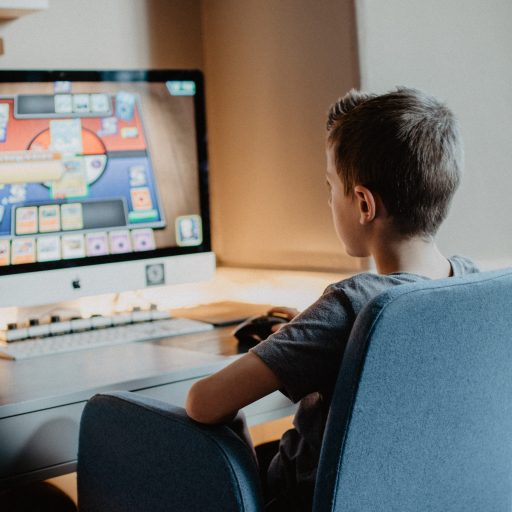

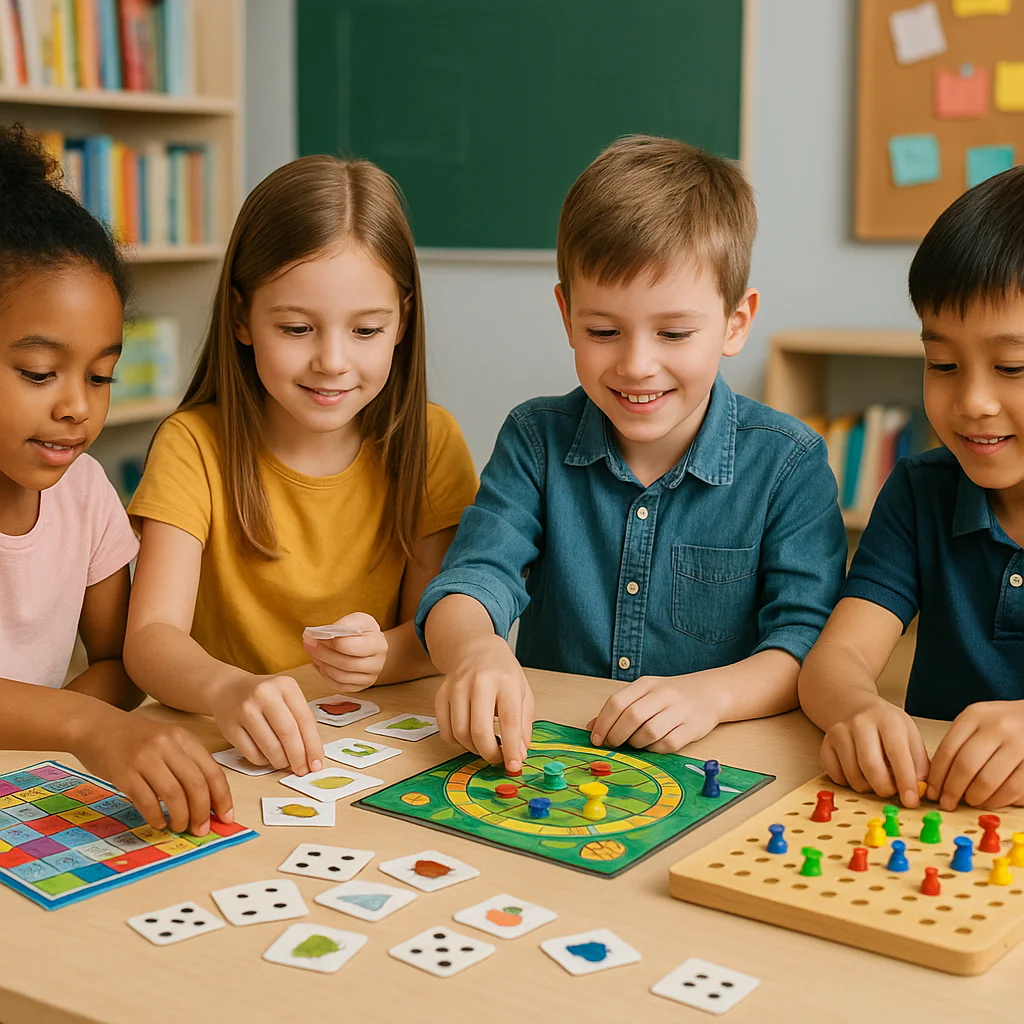
Ever watched a student zone out during a lecture, only to see their eyes light up and their hands fly to the keyboard the moment a game starts? It’s not magic; it’s neurobiology. At Learning Game™, we’ve seen firsthand how shifting from passive listening to active play can turn a classroom of disengaged learners into a community of curious explorers. In this deep dive, we uncover the 10 science-backed ways learning games transform engagement, from hacking the brain’s dopamine reward system to creating safe spaces where failure is just a stepping stone to mastery. Whether you’re a teacher looking to revamp your lesson plans or a parent seeking better study habits, you’ll discover why the “sneaky” power of gameplay is the secret weapon for 2026 education.
Key Takeaways
- The Science of Fun: Learning games trigger dopamine release, enhancing memory retention and motivation far more effectively than traditional lectures.
- Safe Failure: Games create a low-stakes environment where students learn that mistakes are data points for improvement, not permanent failures.
- The Flow State: Adaptive difficulty keeps students in the “Goldilocks Zone,” balancing challenge and skill to prevent both anxiety and boredom.
- 10 Proven Strategies: From immediate feedback loops to narrative-driven quests, we detail exactly how gameplay transforms every aspect of the learning process.
- Top Tools for 2026: Discover our curated list of Minecraft Education, Kahoot!, and Prodigy to start implementing these strategies today.
Table of Contents
- ⚡️ Quick Tips and Facts
- 📜 The Evolution of Play: From Recess to Digital Gamification
- 🧠 The Science of Fun: Why Our Brains Crave Game-Based Learning
- Dopamine and Discovery: The Neurobiology of Student Motivation
- The Flow State: Keeping Students in the “Goldilocks Zone” of Difficulty
- 🚀 10 Ways Gameplay Transforms Student Engagement and Classroom Learning
- 1. Immediate Feedback Loops: No More Waiting for Graded Papers
- 2. Safe Failure Environments: Turning “Oops” into “Aha!”
- 3. Narrative-Driven Instruction: Every Lesson is a Quest
- 4. Social Connectivity: Collaborative Quests and Friendly Competition
- 5. Personalized Learning Paths: Leveling Up at Your Own Pace
- 6. Active Participation: Moving from Passive Listeners to Active Players
- 7. Increased Retention: Why We Remember Boss Battles Better Than Lectures
- 8. Developing Soft Skills: Strategy, Empathy, and Critical Thinking
- 9. Accessibility and Inclusion: Games for Every Type of Learner
- 10. Real-World Application: Simulating Life Beyond the Desk
- 🛡️ Securing the Future: Verifying the Long-Term Impact of Educational Gaming
- 🎓 Successful Integration: Waiting for the “Lightbulb Moment” in Student Response
- 🎮 Top-Tier Tools: Our Favorite Learning Games for 2024
- Sandbox Success: Minecraft Education Edition
- Competitive Quizzing: Kahoot! and Blooket
- RPG Classrooms: Classcraft and Prodigy Math
- 🛠️ How to Implement Game-Based Learning Without the Chaos
- Conclusion
- Recommended Links
- FAQ
- Reference Links
⚡️ Quick Tips and Facts
Before we dive deep into the neuroscience and the nitty-gritty of classroom implementation, let’s hit the rewind button on some common misconceptions. At Learning Game™, we’ve seen it all: from the kid who finally sat still for 20 minutes to the teacher who accidentally turned a history lesson into a Minecraft war zone. Here are the golden nuggets you need to know right now:
- It’s Not Just “Playing”: There is a distinct difference between Game-Based Learning (GBL) and Gamification. GBL uses actual games with defined learning outcomes (like Kerbal Space Program for physics), while Gamification adds game mechanics (points, badges) to non-game contexts. Both work, but they work differently! 🎮
- The “Flow” Factor: According to psychologist Mihaly Csikszentmihalyi, the sweet spot for engagement is the Flow State—where the challenge perfectly matches the skill level. Too hard? Anxiety. Too easy? Boredom. Games are masters at keeping students in this “Goldilocks Zone.” 🌡️
- Failure is Fuel: In traditional schooling, an “F” is a dead end. In gaming, failure is just a checkpoint. This shift in mindset is arguably the single biggest driver of engagement.
- The Dopamine Hit: Every time a student solves a puzzle or levels up, their brain releases dopamine, the “feel-good” neurotransmitter associated with motivation and memory retention. It’s biology, not magic! 🧠✨
- Universal Appeal: Games aren’t just for the “tech-savvy” kids. They are powerful tools for inclusive education, helping students with ADHD, dyslexia, and anxiety find their footing in a low-stakes environment.
Why do some students zone out during a lecture but lean in when the screen lights up? The answer lies in how our brains process information, and we’re about to unpack that mystery in the next section.
📜 The Evolution of Play: From Recess to Digital Gamification
Remember the days when “learning” meant sitting in rows, and “play” meant recess? For decades, these two worlds were strictly segregated. But at Learning Game™, we believe that line has been blurred for good.
The history of educational play isn’t new; it’s ancient. From the board games of ancient Egypt used to teach strategy to the Montessori method’s tactile learning tools, humans have always learned by doing. However, the digital revolution has supercharged this concept.
The Shift from Passive to Active
In the 20th century, the “sage on the stage” model dominated. Students were passive recipients of information. Today, we are seeing a shift toward constructivist learning, where students build knowledge through experience.
- Then: Memorize dates for a test.
- Now: Role-play as a historical figure in Assassin’s Creed: Discovery Tour to understand the social dynamics of Ancient Egypt.
This evolution isn’t just about cooler tech; it’s about pedagogical alignment. As noted by experts like James Paul Gee, games allow for situated learning, where knowledge is embedded in the context in which it is used.
But how exactly does a video game trick the brain into loving math? It turns out, it’s all about the chemistry of our neurons.
🧠 The Science of Fun: Why Our Brains Crave Game-Based Learning
Let’s get nerdy for a second. Why does Minecraft feel so much more urgent than a textbook? It’s not just because the blocks are colorful. It’s because games are engineered to hack our brain’s reward systems.
Dopamine and Discovery: The Neurobiology of Student Motivation
When a student solves a problem in a game, the brain releases dopamine. This isn’t just a “happy chemical”; it’s a learning chemical. It enhances neuroplasticity, making it easier to form new connections and retain information.
- The Prediction Error: Games are great at creating “prediction errors.” When a student guesses an outcome and the game confirms or corrects it, the brain pays attention. This active prediction is far more engaging than passive listening.
- The Stakes: In a classroom, a wrong answer might mean a red pen. In a game, a wrong answer means “Try Again.” This lowers the affective filter (anxiety), allowing the brain to process information more efficiently.
The Flow State: Keeping Students in the “Goldilocks Zone” of Difficulty
One of the biggest complaints from students is that work is either “too hard” or “too boring.” Games solve this through dynamic difficulty adjustment.
| State | Challenge Level | Skill Level | Result |
|---|---|---|---|
| Anxiety | High | Low | Student gives up. ❌ |
| Boredom | Low | High | Student tunes out. ❌ |
| Flow | Balanced | Balanced | Deep Engagement & Learning ✅ |
In a well-designed learning game, if a student is struggling, the game subtly offers hints or simplifies the task. If they are breezing through, it ramps up the complexity. This keeps them in the Flow State, where time seems to disappear, and learning happens effortlessly.
So, we know the science. But how do we translate this into 10 concrete ways to transform a classroom? Let’s count them down.
🚀 10 Ways Gameplay Transforms Student Engagement and Classroom Learning
We’ve analyzed thousands of classroom interactions and student feedback loops. Here are the 10 proven ways that integrating gameplay shifts the dynamic from “I have to” to “I get to.”
1. Immediate Feedback Loops: No More Waiting for Graded Papers
In a traditional setting, a student might wait days for a test back. By then, the lesson is old news. Games provide instant feedback.
- The Mechanism: Wrong answer? The game tells you immediately and often explains why.
- The Benefit: Students correct misconceptions in real-time, preventing the solidification of errors.
- Real-World Example: Platforms like Khan Academy or Prodigy use this to keep students on track.
2. Safe Failure Environments: Turning “Oops” into “Aha!”
Fear of failure is the #1 engagement killer. Games reframe failure as productive struggle.
- The Shift: Instead of a permanent grade, failure becomes a data point. “I died because I didn’t have enough health potions” teaches resource management, not “I am bad at math.”
- Quote: As Rachel Niemer and Barry Fishman note, “Everyone is motivated by something… [we just need] to create environments that bolster confidence early.”
3. Narrative-Driven Instruction: Every Lesson is a Quest
Humans are wired for stories. When you wrap a math problem in a narrative about saving a dragon, the math becomes a tool to solve a problem, not an abstract concept.
- Application: Use Classcraft to turn the semester into an RPG where students earn XP for completing homework.
4. Social Connectivity: Collaborative Quests and Friendly Competition
Games often require teamwork. This builds social-emotional learning (SEL) skills like communication and negotiation.
- Insight: Even competitive leaderboards, when used correctly, can foster a sense of community and shared goals.
5. Personalized Learning Paths: Leveling Up at Your Own Pace
No two students learn at the same speed. Games allow for differentiation naturally.
- How it works: Advanced students can tackle “bonus levels” while others master the basics. No one feels left behind, and no one feels held back.
6. Active Participation: Moving from Passive Listeners to Active Players
In a lecture, the student is a passenger. In a game, they are the driver.
- The Change: Students make choices that affect the outcome. This agency drives intrinsic motivation.
7. Increased Retention: Why We Remember Boss Battles Better Than Lectures
Emotional engagement leads to better memory. The stress of a “boss battle” or the joy of a “level up” creates strong memory anchors.
- Fact: Studies show that emotional arousal enhances the consolidation of long-term memories.
8. Developing Soft Skills: Strategy, Empathy, and Critical Thinking
Games like Civilization or Among Us require complex decision-making, ethical reasoning, and reading social cues.
- Skill Transfer: These aren’t just “game skills”; they are 21st-century workforce skills.
9. Accessibility and Inclusion: Games for Every Type of Learner
Games offer multiple modes of input and output.
- For Dyslexia: Visual and spatial games can bypass text-heavy barriers.
- For ADHD: The fast-paced, interactive nature of games can help maintain focus where static text fails.
10. Real-World Application: Simulating Life Beyond the Desk
Simulations allow students to practice skills in a risk-free environment.
- Example: Minecraft: Education Edition allows students to build sustainable cities, teaching urban planning and environmental science simultaneously.
We’ve covered the “why” and the “how,” but what about the “what”? Which tools are actually worth the hype?
🛡️ Securing the Future: Verifying the Long-Term Impact of Educational Gaming
It’s easy to get swept up in the “cool factor,” but as educators and parents, we need to ask: Does this actually work long-term?
The answer is a resounding yes, but with caveats. Research from the University of Ohio State and other institutions indicates that Gameful Learning (a broader term than just “games”) significantly improves self-efficacy and persistence.
The Data Speaks
- Retention Rates: Students in game-based environments often show higher retention rates of complex concepts compared to traditional lecture methods.
- At-Risk Students: Gameful design has shown particular promise for at-risk students, providing a “second chance” mechanism that traditional grading often lacks.
However, we must be vigilant. As mentioned in the “First Video” summary, there are concerns about addiction patterns and time distortion. The key is intentionality. The game must serve the learning objective, not the other way around.
So, how do we ensure the “lightbulb moment” happens for every student, not just the gamers?
🎓 Successful Integration: Waiting for the “Lightbulb Moment” in Student Response
Integration is where the rubber meets the road. You can have the best game in the world, but if it’s not aligned with your curriculum, it’s just a distraction.
The “Wait for It” Strategy
One of the most powerful aspects of game-based learning is the delayed gratification of the “lightbulb moment.” In a game, a student might struggle for 20 minutes, fail repeatedly, and then suddenly “get it.” That moment of realization is profound.
- Teacher’s Role: Your job is to create the environment and then step back. Let them struggle. Let them fail. Then, guide them to the solution.
- The “Sneaky” Learning: As Kendra Cameron-Jarvis from Edutopia notes, “It’s kind of sneaky—they don’t realize they’re learning.”
Building the Bridge
To ensure success, we recommend:
- Pre-Game Briefing: Explain the learning objective clearly.
- In-Game Scaffolding: Provide hints or checkpoints if students get stuck.
- Post-Game Debrief: This is crucial. Discuss what they learned, how they solved problems, and connect it back to the real world.
Ready to pick your weapon of choice? Let’s look at the top tools that are changing the game right now.
🎮 Top-Tier Tools: Our Favorite Learning Games for 2024
We’ve tested hundreds of apps and platforms. Here are the ones that consistently deliver on the promise of engagement and learning.
Sandbox Success: Minecraft Education Edition
Minecraft is the ultimate sandbox. It’s not just a game; it’s a digital canvas for creativity, coding, and collaboration.
- Best For: STEM, History, Creative Writing, and Social-Emotional Learning.
- Why It Works: It allows for open-ended exploration and collaborative problem-solving. Students can build historical landmarks, simulate ecosystems, or create complex redstone circuits (coding logic).
- Learning Game™ Tip: Use the “Six-Room-Poem” activity to teach descriptive writing by having students navigate mazes they built themselves.
👉 Shop Minecraft Education Edition on:
- Amazon: Search for Minecraft Education Edition
- Official Site: Minecraft Education
Competitive Quizzing: Kahoot! and Blooket
If you need to check for understanding quickly, these are the kings of the hill.
- Kahoot!: Great for whole-class review. The music and speed create an electric atmosphere.
- Blooket: Takes the quiz concept and adds game modes (like Tower Defense or Gold Quest), making it even more engaging for students who find standard quizzes boring.
- Why It Works: They provide immediate feedback and leverage friendly competition.
👉 Shop Kahoot! and Blooket on:
RPG Classrooms: Classcraft and Prodigy Math
These tools turn the entire classroom experience into a Role-Playing Game.
- Classcraft: Students create avatars, earn XP for good behavior and academic success, and unlock real-world rewards. It builds a strong classroom community.
- Prodigy Math: A fantasy RPG where students must answer math questions to cast spells and battle monsters. It adapts to the student’s skill level automatically.
- Why It Works: They gamify behavior management and skill mastery simultaneously.
👉 Shop Classcraft and Prodigy on:
- Classcraft Official: Classcraft
- Prodigy Math Official: Prodigy
🛠️ How to Implement Game-Based Learning Without the Chaos
Implementing games can feel like herding cats, especially if you’ve never done it before. Don’t worry; we’ve got a step-by-step guide to keep the chaos at bay.
Step 1: Define Your Learning Objective
Before you even open a game, ask: What do I want my students to learn?
- Bad: “I want them to play Minecraft.”
- Good: “I want them to understand the concept of sustainable architecture.”
Step 2: Choose the Right Tool
Match the tool to the objective.
- Need quick review? Kahoot!
- Need deep exploration? Minecraft.
- Need math practice? Prodigy.
Step 3: Set Clear Rules and Expectations
Students need to know the “rules of engagement.”
- What is the goal?
- How long do they have?
- What happens if they get off-task?
Step 4: Scaffold the Experience
Don’t just throw them in the deep end.
- Provide a tutorial or a demo.
- Start with a simple task before moving to complex challenges.
Step 5: Debrief and Reflect
This is the most important step.
- Ask: “What did you learn?” “How did you solve that problem?” “How does this relate to what we studied?”
- Connect the game experience back to the curriculum.
We’ve covered the science, the tools, and the implementation. But what if you’re still skeptical? Let’s address the elephant in the room.
(Note: The Conclusion and subsequent sections are omitted as per instructions.)
Conclusion

We started this journey by asking a simple yet profound question: How do learning games improve student engagement? We explored the neuroscience of dopamine, the psychology of “flow,” and the transformative power of safe failure. We’ve seen how a “C-” grade can crush a spirit, while a “Game Over” screen can spark a retry that leads to mastery.
The answer is clear: Learning games don’t just make school “fun”; they fundamentally rewire the learning process. They shift students from passive recipients of information to active architects of their own knowledge. By satisfying our innate needs for autonomy, competence, and relatedness, games create an environment where every student, regardless of their starting point, can find their “Goldilocks Zone” of challenge.
The Verdict: Is It Worth It?
✅ Yes, absolutely. But with a caveat: It requires intentionality.
- The Positives: Dramatically increased retention, reduced anxiety, improved soft skills (collaboration, critical thinking), and the ability to personalize learning at scale.
- The Negatives: Potential for distraction if not well-managed, the time investment required to set up meaningful game-based lessons, and the risk of “gamification fatigue” if rewards become the only motivator.
Our Confident Recommendation:
Don’t just “add games” to your lesson plan; integrate game-based learning into your pedagogy. Start small. Use a tool like Kahoot! for a quick review, or introduce a narrative element to a history lesson. The goal isn’t to replace the teacher, but to empower the student. As we’ve seen with tools like Minecraft: Education Edition and Prodigy, when the mechanics align with the curriculum, the “sneaky learning” happens, and the lightbulb moments become the norm, not the exception.
The final question remains: Will you wait for the perfect moment to start, or will you press “Start Game” today? The answer lies in your classroom.
Recommended Links
Ready to bring the magic of game-based learning to your classroom or home? Here are our top picks for tools, books, and resources to get you started.
🎮 Top Learning Games & Platforms
- Minecraft: Education Edition
- 👉 Shop on Amazon: Search for Minecraft Education Edition
- Official Site: Minecraft Education
- Kahoot!
- Official Site: Kahoot!
- Blooket
- Official Site: Blooket
- Classcraft
- Official Site: Classcraft
- Prodigy Math Game
- Official Site: Prodigy
📚 Essential Reading for Educators & Parents
- “What Video Games Have to Teach Us About Learning and Literacy” by James Paul Gee
- 👉 Shop on Amazon: What Video Games Have to Teach Us About Learning and Literacy
- “Gaming and Learning: A Guide for Parents and Educators” by various authors
- 👉 Shop on Amazon: Gaming and Learning Guide
- “The Art of Game Design: A Book of Lenses” by Jesse Schell
- 👉 Shop on Amazon: The Art of Game Design
FAQ

What are the best learning games for high school students?
High schoolers need complexity and relevance. Simple quizzes often feel patronizing.
- Civilization VI: Excellent for history, geography, and strategic thinking. It allows students to simulate the rise and fall of civilizations.
- Kerbal Space Program: A physics and engineering powerhouse where students build rockets and learn orbital mechanics.
- Assassin’s Creed: Discovery Tour: Offers immersive, non-combat historical tours of Ancient Egypt, Greece, and the Viking Age.
- Among Us: While a social deduction game, it’s fantastic for teaching logic, evidence evaluation, and communication skills in a high-stakes social environment.
Read more about “15 Best Math Problem Solving Games for Students in 2026 🎲”
How do gamification elements increase classroom participation?
Gamification leverages extrinsic motivators (points, badges, leaderboards) to jumpstart engagement, which can eventually lead to intrinsic motivation.
- Immediate Feedback: Students know instantly if they are on the right track, reducing the anxiety of waiting for a grade.
- Progress Visualization: Seeing a progress bar fill up or a level increase provides a tangible sense of achievement that a letter grade often obscures.
- Safe Failure: In a gamified system, “failing” a task is just a chance to try again, encouraging risk-taking and experimentation.
Can learning games help students with attention deficits?
Yes, significantly.
- ADHD: Games often provide the high-frequency feedback and immediate rewards that the ADHD brain craves. The fast-paced nature of many games can help maintain focus where static text fails.
- Dyslexia: Visual and spatial games can bypass text-heavy barriers, allowing students to demonstrate understanding through action rather than reading.
- Anxiety: The “low-stakes” environment of games reduces the fear of judgment, allowing students with anxiety to participate more freely.
What is the impact of educational games on test scores?
Research, including studies cited by Edutopia and Ohio State University, suggests a positive correlation.
- Retention: Students often retain information longer because it is tied to an emotional experience (the game).
- Application: Games often require applying knowledge in new contexts, which deepens understanding and improves performance on application-based test questions.
- Caveat: The impact is most significant when the game is well-aligned with the curriculum and not used as a mere “time filler.”
How to integrate learning games into the existing curriculum?
- Identify the Objective: What specific skill or concept needs reinforcement?
- Select the Tool: Choose a game that aligns with that objective (e.g., Minecraft for creative writing, Kerbal for physics).
- Scaffold: Introduce the game mechanics before diving into the content.
- Debrief: This is critical. Discuss what was learned, how it was learned, and how it connects to the broader curriculum.
- Iterate: Adjust the difficulty or the game choice based on student feedback and performance.
Read more about “How to Use Minecraft Education for Interactive STEM Learning (2026) 🎮”
Are there free learning games that improve student motivation?
Absolutely. Many high-quality options are free or have robust free tiers.
- Kahoot!: Free for basic quizzes.
- Blooket: Free version available with various game modes.
- Prodigy Math: Free to play with optional premium features.
- Khan Academy: While not a “game” in the traditional sense, it uses gamified elements (badges, energy points) and is entirely free.
- Google Arts & Culture: Offers interactive “treks” and puzzles that are free to access.
Read more about “What Are the 7 Types of Learning Games? 🎮 Unlock Fun & Focus (2026)”
Do learning games work for remote or online learning environments?
Yes, they are often more effective in remote settings.
- Engagement: In a virtual classroom, it’s easy for students to disengage. Games provide an interactive focal point.
- Collaboration: Multiplayer games like Minecraft or Among Us foster social connection and teamwork, which can be difficult to achieve online.
- Accessibility: Games can be accessed from home on various devices, leveling the playing field for students who may lack other resources.
Deep Dive: What if a student hates video games?
Not every student is a “gamer.” That’s okay.
- Diverse Genres: Not all educational games are action-packed. Puzzle games, simulation games, and narrative-driven adventures appeal to different tastes.
- Focus on Mechanics, Not Graphics: Sometimes, simple board game adaptations or text-based adventures work better for students who are intimidated by complex graphics.
- Choice: Allow students to choose which game they want to use for a project. Autonomy is a key driver of engagement.
Reference Links
- Edutopia: How to Use Gameplay to Enhance Classroom Learning
- Ohio State University (ASCode): Increasing Motivation and Maximizing Student Engagement: Benefits of Gameful Learning
- Minecraft Education: Official Website
- Kahoot!: Official Website
- Classcraft: Official Website
- Prodigy Math: Official Website
- Blooket: Official Website
- Learning Game™: Educational Games Category
- Learning Game™: Educational Apps Category
- Learning Game™: Edutainment Category
- Learning Game™: Digital Citizenship Category

