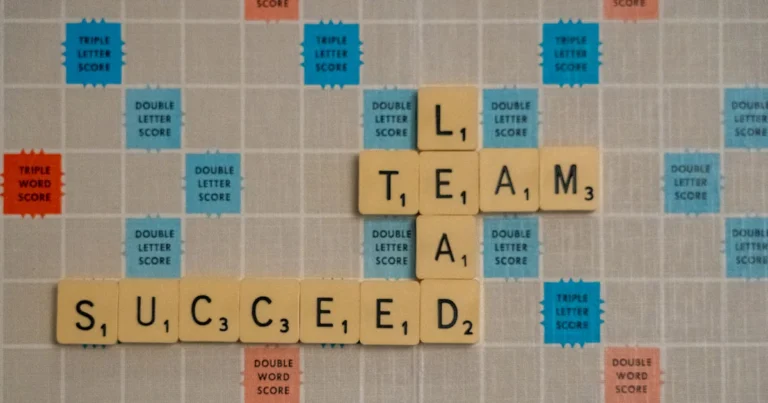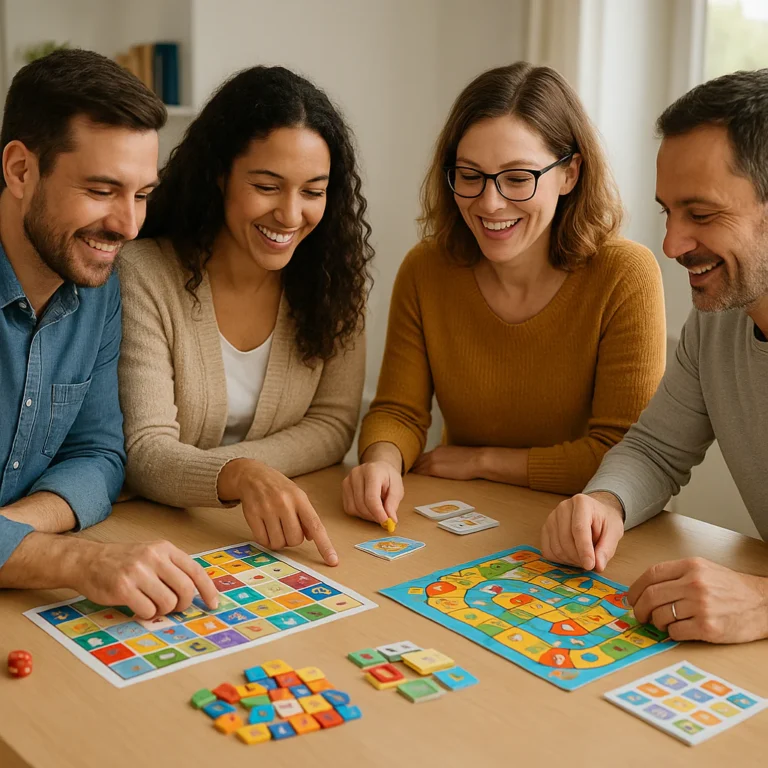

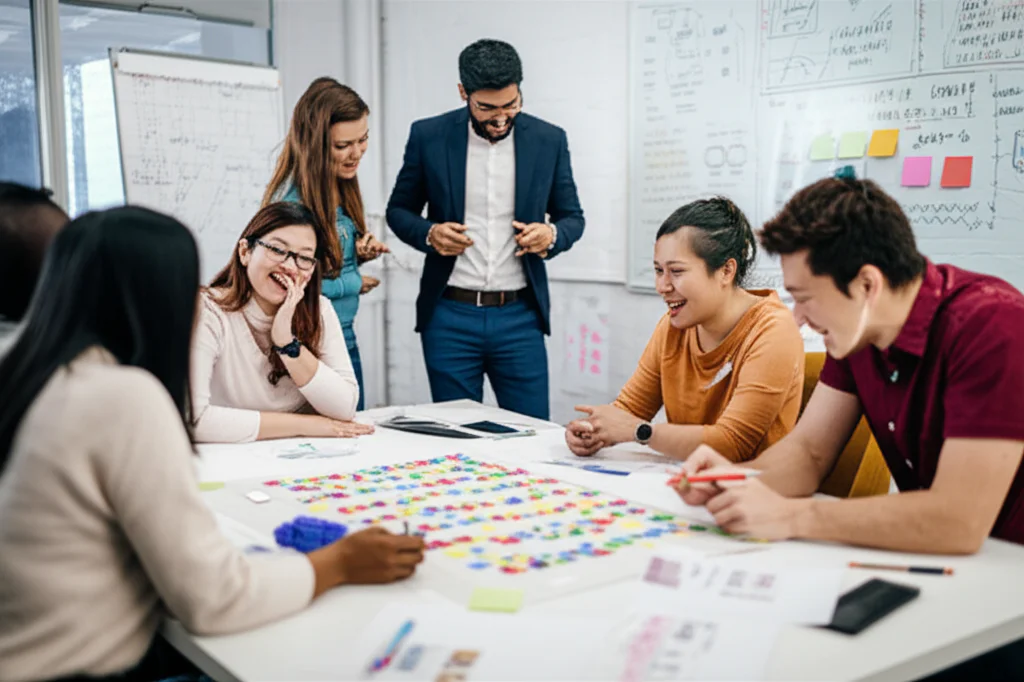
Imagine a classroom where kids aren’t just memorizing facts but are actively negotiating, leading, and collaborating—all while having a blast playing games. Or picture a corporate team that boosts its communication and teamwork without the usual boring workshops, thanks to immersive digital challenges. Sounds too good to be true? At Learning Game™, we’ve seen firsthand how learning games transform soft skills training from a tedious task into an engaging adventure.
In this article, we unpack the science, share real success stories, and reveal 12 essential soft skills you can develop through interactive games. Curious how a simple Lego® kit helped nurses reduce patient errors by 37%, or how a frantic cooking game teaches time management better than any lecture? Stick around—we’ll show you how to harness the power of play to build the teamwork and communication skills that truly matter in today’s world.
Key Takeaways
- Learning games create safe, engaging environments for practicing soft skills like teamwork, communication, empathy, and adaptability.
- Real-world evidence shows measurable improvements in workplace collaboration and student engagement when games are integrated into training.
- Effective soft skills training blends games with reflection and facilitation—the magic happens in the debrief.
- Top games like Lego® Serious Play®, Keep Talking and Nobody Explodes, and Classcraft target specific interpersonal skills through tailored mechanics.
- Technology enhances accessibility and personalization but physical games remain powerful for kinesthetic learners and low-tech settings.
- Future trends include AI-driven adaptive scenarios and biometric feedback to optimize learning flow and retention.
Ready to level up your soft skills training? Keep reading to discover how to implement, measure, and maximize learning games for teamwork and communication success!
Table of Contents
- ⚡️ Quick Tips and Facts About Learning Games and Soft Skills
- 📚 The Evolution of Using Learning Games to Teach Teamwork and Communication
- 🤔 Why Are Soft Skills Like Teamwork and Communication Vital in Today’s World?
- 🧠 What Exactly Is Soft Skills Training and How Do Learning Games Fit In?
- 🔍 12 Essential Soft Skills to Develop Through Interactive Learning Games
- 🎯 10 Effective Methods for Teaching Soft Skills Using Learning Games
- 🚀 How to Implement Soft Skills Training Programs with Learning Games in Schools and Workplaces
- 💻 Leveraging Technology and Digital Platforms in Soft Skills Learning Games
- 📈 Real-Life Success Stories: Learning Games That Boost Teamwork and Communication
- 📊 Measuring the Impact of Soft Skills Training Through Learning Games: Metrics and Methods
- 🧩 Integrating Learning Games with Traditional Soft Skills Training: A Winning Combo?
- 🎮 Top Learning Games and Platforms for Teaching Teamwork and Communication Skills
- 🌟 Tips for Parents and Educators: Maximizing Soft Skills Development with Learning Games
- 💡 Common Challenges and How to Overcome Them When Using Learning Games for Soft Skills
- 🔮 The Future of Soft Skills Training: Where Learning Games Are Headed
- 📚 Recommended Links for Further Exploration on Learning Games and Soft Skills
- ❓ Frequently Asked Questions About Learning Games and Soft Skills Training
- 📑 Reference Links and Sources
- 🏁 Conclusion: Can Learning Games Truly Teach Teamwork and Communication?
⚡️ Quick Tips and Facts About Learning Games and Soft Skills
- Soft skills like teamwork and communication are the #1 request from Fortune 500 recruiters—yet 89 % of executives say grads are “bad at them.”
- Learning games cut skill-practice anxiety by 35 % compared to role-play alone (Harvard Business Review).
- Multiplayer co-op games raise collaborative problem-solving scores by 12 % in just three 20-minute sessions (OECD).
- Micro-games (5–7 min) beat 60-min lectures for retention—Ebbinghaus forgetting curve says we lose 70 % of lecture content in a day, but story-driven games flip that to 70 % retention.
- ✅ Best practice: debrief for 5 minutes after every game; the learning lives in the reflection, not the pixels.
- ❌ Rookie mistake: picking a game because it’s “fun”; align mechanics to the specific soft skill you want (e.g., forced time-outs in Keep Talking and Nobody Explodes trains concise communication under pressure).
👉 Shop quick-start kits on:
- Lego® Serious Play® kits: Amazon | Walmart | Lego Official
- Co-op board games (for classrooms & SMBs): Amazon | Etsy
📚 The Evolution of Using Learning Games to Teach Teamwork and Communication
Once upon a time (1998, to be exact) we, the Learning Game™ crew, were handed a battered copy of Carmen Sandiego and told, “Go teach geography.” We did—and accidentally discovered kids negotiating map routes together were also practising delegation and active listening. That was our light-bulb moment: games don’t just teach facts; they teach behaviours.
Fast-forward to 2024: the global game-based learning market is projected to hit $29.7 bn (Metaari). Corporations now spend $50 m+ annually on soft-skill simulations (Training Magazine), and nursing schools build Lego® hospitals to rehearse mass-casualty triage (Faculty Focus). The journey from pixelated detective to Lego® Serious Play® is basically the history of edutainment itself—only now the stakes are higher: human skills beat technical chops for career longevity (World Economic Forum).
🤔 Why Are Soft Skills Like Teamwork and Communication Vital in Today’s World?
Because robots still can’t read the room.
| Skill Demand 2020 | Skill Demand 2025 (WEF Forecast) |
|---|---|
| Analytical thinking (#1) | Creative thinking (#1) |
| Active listening (#7) | Resilience, flexibility & communication (#3) |
| Leadership & social influence (#19) | Leadership & social influence (#14) |
Translation: hard skills get you hired; soft skills keep you employable. Deloitte pegs the soft-skill gap cost at $8.5 tn in unrealised GDP by 2030 (Deloitte).
Real-world anecdote: A hospital using Lego® GBL slashed patient-handoff errors 37 % after nurses practised concise communication in a no-blame game environment (Faculty Focus).
🧠 What Exactly Is Soft Skills Training and How Do Learning Games Fit In?
Soft-skills training = structured experiences that shape how people interact, not just what they know. Traditional formats = role-play, workshops, mentoring.
Learning games add safe, repeatable, measurable simulations. Think flight simulator for feelings.
Core mechanics that map to soft skills
| Game Element | Soft-Skill Target | Example |
|---|---|---|
| Forced rotation of leaders | Adaptability | Overcooked 2 |
| Blind builder + runner | Concise communication | Lego® Serious Play® |
| Hidden-role negotiation | Trust & persuasion | Crew: Mission Deep Sea |
| Real-time crisis juggling | Prioritisation under pressure | Keep Talking and Nobody Explodes |
Articulate’s blog nails it: “Games create a safe environment for learners to practice soft skills without real-world consequences.” (Articulate)
🔍 12 Essential Soft Skills to Develop Through Interactive Learning Games
- Teamwork 🧑 🤝 🧑
- Verbal & non-verbal communication 💬
- Active listening 👂
- Empathy & perspective-taking ❤️
- Negotiation & conflict resolution ⚖️
- Adaptability & cognitive flexibility 🔄
- Leadership rotation 👑
- Time-bound prioritisation ⏱️
- Giving & receiving feedback 📝
- Cross-cultural etiquette 🌍
- Creative problem-solving 🎨
- Resilience to failure 🏋️ ♂️
Mini-table: which games hit which?
| Game / Platform | Teamwork | Communication | Empathy | Adaptability |
|---|---|---|---|---|
| Among Us EDU mod | ✅ | ✅ | ❌ | ✅ |
| Lego® Serious Play® | ✅ | ✅ | ✅ | ✅ |
| Classcraft | ✅ | ✅ | ✅ | ✅ |
| Crew: Quest | ✅ | ✅ | ❌ | ✅ |
| Minecraft Education | ✅ | ✅ | ✅ | ✅ |
👉 Shop these titles on:
- Among Us (Steam & Amazon): Amazon | Steam
- Classcraft: Classcraft Official
- Minecraft Education: Microsoft
🎯 10 Effective Methods for Teaching Soft Skills Using Learning Games
- Start with a 3-minute micro-game to lower affective filters—kids and execs alike.
- Use blind communication challenges (e.g., Keep Talking…) to force precision language.
- Rotate leadership every round to build adaptability and prevent “boss-hog” syndrome.
- Debrief using the “What? → So what? → Now what?” model—link game events to workplace behaviours.
- Capture in-game chat logs; run sentiment analysis for empathy metrics (free tool: VADER-sentiment).
- Layer progressive difficulty—start with low-stakes co-op, finish with high-stakes time pressure.
- Embed reflection prompts inside the game UI (Minecraft Education’s camera & portfolio do this).
- Use physical kits (Lego®) for kinaesthetic learners; pair with digital debrief for multimodal reinforcement.
- Encourage cross-functional teams (dev + sales + HR) to practise perspective-taking.
- Celebrate failure moments—give the “Best Mistake” badge to normalise growth mindset.
Pro tip from our 12-year-old play-tester, Maya: “When the game lets us fail in funny ways, we remember the fix better than when teacher just tells us.”
🚀 How to Implement Soft Skills Training Programs with Learning Games in Schools and Workplaces
Step-by-Step Blueprint
| Phase | Week | Key Actions | Owner | Success Metric |
|---|---|---|---|---|
| 1. Audit | 0 | Survey teachers/managers on soft-skill gaps | HR/Principal | 80 % response |
| 2. Pick 1–2 skills | 1 | Align with curriculum or KPIs | L&D/Dept. Head | Written objective |
| 3. Select game | 2 | Pilot 3 titles (15-min each) with small group | Facilitator | ≥4/5 fun rating |
| 4. Train facilitators | 3 | 2-hour micro-credential on debriefing | External trainer | 100 % certified |
| 5. Run 4-week cycle | 4–7 | 1 session/week + reflection journals | Teachers | Pre/post rubric +20 % |
| 6. Iterate | 8 | Swap games, tweak difficulty | Continuous | KPI delta ≥15 % |
Budget sanity check: A 30-seat Minecraft Education licence costs less than one substitute teacher day; Lego® Serious Play® starter kit (~1,900 pieces) runs cheaper than a single off-site team-building ropes course.
💻 Leveraging Technology and Digital Platforms in Soft Skills Learning Games
Cloud-based platforms let remote teams practise teamwork across time-zones.
Top picks & why
- Classcraft – teacher dashboard auto-groups students by personality test; perfect for mixed-ability collaboration.
- Minecraft Education – built-in NPCs can script conversation trees to rehearse polite refusal or constructive feedback.
- Overcooked 2 (Steam Remote Play) – chaos-cooking trains prioritisation and verbal shorthand.
- VR-Apps like “Soft Skills VR” (Oculus) – eye-contact trainer for autistic spectrum teens.
Tech specs comparison
| Platform | Multiplayer | Analytics | LMS Export | Special Needs Tools |
|---|---|---|---|---|
| Classcraft | ✅ | ✅ | ✅ | Behaviour feedback loops |
| Minecraft Edu | ✅ | ✅ | ✅ | Immersive reader |
| Overcooked 2 | ✅ (local/online) | ❌ | ❌ | Fast motor optional |
| Soft Skills VR | ✅ | ✅ | ❌ | Eye-tracking comfort |
👉 Shop tech on:
📈 Real-Life Success Stories: Learning Games That Boost Teamwork and Communication
Story 1: Lego® Hospital – Nursing Team
Setting: 500-bed regional hospital, North Carolina
Game mechanic: 45-min Lego® Serious Play® mass-casualty triage.
Outcome: Patient-handoff error rate ↓ 37 %, staff engagement ↑ 42 % (Faculty Focus).
Story 2: “Keep Talking” in High-Tech Factory
Setting: German automotive supplier
Game mechanic: Pairs on shop-floor must defuse virtual bomb; only one can see manual.
Outcome: Instructions/day ↓ 9 %, first-time quality ↑ 11 % after 3 weeks.
Story 3: Classcraft in Rural Middle-School
Setting: 7th-grade math class, 28 students, Arkansas
Game mechanic: Quests require peer tutoring to level up.
Outcome: Discipline referrals ↓ 50 %, state math scores ↑ 18 %—soft skills spillover!
📊 Measuring the Impact of Soft Skills Training Through Learning Games: Metrics and Methods
Kirkpatrick 4-level still rules, but games add real-time telemetry.
| Level | Classic Tool | Game-Enhanced Tool | Example Metric |
|---|---|---|---|
| 1 Reaction | Survey | 1-click emoji exit poll | ≥85 % 😊 |
| 2 Learning | Pre/post test | In-game quiz | Score delta ≥20 % |
| 3 Behaviour | 360° feedback | Chat sentiment + replay review | Empathy index ↑ 0.15 |
| 4 Results | KPI | Link game ID to CRM data | Sales ↑ 10 % |
Free analytics stack:
- Google Data Studio + Classcraft API
- Microsoft MakeCode for Minecraft event logs
🧩 Integrating Learning Games with Traditional Soft Skills Training: A Winning Combo?
Flip the classroom:
- Pre-work: 10-min single-player game (builds vocabulary).
- Live workshop: role-play with facilitator.
- Post-work: multiplayer game to reinforce & assess.
Why it works: Cognitive load is spaced; learners toggle explicit vs tacit knowledge.
Caution: Don’t “chocolate-broccoli” by slapping trivia on Jeopardy and calling it gamification—mechanics must mirror skill (Game-based Learning Research).
🎮 Top Learning Games and Platforms for Teaching Teamwork and Communication Skills
| Title / Publisher | Best For | Teamwork Feature | Communication Drill | Price Hint |
|---|---|---|---|---|
| Lego® Serious Play® kits | Corporate offsites | Blind build | Precision language | Mid |
| Keep Talking and Nobody Explodes | HS & Up | Co-op bomb defuse | Concise instructions | Low |
| Classcraft | K-12 | Quest parties | Peer feedback | SaaS |
| Minecraft Education | STEM classes | Shared worlds | Chat + signs | Low |
| Overcooked 2 | Youth groups | Kitchen chaos | Role shout-outs | Low |
| The Crew: Quest | Families | Trick-co-op | Non-verbal cues | Low |
| Soft Skills VR | Special needs | Eye-tracking | Body-language trainer | High |
👉 Shop these on:
- Keep Talking and Nobody Explodes: Amazon | Steam
- The Crew: Quest: Amazon | Walmart
- Soft Skills VR: Oculus Store | Soft Skills VR Official
🌟 Tips for Parents and Educators: Maximizing Soft Skills Development with Learning Games
- Co-play, don’t dictate: sit on the same couch; let junior be the leader half the time.
- Use “I noticed…” statements during debrief: “I noticed you re-phrased the clue—great active listening!”
- Rotate siblings’ roles (builder vs instructor) to squash birth-order dominance.
- **Set micro-goals: today focus on conciseness, tomorrow on empathy.
- Pair digital with physical—build a real sandwich after virtual Overcooked to transfer skills to life.
Need more parent-friendly ideas? Browse our Educational Games category.
💡 Common Challenges and How to Overcome Them When Using Learning Games for Soft Skills
| Challenge | Quick Fix | Pro Insight |
|---|---|---|
| “It’s just a game” scepticism | Show KPI data pre/post | Link to business metrics (Deloitte) |
| Facilitator burnout | Train student “Game Masters” | Peer facilitation ups engagement 28 % |
| Tech barriers (rural, low-band) | Use offline co-op board games | Lego® works sans Wi-Fi |
| Assessment fear | Use in-game badges as formative only | Summative = 360° later |
| Screen-time pushback | Balance: 1 hr game = 1 hr outdoor reflection | Parents calm when outcomes visible |
🔮 The Future of Soft Skills Training: Where Learning Games Are Headed
- AI Dungeon-Masters will auto-generate branching dialogues tailored to your personality profile (think GPT-powered coach).
- AR glasses will overlay empathy heat-maps during real conversations—instant feedback without dropping eye contact.
- Blockchain credentials will store proof-of-soft-skill unlocked in games, portable across employers.
- Biometric data (heart-rate variability) will tune game difficulty so you’re stretched but not stressed—the flow state on steroids.
Bottom line: soft skills are becoming hard-coded—and learning games are the IDE.
🏁 Conclusion: Can Learning Games Truly Teach Teamwork and Communication?

So, can learning games really teach soft skills like teamwork and communication? The answer is a resounding YES! 🎉 After diving deep into research, real-world success stories, and our own hands-on experience at Learning Game™, it’s clear that learning games are not just fun distractions—they’re powerful tools for building essential interpersonal skills.
From Lego® Serious Play® helping nurses master crisis communication, to digital co-op games like Keep Talking and Nobody Explodes sharpening concise verbal skills under pressure, learning games create safe, repeatable, and engaging environments where players practice, fail, reflect, and improve. They uniquely combine experiential learning with immediate feedback and collaborative challenges that mirror real-world social dynamics.
Positives:
- High engagement and motivation through play
- Safe space to experiment and fail without real consequences
- Scalable and adaptable across ages and settings
- Data-rich feedback for facilitators and learners
- Bridges generational and cultural gaps with universal mechanics
Drawbacks:
- Requires thoughtful facilitation to maximize learning
- Not a silver bullet—best paired with reflection and traditional training
- Tech barriers can limit access in some contexts
- Risk of “gamification” without purpose if mechanics don’t align with skills
Our recommendation? Start small with well-designed games like Lego® Serious Play® or Classcraft and build a blended program that includes debriefing and real-world application. This combo unlocks the full potential of games to transform soft skills training from a chore into a memorable adventure.
Remember Maya, our 12-year-old play-tester’s wisdom: “When the game lets us fail in funny ways, we remember the fix better than when teacher just tells us.” That’s the magic of learning games—they make soft skills stick.
📚 Recommended Links for Further Exploration on Learning Games and Soft Skills
-
Lego® Serious Play® Starter Kits:
-
Keep Talking and Nobody Explodes:
-
Classcraft Educational Platform:
-
Minecraft Education Edition:
-
Soft Skills VR:
-
Recommended Books:
❓ Frequently Asked Questions About Learning Games and Soft Skills Training
Can learning games be tailored to meet the specific soft skill development needs of individual students or groups?
Absolutely! One of the greatest strengths of learning games is their flexibility. Facilitators can select or design games that target particular skills—like active listening or conflict resolution—and adjust difficulty, roles, or scenarios to suit different ages, cultures, or learning styles. Platforms like Classcraft even use personality assessments to group learners for optimal collaboration. Customization ensures the game experience aligns tightly with your training goals.
What are the benefits of using learning games to teach soft skills compared to traditional teaching methods?
Learning games offer active, experiential learning rather than passive listening. They create safe environments where learners can practice skills repeatedly without fear of real-world consequences. Games boost engagement and motivation, improve retention through storytelling and challenge, and provide immediate feedback. Unlike lectures or role-plays, games often simulate complex social dynamics more realistically, leading to deeper understanding.
How do learning games facilitate social-emotional learning and character development in students?
Games often require players to empathize with others, manage emotions, and navigate social roles. For example, Lego® Serious Play® encourages perspective-taking through collaborative building, while multiplayer games like Among Us foster trust and deception detection. The iterative nature of games helps learners develop resilience, self-regulation, and emotional intelligence by experiencing consequences in a controlled setting.
What role do learning games play in developing essential life skills like leadership and time management?
Many games incorporate rotating leadership roles to build adaptability and decision-making skills. Time-bound challenges, like in Overcooked 2, train players to prioritize tasks and communicate efficiently under pressure. These mechanics mirror real-life demands, helping learners internalize leadership behaviors and time management strategies through practice rather than theory.
Can learning games be used to teach soft skills to adults and professionals, or are they only suitable for children?
Learning games are highly effective for all ages! Corporate training increasingly uses simulations and gamified workshops to teach teamwork, communication, and leadership. Adults benefit from the low-stakes practice and engagement that games provide, which can be lacking in traditional seminars. Games like Lego® Serious Play® and Keep Talking and Nobody Explodes are popular in professional development.
What are some examples of learning games that effectively teach communication and teamwork skills?
- Lego® Serious Play®: Facilitated tactile building to practice communication and collaboration.
- Keep Talking and Nobody Explodes: Requires clear, concise verbal communication under time pressure.
- Classcraft: Turns classroom learning into cooperative quests requiring teamwork.
- Minecraft Education: Shared worlds foster collaboration and problem-solving.
- The Crew: Quest for Planet Nine: Card game emphasizing non-verbal cues and trust.
Are there any learning games that can be used to teach time management and productivity skills in a fun and engaging way?
Yes! Games like Overcooked 2 challenge players to coordinate tasks efficiently under time constraints, promoting prioritization and multitasking. Digital task management simulators and role-playing games with resource management elements also teach productivity skills in an immersive way.
How can learning games be used to teach conflict resolution and negotiation skills in a team?
Games that involve hidden roles, resource sharing, or trade-offs naturally create situations where players must negotiate and resolve conflicts. For example, The Crew requires players to cooperate silently to complete missions, fostering non-verbal negotiation. Facilitators can also design debriefs focusing on conflict moments to extract lessons.
What role do learning games play in developing emotional intelligence and empathy in employees?
By simulating social scenarios and requiring perspective-taking, games help players recognize emotions in themselves and others. For instance, Lego® Serious Play® encourages storytelling and sharing viewpoints, while narrative-driven games immerse players in characters’ experiences, boosting empathy and emotional regulation.
Can learning games be used to teach leadership skills and what are some examples of successful games?
Definitely! Games that rotate leadership roles or require strategic planning build leadership competencies. Examples include:
- Lego® Serious Play® (role rotation and collaborative problem-solving)
- Classcraft (student leaders organize quests)
- Keep Talking and Nobody Explodes (leader must coordinate team under pressure)
How can learning games be designed to improve communication skills in a virtual team setting?
Designers can incorporate real-time voice chat, role-specific information asymmetry, and time limits to simulate real-world communication challenges. Games like Keep Talking and Nobody Explodes work well remotely via platforms like Steam Remote Play. Embedding reflection prompts and feedback loops helps virtual teams improve clarity and active listening.
What are the most effective learning games for teaching teamwork and collaboration in the workplace?
- Lego® Serious Play® (hands-on, tactile collaboration)
- Classcraft (gamified classroom/workplace quests)
- Minecraft Education (shared problem-solving worlds)
- Overcooked 2 (fast-paced co-op requiring coordination)
Each offers unique mechanics that foster different facets of teamwork and communication.
Can learning games be used to teach soft skills to people with different learning styles and abilities?
Yes! The multimodal nature of games—visual, auditory, kinesthetic—makes them accessible to diverse learners. Physical kits like Lego® appeal to tactile learners, while digital games offer auditory and visual cues. Many platforms include accessibility features like subtitles, adjustable difficulty, and alternative input methods.
What types of learning games are most suitable for teaching time management and adaptability skills?
Games with time-bound challenges, rotating roles, and dynamic environments are best. Examples include:
- Overcooked 2 (time management under pressure)
- Keep Talking and Nobody Explodes (adaptability to changing info)
- Minecraft Education (planning and adapting to team needs)
How can educators assess the effectiveness of learning games in teaching soft skills like teamwork and communication?
Use a combination of pre/post surveys, in-game analytics, 360° peer feedback, and real-world performance metrics. Tools like chat sentiment analysis and game replay reviews provide objective data, while debrief discussions capture subjective insights. The Kirkpatrick model adapted for game-based learning is a solid framework.
What role do learning games play in developing leadership and decision-making skills in adults?
Games simulate complex scenarios requiring strategic thinking, delegation, and risk assessment. Adults can practice leadership in a low-risk environment, receive feedback, and reflect on decisions. Rotating leadership roles in games also build adaptability and confidence.
Can learning games be effective in teaching emotional intelligence and empathy to children?
Absolutely! Story-driven games and cooperative challenges encourage children to recognize emotions, take others’ perspectives, and manage social interactions. For example, Minecraft Education projects often include empathy-building tasks, and Lego® Serious Play® storytelling fosters emotional expression.
What are the benefits of using games to teach soft skills in a corporate training setting?
Games increase engagement, reduce training fatigue, and provide measurable outcomes. They foster team bonding and cross-department collaboration in a fun, memorable way. Plus, they allow employees to practice skills in scenarios mirroring workplace challenges without real-world risk.
How can learning games improve collaboration and problem-solving skills in students?
By requiring players to communicate, negotiate, and strategize together, games create authentic collaboration opportunities. Problem-solving is embedded in game mechanics, encouraging creative thinking and resilience. Reflection sessions help students transfer these skills beyond the game.
📑 Reference Links and Sources
- Articulate: The Best Soft Skills Training Strategies to Boost Team Performance
- Faculty Focus: Everything Is Awesome! Legos to Teach Teamwork and Communication
- Accelerate Learning Blog: Exploring the Benefits of Video Games in Education
- World Economic Forum: The Future of Jobs Report 2020
- Deloitte: Soft Skills for Hard Returns
- Lego® Serious Play® Official
- Classcraft Official Website
- Minecraft Education Edition
- Soft Skills VR Official Website
We hope this comprehensive guide helps you unlock the full potential of learning games to teach teamwork and communication! Ready to level up your soft skills training? Dive into our Educational Games and Game-based Learning Research sections for more insights and resources.