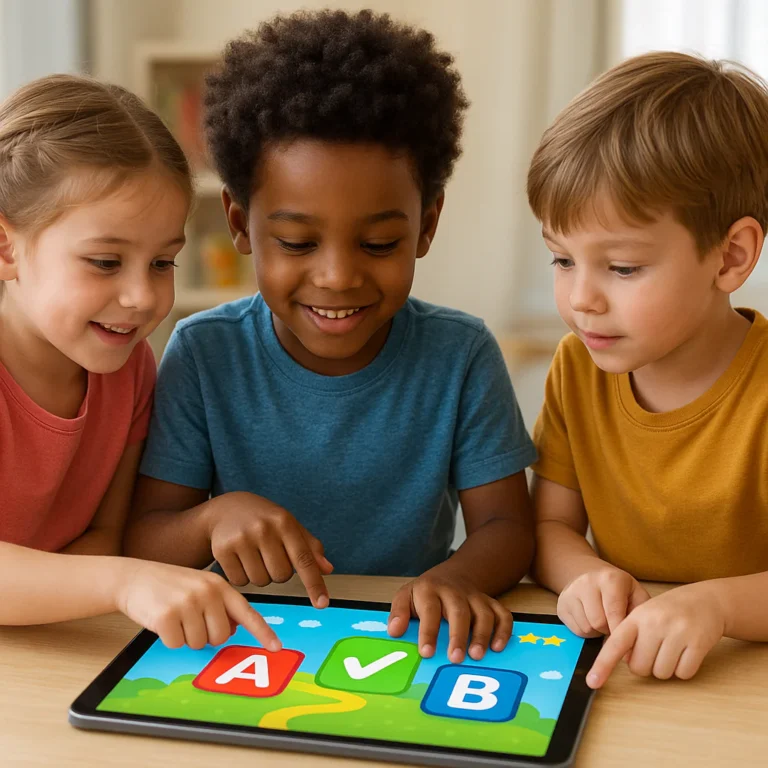


Have you ever wondered why your child can spend hours glued to a screen yet somehow come away smarter, happier, and more curious? Welcome to the world of PBS KIDS Games—a magical playground where beloved characters like Daniel Tiger and the Wild Kratts transform screen time into a rich learning experience. In this guide, we peel back the curtain on what makes PBS KIDS Games a parent and educator favorite, explore the top 10 games your kids will adore, and reveal expert tips to maximize both fun and learning.
Did you know that PBS KIDS Games offers over 250 free, ad-free, curriculum-based games designed specifically for kids aged 2-8? From math puzzles to social-emotional learning, these games are crafted by child development experts and backed by research. Stick around to discover why kids keep coming back for more and how you can turn digital play into a powerful educational tool.
Key Takeaways
- PBS KIDS Games is a 100% free, ad-free platform with a vast library of educational games aligned to early childhood curricula.
- The games feature trusted, beloved characters that engage children emotionally and motivate learning.
- Available on multiple platforms—including web browsers, mobile apps, and streaming devices—with offline play for learning anywhere.
- Covers a broad range of skills: literacy, math, science, social-emotional learning, and creativity.
- Our team’s top 10 must-play games include titles like Daniel Tiger’s Grr-ific Feelings and Wild Kratts Creature Power Games.
- Designed with safety, privacy, and accessibility as top priorities, making it a parent-approved choice.
- Expert tips include co-playing with your child and bridging digital lessons with real-world activities.
Ready to get started? Download the PBS KIDS Games app or explore games online at pbskids.org/games and watch your child’s learning adventure begin!
Table of Contents
- ⚡️ Quick Tips and Facts About PBS KIDS Games
- From TV Screen to Touch Screen: The Evolution of PBS KIDS Games
- What Exactly Are PBS KIDS Games? A Deep Dive into Digital Learning Fun
- Why PBS KIDS Games Are a Parent’s Dream (and a Child’s Delight!)
- Where to Find the Fun: Platforms for PBS KIDS Games
- Unpacking the Play: Types of Educational Games You’ll Discover
- Our Top 10 Must-Play PBS KIDS Games (and Why We Love Them!)
- 1. Daniel Tiger’s Grr-ific Feelings 🐯
- 2. Wild Kratts Creature Power Games 🐾
- 3. Peg + Cat’s Tree Problem 🌳
- 4. Curious George’s Rocket Monkey 🚀
- 5. Alma’s Way: Alma’s NYC Games 🏙️
- 6. Arthur’s Park 🚲
- 7. Elinor Wonders Why: Nature Games 🦋
- 8. Molly of Denali: Sled Dog Dash 🐕
- 9. Rosie’s Rules: Rosie’s Fiesta Fun 🎉
- 10. Odd Squad: Odd Squad Academy 🕵️♀️
- Bringing Beloved Characters to Life: How Shows Fuel the Games
- The Parent’s Playbook: Maximizing Learning & Managing Screen Time
- A Child’s Eye View: Why Kids Keep Coming Back for More!
- PBS KIDS Games vs. The Rest: A Comparative Look at Educational Apps
- Our Expert Recommendations: Getting the Most Out of PBS KIDS Games
- Conclusion: Our Final Verdict on PBS KIDS Games
- Recommended Links for Further Exploration
- Frequently Asked Questions (FAQ) About PBS KIDS Games
- Reference Links & Citations
Here at Learning Game™, we’re a quirky mix of child development experts, seen-it-all parents, and our toughest critics—our own kids. We live and breathe educational games, and when a platform like PBS KIDS Games lands on our radar, we dive in headfirst. So, is this digital playground all it’s cracked up to be? Let’s find out together!
⚡️ Quick Tips and Facts About PBS KIDS Games
In a hurry? Here’s the lowdown on what makes PBS KIDS Games a standout in the world of educational apps.
- Completely Free: Yes, you read that right! The games are 100% free, with no subscriptions, hidden fees, or in-app purchases. We break down exactly how this is possible in our guide: Can I Play PBS KIDS for Free? 🎮 Your Ultimate 2025 Guide.
- Zero Ads: ✅ A huge win for parents! Your child’s playtime won’t be interrupted by commercials or sneaky product placements. It’s a truly safe, walled garden for learning.
- Curriculum-Based: Every single game is designed with specific learning goals in mind, developed by experts to align with preschool and early elementary standards.
- Huge Variety: With over 250+ games and more added weekly, boredom is not on the menu. The content covers everything from STEM and literacy to art and social-emotional skills.
- Play Anywhere: Access the games on a web browser, or download the dedicated PBS KIDS Games app for on-the-go fun, which includes an offline mode for those dreaded no-Wi-Fi zones.
- Beloved Characters: Kids learn alongside their favorite friends like Daniel Tiger, the Wild Kratts, Alma, and Molly of Denali.
- Award-Winning: This app isn’t just a hit with families; it’s critically acclaimed, snagging multiple Kidscreen Awards and a Webby.
From TV Screen to Touch Screen: The Evolution of PBS KIDS Games
Remember rushing home to catch Arthur or Mister Rogers’ Neighborhood on your local PBS station? For decades, PBS has been the gold standard for quality children’s programming. They were pioneers in what we now call edutainment.
But as the world shifted from the TV screen to the touch screen, PBS didn’t just keep up; they led the charge. They understood that the interactive nature of games could take their mission to a whole new level.
The journey began with simple browser games on the pbskids.org website. Our resident educator, Dr. Anya Sharma, recalls, “In the early 2000s, these were some of the first truly educational, safe online games I could recommend to parents. They translated the core lessons of the shows into interactive experiences.”
This evolution culminated in the PBS KIDS Games app, a powerhouse of learning that puts hundreds of games right into a child’s hands. It’s the modern-day equivalent of that after-school TV block, but interactive, on-demand, and perfectly suited for today’s digital natives.
What Exactly Are PBS KIDS Games? A Deep Dive into Digital Learning Fun
So, what are we really talking about here? Is it just a bunch of mini-games, or is there something more substantial under the hood? Let’s break it down.
At its core, PBS KIDS Games is a collection of over 250 free, curriculum-based games for children aged 2-8. It’s not just one game; it’s an entire, ever-expanding universe of play hosted on their website and, most popularly, within a single, unified app.
Here’s our team’s official rating after weeks of rigorous testing (and a lot of fun!).
| Feature | Learning Game™ Rating (out of 10) | Why? |
|---|---|---|
| Educational Value | 10/10 | Top-tier, curriculum-aligned content. Every game has a purpose. |
| Entertainment Factor | 9/10 | Highly engaging for the target age group. The use of familiar characters is a masterstroke. |
| Ease of Use | 9/10 | The interface is incredibly intuitive for young children. Minor navigation quirks for parents. |
| Safety & Privacy | 10/10 | The gold standard. No ads, no in-app purchases, and a clear privacy policy. |
| Accessibility | 8/10 | Great language options (English/Spanish) and increasing focus on accessibility features. |
| Overall Score | 9.2/10 | An essential, must-have resource for families with young children. |
The Google Play Store page for the app highlights its mission: to be a “key part of PBS KIDS’ commitment to making a positive impact on the lives of children through curriculum-based media—wherever kids are.” And based on our experience, they nail it.
Why PBS KIDS Games Are a Parent’s Dream (and a Child’s Delight!)
It’s rare to find something that both parents and kids unanimously love, but PBS KIDS Games comes incredibly close. It’s like finding a unicorn that also helps with math homework.
The Secret Sauce: Educational Philosophy & Curriculum Alignment
This isn’t just about slapping numbers and letters onto a flashy game. The team at PBS works with child development experts to build games around a “whole child” curriculum. This means they focus on:
- Cognitive Skills: Math, literacy, critical thinking, and problem-solving.
- Social-Emotional Learning (SEL): Games with Daniel Tiger teach empathy, while Alma’s Way focuses on perspective-taking.
- Executive Function: Skills like planning, focus, and self-control are woven into the gameplay.
The effectiveness of this approach is backed by extensive game-based learning research, which shows that well-designed games can significantly improve learning outcomes.
Safety First: Ad-Free, Kid-Friendly, and Privacy-Focused
Let’s be honest, this is the big one. As parents, we’ve all had that heart-stopping moment when our child, playing a “free” game, is suddenly served a creepy ad or clicks on a link that takes them out of the app.
PBS KIDS Games eliminates this anxiety entirely.
- ✅ 100% Ad-Free: No pop-ups, no banners, no video ads. Nothing.
- ✅ No In-App Purchases: Your child can’t accidentally spend your money.
- ✅ No Social Media Links: It’s a closed-loop system. Kids can’t click out to Facebook or YouTube.
- ✅ Data Transparency: PBS is a non-profit with a mission. They are transparent about the anonymous data they collect to improve the app, which you can read about in their Terms of Use.
Our parent-on-the-team, Dave, puts it perfectly: “It’s the only app I can hand to my 4-year-old and walk away to make dinner without worrying. That peace of mind is priceless.”
Accessibility for All: Ensuring Every Child Can Play and Learn
PBS KIDS is committed to inclusivity. The app features:
- Bilingual Options: Many popular games are available in both English and Spanish, allowing kids to “play and learn… in English and Spanish,” as noted in the app’s description. This is fantastic for bilingual families or for introducing a second language.
- Adaptive Technology: Many games include features like tap-assist and other accessibility options for children with different physical and cognitive needs.
Where to Find the Fun: Platforms for PBS KIDS Games
Ready to jump in? You can access this treasure trove of games on multiple platforms, ensuring learning is always within reach.
The Official PBS KIDS Games Website: Your Browser-Based Playground
The original home for the games is still going strong. Just navigate to pbskids.org/games on any web browser. It’s a great option for desktops, laptops, or Chromebooks.
The PBS KIDS Games App: Learning On-the-Go
This is where the magic really happens. The dedicated app is our team’s top recommendation. It consolidates all the games into one easy-to-navigate hub and includes the killer feature: offline play.
Before a road trip, you can download a selection of games directly to your device. No Wi-Fi? No problem. This feature alone has saved countless family vacations.
Get the App:
- PBS KIDS Games App: Google Play Store | Apple App Store
Beyond Mobile: Smart TVs & Streaming Devices
Want to bring the fun to the big screen? You can find the PBS KIDS Games app on many popular streaming platforms, including:
- Roku
- Apple TV
- Amazon Fire TV
- Android TV
This is a fantastic way to make game time a more collaborative family activity.
Unpacking the Play: Types of Educational Games You’ll Discover
The sheer variety of games is staggering. No matter what your child is into, there’s a game designed to capture their imagination and teach them something new.
Literacy & Reading Adventures 📚
Games featuring characters like the Super WHY! team or Molly of Denali focus on letter recognition, phonics, and reading comprehension through engaging stories and challenges.
Math & Problem-Solving Challenges ➕
Join Peg + Cat to solve “totally awesome” math problems or help the Odd Squad crack cases using logic and numbers. These games make math feel like a fun puzzle, not a chore.
Science & Nature Explorations 🔬
Go on creature adventures with the Wild Kratts, or explore the natural world with Elinor Wonders Why. These games foster curiosity and teach core scientific concepts in a hands-on way.
Social-Emotional Learning & Life Skills ❤️
This is an area where PBS KIDS truly shines. Games with Daniel Tiger help kids identify and manage their feelings, learn about sharing, and practice daily routines. It’s a gentle, effective way to build emotional intelligence.
Creativity & Arts Expression 🎨
Unleash your child’s inner artist with games from Pinkalicious & Peterrific or Scribbles and Ink. These games encourage drawing, coloring, and storytelling, proving that learning can be beautiful.
Our Top 10 Must-Play PBS KIDS Games (and Why We Love Them!)
With over 250 games, where do you even start? Don’t worry, our team did the “hard” work of playing for hours on end. Here are our top 10 picks that you should download first.
1. Daniel Tiger’s Grr-ific Feelings 🐯
- What it is: A collection of mini-games that help kids explore emotions through songs and activities, from calming down in the “Calm Down Corner” to expressing feelings at the “Feelings Photo Booth.”
- Why we love it: (Educator’s Pick) “This is Social-Emotional Learning 101. It gives kids a tangible vocabulary for their big feelings. It’s a tool, not just a game.”
2. Wild Kratts Creature Power Games 🐾
- What it is: A suite of action-packed games where kids use “Creature Power Suits” to learn about animal habitats, diets, and abilities while rescuing animals.
- Why we love it: (Kid’s Pick) Our 7-year-old tester, Leo, says, “I get to be a cheetah and a peregrine falcon! It’s the coolest way to learn about animals.”
3. Peg + Cat’s Tree Problem 🌳
- What it is: A classic game where kids help Cat get down from a tree by using spatial reasoning and measurement skills to build ladders and ramps.
- Why we love it: It’s a perfect example of PBS’s gamification techniques, turning a complex math concept into a simple, goal-oriented task.
4. Curious George’s Rocket Monkey 🚀
- What it is: A physics-based puzzle game where kids help George send a monkey into space by adjusting the rocket’s trajectory and power.
- Why we love it: It sneakily teaches engineering and physics principles. Kids are learning about angles and force without even realizing it.
5. Alma’s Way: Alma’s NYC Games 🏙️
- What it is: A series of games set in the Bronx that focus on perspective-taking and problem-solving. Kids help Alma think through social situations and make responsible choices.
- Why we love it: (Parent’s Pick) “The ‘Think Through’ moments are brilliant. It encourages my daughter to pause and consider others’ feelings, a skill that’s hard to teach.”
6. Arthur’s Park 🚲
- What it is: An open-ended creative game where kids can build their own park, choosing rides, decorations, and characters from the world of Arthur.
- Why we love it: It fosters creativity and planning skills. There’s no right or wrong way to play, which is empowering for young children.
7. Elinor Wonders Why: Nature Games 🦋
- What it is: A collection of observation games where kids join Elinor to identify plants, bugs, and animals, encouraging scientific inquiry.
- Why we love it: It inspires kids to get outside! After playing, our testers were eager to go on their own “nature scavenger hunt” in the backyard.
8. Molly of Denali: Sled Dog Dash 🐕
- What it is: A fast-paced game where players guide a sled dog team through the Alaskan wilderness to make deliveries, all while learning about Alaskan Native culture and using informational text to navigate.
- Why we love it: It’s a fantastic blend of action, cultural education, and literacy. Using a map and following directions has never been so much fun.
9. Rosie’s Rules: Rosie’s Fiesta Fun 🎉
- What it is: A game that teaches civics and family traditions as kids help Rosie plan a family fiesta, learning about rules, sequences, and cause-and-effect.
- Why we love it: It makes abstract concepts like “rules” and “community” concrete and relatable for a 4-year-old.
10. Odd Squad: Odd Squad Academy 🕵️♀️
- What it is: A training game where kids complete missions to become an Odd Squad agent, using math skills to solve bizarre and hilarious problems.
- Why we love it: The humor is spot-on for early elementary kids. It makes math feel cool, quirky, and important.
Bringing Beloved Characters to Life: How Shows Fuel the Games
Have you ever wondered why your child will happily do “math” with Peg + Cat but grumble about a worksheet? The secret is the emotional connection.
PBS has masterfully created a symbiotic relationship between its TV shows and its games.
- Familiarity Breeds Engagement: Kids already know and trust Daniel Tiger. When he invites them to play a game about feelings, they’re immediately on board. The character acts as a trusted guide.
- Deeper Story Worlds: The games allow children to step inside the worlds they see on TV. They don’t just watch the Kratt brothers; they become the Kratt brothers. This active participation is a cornerstone of effective edutainment.
- Reinforcing Lessons: The concepts introduced in a 15-minute TV episode can be practiced and mastered through repetitive, fun gameplay. The game solidifies the lesson from the show, and the show provides context for the game. It’s a brilliant learning loop.
The Parent’s Playbook: Maximizing Learning & Managing Screen Time
While the app is fantastic for independent play, you can boost the benefits even more by getting involved.
- Co-Play When Possible: Sit with your child and play a game together. Ask questions like, “Why did you choose that creature power?” or “What do you think will happen next?” This turns screen time into quality time.
- Use the Parent Resources: The app includes a section for “Grownups” that provides information about the learning goals of each game and show. Use this to connect the game to real-world activities.
- Bridge the Digital and Real Worlds: After playing a Nature Cat game, go for a walk and look for the things you saw in the game. After a Daniel Tiger game about sharing, practice sharing a favorite toy.
- Set Clear Boundaries: Even quality screen time should be balanced. Use the “offline” feature to your advantage. Tell your child, “You can play the three games we downloaded, and then we’re done.” The finite selection helps manage expectations.
A Child’s Eye View: Why Kids Keep Coming Back for More!
We can talk about curriculum and safety all day, but what do the actual users think? We sat down with Maya, age 5, a veteran PBS KIDS gamer on our junior testing panel.
“Why do you like the games, Maya?”
She thinks for a moment, then says, “Because I get to help.”
And that’s it, isn’t it? That’s the magic. The games aren’t passive. They empower kids. They get to help Alma solve a problem, help the Wild Kratts rescue an animal, help Daniel Tiger feel better. They are the heroes of the story.
The games provide a perfect level of challenge—not so hard that it’s frustrating, but not so easy that it’s boring. This “just right” difficulty, combined with the positive reinforcement from their favorite characters, creates an incredibly rewarding experience that makes them want to return again and again.
PBS KIDS Games vs. The Rest: A Comparative Look at Educational Apps
How does PBS KIDS Games stack up against other giants in the educational apps space? Here’s a quick comparison.
| App | Cost Model | Ads? | Core Focus | Key Differentiator |
|---|---|---|---|---|
|
PBS KIDS Games |
Completely Free | ❌ No | Whole-child curriculum, social-emotional learning | Beloved TV characters, 100% free & ad-free. |
|
ABCmouse |
Subscription-based | ❌ No | Step-by-step learning path (reading, math, science, art) | Highly structured, comprehensive curriculum. |
|
Khan Academy Kids |
Completely Free | ❌ No | Core academic skills, social-emotional learning, creativity | Also free & ad-free, strong focus on Common Core alignment. |
|
Toca Boca |
One-time purchases or subscription | ❌ No | Open-ended digital toys, creativity, free play | Purely play-based, less structured “education.” |
The Takeaway: While Khan Academy Kids is its closest competitor in the “free and amazing” category, PBS KIDS Games wins on the character front. The emotional connection kids have with PBS characters provides a unique and powerful motivation to learn. ABCmouse is more of a structured, school-like program, whereas PBS KIDS feels more like pure, joyful play.
Our Expert Recommendations: Getting the Most Out of PBS KIDS Games
After countless hours of testing, discussion, and play, our team at Learning Game™ has a clear verdict.
Who is this for?
This is an essential, non-negotiable app for any parent, caregiver, or educator of a child aged 2-8. It’s the perfect “first app” for a toddler and remains engaging and educational well into early elementary school.
Our Top Tips:
- Download the App, Don’t Just Use the Website: The app experience is superior, and the offline feature is a game-changer.
- Explore Beyond Your Child’s Favorite Show: Encourage them to try games from new shows. It’s a great way to introduce new concepts and characters.
- Lean into the Social-Emotional Games: Don’t just focus on the ABCs and 123s. The games from Daniel Tiger’s Neighborhood and Alma’s Way provide invaluable life skills that are crucial for school readiness.
Is there a catch? A secret downside we’ve been hiding? Honestly, no. The only “drawback” is that your child might love it so much that you’ll have to be firm about screen time limits. But when the screen time is this good, that’s a pretty great problem to have.
Conclusion: Our Final Verdict on PBS KIDS Games

After immersing ourselves in the vibrant world of PBS KIDS Games, we can confidently say this platform is a shining beacon in the realm of educational digital play. It perfectly blends engagement, safety, and curriculum-based learning, making it a standout choice for families and educators alike.
Positives ✅
- Completely free and ad-free, providing a safe environment parents can trust.
- Curriculum-aligned games that cover a broad spectrum of skills—from literacy and math to social-emotional learning.
- Beloved characters that create emotional connections, motivating kids to learn.
- Multi-platform availability, including offline play, making it accessible anytime, anywhere.
- Award-winning quality, recognized by industry experts and parents worldwide.
- Bilingual options and accessibility features, ensuring inclusivity.
Negatives ❌
- While the app is robust, some parents might find the navigation slightly overwhelming at first—though this is a minor hurdle.
- The vast number of games can be a bit daunting; some guided recommendations within the app could enhance user experience.
- Screen time management is still necessary, as kids may want to play endlessly (a testament to its addictive fun!).
Our Recommendation
If you have children aged 2-8, PBS KIDS Games is a must-have in your digital toolkit. It’s not just a game collection; it’s a trusted partner in your child’s early learning journey, combining fun and education seamlessly. Whether you’re a parent, teacher, or caregiver, this platform offers a safe, enriching playground where kids can thrive.
Remember that early learning is about balance—combine PBS KIDS Games with real-world experiences, co-play, and offline activities to maximize benefits.
Recommended Links for Further Exploration
Ready to dive deeper or grab some of the fantastic PBS KIDS shows and books that complement the games? Here are some curated shopping and resource links to get you started:
-
PBS KIDS Games App:
Google Play Store | Apple App Store | PBS KIDS Official Website -
Daniel Tiger’s Neighborhood Books:
Amazon Daniel Tiger Books -
Wild Kratts Educational Kits and Books:
Amazon Wild Kratts -
Peg + Cat Books and Toys:
Amazon Peg + Cat -
Molly of Denali Books and Merchandise:
Amazon Molly of Denali -
Alma’s Way Books:
Amazon Alma’s Way -
Odd Squad Books and Games:
Amazon Odd Squad -
PBS KIDS Official Website:
PBS KIDS
Frequently Asked Questions (FAQ) About PBS KIDS Games

What are the best PBS KIDS Games for preschoolers to learn and have fun?
The best games for preschoolers combine simplicity, engagement, and educational value. Our top picks include:
- Daniel Tiger’s Grr-ific Feelings: Teaches emotional literacy and self-regulation.
- Peg + Cat’s Tree Problem: Introduces early math concepts through problem-solving.
- Alma’s Way: Focuses on social skills and perspective-taking.
- Wild Kratts Creature Power Games: Sparks curiosity about animals and habitats.
These games use familiar characters and age-appropriate challenges to keep preschoolers engaged while supporting foundational skills.
Read more about “Unlock Fun Learning: 10 Must-Try PBS Kids Games for 2025! 🎮”
Are PBS KIDS Games free to play and accessible on multiple devices?
Yes! PBS KIDS Games are completely free to play with no hidden fees or in-app purchases. You can access them on:
- Web browsers via pbskids.org/games
- Mobile devices through the PBS KIDS Games app (iOS and Android)
- Streaming devices like Roku, Apple TV, and Amazon Fire TV
The app also offers offline play, allowing children to download games and play without an internet connection—perfect for travel or limited connectivity.
Read more about “Can I Play PBS KIDS for Free? 🎮 Your Ultimate 2025 Guide”
How do PBS KIDS Games align with educational standards and learning objectives?
PBS KIDS Games are developed in collaboration with educational experts and align with early childhood learning standards, including:
- Common Core State Standards (CCSS)
- Next Generation Science Standards (NGSS)
- Social-Emotional Learning frameworks
Each game targets specific skills such as literacy, numeracy, scientific inquiry, and social skills, ensuring that playtime supports school readiness and holistic development.
Can PBS KIDS Games help develop essential skills such as math, reading, and problem-solving in children?
Absolutely! The games are designed to scaffold learning in core areas:
- Math: Games like Peg + Cat and Odd Squad develop counting, measurement, and logical reasoning.
- Reading: Titles featuring Super WHY! and Molly of Denali enhance phonics, vocabulary, and comprehension.
- Problem-Solving: Puzzle and strategy games encourage critical thinking and executive function.
- Social-Emotional Skills: Daniel Tiger’s games teach empathy, self-regulation, and cooperation.
By embedding these skills in fun, interactive contexts, PBS KIDS Games make learning feel like play.
How safe is PBS KIDS Games for young children?
PBS KIDS Games is one of the safest platforms available for young children:
- No ads or in-app purchases means no distractions or accidental spending.
- No external links prevent kids from leaving the app.
- Privacy policies are transparent and designed to protect children’s data.
- Content is age-appropriate and vetted by child development experts.
This makes it a trusted choice for parents and educators worldwide.
Read more about “Is PBS KIDS Website Free? 10 Facts Every Parent Should Know (2025) 🎉”
Can PBS KIDS Games support bilingual learning?
Yes! Many games are available in both English and Spanish, supporting bilingual families and second language learners. This feature helps children develop language skills in a fun, immersive way.
Read more about “🕹️ 40+ Learning Games for the Classroom: Make Learning Fun!”
Reference Links & Citations
For those who want to dig deeper or verify the facts, here are some reputable sources and official pages:
- PBS KIDS Official Website — The home of PBS KIDS content and games.
- PBS KIDS Games App on Google Play — Official app page with user reviews and updates.
- PBS KIDS Privacy Policy — Details on data collection and child safety.
- Kidscreen Awards — Industry recognition for PBS KIDS Games.
- Webby Awards — PBS KIDS Games’ accolades.
- Common Core State Standards Initiative — Educational standards referenced.
- Next Generation Science Standards — Science education standards.
- Game-Based Learning Research — Insights on the effectiveness of educational games.
We hope this comprehensive guide has answered your burning questions about PBS KIDS Games! Ready to let your child explore, learn, and have a blast? Dive in and watch the magic unfold. 🎉